Choosing Earrings for Newborn Piercings: A Safety Guide
Discover what to look for when buying earrings for newborn piercings. Learn about safe metals, screw-back clasps, and ideal post lengths.

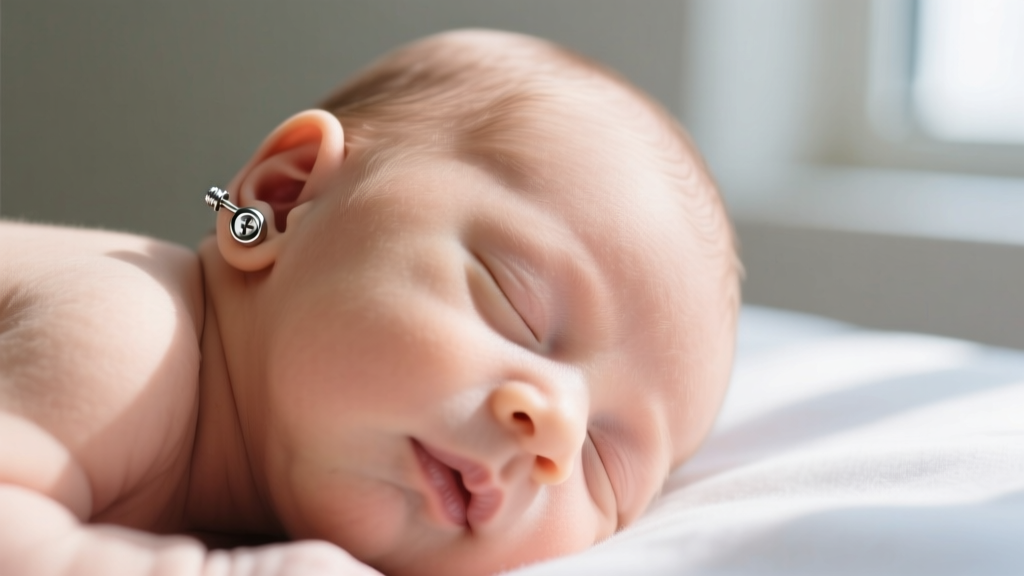
The decision to pierce a baby’s ears is deeply rooted in cultural traditions, family milestones, and personal preference. However, when it comes to selecting earrings for newborn infants, aesthetics must take a backseat to medical safety, biocompatibility, and precise anatomical sizing. A newborn’s earlobe is incredibly delicate, highly vascular, and still developing, meaning standard jewelry can cause severe complications ranging from contact dermatitis to tissue embedding.
This comprehensive buying guide cuts through the marketing fluff to provide parents and guardians with exact material grades, gauge specifications, and structural requirements necessary to ensure a safe, comfortable, and infection-free healing process for your baby’s first piercings.
Why Material Purity is Non-Negotiable
The most common complication in infant ear piercing is allergic contact dermatitis, primarily triggered by nickel exposure. Even trace amounts of nickel can cause severe blistering, swelling, and permanent sensitization in a newborn’s immune system. According to the American Academy of Dermatology, nickel allergy is the leading cause of jewelry-related skin reactions, and once developed, it is a lifelong condition.
When shopping for newborn jewelry, ignore vague terms like "hypoallergenic" or "surgical steel," which are unregulated marketing buzzwords. Instead, demand materials that meet strict implant-grade standards:
- Implant-Grade Titanium (ASTM F136): Specifically Ti6Al4V ELI. This is the gold standard for fresh piercings. It is entirely nickel-free, lightweight, and biocompatible, meaning the body will not recognize it as a foreign threat. The Association of Professional Piercers (APP) highly recommends this material for all initial piercings.
- Solid 14k or 18k Gold: Must be alloyed with palladium or silver, never nickel. Note that white gold often contains nickel to achieve its color; always opt for high-quality yellow or rose gold from reputable jewelers who can provide metallurgical assays.
- Niobium: A highly reactive metal that is naturally nickel-free and can be anodized to various colors without using dyes or platings that could flake off into a healing fistula.
Warning: Never use gold-plated, gold-filled, or sterling silver earrings for a newborn. Plating wears off quickly, exposing the base metals underneath, while sterling silver contains copper and other alloys that can oxidize and cause argyria (skin discoloration) in healing tissue.
The Anatomy of Safe Earrings for Newborn Lobes
A standard earring designed for an adult or older child is a hazard for an infant. The anatomy of the jewelry must address three critical risks: choking, scratching, and bacterial trapping.
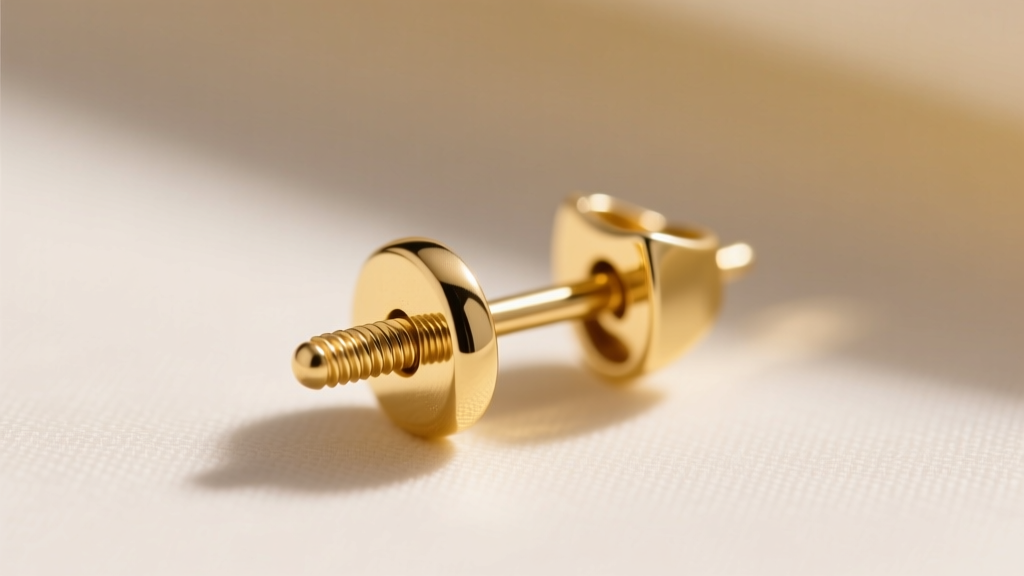
The Choking Hazard of Friction Backs
Standard "butterfly" or friction backs rely on tension to stay on the post. A baby’s constant movements, combined with the friction of blankets and car seat straps, can easily dislodge these backs. Once loose, they pose a severe choking or aspiration hazard. Furthermore, the crevices in butterfly backs trap milk, sweat, and dead skin cells, creating a breeding ground for staphylococcus bacteria.
The Solution: Covered Screw-Backs
You must exclusively purchase earrings with internally threaded screw-backs. These backs physically thread onto the post, requiring intentional twisting to remove. More importantly, look for covered or enclosed screw-backs. These feature a smooth, domed capsule that completely encases the sharp tip of the post, preventing the baby from scratching their neck or face while sleeping.
Sizing and Fit: Avoiding the Embedding Trap
One of the most frequent emergencies pediatricians see regarding infant piercings is "embedding." This occurs when the earring post is too short to accommodate the natural swelling that follows a piercing, or when the jewelry is too long, causing the "cheese-cutter effect" where the heavy earring slowly slices through the delicate lobe tissue.
Newborn lobes are remarkably thin, typically measuring between 2mm and 4mm. A standard 6mm (1/4 inch) adult post will protrude dangerously far from the lobe, catching on clothing and causing trauma. Use the following sizing matrix to ensure a proper fit:
| Age Group | Average Lobe Thickness | Ideal Post Length | Recommended Gauge |
|---|---|---|---|
| Newborn (0-2 Months) | 2.0mm - 3.5mm | 3.0mm - 4.0mm | 20G (0.81mm) or 18G (1.0mm) |
| Infant (3-12 Months) | 3.5mm - 5.0mm | 4.0mm - 5.0mm | 18G (1.0mm) |
| Toddler (1-3 Years) | 5.0mm - 6.5mm | 5.0mm - 6.0mm | 18G (1.0mm) |
Expert Tip: Always account for post-healing swelling. A professional piercer will typically insert a slightly longer post (e.g., 4mm for a newborn) to allow for the first two weeks of edema, and then have you return to downsize to a 3mm post once the swelling subsides to prevent the jewelry from snagging.
Piercing Method: Hollow Needle vs. Spring-Loaded Gun
The jewelry you buy is only half the equation; how it is inserted dictates the healing trajectory. Spring-loaded piercing guns, commonly found in mall kiosks and pediatricians' offices, use blunt force trauma to shove a stud through the tissue. This causes massive cellular crush damage, leading to prolonged swelling, excessive scar tissue (keloids), and a higher risk of infection.
Furthermore, piercing guns cannot be sterilized in an autoclave. They are merely wiped down with disinfectant, meaning microscopic blood and tissue from previous clients can remain in the mechanism.
Always seek out a licensed, professional body piercer who uses a single-use, sterilized hollow bevel needle. A hollow needle cleanly removes a tiny crescent of tissue, creating a smooth fistula that heals significantly faster and with less trauma. Ensure the piercer opens the sterilization pouch in front of you and uses a receiving tube to support the back of the lobe during insertion.
Troubleshooting: Redness, Snagging, and Embedding
Even with perfect jewelry and technique, issues can arise. Here is how to differentiate between normal healing and complications requiring intervention:
- Normal Healing: Mild redness, slight warmth, and the secretion of clear or pale yellow lymph fluid (crusties) are normal for the first 2-3 weeks.
- Embedding (Medical Emergency): If the front stud or back clasp begins to sink into the skin and you cannot see the post between the jewelry and the lobe, seek immediate medical or professional piercer assistance. The jewelry must be removed or swapped for a longer post immediately to prevent the skin from healing over the metal.
- Contact Dermatitis: If the lobe becomes intensely itchy, flaky, and bright red, suspect a metal allergy. Remove the jewelry and switch to verified ASTM F136 titanium.
- Snagging Trauma: If the earring is pulled, causing bleeding, apply gentle pressure with sterile gauze. Do not remove the jewelry, as the hole will close and trap the infection inside. Clean with saline and monitor for signs of systemic infection (fever, spreading red streaks).
Aftercare Protocols for Rapid Healing
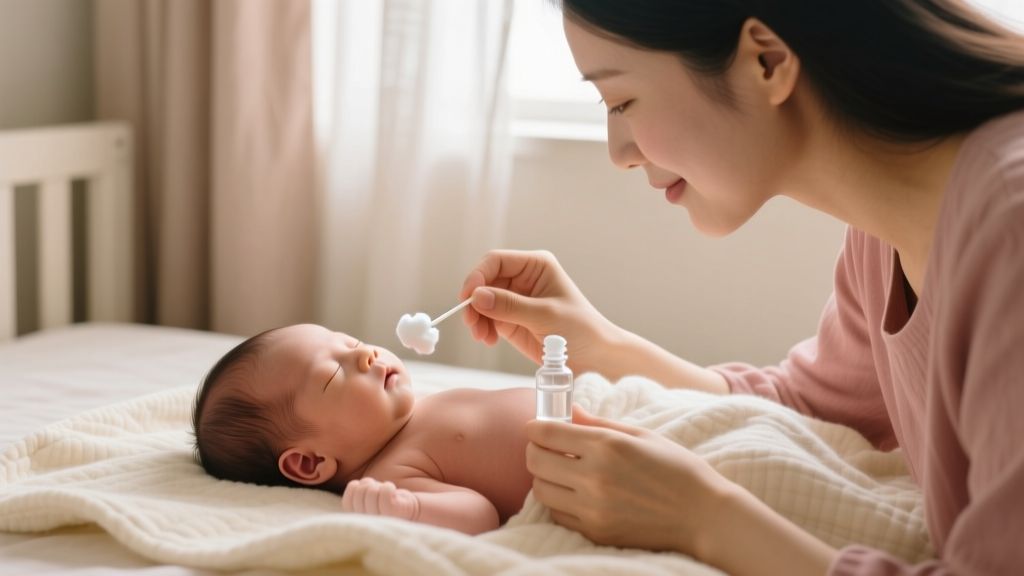
The aftercare routine for a newborn must be gentle, consistent, and devoid of harsh chemicals. Discard any advice suggesting the use of rubbing alcohol, hydrogen peroxide, or antibiotic ointments. Alcohol and peroxide destroy newly forming, fragile epithelial cells, delaying healing, while ointments block oxygen flow to the fistula.
The Golden Rules of Newborn Aftercare:
- Spray, Don't Touch: Use a sterile 0.9% sodium chloride wound wash (ensure there are no additives or preservatives). Spray it directly onto the front and back of the piercing twice daily.
- Never Twist the Jewelry: Twisting tears the delicate healing tissue inside the fistula and introduces surface bacteria into the wound.
- Keep it Dry: After bathing the baby, gently dry the area using a hairdryer on the absolute coolest setting, held at a safe distance. Moisture trapped behind the earring back encourages yeast and bacterial growth.
- Leave it Alone: Do not change the initial jewelry for at least 8 to 12 weeks. The fistula takes months to mature, even if the outside looks healed.
By prioritizing implant-grade materials, precise anatomical sizing, and professional needle piercing techniques, you ensure that your baby’s first earrings are a source of joy rather than a medical complication. Always verify the metallurgical credentials of your jeweler and the sterilization protocols of your piercer before making a decision.


