Earrings Ice Cream Buying Guide: Metals, Enamel & Fit
Discover what to look for when buying earrings ice cream designs. Our guide covers hypoallergenic metals, enamel types, gauge sizes, and care tips.

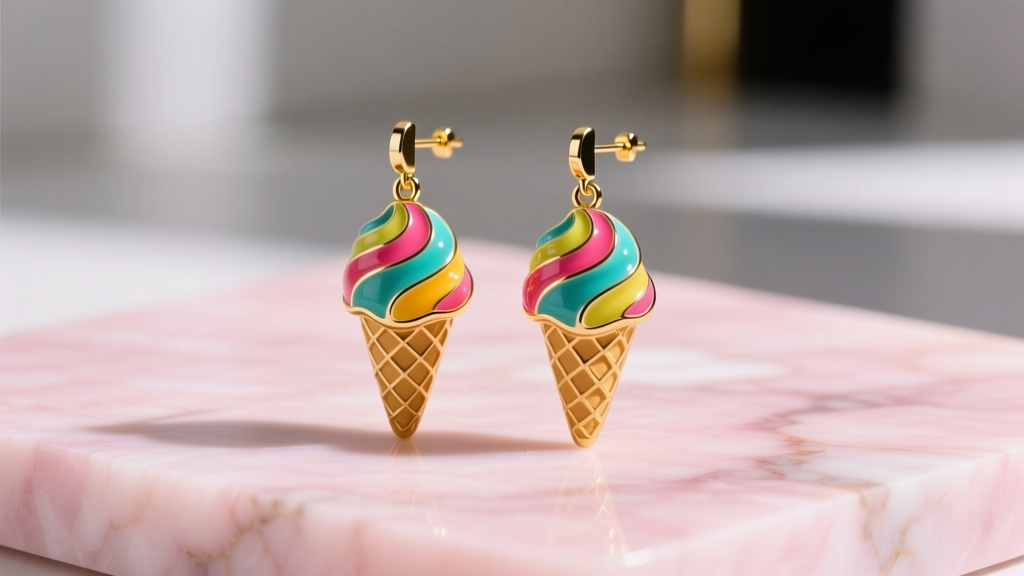
Novelty jewelry has experienced a massive renaissance, moving from childhood dress-up boxes to high-end, adult-appropriate accessories. When curating a playful yet sophisticated collection, the search for the perfect earrings ice cream designs requires a discerning eye. While the aesthetic appeal of a dripping cone or a pastel scoop is undeniable, the structural integrity, metal purity, and enamel quality dictate whether a piece will become a cherished staple or a tarnished disappointment.
This comprehensive buying guide breaks down the exact specifications you need to evaluate when purchasing ice cream-themed earrings, ensuring your novelty pieces are as durable and hypoallergenic as they are adorable.
The Evolution of Novelty Sweets in Jewelry
Ice cream motifs in jewelry trace their roots back to the mid-century novelty boom, where Bakelite and early plastics were molded into whimsical charms. In the 1990s, brands like Betsey Johnson popularized the 'sweet tooth' aesthetic with heavy resin and rhinestone pieces. Today, the market is bifurcated: fast-fashion retailers mass-produce cheap alloy versions, while independent jewelers and boutique brands utilize traditional metallurgy and vitreous enameling to create heirloom-quality novelty pieces. Understanding this divide is the first step in making an informed purchase.
Base Metals and the Nickel Trap
The most critical factor in buying any novelty earring is the base metal. Ice cream charms are often cast using Zamak (a zinc-aluminum-magnesium-copper alloy) or brass because these metals capture fine details—like the texture of a waffle cone or the drip of melting fudge—exceptionally well. However, these base metals are frequently flash-plated with nickel or low-grade silver to achieve a bright finish.
Nickel is the leading cause of allergic contact dermatitis in jewelry wearers. According to the American Academy of Dermatology, prolonged exposure to nickel-plated posts can cause severe lobe irritation, weeping, and long-term sensitization. When shopping, you must look beyond the charm's plating and investigate the post material.
What to Look For in Metal Grades
- ASTM F136 Titanium: The gold standard for hypoallergenic jewelry. If the earring post is made of implant-grade titanium, it is safe for even the most reactive ears, regardless of the charm's base metal.
- 316L Surgical Stainless Steel: A highly reliable, budget-friendly alternative that contains trace amounts of nickel but rarely leaches enough to cause a reaction in standard piercings.
- Solid 14k or 18k Gold: Found in luxury novelty pieces. Ensure it is solid or heavily vermeil-plated over sterling silver, not gold-plated brass.
- PVD Coating: Physical Vapor Deposition is a modern plating technique that bonds gold or rose gold to stainless steel at a molecular level. It is vastly superior to traditional electroplating and will not flake off onto your skin.
Enamel Techniques: Resin vs. Vitreous
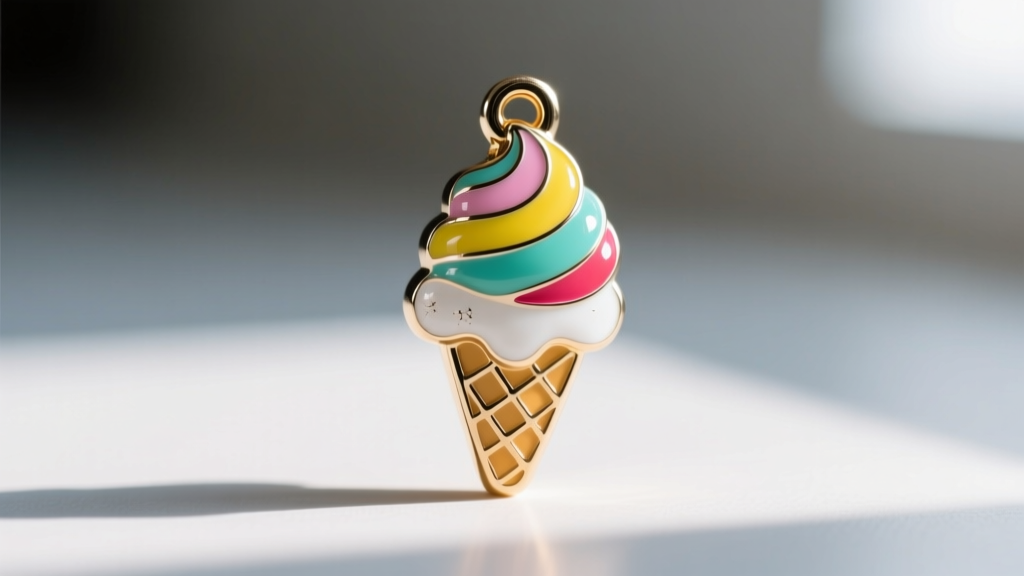
The vibrant colors of ice cream scoops—strawberry pinks, mint greens, and vanilla creams—are almost always achieved through enameling. However, not all enamel is created equal. The terminology used by sellers can be misleading, so it is vital to distinguish between cold enamel (epoxy resin) and hard enamel (vitreous glass).
| Feature | Cold Enamel (Epoxy Resin) | Hard Enamel (Vitreous Glass) |
|---|---|---|
| Material Composition | Synthetic two-part plastic resin | Finely ground glass powder fused to metal |
| Durability | Prone to micro-scratches and denting | Highly scratch-resistant, glass-like hardness |
| UV Stability | Yellows or clouds over time with sun exposure | Colorfast indefinitely; will not fade |
| Finish & Texture | Slightly domed, softer tactile feel | Flat, polished flush with the metal cloisons |
| Price Point | $10 - $35 (Mass market / Indie craft) | $45 - $150+ (Boutique / Fine jewelry) |
While epoxy resin is acceptable for budget-friendly, seasonal wear, vitreous enamel is a must for pieces you intend to wear year-round. Vitreous enamel requires firing in a kiln at temperatures exceeding 1,400°F (760°C), resulting in a luminous, permanent finish that mimics the glossy sheen of actual ice cream.
Gauge, Weight, and the 'Cheese Wire' Effect
Ice cream cone dangles and drop earrings inherently carry more weight than standard studs. A detailed, multi-scoop ice cream charm cast in solid brass or zinc alloy can easily weigh between 8 and 15 grams per earring. This weight introduces a mechanical issue known in the jewelry industry as the 'cheese wire' effect.
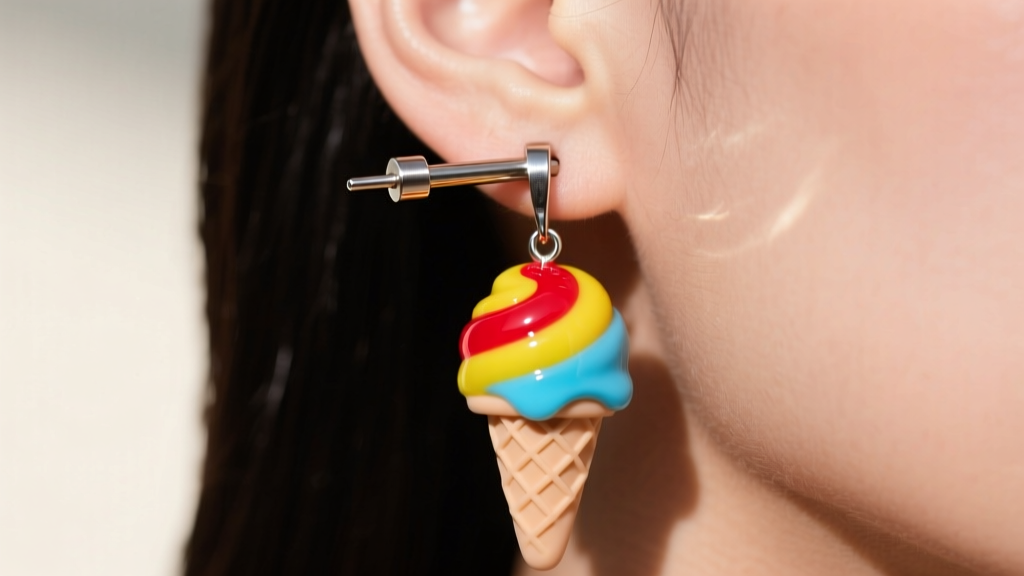
If a heavy dangle is suspended from a thin, standard 20-gauge (0.81mm) or 22-gauge (0.64mm) wire, the downward force concentrates on a microscopic surface area of your earlobe. Over time, this constant friction and gravity can actually stretch the piercing hole or cause the wire to slice into the tissue, especially during movement.
Sizing and Gauge Recommendations
When evaluating the fit of novelty dangles, check the product specifications for the wire gauge. For any ice cream drop earring exceeding 6 grams, the post or ear wire should be a minimum of 18-gauge (1.02mm). For oversized, statement-making triple-scoop designs, an 16-gauge (1.29mm) leverback wire is highly recommended to distribute the weight safely across the lobe.
Securing the Sweet: Backings and Closures
The closure mechanism is just as important as the post gauge. Novelty earrings are often bumped, caught on hair, or snagged on clothing collars. Losing a meticulously crafted enamel ice cream cone to a faulty backing is a preventable tragedy.
- Silicone Discs vs. Butterfly Backs: Standard metal butterfly backs can slip off smooth posts and dig into the neck. For heavier ice cream studs, opt for flat silicone friction discs or O-rings, which provide a wider surface area of grip and cushion the lobe.
- La Pousette (Locking) Backs: If you are investing in fine jewelry ice cream pieces (e.g., solid gold with diamond 'sprinkles'), ensure the posts are notched and paired with La Pousette locking backs, which click securely into place like a mechanical watch crown.
- Leverbacks for Dangles: For ice cream cone dangles, avoid simple 'fishhook' wires that can easily slide out of the ear. French leverbacks feature a hinged closure that snaps shut, securing the earring firmly while allowing the charm to swing freely and catch the light.
Care and Maintenance Protocol
Proper maintenance ensures your novelty pieces retain their vibrant, appetizing appearance. The care routine depends entirely on the enamel type identified in your purchase.
Cleaning Vitreous Hard Enamel
Hard enamel can be cleaned using warm water, a drop of mild dish soap, and a soft-bristled baby toothbrush. Because it is essentially glass, it can withstand gentle chemical cleaners, but you should avoid ultrasonic cleaners if the piece features glued-in rhinestones or pearls mimicking 'sprinkles' or 'cherries' on top of the ice cream scoop.
Cleaning Epoxy Resin (Cold Enamel)
Resin is highly porous and sensitive to chemicals. Never use alcohol, acetone, or commercial jewelry dips on cold enamel, as these solvents will break down the synthetic polymers, causing the 'ice cream' colors to turn cloudy or sticky. Simply wipe resin pieces with a damp microfiber cloth and dry them immediately. Store them in a dark, velvet-lined box to prevent UV-induced yellowing.
Final Verdict: Investing in Joyful Quality
The 'earrings ice cream' aesthetic is a celebration of whimsy, but it shouldn't come at the expense of your skin's health or your wallet. By prioritizing ASTM F136 titanium posts, demanding vitreous glass enameling, and respecting the physics of gauge thickness and weight distribution, you can build a novelty jewelry collection that is as resilient as it is delightful. Whether you are buying a subtle enamel stud for the office or a cascading triple-scoop dangle for a summer festival, these technical specifications will ensure your sweet tooth is satisfied with lasting quality.


