How to Authenticate Hermès Earrings: Step-by-Step Guide
Learn how to authenticate Hermès earrings with our step-by-step guide. Discover hallmark, enamel, and hardware secrets to spot fakes instantly.

The Rising Stakes of the Luxury Jewelry Secondary Market
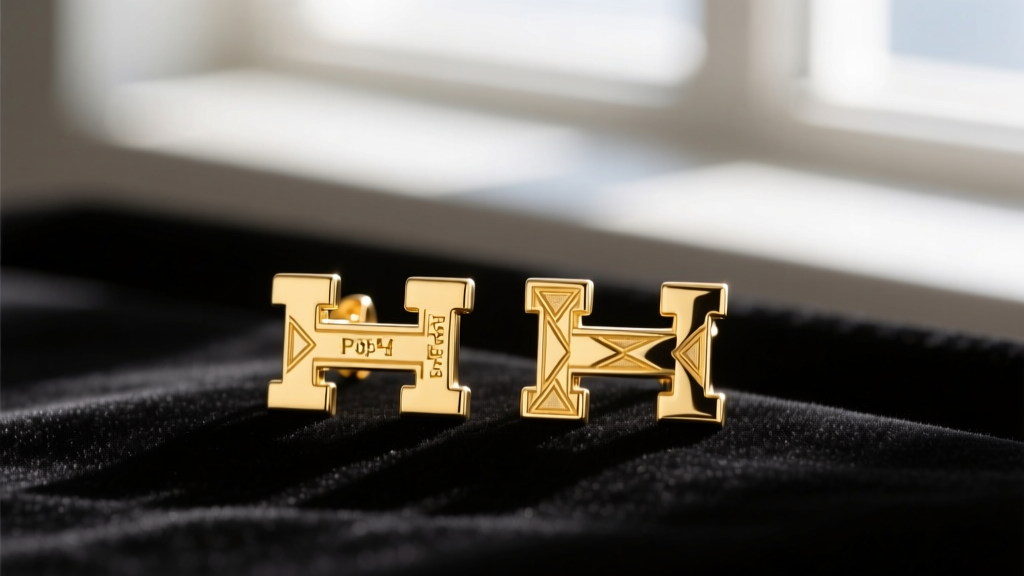
As we navigate the luxury resale landscape in 2026, the demand for iconic Hermès earrings—ranging from the playful Pop H collection to the sophisticated Chaine d'Ancre and Kelly lines—has reached unprecedented heights. Consequently, the market has been flooded with increasingly sophisticated 'super-fakes.' These replicas often mimic the visual aesthetics of the brand but fail under microscopic scrutiny. For serious collectors, vintage hunters, and first-time buyers, understanding the precise manufacturing standards of the Maison is no longer optional; it is a financial necessity.
Authenticating luxury jewelry requires moving beyond superficial logo checks. True verification demands a granular understanding of French metallurgical laws, high-fire enameling techniques, and proprietary hardware engineering. This comprehensive, step-by-step guide will equip you with the exact frameworks used by luxury authenticators to separate genuine Hermès masterpieces from high-end counterfeits.
Step 1: Decoding French Hallmarks and Maker's Marks
The most definitive way to authenticate solid gold or platinum Hermès earrings is by examining the state-mandated French hallmarks. Unlike many countries that rely on simple numeric stamps (like '750' or '18k'), France employs a rigorous, state-controlled guarantee system known as the Garantie de l'État. According to the French Customs and Excise authority, these stamps are struck by official assay offices, not the jewelers themselves.
The Eagle Head and Dog Head
For any Hermès earring crafted in 18-karat gold (the standard for their fine jewelry), you must locate the tête d'aigle (eagle head) hallmark. This tiny stamp guarantees a minimum gold purity of 750/1000. If you are examining a platinum piece, look for the tête de chien (dog head), which denotes a minimum of 950/1000 platinum purity. Counterfeiters often laser-etch these symbols, resulting in shallow, overly clean, or slightly blurred impressions. Authentic hallmarks are struck with a hardened steel die, creating deep, crisp edges with microscopic metal displacement around the borders.
The Poinçon de Maître (Maker's Mark)
Alongside the state hallmark, authentic pieces feature the poinçon de maître. For Hermès, this is typically a diamond-shaped lozenge containing the brand's name or a specific symbol, alongside the initials of the manufacturing workshop. This stamp is usually located on the earring post, the back of the omega clip, or the interior curve of a hoop. If the font appears pixelated or the lozenge borders are uneven, proceed with extreme caution.
Step 2: Analyzing Enamel Quality and Cloisonné Techniques
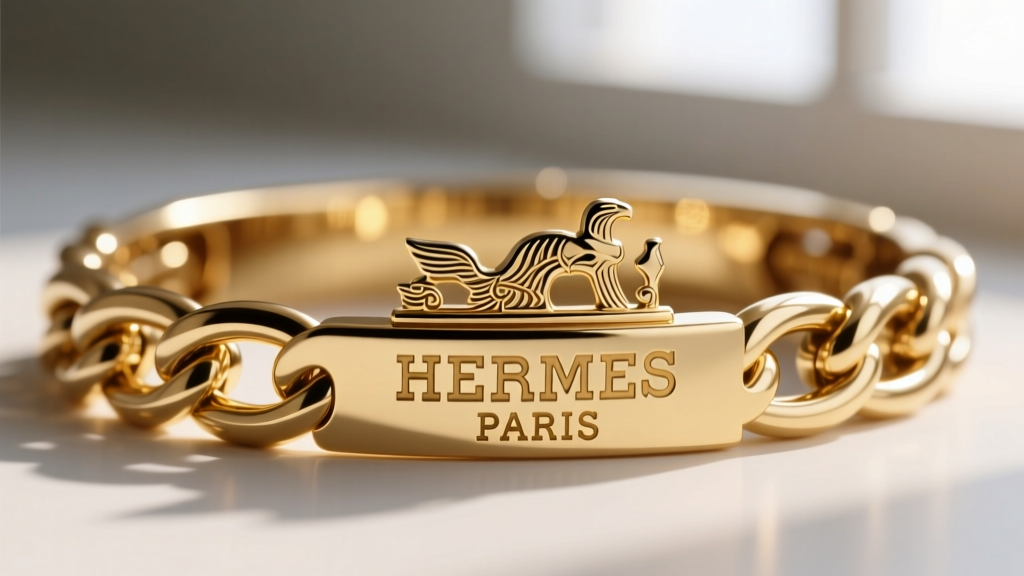
Hermès is globally renowned for its vibrant enamel work, particularly on the Pop H and Kelly earring collections. The Maison utilizes Grand Feu (high-fire) enamel or precision champlevé techniques. This involves fusing silica-based glass powder to a gold base at temperatures exceeding 800°C. The result is a glass-like, infinitely durable surface that will not degrade over time.
Spotting Cold Enamel Fakes
Replicas almost universally use 'cold enamel,' which is actually an epoxy resin or polyurethane poured into metal cavities and cured at room temperature. You can identify cold enamel fakes through three critical flaws:
- The Meniscus Effect: Resin shrinks as it cures. If you run your fingernail across the earring, fake enamel will feel concave, dipping below the gold bezel. Authentic Grand Feu enamel is polished perfectly flush with the surrounding metal.
- Pinprick Bubbles: Under a 10x jeweler's loupe, cold enamel reveals tiny trapped air bubbles. High-fire enamel is completely vitrified and optically clear.
- Color Degradation: Resin yellows and chips when exposed to UV light and cosmetics. Authentic Hermès enamel maintains its vivid, opaque saturation indefinitely.
Step 3: Evaluating Hardware, Weight, and Closure Mechanisms
The mechanical engineering of Hermès earring closures is a masterclass in micro-machining. Whether you are inspecting a vintage clip-on or a modern post-and-butterfly earring, the hardware must operate with absolute precision.
Post Gauge and Threading
Standard fashion jewelry typically uses 0.8mm posts. Hermès, prioritizing durability and the weight of their solid gold designs, frequently utilizes 0.95mm to 1.05mm posts. Furthermore, the threading on the post (if designed for a screw-back) is micro-milled with flawless symmetry. Fake earrings often feature poorly cut threads that cross-thread easily or feel gritty when the nut is applied.
Omega Clips and Hinge Tension
For non-pierced options or larger statement pieces, Hermès employs the omega clip. The hinge mechanism on an authentic omega clip is spring-loaded with a specific torque. It should snap shut with a definitive, resonant 'click' and hold tension without drooping. Replicas often use weak base-metal springs that loosen after a few wears, causing the earring to slide down the earlobe.
| Feature | Authentic Hermès | Common Replica |
|---|---|---|
| Enamel Surface | Flush, glass-like, zero bubbles | Concave, resin-like, micro-bubbles |
| Hallmark Depth | Deep die-strike, crisp edges | Shallow laser-etch, blurred edges |
| Post Thickness | 0.95mm - 1.05mm (sturdy) | 0.7mm - 0.8mm (flimsy, bends easily) |
| Clasp Tension | High-torque, resonant click | Weak spring, silent or loose closure |
| Weight (e.g., Pop H) | Heavy, dense 18k gold feel | Noticeably lighter, hollow feel |
Step 4: Scrutinizing Packaging and Documentation
A common misconception in the secondary market is that luxury jewelry must come with a plastic authenticity card. As highlighted by authentication experts at Vestiaire Collective, Hermès does not issue plastic authenticity cards for their fashion or fine jewelry lines. If a seller presents a plastic card with a serial number, the earrings are almost certainly counterfeit.
The Orange Box and Blind Stamps
Authentic Hermès earrings are presented in the iconic orange box, which should feature a subtle, high-quality debossed logo, not a glossy, stamped-on print. The interior lining is typically a high-grade, suede-like microfiber or velvet, perfectly fitted to the box dimensions. While Hermès leather goods feature 'blind stamps' indicating the year and craftsman, these are rarely applied to small metal jewelry items. Instead, rely on the metal hallmarks and the presence of a specialized high-jewelry certificate if the piece features significant diamonds or precious gemstones.
'When authenticating Hermès jewelry, I always tell my clients to trust their tactile senses. The Maison's polishing standards are absolute. If the back of the earring or the interior of a hoop feels sharp, porous, or catches on a silk cloth, it has not been finished by a master polisseur.' — Senior Luxury Jewelry Appraiser
Final Expert Advice for 2026 Buyers
Purchasing Hermès earrings on the secondary market requires a methodical, skeptical approach. Always request high-resolution, unedited macro photographs of the hallmarks, the earring post, and the enamel bezels. If a seller refuses to provide these specific angles, walk away. By mastering the nuances of French assay marks, understanding the physics of Grand Feu enamel, and recognizing the mechanical superiority of authentic hardware, you can build a pristine, investment-grade jewelry collection with absolute confidence.


