Vintage Rhinestone Earrings Buying Guide: Authentication & Eras
Discover how to authenticate, date, and buy vintage rhinestone earrings. Learn about Art Deco to Mid-Century eras, foil-backing, and fair market pricing.

Decoding the Eras: Art Deco to Mid-Century
When hunting for authentic vintage rhinestone earrings, understanding the historical context of jewelry manufacturing is your first line of defense against modern reproductions. The evolution of glass-cutting techniques, metal alloys, and backing foils provides distinct clues that separate genuine antiques from contemporary mass-market replicas.
1920s–1930s: The Art Deco Revolution
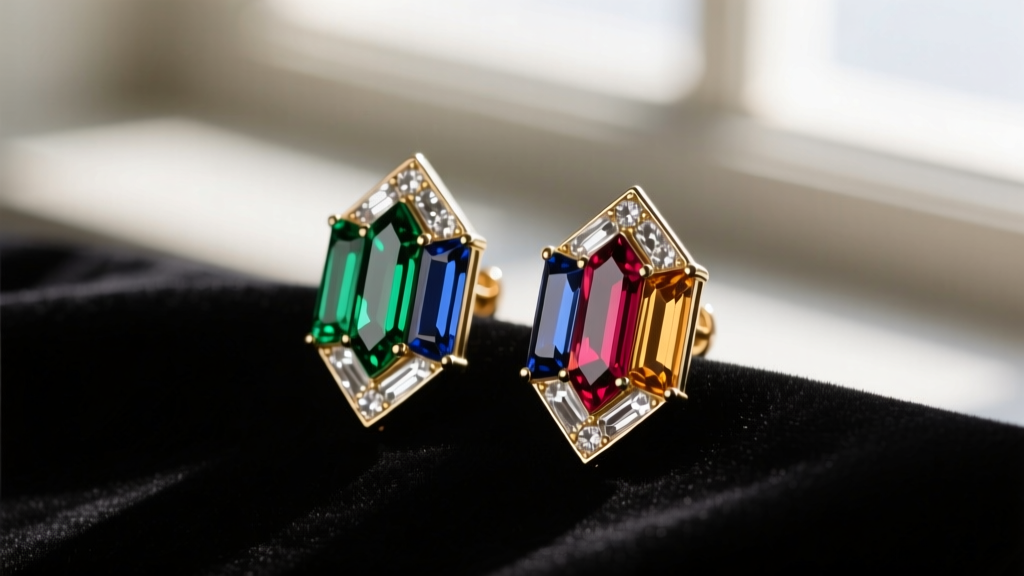
Art Deco earrings are defined by their geometric precision. During this era, designers sought to mimic the look of high-end platinum and diamond jewelry. To achieve this, manufacturers utilized rhodium plating over base metals or sterling silver, giving the settings a bright, white-metal luster that resists tarnish. The rhinestones themselves were primarily lead glass, cut into baguettes, emeralds, and square chatons. If you are examining a pair of screw-back earrings with sharp, symmetrical geometric lines and a heavy, cold-to-the-touch glass composition, you are likely looking at a genuine 1930s piece.
1940s: Retro and Wartime Restrictions
World War II drastically altered jewelry production. With base metals and platinum diverted for the war effort, jewelers turned to sterling silver. The aesthetic shifted from strict geometry to bold, three-dimensional florals, ribbons, and patriotic motifs. Because silver tarnishes, genuine 1940s retro pieces often exhibit a soft, natural patina in the crevices of the casting—a highly desirable trait that modern artificial antiquing fails to replicate accurately.
1950s–1960s: The Aurora Borealis Phenomenon
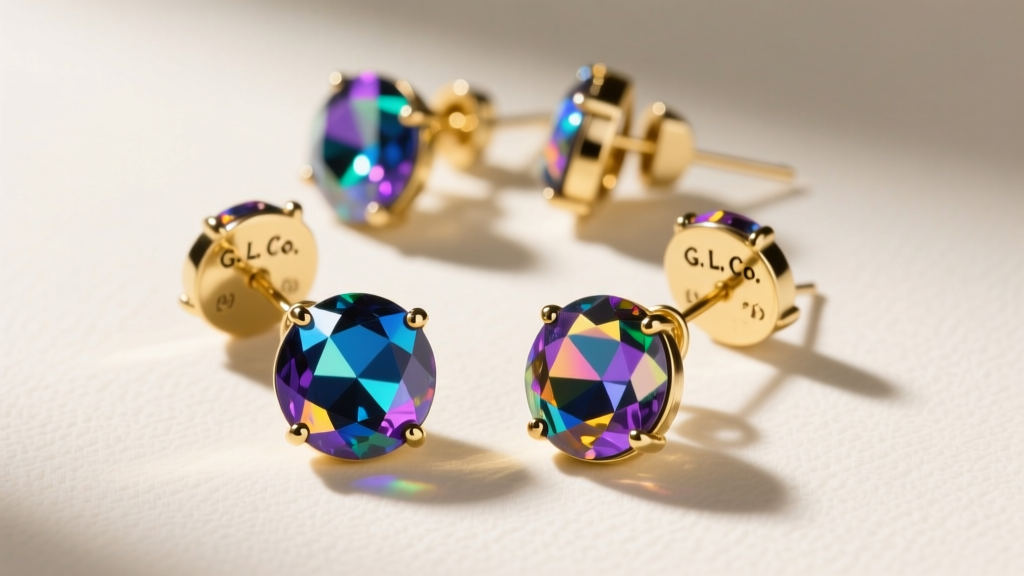
The Mid-Century era introduced the most significant technological leap in rhinestone history: the Aurora Borealis (AB) coating. Developed by Swarovski in collaboration with Christian Dior in 1955, this vacuum-deposited metallic layer gave glass stones an iridescent, rainbow-like sheen. If a pair of vintage rhinestone earrings features an AB finish, they cannot pre-date 1955. Early AB coatings (1955–1960) typically display a pronounced blue and green color shift, whereas later 1960s production runs often lean toward pink and gold hues.
The Anatomy of Vintage Rhinestones: What to Inspect
Authenticating the stones requires looking past the sparkle and examining the physical construction. Modern acrylic or resin stones are lightweight and warm to the touch, whereas vintage lead glass possesses a distinct, substantial heft and thermal conductivity (it feels cold against the skin).
Foil-Backed vs. Unfoiled Stones
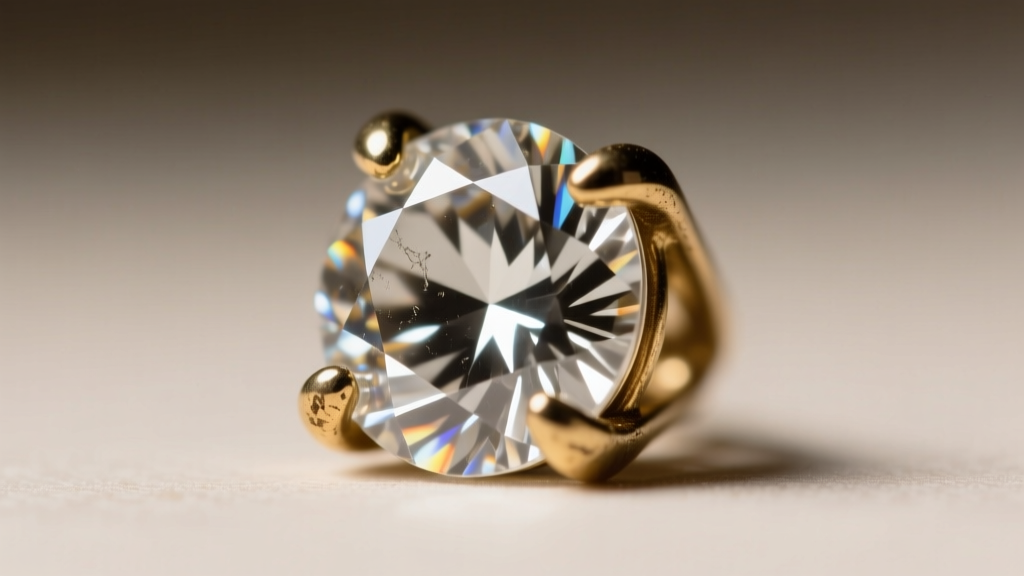
Prior to the 1960s, the brilliance of a rhinestone was largely dependent on its foil backing. A thin sheet of silver, gold, or colored metallic foil was applied to the pavilion (the bottom) of the stone to reflect light back through the crown. When inspecting vintage rhinestone earrings, use a 10x jeweler's loupe to check the foil.
- Pristine Foil: Bright, mirror-like reflection. Highly desirable and commands a premium.
- Foil Rot (Blackening): Occurs when moisture breaches the prong setting, oxidizing the metallic foil. This appears as dark, grey, or black patches beneath the glass, significantly reducing the stone's brilliance and the piece's market value.
Prong-Set vs. Glued Settings
High-end vintage costume jewelry, such as pieces by Trifari, Coro, or Eisenberg, predominantly features prong-set stones. The metal prongs are folded over the girdle of the glass stone by hand or precision machinery. Conversely, lower-tier vintage pieces and almost all modern reproductions rely on industrial adhesives. If you see yellowing glue seeping from the edges of the stone, or if the stones are completely flush with a smooth bezel lacking visible prongs, proceed with caution.
Hardware and Hallmarks: Verifying Authenticity
The earring findings (the hardware that attaches the jewelry to the ear) are among the most reliable indicators of age. According to the educational archives at Lang Antiques, the evolution of earring clasps directly correlates with specific decades.
| Clasp Type | Patented / Popularized | Primary Era of Use | Authentication Notes |
|---|---|---|---|
| Screw-Back | 1894 | 1900s – 1940s | Features a flat paddle that screws against the earlobe. Often stamped with pat. numbers. |
| Early Clip-On | 1930s | 1940s – 1950s | Simple hinged wire or flat metal clip. Lacks the comfort pads seen in later decades. |
| Omega / Comfort Clip | 1950s | 1960s – 1980s | Features a wider, domed clip mechanism, often with a textured grip or adjustable tension screw. |
| Pierced Post | N/A | 1970s – Present | If a piece claims to be 1930s but features a modern butterfly clutch post, it is likely a reproduction or altered piece. |
Decoding Maker Marks
Turn the earrings over and examine the reverse for hallmarks. Prestigious makers like Miriam Haskell often hand-wired their stones and utilized distinct 'Russian Gold' plating, which develops a beautiful, mellow patina over time. Weiss and Coro frequently stamped their logos directly into the metal clip or on a small soldered plaque. Be wary of laser-engraved hallmarks; vintage stamps were struck with dies, resulting in slightly imperfect, deeply impressed lettering.
Condition Reports: Flaws That Impact Value
When evaluating vintage rhinestone earrings on platforms like Ruby Lane or at estate sales, condition is paramount. Unlike fine jewelry, costume jewelry cannot always be easily restored without destroying its historical integrity.
Expert Tip: Never attempt to clean foil-backed rhinestones with ultrasonic cleaners or liquid jewelry dips. The fluid will seep behind the glass, instantly destroying the foil backing and turning the stones opaque black.
Key Condition Factors to Assess:
- Verdigris: A green, crusty buildup on copper or brass alloys caused by oxidation and skin oils. While light verdigris can be carefully removed with a dry wooden toothpick, deep corrosion weakens the structural integrity of the prongs.
- Rhodium Wear: White-metal pieces from the 1930s were plated with rhodium. If the plating has worn away to reveal yellow brass or pot metal beneath, the value drops by 30% to 50%.
- Replacement Stones: Look closely at the color and refraction of all stones. A single replacement stone will often have a slightly different hue, cut, or lack the foil aging of the originals. Collectors pay a premium for 'all-original' stones.
Pricing Framework: What You Should Actually Pay
The market for vintage rhinestone earrings is highly segmented. Use this framework to ensure you are paying fair market value in the current landscape:
Tier 1: Unsigned & Mass-Market ($25 – $75)
These are typical 1950s and 1960s clip-ons without maker marks. They are excellent for everyday wear or theatrical costuming but hold little collector value unless the design is exceptionally avant-garde.
Tier 2: Signed Mid-Century & Retro ($100 – $350)
Pieces bearing hallmarks of Trifari (especially the 'Crown' mark), CoroCraft, or Weiss. Earrings featuring complex figural designs, such as jelly belly animals or intricate floral sprays, sit at the top of this range.
Tier 3: High-End Couture & Art Deco ($400 – $1,500+)
This tier includes pristine 1920s Art Deco platinum and diamond-mimic screw-backs, as well as hand-wired Miriam Haskell pieces featuring baroque pearls and Russian gold plating. Runway pieces from Christian Dior (often stamped 'Chr. Dior' with a copyright symbol) from the 1960s also command top dollar.
Sourcing Safely: Where to Buy and What to Ask
When purchasing from online dealers or auction houses, always request high-resolution macro photography of the reverse side of the earrings. Ask the seller specifically: 'Are there any missing stones, and is there any blackening or deterioration to the foil backing?' A reputable vintage jeweler will provide a transparent condition report and offer a return policy if the piece arrives with undisclosed foil rot or structural damage. By mastering these authentication techniques, you can confidently build a curated collection of vintage rhinestone earrings that hold both historical significance and enduring stylistic value.


