Ball and Chain Earrings: Budget & Value Guide 2026
Discover if ball and chain earrings are worth the investment. We break down material tiers, chain durability, and cost-per-wear for 2026 buyers.

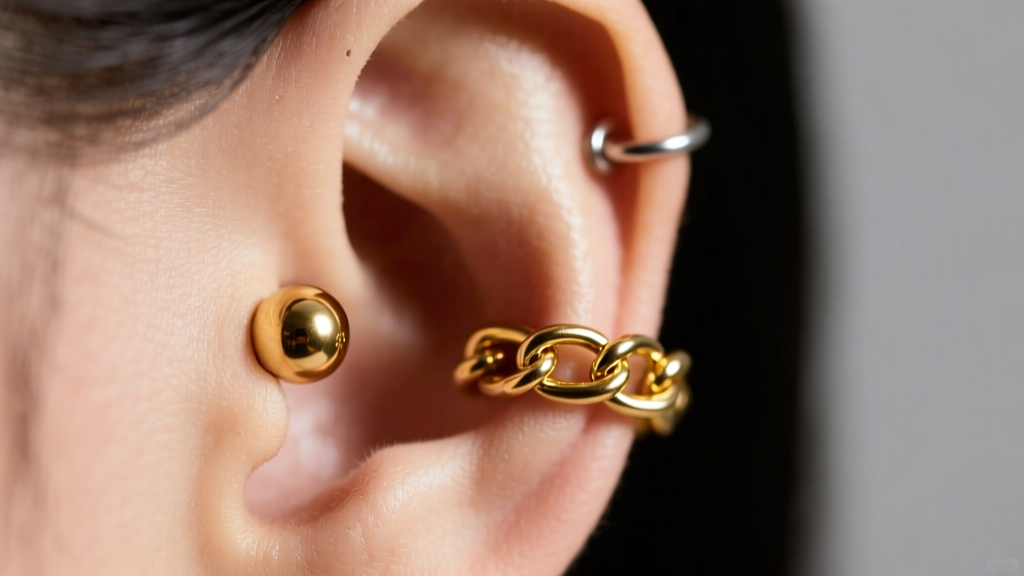
Ball and chain earrings have evolved from a niche alternative staple into a mainstream jewelry box essential. Characterized by a delicate chain bridging two points—typically connecting a lobe stud to a cartilage cuff, or wrapping around the helix—these pieces offer an intricate, layered look without the commitment of multiple piercings. However, from a budget and value assessment perspective, they are notoriously tricky. The very anatomy that makes them beautiful also makes them highly susceptible to structural failure and material degradation.
If you are shopping for ball and chain earrings in 2026, you are not just paying for the metal weight; you are paying for structural engineering on a micro-scale. This guide breaks down the true cost-per-wear, material realities, and hidden failure points of ball and chain designs to help you allocate your jewelry budget wisely.
The Anatomy of Value: What You Are Actually Paying For
Unlike a simple cast hoop or a solid stud, a ball and chain earring is an assembly of multiple micro-components. When evaluating the price tag, you must assess the quality of three distinct zones:
- The Anchor Points: The lobe post (usually 20-gauge or 18-gauge) and the cartilage cuff or secondary stud. These bear the physical weight and tension.
- The Bridge (Chain): Typically ranging from 1.5 to 3 inches in length. The chain dictates the drape and is the primary friction point against hair and clothing.
- The Connectors (Jump Rings): The tiny rings linking the chain to the anchors. This is the single most common point of catastrophic failure in budget jewelry.
Material Tiers: Fast Fashion vs. Demi-Fine vs. Solid Gold
The price variance in ball and chain earrings is massive, ranging from $12 to over $600. To understand the value proposition, we must look at the base metals and plating thicknesses. According to the Federal Trade Commission Jewelry Guides, specific legal thresholds define terms like 'vermeil' and 'gold plated,' which directly impact the lifespan of the chain.
| Material Tier | Typical Price Range | Base Metal & Finish | Estimated Daily-Wear Lifespan |
|---|---|---|---|
| Fast Fashion | $12 - $35 | Brass/Copper with flash plating (<0.5 microns) | 1 - 3 Months |
| Demi-Fine (Vermeil) | $45 - $120 | 925 Sterling Silver with 2.5+ microns of 10k-18k gold | 1 - 2 Years |
| Fine Jewelry | $250 - $650+ | Solid 14k or 18k Gold (No plating) | Generational |
The Hidden Cost of Gold Vermeil Chains
Gold vermeil is an excellent value for solid pendants or thick hoop earrings. However, for chains, it presents a unique value problem. The Gemological Institute of America (GIA) notes that gold plating wears away through friction and contact with skin acids. Because a chain is made of dozens of tiny interlocking wire links, it experiences constant micro-friction against itself, your hair, and your sweaters. A vermeil chain will often reveal its silver base metal along the friction points long before a solid vermeil pendant shows wear. If you buy vermeil ball and chain earrings, expect to re-plate the chain or accept a two-tone look within 18 months of daily wear.
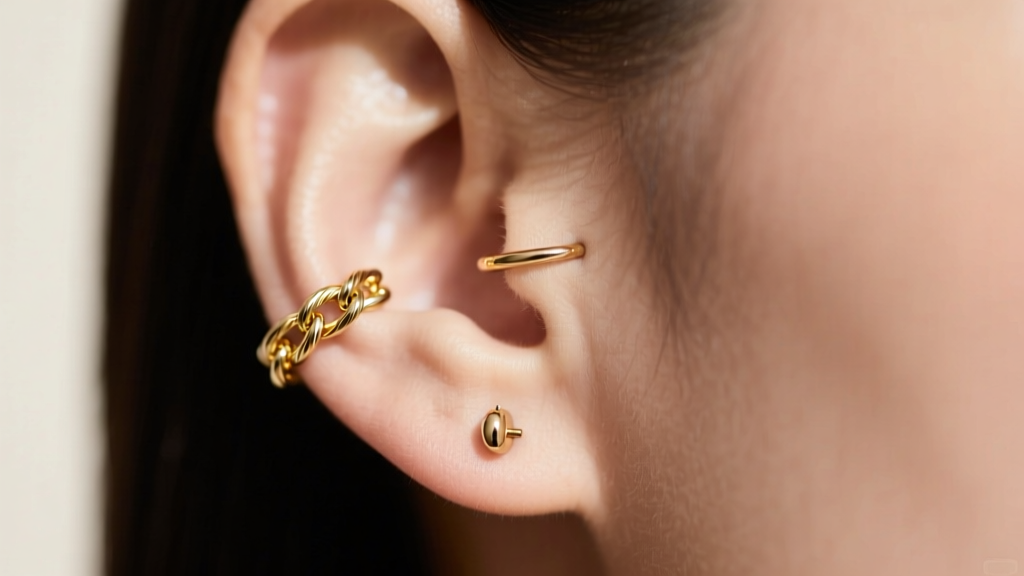
Chain Link Styles and Durability (The Real Value Killer)
Not all chains offer the same return on investment. The style of the chain link dictates how easily it will tangle, kink, or snap when caught in your hair.
Cable Chains
The most common and affordable option. Cable chains consist of uniform oval links. While they offer a classic, delicate drape, they are notorious for catching on fine hair and sweater threads. When a cable chain snags, the oval links can easily stretch and deform, ruining the drape.
Box Chains
Box chains feature square, interlocking links that lie flat. They are highly resistant to hair snagging, making them a superior choice for cartilage-to-lobe connections. However, they are stiff. If a box chain gets kinked or bent out of shape, it is nearly impossible to repair without replacing the entire chain segment.
Rolo Chains
Rolo (or belcher) chains use round, symmetrical links. They offer the best ROI for ball and chain earrings. They are significantly more resistant to tangling than cable chains, and if they do snag, the round links are less prone to permanent stretching. Look for rolo chains in the 1.2mm to 1.5mm width for optimal durability without sacrificing the delicate aesthetic.
Common Failure Points: Gauges and Jump Rings
When assessing the budget value of a specific piece, inspect the hardware connecting the chain to the earrings. This is where manufacturers of budget jewelry cut corners to save on metal weight.
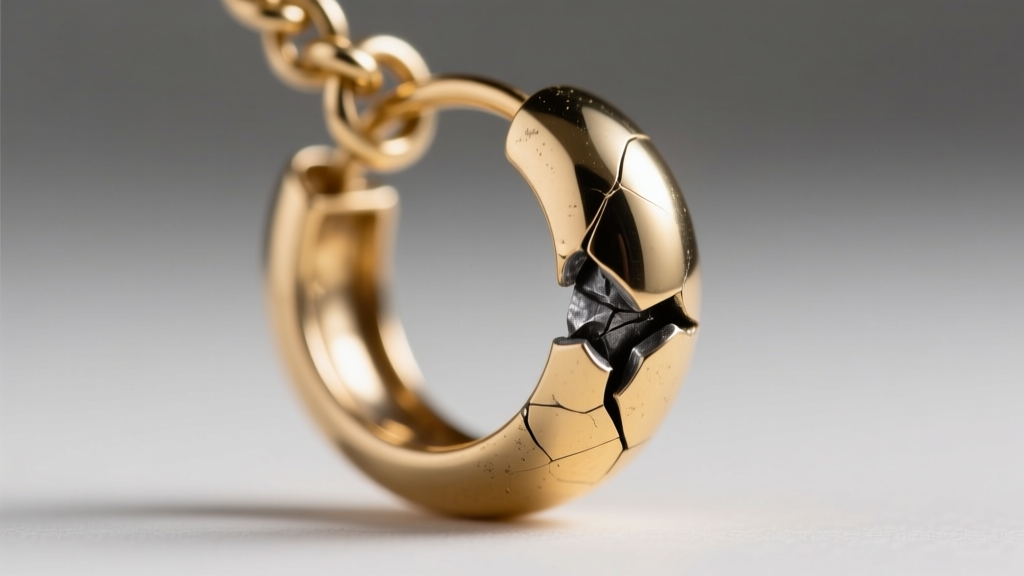
Expert Rule of Thumb: Never buy a ball and chain earring where the chain is attached via an unsoldered jump ring thinner than 22-gauge. The lateral stress of the chain pulling against the ear cartilage will pry an unsoldered 24-gauge ring open within weeks.
High-value pieces will feature soldered jump rings (where the gap in the ring is fused shut with laser or torch) or will use a closed, seamless cast loop integrated directly into the stud or cuff design. If you are buying a $20 pair, check the jump rings with a jeweler's loupe or macro lens on your phone. If you see a visible gap in the tiny ring connecting the chain, factor in the inevitability of losing the earring.
Cost-Per-Wear Calculation: How to Maximize Your Budget
To determine if a pair of ball and chain earrings is a good value, apply the cost-per-wear (CPW) framework based on your intended usage scenario.
- For Occasional/Event Wear (Under 10 wears a year): Fast fashion or brass-based gold-plated options ($15-$30) are a justifiable budget allocation. The low friction and minimal sweat exposure will preserve the flash plating, and the risk of chain-snagging is lower in controlled environments.
- For Weekend/Rotation Wear (1-2 times a week): Demi-fine Sterling Silver or Gold Vermeil ($50-$90) is the sweet spot. Ensure the chain is a rolo or box style to minimize weekend hair-tangles, and store it flat in an anti-tarnish pouch.
- For Daily/Signature Wear (4+ times a week): You must invest in Solid 14k Gold ($250+). The daily friction of hair, clothing, and showering will strip vermeil rapidly. Solid gold allows you to safely solder jump rings if they pull, and a skilled jeweler can replace a snapped 14k chain for $30-$50, protecting your initial investment.
Final Verdict
Ball and chain earrings are a high-maintenance, high-reward category. The illusion of a complex, multi-piercing ear curation is highly appealing, but the delicate chains demand respect. In 2026, the smartest budget strategy is to avoid the 'middle-ground' trap: do not spend $80 on a vermeil chain that will degrade in a year. Either embrace the low cost of fashion jewelry for seasonal trends, or bypass the demi-fine tier entirely and invest in a solid 14k gold piece with soldered connectors and a rolo chain that will withstand the rigors of daily life.


