Bamboo Earring Mold Buying Guide: Resin & Clay (2026)
Discover what to look for in a bamboo earring mold. We compare silicone grades, clay baking limits, and resin compatibility for perfect casts.

The Rise of Botanical Jewelry: Why Bamboo?
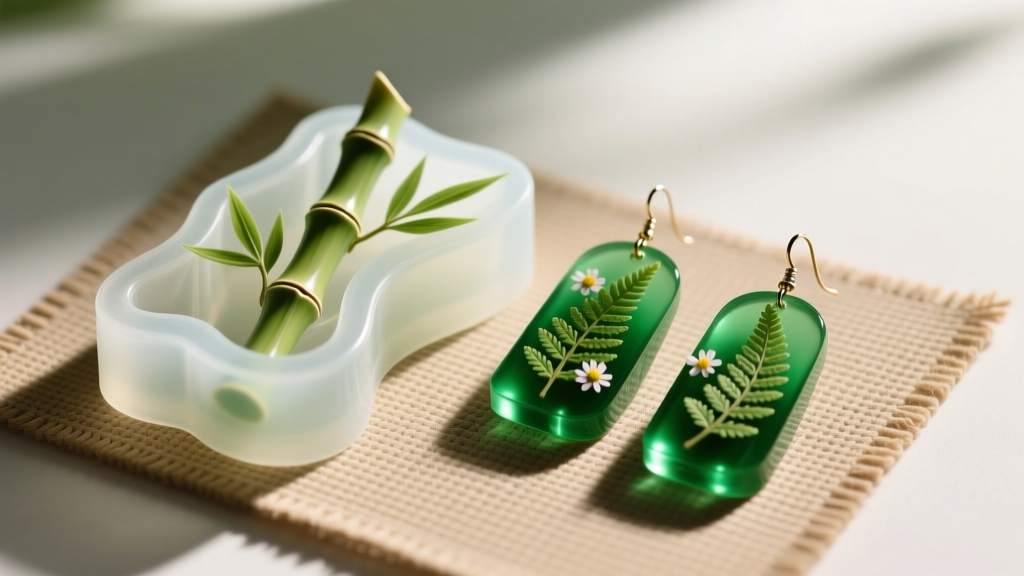
Botanical motifs have dominated independent jewelry design for the past decade, but as we move through 2026, the focus has shifted toward structural flora. Bamboo, representing resilience, flexibility, and elegant verticality, is a standout choice for statement earrings. However, capturing the intricate nodes, delicate leaves, and cylindrical stalks of bamboo requires more than just a generic cavity. A high-quality bamboo earring mold must balance flexibility for demolding with rigidity to maintain the crisp, linear geometry of the plant. Whether you are casting UV resin, pouring slow-cure epoxy, or pressing polymer clay, understanding the engineering behind your mold is the difference between a professional-grade earring and a warped, bubbly disappointment.
Material Science: Platinum-Cure vs. Tin-Cure Silicone
The vast majority of premium casting molds on the market are made from silicone rubber. However, not all silicone is created equal. According to material specialists at Smooth-On, the distinction between platinum-cure and tin-cure silicone is the most critical factor in your purchasing decision.
Platinum-Cure Silicone: This is the gold standard for jewelry making. It offers exceptional tear strength, minimal shrinkage (often less than 0.1%), and a long shelf life. Crucially, platinum-cure silicone is chemically inert once cured, meaning it will not react with the aggressive photoinitiators found in UV resins or the harsh solvents in certain metal clays.
Tin-Cure Silicone: Often found in cheaper, mass-produced molds, tin-cure (or condensation-cure) silicone is more forgiving of moisture during the manufacturing process but suffers from higher shrinkage rates over time. More importantly, UV resin can degrade tin-cure silicone rapidly, causing the mold to become brittle and tear after just a few uses.
Understanding Shore A Hardness
Silicone hardness is measured on the Shore A scale. For a bamboo earring mold, you need a specific balance. Bamboo designs feature deep, narrow grooves (the nodes) and fragile protruding elements (leaves).
- Shore 10A (Very Soft): Excellent for complex undercuts and delicate leaf tips, but lacks the structural rigidity to keep long bamboo stalk earring blanks perfectly straight during resin curing.
- Shore 15A to 20A (Medium-Soft): The ideal sweet spot. It provides enough flexibility to peel back from delicate bamboo nodes without tearing, while maintaining the dimensional stability required for straight earring posts and clean lines.
- Shore 30A+ (Hard): Too rigid for intricate botanical textures. Attempting to demold a delicate bamboo leaf from a 30A mold will almost certainly result in snapped silicone or ruined casts.
Mold Material Comparison Chart
| Material Type | Shore Hardness | Max Temp Limit | Best Medium | Lifespan (Casts) |
|---|---|---|---|---|
| Platinum Silicone | 15A - 20A | 400°F (204°C) | Epoxy, UV Resin, Polymer Clay | 50 - 100+ |
| Tin-Cure Silicone | 10A - 15A | 350°F (176°C) | Epoxy, Plaster, Wax | 15 - 30 |
| Bamboo-Resin Composite | N/A (Rigid) | 150°F (65°C) | Low-Melt Metals, Wax | 200+ |
| Acrylic Press Mold | N/A (Rigid) | 200°F (93°C) | Polymer Clay (No Undercuts) | 500+ |
Design Features: Sprues, Vents, and Earring Post Holes
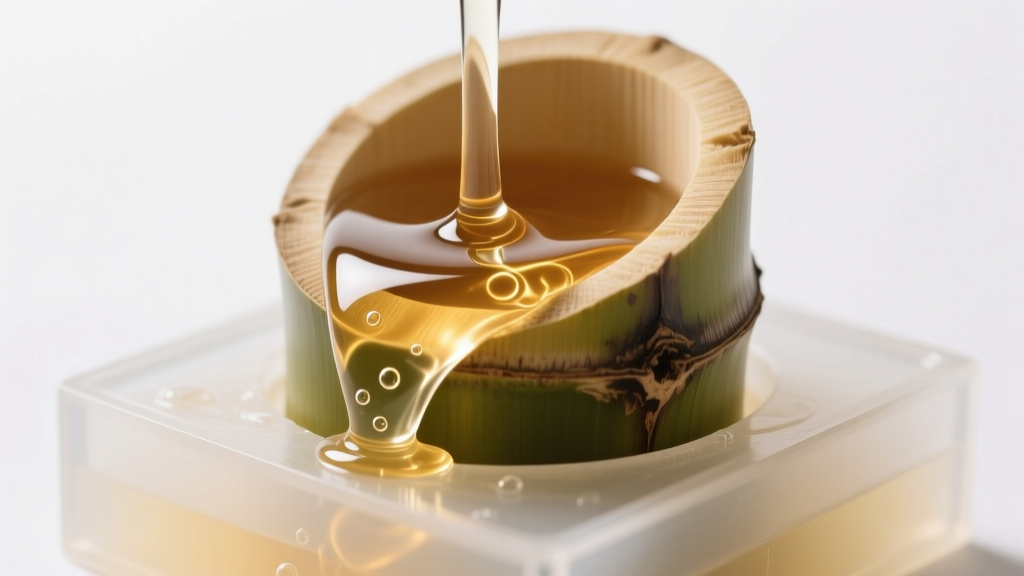
The physical architecture of the mold cavity dictates your success rate. Bamboo is inherently tubular and segmented. When liquid resin flows into a long, narrow bamboo stalk cavity, air gets trapped at the terminal ends (the nodes).
Look for molds that feature micro-vent channels at the extreme tips of the design. These tiny slits allow displaced air to escape, preventing the dreaded 'void bubbles' that ruin the tip of a botanical earring. If your mold lacks vents, you must use a pressure pot (set to 40-60 PSI) or meticulously drag a toothpick through the resin to coax bubbles to the surface, a technique heavily documented by the experts at Resin Obsession.
Additionally, the best earring-specific molds include pre-drilled pilot holes for earring posts. Standard friction-back earring posts typically require a 0.8mm to 1.0mm hole. A mold with integrated 0.9mm guide pins ensures your bamboo stalk earrings are perfectly aligned for gluing or embedding posts, saving you the risk of drilling through a cured, brittle resin piece and causing micro-fractures.
Medium Compatibility: Resin vs. Polymer Clay vs. Metal Clay
Your chosen casting medium will dictate which bamboo earring mold you should buy. The thermal and chemical properties of these materials interact very differently with silicone.
Working with Epoxy and UV Resins
Epoxy resin generates an exothermic reaction (heat) as it cures. High-quality platinum silicone can easily withstand the 140°F to 180°F heat spike of a small earring-sized epoxy pour. UV resin, however, cures via photoinitiators that can sometimes leach into lower-grade silicones, causing a cloudy residue on your mold over time. Always opt for high-gloss, platinum-cure molds for UV resin to ensure your bamboo casts remain crystal clear and glass-like.
Baking Polymer Clay in Silicone
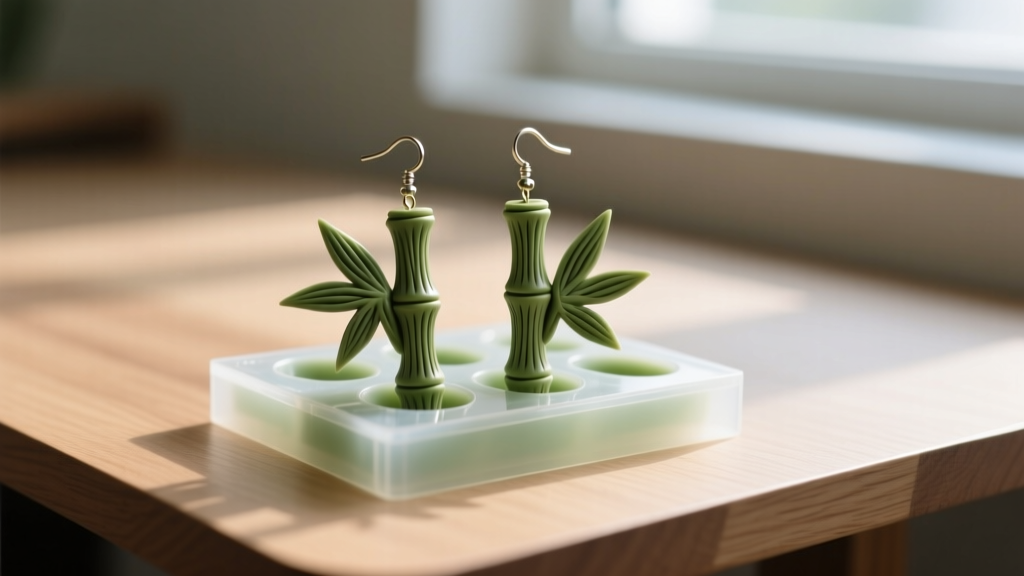
Polymer clay is a favorite for opaque, matte, or gradient bamboo earrings. Brands like Sculpey and Fimo require baking at temperatures between 265°F and 300°F (130°C - 150°C). You must verify that your silicone mold is rated for at least 350°F. Never place a silicone mold on a direct metal baking sheet; always use a glass or ceramic tile to buffer the heat and prevent localized scorching of the silicone, which will permanently ruin the bamboo texture.
Precious Metal Clay (PMC) Shrinkage
If you are pressing silver or copper metal clay into a bamboo mold to create fine jewelry, remember that metal clay shrinks between 10% and 30% during the firing process. A bamboo stalk that looks perfectly proportioned in the mold will become noticeably stubbier after firing. Expert metal clay artists intentionally scale up their mold designs or stretch the clay slightly within the bamboo cavity to compensate for this predictable shrinkage.
Common Failure Modes and Troubleshooting
Even with the perfect mold, technique errors can ruin a batch. Here is how to troubleshoot the most common bamboo earring casting failures:
- Torn Leaf Tips During Demolding: This happens when the silicone is too hard or the user pulls too fast. Fix: Freeze the mold for 10 minutes before demolding polymer clay to harden the clay, or use a mild soap-water solution as a release agent for resin to reduce surface tension.
- Cloudy or Frosted Resin Casts: Often caused by moisture trapped in the mold or using a matte-finish mold cavity. Fix: Ensure the mold is bone-dry before pouring epoxy. If the mold interior has lost its gloss from UV degradation, it is time to retire it.
- Warped Bamboo Stalks: Caused by demolding epoxy before it has reached full structural cure, or using a Shore 10A mold that bends too easily. Fix: Allow epoxy to cure for a full 24-48 hours, and cast the mold on a perfectly level, rigid surface.
Extending the Lifespan of Your Molds
A premium bamboo earring mold is an investment. To maximize its lifespan, never use sharp metal tools to pry out stubborn casts; use a soft silicone spatula or your fingernails. After every use, wash the mold with warm water and a gentle dish soap, avoiding abrasive sponges that will scratch the glossy interior cavity. Store your molds flat, away from direct sunlight, as UV exposure will degrade the silicone polymer chains over time, leading to brittleness and tearing. By treating your molds with care, a single high-quality bamboo earring mold can yield hundreds of flawless, intricate botanical casts for your jewelry line.


