Bamboo Silver Earrings: Material Properties & Care Guide
Discover the metallurgical properties of bamboo silver earrings. Learn how 925 sterling behaves in segmented designs, plus expert cleaning tips.

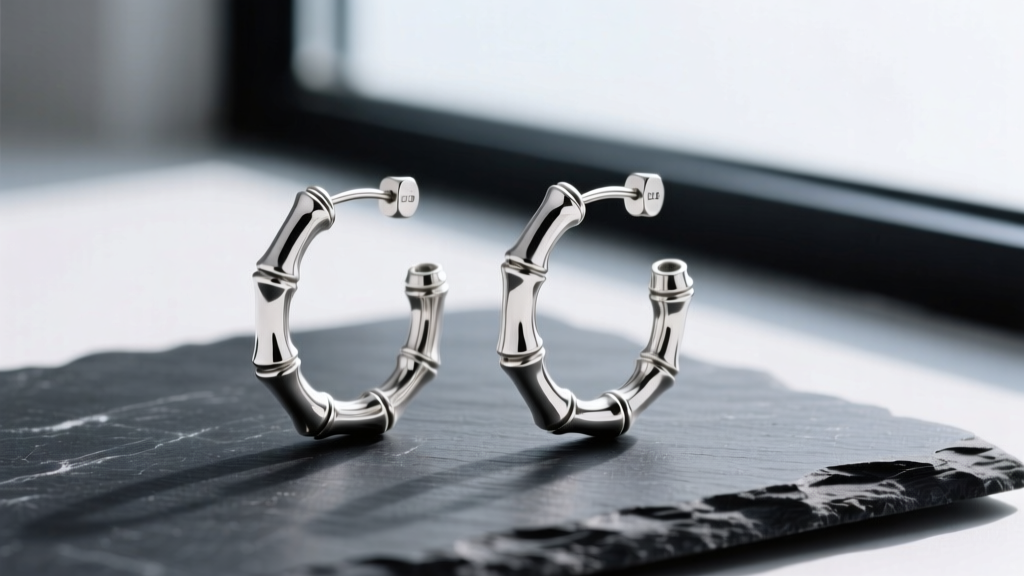
When navigating the vast landscape of ear adornments, bamboo silver earrings occupy a unique intersection of structural artistry and classic metallurgy. Unlike smooth, continuous wire hoops or solid cast studs, bamboo-style earrings feature segmented designs that mimic the natural joints (nodes) of bamboo stalks. While the aesthetic is unmistakable, the material properties of the silver used—almost exclusively 925 sterling silver—behave differently when manipulated into this specific geometric structure. As of 2026, with a renewed market focus on sustainable, long-lasting jewelry, understanding the metallurgical realities, failure modes, and care protocols of segmented silver is essential for both collectors and everyday wearers.
The Metallurgy of 925 Sterling in Bamboo Designs
To understand bamboo silver earrings, we must first look at the base alloy. Pure silver (99.9% fine silver) is far too malleable to hold the crisp, angular ridges of a bamboo node without deforming under the slight pressure of daily wear. Therefore, jewelers rely on 925 sterling silver, an alloy consisting of 92.5% pure silver and 7.5% copper. According to the Gemological Institute of America (GIA), this copper addition increases the Vickers hardness (HV) of the metal from roughly 25 HV (fine silver) to about 65-70 HV (sterling silver).
This increased hardness is what allows the bamboo segments to maintain their structural integrity. However, the copper content is also the root cause of the material's primary vulnerability: oxidation. When the copper in the alloy reacts with sulfur compounds in the air and on the skin, it forms silver sulfide, manifesting as black tarnish. In smooth earrings, this is easily wiped away. In bamboo designs, it becomes a complex maintenance challenge.
Structural Integrity: Hollow vs. Solid Nodes
Bamboo silver earrings are generally manufactured using one of two techniques, which drastically affect their weight, durability, and price point:
- Die-Cast Hollow Bamboo: Created by injecting molten silver into a two-part mold. These earrings are lightweight and affordable but prone to denting if dropped. The nodes are purely aesthetic and offer no structural reinforcement.
- Hand-Forged Solid Wire: Crafted by manipulating solid sterling silver wire (often 10-gauge or 12-gauge for the main hoop) and using specialized pliers or soldering techniques to create the raised nodes. These are significantly heavier, more durable, and command a premium price.
Material Comparison Chart: Bamboo Silver vs. Alternatives
How does the 925 sterling silver used in bamboo earrings compare to other popular materials in the 2026 jewelry market? The table below breaks down the physical properties that dictate how these earrings wear over time.
| Material | Hardness (Vickers) | Tarnish Resistance | Weight (Relative) | Ideal For Bamboo Design? |
|---|---|---|---|---|
| 925 Sterling Silver | 65 - 70 HV | Low (Requires upkeep) | Medium (10.5 g/cm³) | Excellent (Holds detail well) |
| 14k Yellow Gold | 130 - 150 HV | High | Heavy (13.0 g/cm³) | Good, but high cost limits size |
| Grade 23 Titanium | 310 - 330 HV | Extreme (Inert) | Light (4.4 g/cm³) | Poor (Too hard to machine nodes) |
| Brass (Plated) | 60 - 80 HV | Very Low (Corrodes) | Medium (8.5 g/cm³) | Fair, but plating wears off at joints |
As noted by The Silver Institute, silver's natural antimicrobial properties make it an excellent choice for sensitive earlobes, provided the wearer manages the copper oxidation. Titanium, while hypoallergenic and incredibly strong, is notoriously difficult to machine into the intricate, segmented bamboo shapes without massive manufacturing costs, which is why 99% of authentic bamboo earrings on the market remain sterling silver.
The Tarnish Trap: Oxidation in Segmented Crevices
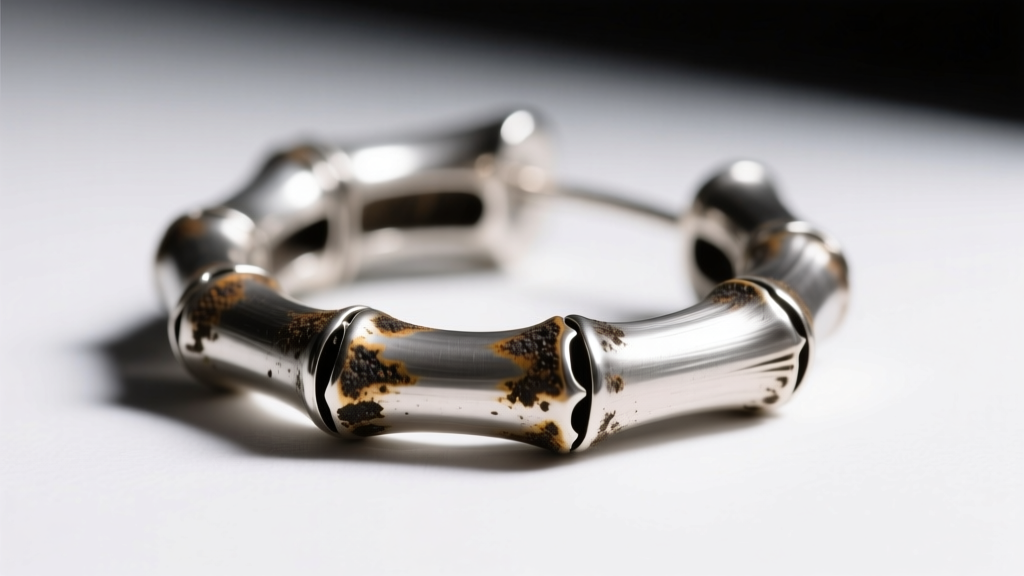
The most critical failure mode of bamboo silver earrings is tarnish accumulation in the micro-crevices of the nodes. Because the design relies on sharp contrasts between the raised, polished segments and the recessed joints, standard polishing cloths cannot reach the recessed areas.
Furthermore, many manufacturers apply an intentional chemical patina (antiquing) to the joints to make the bamboo texture pop. If you use a liquid silver dip (which typically contains thiourea) to clean your earrings, you will strip this intentional oxidation, leaving the earrings looking flat and artificially bright. Once the factory patina is gone, recreating that high-contrast bamboo look requires professional re-antiquing with liver of sulfur.
Gauge Sizing and Ear Lobe Stress
Because bamboo hoops and dangles can be visually and physically heavy, understanding wire gauge is vital for ear lobe health. The standard ear piercing is done at 20-gauge (0.81mm) or 18-gauge (1.02mm).
- The Hook/Post: The part of the earring that passes through the ear should always taper down to 20g or 18g to prevent stretching the fistula.
- The Body: The main bamboo hoop often utilizes much thicker wire, such as 12-gauge (2.05mm) or 10-gauge (2.58mm), to support the weight of the nodes without warping.
Expert Warning: Never force a thick 12-gauge bamboo wire through a standard 20-gauge piercing. If the earring does not feature a properly tapered hook, it will cause micro-tears in the earlobe, leading to scar tissue buildup and eventual migration of the piercing.
Expert Maintenance Protocol for Segmented Silver
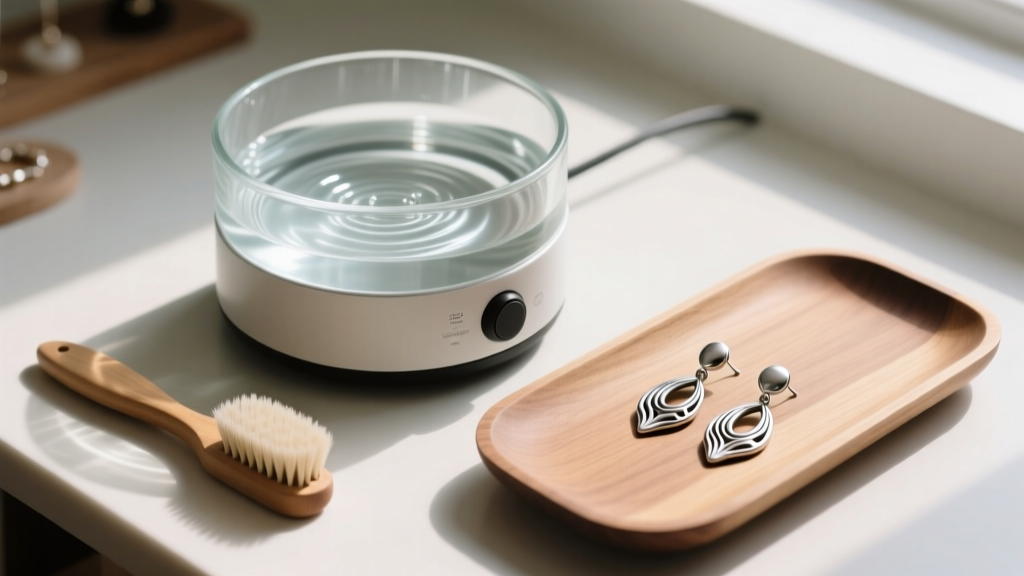
To maintain the structural beauty of bamboo silver earrings without destroying the contrast of the joints, abandon liquid chemical dips and abrasive polishing pastes. Instead, adopt this targeted 2026 maintenance protocol:
- Dry Microfiber Dusting: After every 3-4 wears, use a clean, dry microfiber cloth to wipe down the smooth, raised segments of the bamboo. This removes skin oils and sulfur-rich sweat before they can bond with the copper.
- Targeted Crevice Cleaning: For dirt and grime trapped in the nodes, use an extra-soft baby toothbrush dipped in a mild solution of warm water and phosphate-free dish soap. Gently agitate the joints, then rinse thoroughly and dry immediately with a hair dryer on a cool setting to prevent water spots.
- Ultrasonic Caution: While modern ultrasonic cleaners are excellent for removing debris from bamboo joints, they can loosen the solder points on hollow-cast bamboo earrings. Only use ultrasonic waves on solid, hand-forged wire bamboo designs, and limit the cycle to 90 seconds.
- Anti-Tarnish Storage: Store the earrings in an airtight polyethylene bag with a 3M anti-tarnish strip. The strip absorbs ambient sulfur gases, effectively pausing the oxidation process in those hard-to-reach bamboo nodes.
By respecting the metallurgical realities of 925 sterling silver and adapting your care routine to accommodate the unique geometry of the bamboo design, these earrings can remain a striking, structurally sound staple in your jewelry rotation for decades.


