Barse Earrings: The Beginner Guide to Minimalist Bar Studs
Discover everything about barse earrings. Learn how to style minimalist bar studs, choose the right gauge, and pick hypoallergenic metals for sensitive ears.

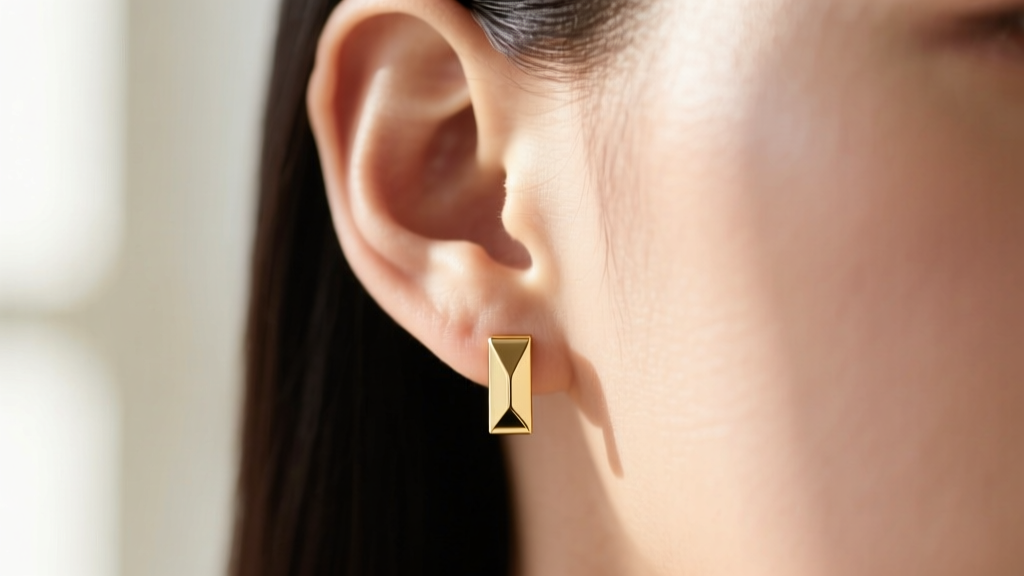
If you have been browsing minimalist jewelry forums or scrolling through curated ear-stacking feeds in 2026, you have likely encountered the term barse earrings. While traditionally known in the industry as linear bar studs or straight barbells, the colloquial term 'barse' has been adopted by modern jewelry enthusiasts to describe these sleek, geometric staples. For beginners, navigating the world of minimalist ear jewelry can feel overwhelming, especially when dealing with precise gauge sizes, material grades, and placement mechanics.
This comprehensive, beginner-friendly explainer will demystify barse earrings. We will cover everything from the exact metallurgical standards you need for sensitive skin to structural troubleshooting, ensuring your linear studs sit perfectly without drooping or snagging.
What Exactly Are Barse Earrings?
At their core, barse earrings are characterized by a straight, linear front face that rests flush against the earlobe or cartilage. Unlike traditional round solitaire studs or dangling drops, these earrings offer a modern, architectural silhouette. They typically range from 5mm (a subtle, petite line) to over 30mm (a bold, statement piece that spans the length of the earlobe).
The appeal of the barse style lies in its versatility. A simple 10mm gold bar can serve as an everyday essential for the office, while a diamond-encrusted or mixed-metal bar can elevate an evening look. Because of their elongated shape, they interact with light differently than circular studs, creating a striking visual line that draws the eye across or down the ear.
The Anatomy of a Linear Bar Stud
Understanding the physical construction of your jewelry is the first step toward a comfortable wearing experience. A standard barse earring consists of three main components:
- The Front Plate (The Bar): The visible linear element. High-quality versions are cast or machined from a single piece of metal to prevent snapping at the solder joint.
- The Post: The wire that passes through the piercing. For bar earrings, the post is usually soldered at a 90-degree angle to the center or one end of the bar.
-
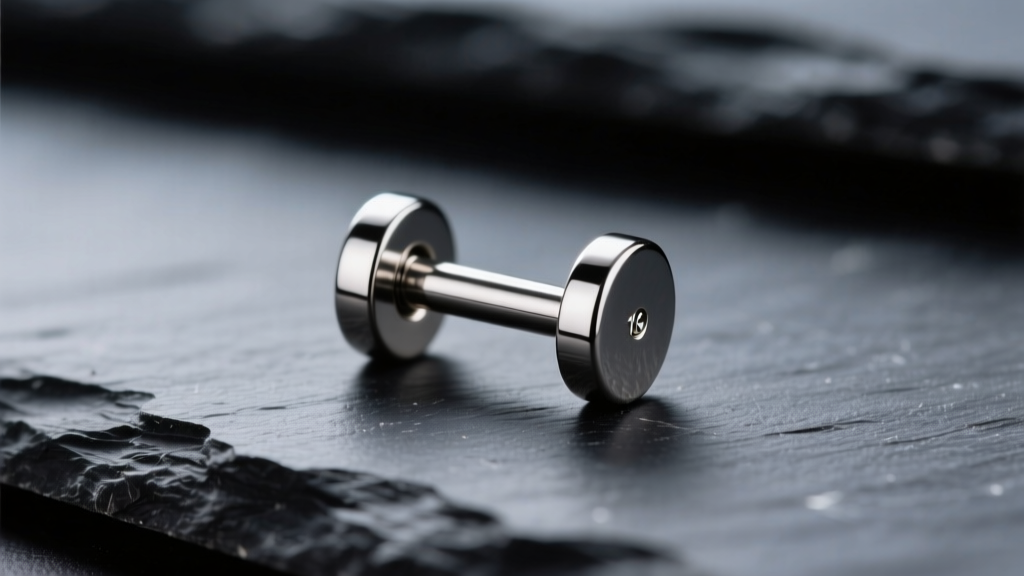 The Backing Mechanism: This is where many beginners make a critical error. Traditional butterfly friction backs often fail to support the horizontal weight distribution of a long bar, causing the earring to droop. For barse earrings, upgrading to a flat-back labret or a screw-back is highly recommended to maintain a crisp, horizontal line.
Material Science: Choosing the Right Metal
When shopping for barse earrings, the metal composition is non-negotiable, especially if you are prone to contact dermatitis or have freshly healed piercings. According to the Association of Professional Piercers (APP), only specific grades of metal are considered safe for long-term wear in the body.
| Material Grade | Nickel Content | Estimated Price Range (2026) | Best Use Case |
|---|---|---|---|
| Implant-Grade Titanium (ASTM F136) | 0% (Nickel-Free) | $25 - $60 | Fresh piercings, highly sensitive skin, cartilage placements |
| 14k Solid Gold (Yellow/White/Rose) | Trace (Alloy dependent) | $120 - $350 | Everyday wear, healed lobes, luxury stacking |
| 18k Solid Gold | Trace | $200 - $500+ | Healed piercings, premium investment pieces |
| 316L Surgical Stainless Steel | Contains Nickel | $10 - $25 | Fully healed, non-sensitive lobes only (Avoid for cartilage) |
As noted by the Gemological Institute of America (GIA), when purchasing gold barse earrings, always look for nickel-free alloys, particularly in white gold, which is often rhodium-plated over a nickel-heavy base metal. If you have a known nickel allergy, stick strictly to ASTM F136 titanium or high-palladium white gold.
Gauge Sizes and Lengths: A Precision Guide
Barse earrings are not one-size-fits-all. The 'gauge' refers to the thickness of the post, while the 'length' refers to the visible bar. Getting these wrong can lead to tearing, migration, or an awkward fit.
Standard Gauge Thicknesses
- 20-Gauge (0.81mm): The standard for basic, lightweight lobe piercings. Best for delicate, minimalist 5mm-10mm barse studs.
- 18-Gauge (1.02mm): A slightly thicker, more secure option. Ideal for cartilage (helix) placements and medium-weight bars.
- 16-Gauge (1.29mm): The standard for professional body piercings. If your barse earring is heavy or spans over 15mm, a 16G post provides the necessary structural integrity to prevent the 'cheese-cutter effect' (where thin wire slowly slices through the tissue).
Choosing the Right Bar Length
The length of your barse earring should complement your ear anatomy. A 25mm bar might look incredibly chic on a larger, elongated earlobe but could hang off the edge of a petite lobe, creating an unbalanced look. Always measure your lobe from the piercing hole to the edge of the ear before purchasing statement-length linear studs.
Styling Frameworks for Different Face Shapes
Because barse earrings create distinct geometric lines, they can be used strategically to balance your facial proportions.
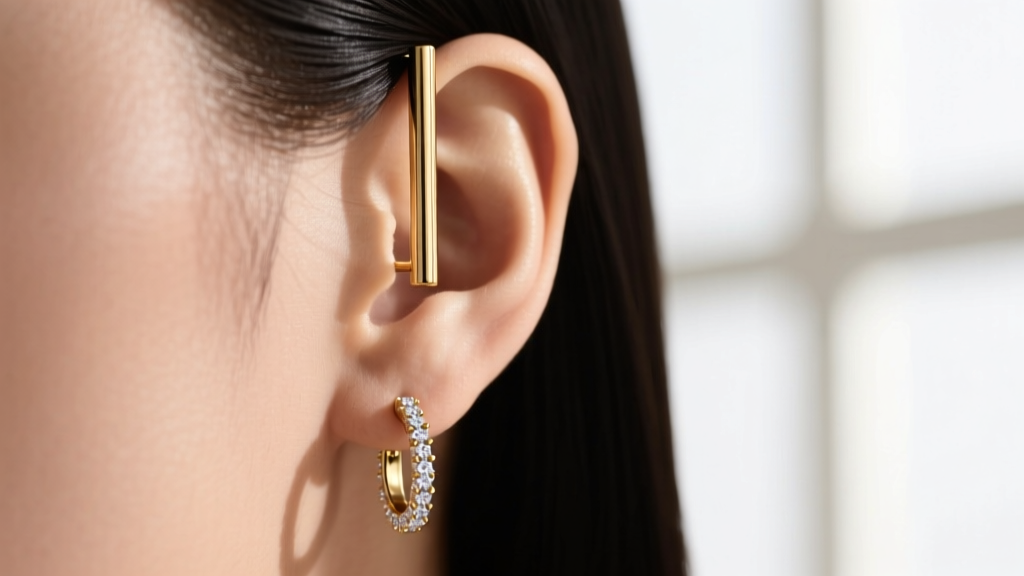
- Round Faces: Opt for vertical barse earrings. A 15mm vertical bar placed in the standard lobe piercing creates an optical illusion that elongates the face and jawline.
- Square Faces: Choose horizontal placements or slightly curved bar designs. Horizontal lines help soften strong, angular jawlines and add a touch of geometric harmony.
- Heart-Shaped Faces: Medium-length horizontal bars (10mm-12mm) draw the eye outward, balancing a narrower chin with wider cheekbones.
- Oval Faces: You have the ultimate versatility. Experiment with asymmetrical stacking—perhaps a horizontal bar on the left ear and a vertical bar on the right for a modern, editorial look.
Pro Styling Tip: When building an ear stack around a statement barse earring, keep the surrounding jewelry minimal. Pair a bold 20mm gold bar with a simple 3mm titanium flat-back stud in the upper lobe and a seamless, unadorned huggie hoop in the mid-helix to let the linear geometry shine.
Troubleshooting Common Beginner Mistakes
Even with the perfect pair of barse earrings, beginners often run into mechanical issues. Here is how to solve the most common problems:
The 'Drooping' Bar
The Problem: Your horizontal bar refuses to sit straight, tilting downward at one end.
The Cause: Standard butterfly backs do not provide a wide enough base of support against the skin, allowing the heavy front plate to pivot on the post.
The Solution: Swap the butterfly back for a silicone o-ring or, ideally, purchase barse earrings that utilize a flat-back (labret) post. The flat disc rests flush against the back of the ear, completely eliminating the pivot point.
Snagging on Hair and Sweaters
The Problem: The sharp corners of the bar catch on your clothing or hair.
The Cause: Poor finishing on the manufacturing end, or a rectangular bar with 90-degree unmilled edges.
The Solution: Look for 'bezel-set' ends or 'high-polish rounded' edges. High-quality jewelers will slightly bevel the edges of the bar to ensure it is completely snag-free.
Daily Care and Maintenance
To keep your barse earrings looking pristine and to protect your piercing, establish a consistent cleaning routine. Minimalist bars can accumulate sebum and dead skin cells at the junction where the post meets the bar.
- Daily Wipe: Use a microfiber cloth to gently polish the bar each evening to remove oils and lotions.
- Weekly Deep Clean: Soak the earrings in a small cup of warm water with a few drops of mild, fragrance-free castile soap for 5 minutes. Use a soft-bristled baby toothbrush to gently scrub the post junction.
- Piercing Hygiene: Spray the front and back of your piercing with a sterile 0.9% sodium chloride wound wash. Avoid harsh chemicals like rubbing alcohol or hydrogen peroxide, which can degrade both your skin barrier and certain metal alloys over time.
By understanding the precise mechanics, materials, and styling nuances of barse earrings, you can confidently elevate your jewelry collection. Whether you are opting for a utilitarian titanium straight barbell or a luxurious 18k gold linear stud, prioritizing structural integrity and anatomical fit will ensure your minimalist jewelry looks intentional, elegant, and perfectly placed.


