Butter Earrings: A Material & Finish Comparison Guide
Discover the material properties of butter earrings. Compare buttery satin gold finishes to polished and hammered metals for lasting wear.

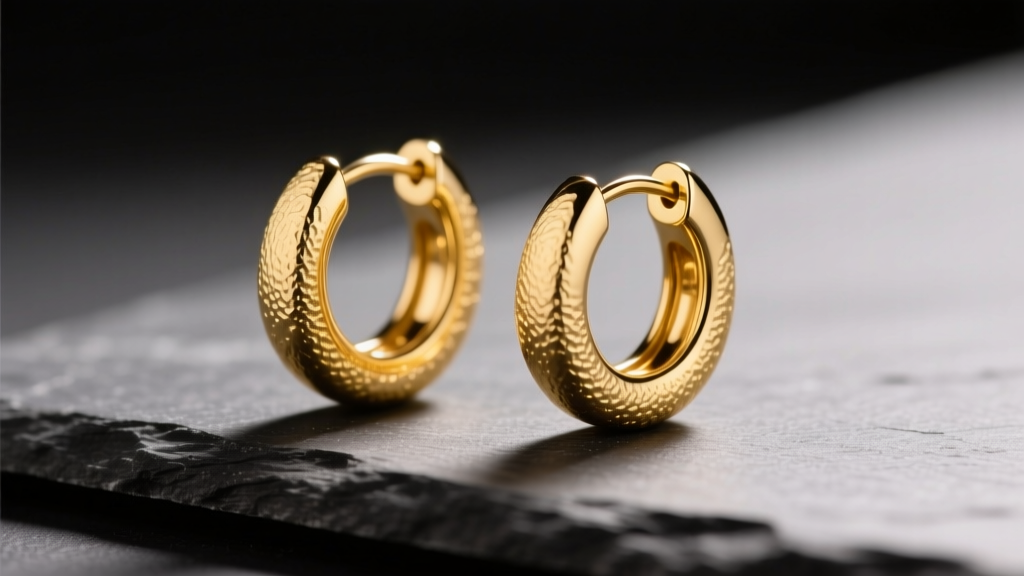
In the evolving landscape of fine jewelry, the hyper-reflective mirror polish that dominated the early 2020s has given way to softer, more organic textures. As we navigate 2026, 'butter earrings' have emerged as a highly sought-after category. But what exactly does this term mean in metallurgical and design contexts? Rather than referring to a specific shape or novelty design, 'butter' describes a highly specific surface finish and color profile—a warm, satin-matte luster on yellow gold that mimics the rich, soft, and diffuse glow of fresh butter.
For collectors and everyday wearers alike, understanding the material properties of butter earrings is crucial. The satin finish not only alters the visual weight of the metal but also changes how the earrings interact with skin oils, environmental abrasives, and daily wear. This guide breaks down the metallurgy, durability, and care requirements of the butter finish compared to traditional gold treatments.
Defining the Butter Finish: Satin vs. Matte vs. Brushed
To understand butter earrings, we must first distinguish between similar surface treatments. The 'butter' effect is achieved through a very specific type of satin finishing. Unlike a harsh, directional 'brushed' finish (which leaves visible, linear scratch patterns) or a completely flat 'matte' finish (often achieved via sandblasting for a chalky, non-reflective look), the butter finish relies on fine-grit abrasive polishing compounds applied in a multi-directional or circular motion.
This technique creates microscopic peaks and valleys on the gold's surface. When light hits these micro-textures, it scatters softly rather than reflecting directly back at the eye. The result is a warm, velvety glow. Jewelers typically achieve this using specialized Scotch-Brite finishing wheels or glass-bead blasting at low pressure, followed by a gentle hand-burnishing with a soft agate tool to bring out the underlying warmth of the gold alloy without creating a mirror shine.
The Metallurgy of Butter Gold: 14k vs. 18k Alloys
The 'butter' aesthetic relies heavily on the underlying gold alloy. Pure 24k gold is naturally a deep, almost orange-yellow, but it is too soft for everyday earrings. Therefore, the butter finish is almost exclusively applied to 14k or 18k yellow gold alloys. According to the Gemological Institute of America (GIA), the specific ratio of copper to silver in the alloy dictates the warmth of the final piece.
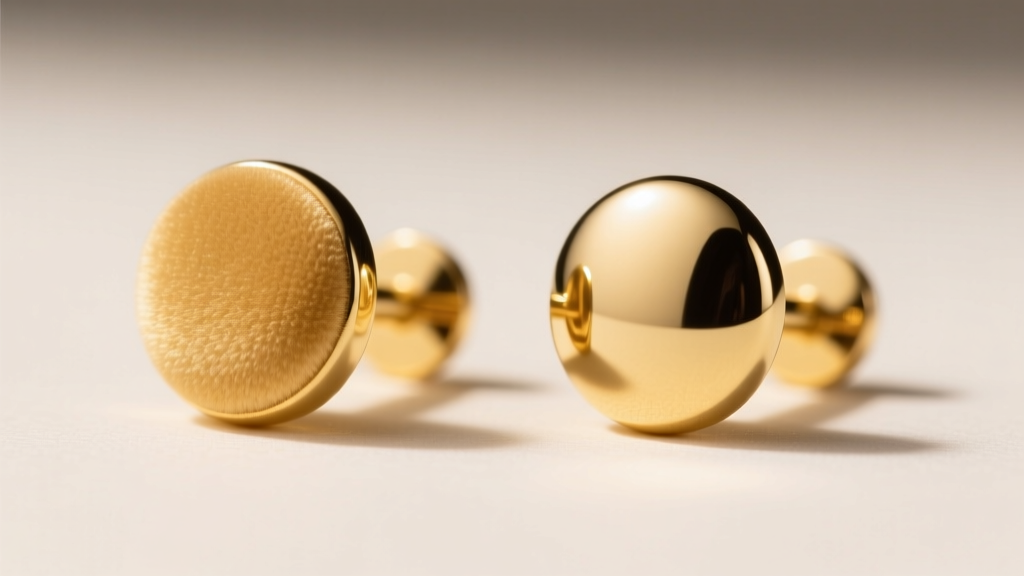
- 14k Butter Gold (58.5% Pure Gold): This is the industry standard for durability. To achieve the 'butter' warmth, metallurgists use a higher silver-to-copper ratio than standard yellow gold, preventing the alloy from leaning too far into rose or green-gold territory. The resulting color is a soft, creamy yellow that takes exceptionally well to satin finishing.
- 18k Butter Gold (75% Pure Gold): With a higher pure gold content, 18k alloys naturally possess a richer, deeper yellow hue. When the butter finish is applied to 18k gold, the result is a luxuriously warm, honey-like glow. However, 18k is noticeably softer, making the microscopic textures of the satin finish more susceptible to wearing down over years of heavy friction.
Finish Comparison: Butter Satin vs. High Polish vs. Hammered
When selecting gold earrings, the surface treatment dictates not just the style, but the long-term maintenance and scratch visibility. Below is a comparative analysis of the most common finishes found in modern gold earrings.
| Finish Type | Light Reflection | Scratch Concealment | Maintenance Risk | Avg. Price (14k Huggies) |
|---|---|---|---|---|
| Butter / Satin | Soft, Diffuse, Warm | Excellent (Hides micro-scratches) | High (Polishing ruins finish) | $220 - $380 |
| High Polish | Mirror-like, Sharp | Poor (Shows every micro-scratch) | Low (Can be easily re-polished) | $180 - $300 |
| Hammered | Faceted, Sparkling | Good (Dents hide wear) | Medium (Hard to re-finish at home) | $250 - $450 |
| Diamond-Cut | Highly Reflective | Poor (Catches on fabrics) | High (Prone to snagging/breaking) | $300 - $500 |
As the data illustrates, butter earrings offer superior scratch concealment. Because the surface is already intentionally textured at a microscopic level, the inevitable micro-scratches from daily wear simply blend into the existing satin pattern. In contrast, a single scratch on a high-polish hoop is immediately visible due to the disruption of the mirror reflection.
Practical Wearability: Gauge Sizes and Ear Lobe Health
Material properties extend beyond the surface finish to the structural integrity of the earring post and wire. When purchasing butter-finish hoops, huggies, or heavy studs, the gauge (thickness) of the metal piercing the ear is a critical factor for long-term lobe health.
The 18-Gauge Sweet Spot for Huggies and Studs
Most mass-market earrings utilize 20-gauge (0.81mm) or even 22-gauge (0.64mm) posts to save on gold weight and manufacturing costs. However, for butter-finish huggies—which often feature a thicker, more substantial tubular design—an 18-gauge (1.02mm) post or wire is highly recommended.
'The cheese-cutter effect is a real concern with heavy, textured earrings. An 18-gauge post distributes the weight of a solid 14k gold huggie much more evenly across the earlobe's fistula, preventing migration and tearing over time,' notes a 2025 report on body jewelry ergonomics.
Furthermore, if you are wearing butter-finish clickers or studs in cartilage piercings (like the helix or tragus), always opt for internally threaded or threadless (push-pin) 18g or 16g posts. Externally threaded posts can harbor bacteria in the threads and cause micro-tears in the delicate cartilage tissue during insertion.
Care and Maintenance: How to Avoid Ruining the Butter Finish
The most common failure mode for butter earrings is improper cleaning. Because owners are accustomed to caring for high-polish jewelry, they often apply the same methods to satin finishes, resulting in irreversible damage.
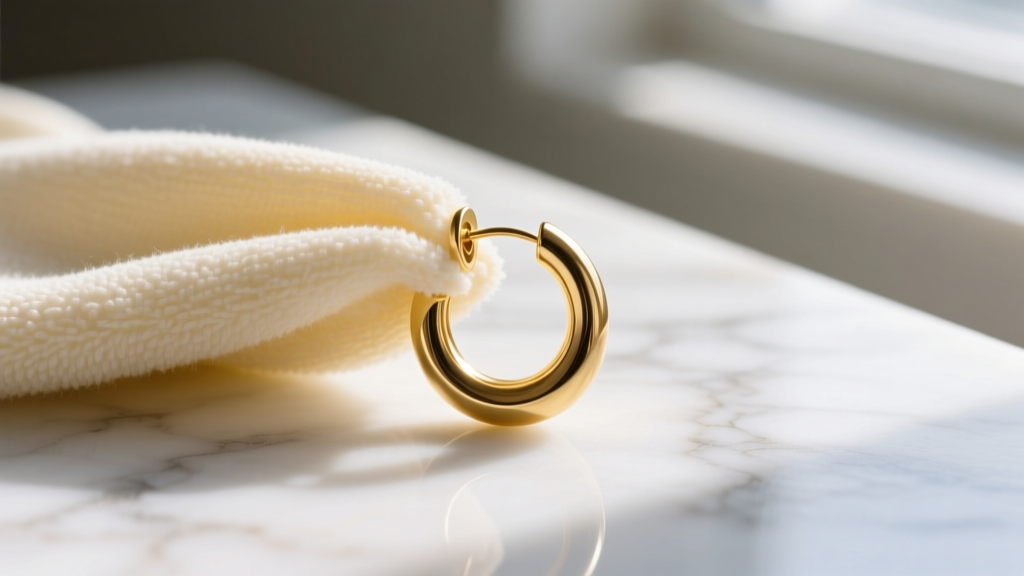
The Golden Rule of Butter Gold: Never use a jeweler's rouge cloth, a Sunshine cloth, or any abrasive polishing compound on butter earrings. These cloths contain micro-abrasives designed to strip away tarnish and burnish metal to a high shine. If you use a polishing cloth on a butter-finish earring, you will literally erase the microscopic textures, leaving you with a patchy, semi-shiny earring that has lost its signature soft glow.
According to care guidelines from Jewelers of America, the safest way to clean textured and satin gold is through gentle chemical and mechanical loosening of oils, rather than abrasion:
- Fill a small bowl with warm water and a few drops of mild, lotion-free dish soap.
- Let the earrings soak for 5 to 10 minutes to break down sebum and skincare residue.
- Use a brand-new, ultra-soft baby toothbrush to gently sweep away debris from the clasp mechanisms and post.
- Rinse thoroughly under lukewarm tap water and pat dry with a lint-free microfiber cloth. Do not rub vigorously.
Final Verdict: Are Butter Earrings Worth the Investment?
Butter earrings represent a sophisticated intersection of metallurgy and modern aesthetic preferences. They are particularly flattering on olive and warm skin undertones, as the diffuse light reflection prevents the harsh, brassy contrast that high-polish yellow gold can sometimes create. While they require a paradigm shift in how you clean and maintain your jewelry, the trade-off is a highly durable, scratch-concealing finish that ages gracefully. For those seeking a luxurious, understated everyday staple in 2026, the butter finish remains an unparalleled choice in fine ear styling.