How to Clean and Care for Squishmallow Earrings Safely
Learn how to safely clean and maintain your Squishmallow earrings. Expert tips for acrylic, enamel, and clay novelty jewelry care.
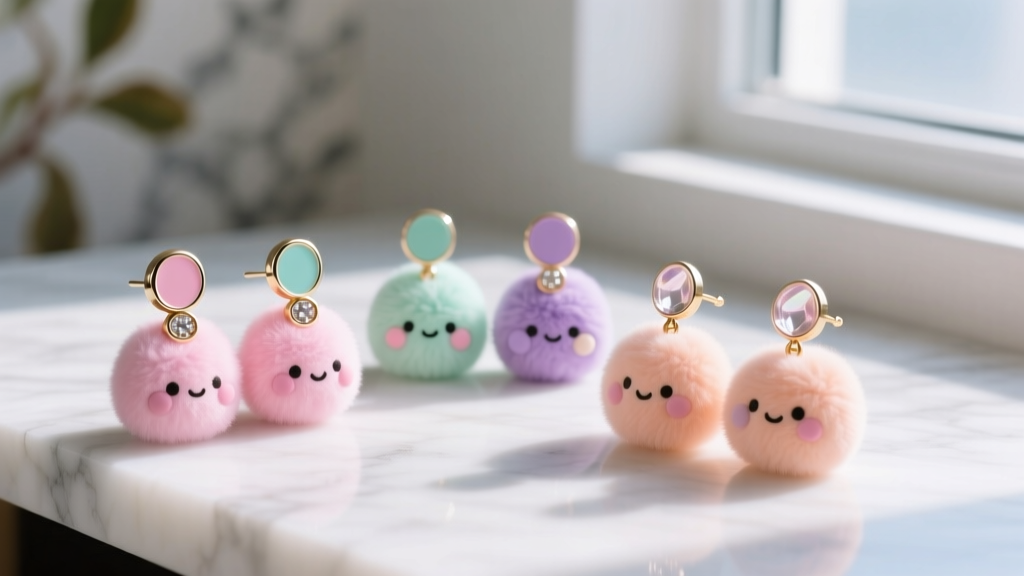
The Unique Anatomy of Squishmallow Earrings
Squishmallow earrings have taken the novelty jewelry market by storm, offering fans a way to wear their favorite plush characters. However, caring for these specific accessories requires a nuanced understanding of mixed-material jewelry. Unlike traditional fine jewelry crafted from solid gold or diamonds, Squishmallow earrings are typically constructed from a combination of delicate substrates and metal hardware. To properly maintain them, you must first identify the primary material of the character charm.
Most Squishmallow earrings on the market fall into three distinct manufacturing categories: laser-cut cast acrylic with UV-printed faces, hard or soft enamel pinned to a metal base, and hand-sculpted polymer clay sealed with a UV resin dome. Each of these materials reacts differently to moisture, friction, and chemical cleaners. The metal hardware—usually a 20-gauge (0.8mm) or 22-gauge (0.6mm) post made of 316L surgical steel or gold-plated brass—requires its own targeted hygiene protocol to prevent contact dermatitis and tarnish.
What NOT to Do: Common Cleaning Mistakes
Because these earrings feature printed faces and painted details, treating them like standard gemstone jewelry will result in irreversible damage. According to guidelines on soft and organic materials from the Gemological Institute of America (GIA), porous and chemically treated surfaces require exceptionally mild cleaning agents. Here are the most common mistakes collectors make:
- Using Isopropyl Alcohol on the Charm: While alcohol is great for sanitizing metal, applying it to acrylic or UV-resin-coated polymer clay will break down the photoinitiators in the resin. This causes clouding, micro-fractures, and can completely strip the UV-printed facial details off acrylic blanks.
- Scrubbing with Toothpaste or Baking Soda: These are highly abrasive. Acrylic has a Mohs hardness of roughly 3, making it softer than a standard penny. Abrasive pastes will leave a web of micro-scratches that dull the glossy finish and trap future dirt.
- Ammonia-Based Glass Cleaners: Many people assume acrylic can be cleaned like a window. Ammonia causes 'crazing' in cast acrylic—a network of tiny internal cracks that compromises the structural integrity of the earring.
The Danger of Ultrasonic Cleaners
Never place novelty character earrings in an ultrasonic jewelry cleaner. The high-frequency sound waves create microscopic cavitation bubbles that implode with intense localized pressure. While this safely blasts dirt off a solid diamond, it will easily shatter polymer clay, chip soft enamel from its metal dams, and peel the adhesive backing off flat-back acrylic charms.
Step-by-Step Cleaning Routine for Mixed Materials
To safely clean your Squishmallow earrings without damaging the character design or the metal post, follow this specialized mixed-material protocol. This method separates the hygiene needs of the skin-contact metal from the delicate visual elements of the charm.
Step 1: Dry Dusting the Charm
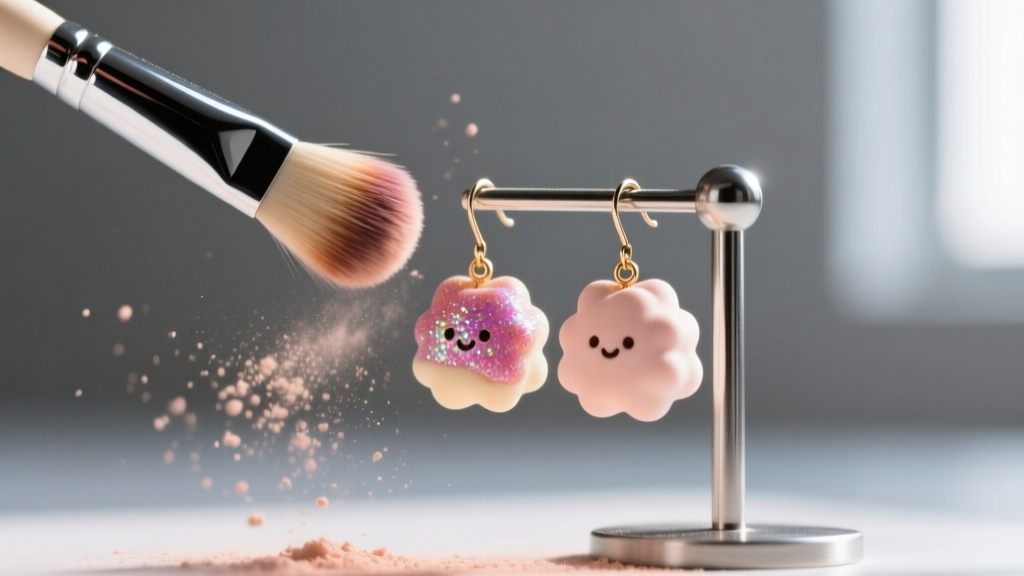
Before introducing any moisture, use a clean, soft-bristled makeup brush (like a fluffy eyeshadow blending brush) to gently sweep away loose dust, dead skin cells, and makeup powder from the surface of the earring. Pay special attention to the edges where the charm meets the metal post. For soft enamel earrings, where the metal lines sit higher than the colored enamel fill, use a soft infant toothbrush to gently dislodge debris trapped in the recessed 'trenches'.
Step 2: The Damp Wipe (Acrylic and Clay Only)
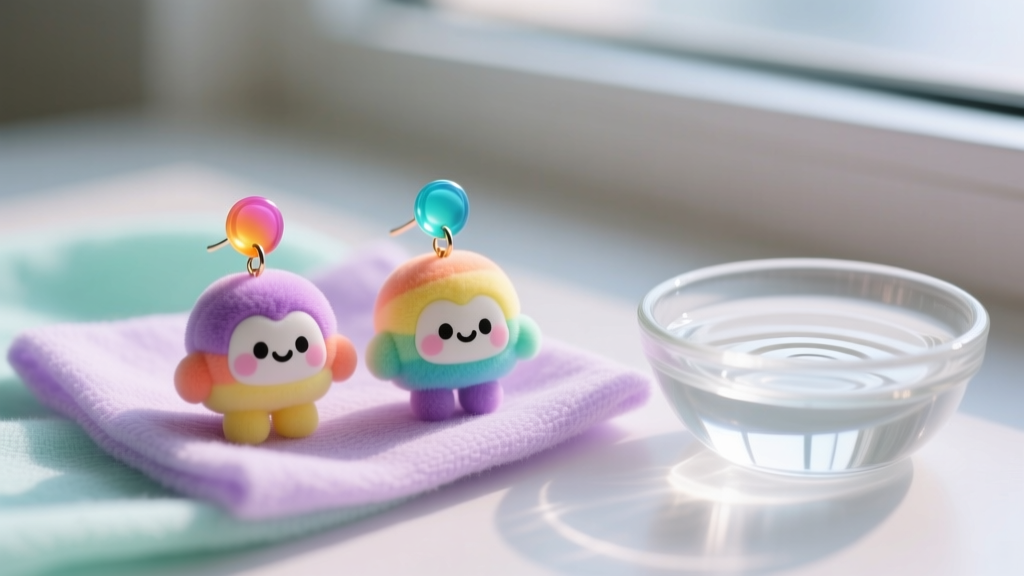
Dampen a lint-free microfiber cloth with distilled water. Tap water contains trace minerals and chlorine that can leave water spots on glossy UV resin domes. Gently wipe the face and edges of the acrylic or clay charm. Do not soak the earring. If there is stubborn hairspray or lotion residue, add a single drop of mild, fragrance-free dish soap (like Dawn) to the damp cloth, lather it slightly, and wipe the surface, followed immediately by a rinse with a cloth dampened only with distilled water.
Step 3: Sanitizing the Metal Hardware
The metal post and the earring backing are the only parts that should be exposed to harsh sanitizers. Soak a cotton swab in 70% isopropyl alcohol and thoroughly swab the metal post, the butterfly back, and the earring clasp. According to Jewelers of America, regular sanitization of earring posts is critical for preventing localized bacterial infections and removing sebum buildup.
Pro Tip: The tiny crevice inside a standard metal butterfly back is a magnet for sebum and dead skin. Use a soft interdental brush or a dental floss threader dipped in alcohol to clean inside the barrel of the earring back where a cotton swab cannot reach.
Material-Specific Care Chart
Use this quick-reference table to identify your Squishmallow earring type and apply the correct care parameters.
| Material Type | Finish / Topcoat | Safe Cleaners | Strictly Avoid | Common Failure Mode |
|---|---|---|---|---|
| Laser-Cut Acrylic | UV Printed / Glossy Edge | Distilled water, mild soap | Alcohol, Ammonia, Ultrasonic | Edge crazing, face rubbing off |
| Hard Enamel | Metal-plated brass/zinc | Mild soap, soft infant brush | Hard bristles, bleach | Metal plating wearing thin |
| Soft Enamel | Epoxy dome (sometimes) | Dry brushing, damp cloth | Soaking in waterEnamel discoloration, rusting | |
| Polymer Clay | UV Resin or Polyurethane | Dry cloth, minimal moisture | Alcohol, essential oils | Resin yellowing, clay cracking |
Maintaining the Metal Hardware (Posts and Hooks)
The longevity of your Squishmallow earrings heavily depends on the integrity of the metal hardware. Novelty earrings often utilize 20-gauge (0.81mm) posts to accommodate standard earring holes, though some heavier acrylic pieces may use a thicker 18-gauge (1.02mm) post for structural support.
Dealing with Sebum Buildup and Tarnish
Sebum, the natural oil produced by your skin, is slightly acidic. When left on gold-plated brass or zinc alloy posts, this acid slowly eats through the thin micron-layer of gold plating, exposing the base metal. This not only causes the post to tarnish and turn black but can also trigger nickel allergies if the base alloy contains nickel. To prevent this, always wipe the metal posts with a dry microfiber cloth immediately after removing the earrings. If the gold plating has already worn off and the post is causing irritation, you can coat the post in a thin layer of clear, non-toxic nail polish to create a hypoallergenic barrier, or have a local jeweler swap the post for a 316L implant-grade titanium replacement.
Proper Storage to Prevent Scratches and UV Yellowing
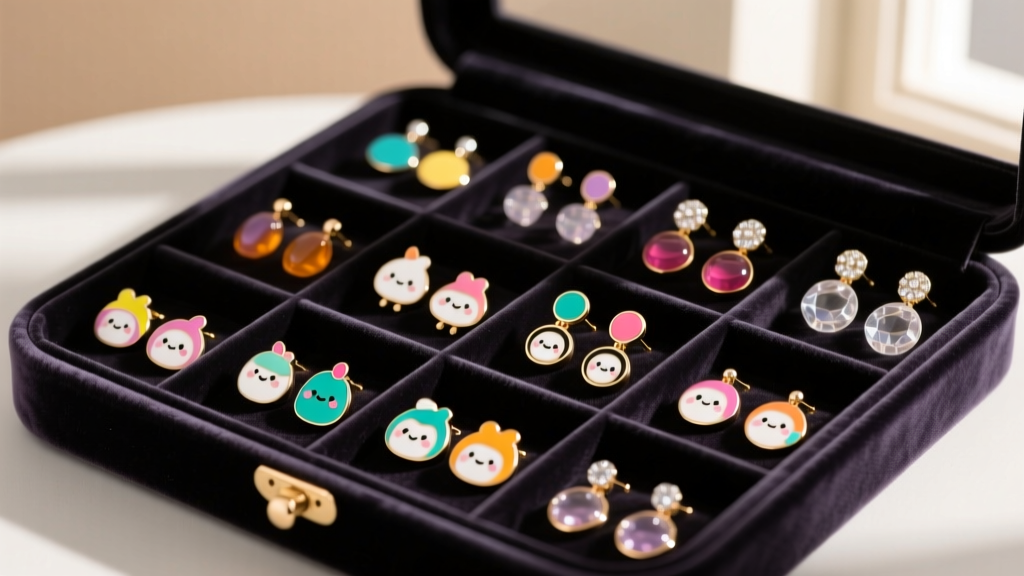
How you store your Squishmallow earrings is just as important as how you clean them. Polymer clay and acrylic charms sealed with UV resin are highly susceptible to ultraviolet light degradation. Prolonged exposure to direct sunlight will trigger a photochemical reaction in the resin, causing it to yellow and become brittle over time.
Store your collection in a closed, velvet-lined jewelry organizer or an opaque acrylic drawer. Never toss multiple pairs into a single communal jewelry box; the metal posts of one pair will easily scratch the glossy acrylic face of another. Utilize individual padded slots or small ziplock bags made of anti-tarnish polyethylene to keep the pieces separated and protected from ambient humidity, which can cause unsealed polymer clay to absorb moisture and warp.
Frequently Asked Questions
Can I wear my acrylic Squishmallow earrings in the shower?
No. While brief exposure to water during cleaning is safe, prolonged exposure to hot shower water and steam can weaken the cyanoacrylate or UV adhesive used to bond the acrylic charm to the metal post pad. Heat and moisture will eventually cause the charm to detach and slide off the post.
How do I remove sticky residue from the back of an enamel earring?
If your enamel earring has a sticky adhesive pad used to secure the post, and it has started to ooze or attract lint, apply a tiny drop of citrus-based adhesive remover (like Goo Gone) to a cotton swab. Carefully dab the sticky area, avoiding the enamel face. Wipe clean with a damp cloth and allow it to dry completely before wearing.
My polymer clay earring got stained with makeup. How do I fix it?
Unsealed or poorly sealed polymer clay is highly porous and will absorb liquid foundation or bronzer. If your earring is sealed with a resin dome, gently buff the stain with a microfiber cloth and a drop of mild soap. If the clay is unsealed, the stain is likely permanent; however, you can carefully apply a fresh coat of jewelry-grade polyurethane varnish over the stained area to seal it and restore a uniform glossy finish.


