How to Style, Clean, and Maintain Golden Leaf Earrings
Master the art of wearing golden leaf earrings. Learn step-by-step styling tips for face shapes, gold purity grades, and safe cleaning methods.

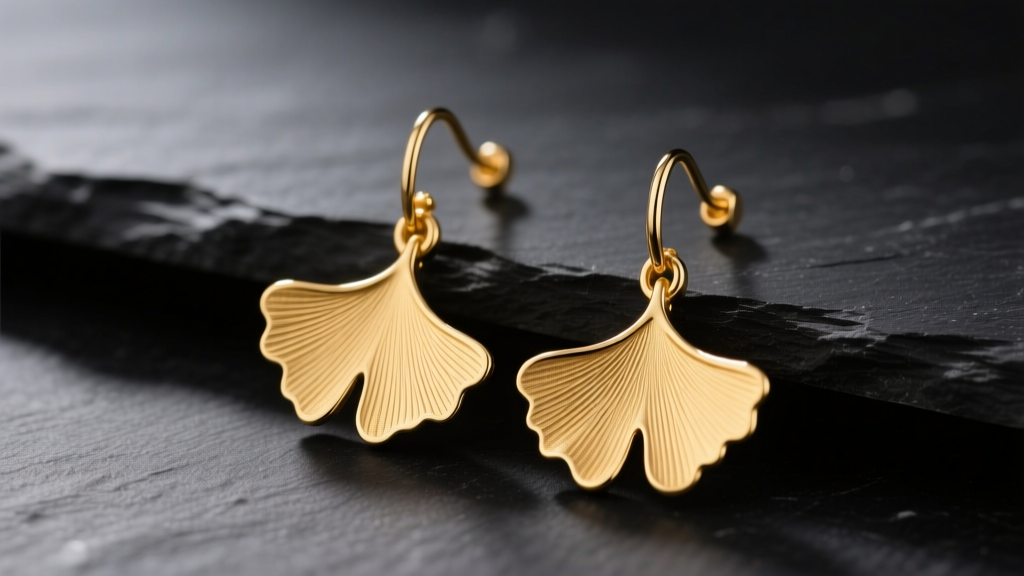
The Enduring Appeal of Botanical Jewelry in 2026
As we navigate the jewelry trends of 2026, the "quiet luxury" movement has seamlessly merged with "botanical core," making nature-inspired designs more relevant than ever. Among these, golden leaf earrings stand out as a versatile staple. Whether you are drawn to the delicate veins of a fern stud, the bold silhouette of a monstera drop, or the intricate texture of a hammered oak leaf, these pieces offer a timeless connection to nature. However, the intricate crevices and delicate stems that make these earrings beautiful also present unique challenges in styling, wearability, and maintenance. This comprehensive, step-by-step guide will teach you how to select the right metallurgy for your lifestyle, style them flawlessly for your face shape, and clean them without damaging their artisanal textures.
Decoding Gold Purity and Manufacturing Methods
Before you can properly care for golden leaf earrings, you must understand what they are made of. The structural integrity of a leaf earring heavily depends on its gold purity and manufacturing technique. According to the Gemological Institute of America (GIA), pure 24k gold is far too soft for intricate botanical designs; a delicate leaf stem crafted in 24k would bend under the weight of its own foliage. Therefore, alloying is essential.
| Gold Type | Composition | Best Leaf Style | Durability & Care |
|---|---|---|---|
| 14k Solid Gold | 58.5% Gold, 41.5% Alloy | Intricate Veins, Wire-Wrapped Stems | Highly durable; resists bending. Safe for daily wear and ultrasonic cleaning. |
| 18k Solid Gold | 75% Gold, 25% Alloy | High-Polish, Smooth Silhouette Leaves | Rich color but softer. Prone to micro-scratches on matte finishes. Requires gentle hand-washing. |
| Gold Vermeil | Min. 2.5µm 10k+ Gold over Sterling Silver | Budget Botanicals, Statement Dangles | Moderate durability. Avoid harsh chemicals that can strip the gold layer from the textured crevices. |
| Gold Plated (Brass) | Flash-plated (under 0.5µm) over Brass | Fashion Trends, Clip-Ons | Low durability. Sweat trapped in leaf veins will quickly cause the brass base to oxidize and turn skin green. |
Manufacturing methods also dictate the earring's fragility. Die-striking compresses gold sheets under immense pressure, resulting in incredibly sharp, defined leaf veins and a dense molecular structure that resists denting. Casting, while excellent for 3D, sculptural leaves (like curled magnolia petals), creates a slightly more porous metal that can trap oils and lotions deep within the design.
Step-by-Step Guide: Styling Golden Leaf Earrings by Face Shape
Styling botanical jewelry requires balancing the organic, often asymmetrical lines of the leaf against the geometric structure of your face. Here is how to select the perfect golden leaf earrings for your specific profile.
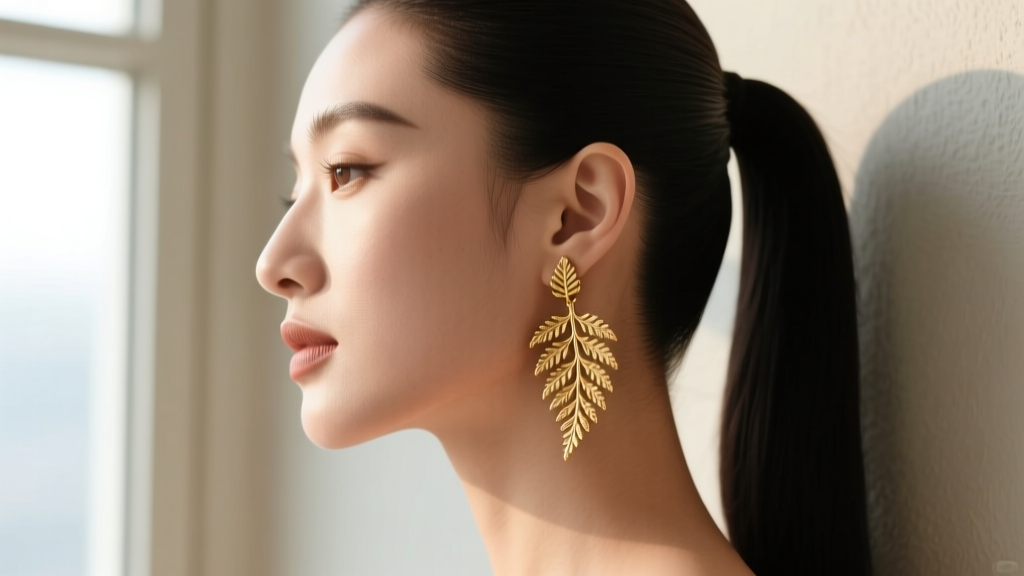
1. Round Faces: Elongate with Willow and Birch Drops
Round faces benefit from vertical lines that create the illusion of length. Avoid wide, circular leaf shapes like lily pads or rounded ginkgo leaves, as they will emphasize facial width. Instead, opt for long, slender willow leaf dangles or cascading birch leaf drops. Look for designs that hang at least 1.5 inches below the earlobe on a 20-gauge or 18-gauge French wire hook. The downward visual pull slims the jawline and elongates the neck.
2. Square Faces: Soften with Curved Monstera and Oak Leaves
A strong, angular jawline is beautifully complemented by the organic, scalloped edges of oak leaves or the natural fenestrations (holes) of a monstera leaf. Choose golden leaf earrings with a high-polish finish; the reflection of light off the curved edges will soften sharp facial angles. Dangles that end just above the jawline work best, drawing the eye upward and breaking the horizontal line of the jaw.
3. Heart-Shaped Faces: Balance with Fern and Maple Studs
Heart-shaped faces feature a broader forehead and a narrow, pointed chin. To balance this, you want to add visual weight to the lower half of the face. Wide, textured maple leaf drops or clustered fern leaf climbers that wrap around the earlobe add volume exactly where it is needed. Avoid top-heavy ear cuffs that draw attention to the forehead.
4. Oval Faces: The Universal Canvas
If you have an oval face, you can pull off virtually any botanical design. To make a bold statement in 2026, try an asymmetrical pairing: a large, sculptural 14k gold magnolia leaf ear cuff on one side, and a delicate, minimalist gold vine stud on the other. This curated, mismatched look is a hallmark of contemporary botanical styling.
The 5-Step Protocol for Cleaning Textured Gold Botanicals
The deep veins, hammered dimples, and matte-finished crevices of leaf earrings are magnets for cosmetic buildup, dead skin cells, and environmental dust. Improper cleaning can strip intentional oxidized patinas or scratch soft 18k gold. Follow this exact protocol to restore your earrings safely.
Expert Warning: Never use commercial "dip" cleaners containing ammonia or thiourea on textured leaf earrings. These harsh chemicals will strip the dark oxidized accents that jewelers intentionally apply to leaf veins to create depth and contrast, leaving the earring looking flat and artificially bright.
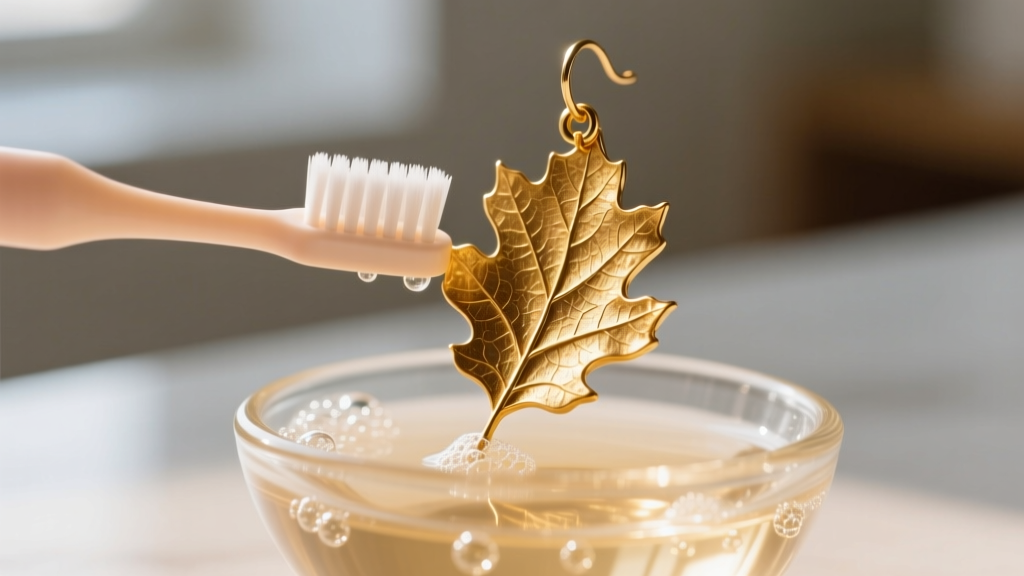
- Prepare a Distilled Water Bath: Do not use tap water. The calcium and magnesium in hard water will leave microscopic white deposits in the deepest veins of the leaf design, which are nearly impossible to remove. Mix 1 cup of lukewarm distilled water with 3 drops of phosphate-free, mild dish soap (like Dawn) in a glass bowl.
- Soak Briefly: Submerge your golden leaf earrings for exactly 3 to 5 minutes. This loosens sebum and lotion buildup without compromising the structural integrity of any glued-in gemstone "dew drop" accents.
- Agitate with the Right Tool: Use an extra-soft baby toothbrush (bristle diameter of 0.12mm or less). Gently brush with the grain of the leaf veins, never across them, to avoid scratching the metal or catching the bristles on micro-prongs.
- Rinse and Neutralize: Rinse thoroughly under a slow stream of distilled water. Ensure all soap residue is flushed from the earring post and the clutch backing, as dried soap can cause skin irritation and post friction.
- Pat Dry and Air Finish: Do not rub with a microfiber cloth, as the fibers can snag on textured edges or diamond-cut facets. Instead, press the earrings gently between two layers of lint-free paper towels to absorb bulk moisture, then lay them flat on a dry towel to air-dry completely before storing.
Troubleshooting Common Wear and Tear Issues
Botanical designs are inherently delicate. Here is how to troubleshoot the most common issues associated with golden leaf earrings, referencing guidelines from the Federal Trade Commission (FTC) Jewelry Guides regarding metal durability and consumer expectations.
Issue 1: Bent Stems and Posts
Because leaf designs often mimic the slender stems of real plants, the gold wire used for the post or the top loop is frequently thin (22-gauge or 20-gauge). If a stem bends, do not use standard metal jewelry pliers, as the steel teeth will gouge the gold, creating a weak point that will eventually snap. Instead, use nylon-jaw pliers. Grip the base of the bend firmly and apply slow, steady pressure to straighten the wire. If the post is heavily kinked, take it to a jeweler for laser soldering rather than risking a breakage inside the earlobe.
Issue 2: Hair Snagging on Ear Hooks
Fish hook (French wire) earrings are popular for leaf dangles, but the open loop frequently catches on hair. If your golden leaf earrings use a 20-gauge hook, it may be too thick to slide smoothly through a standard piercing, causing friction and snagging. A jeweler can easily file and polish the tip of the hook to a smooth, rounded point. Alternatively, look for designs that feature a silicone-coated tip or a hinged lever-back closure, which completely eliminates the snag hazard while providing security for heavier solid gold leaves.
Issue 3: Patina Buildup in Vermeil Crevices
If your gold vermeil leaf earrings are turning dark or greenish in the deep textured areas, the thin gold layer has worn away, exposing the sterling silver or brass base to the acids in your skin. While you cannot reverse this wear, you can slow it down by applying a microscopic layer of clear, non-yellowing nail polish or a specialized jewelry barrier coating (like Jeweler's Skin) to the back of the earring and the post. This creates a physical barrier between the metal and your skin's pH, preserving the remaining gold finish.
Final Thoughts on Sourcing and Storage
When investing in golden leaf earrings, always verify the hallmark. A stamp of "14K" or "18K" guarantees solid gold, while "925" indicates a sterling silver base (common for vermeil). Store your botanical earrings individually in soft, anti-tarnish flannel pouches. Storing them loosely in a communal jewelry box allows the sharp, die-struck veins of one leaf to scratch the high-polish surface of another. By understanding the metallurgy, styling with intention, and cleaning with precision, your golden leaf earrings will remain a lush, vibrant part of your wardrobe for decades to come.


