The Gay Side Earring Myth: A 2026 Guide to Single Ear Styling
Discover the truth behind the gay side earring myth. Our 2026 buying guide covers single earring styling, gauge sizes, and premium materials.

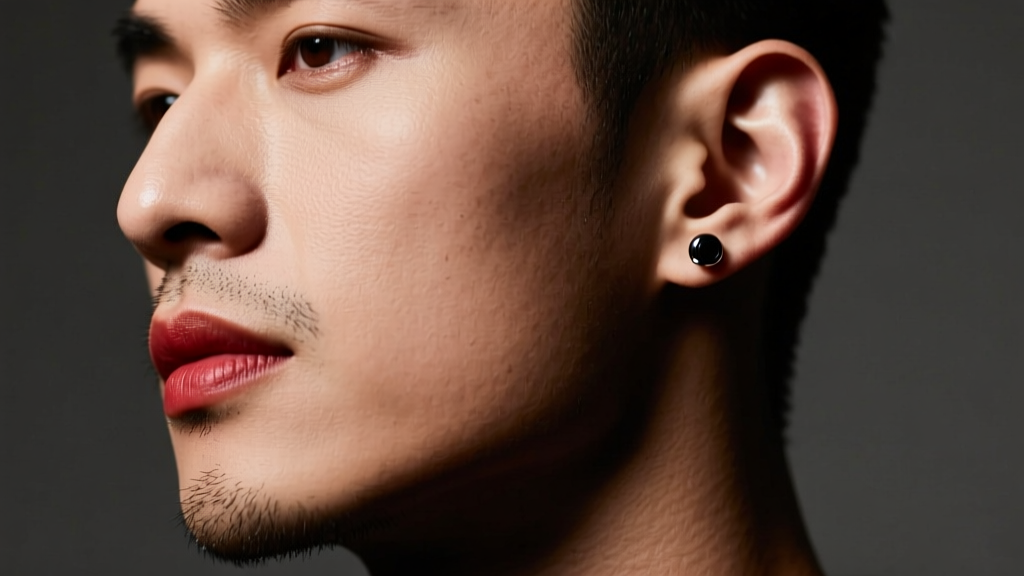
If you grew up in the 1980s or 1990s, you likely heard the pervasive cultural whisper regarding the 'gay side earring.' The old schoolyard rhyme—'left is right, and right is wrong'—suggested that wearing a single earring in the right ear was a covert signal of homosexuality, while the left ear was strictly for heterosexual men. But as we navigate the fashion landscape of 2026, this outdated trope has been entirely dismantled. Today, single earrings, asymmetrical curations, and gender-neutral styling are driven purely by aesthetics, facial symmetry, and personal expression rather than covert coding.
Whether you are a man looking to add a singular edge to your style, a non-binary individual curating a deliberate mismatch, or simply someone who lost the backing to their left stud and wants to know the rules of modern single-ear styling, this comprehensive buying guide will tell you exactly what to look for. We will debunk the historical myths, break down precise gauge sizes, and explore the metallurgy required for high-quality, single-statement ear jewelry.
The History and Myth of the Gay Side Earring
To understand modern single-ear styling, we must first unpack the history of the gay side earring. In the mid-to-late 20th century, before widespread LGBTQ+ acceptance and the advent of digital dating apps, queer communities relied on subtle sartorial codes to identify one another safely. The right-ear piercing became one of these widespread signals. Publications, pop culture, and urban legends cemented this 'rule' into the mainstream consciousness, leading to decades of anxiety for straight men who simply preferred the way a single hoop looked on their right side.
According to cultural historians documenting queer fashion signals, these codes were born of necessity, not aesthetic preference. As detailed in retrospective analyses by them., the dismantling of these rigid dress codes aligns with broader societal shifts toward gender fluidity and the rejection of binary fashion rules. In 2026, wearing a single earring on the right, left, or alternating between both carries zero inherent sexual signaling. The 'gay side' is officially a relic of the past, freeing wearers to choose their piercing side based entirely on visual balance and personal comfort.
Modern Single Earring Styling: How to Choose Your Side
With the cultural baggage removed, how do you decide which ear to pierce or adorn when rocking a single piece? Professional stylists recommend looking at your natural facial asymmetry and hair styling habits.
- The Hair Part Rule: If you part your hair heavily to the left, exposing the right side of your face and neck, a single earring on the right ear creates a striking, balanced focal point. Conversely, a right-side part pairs beautifully with a left-ear statement piece.
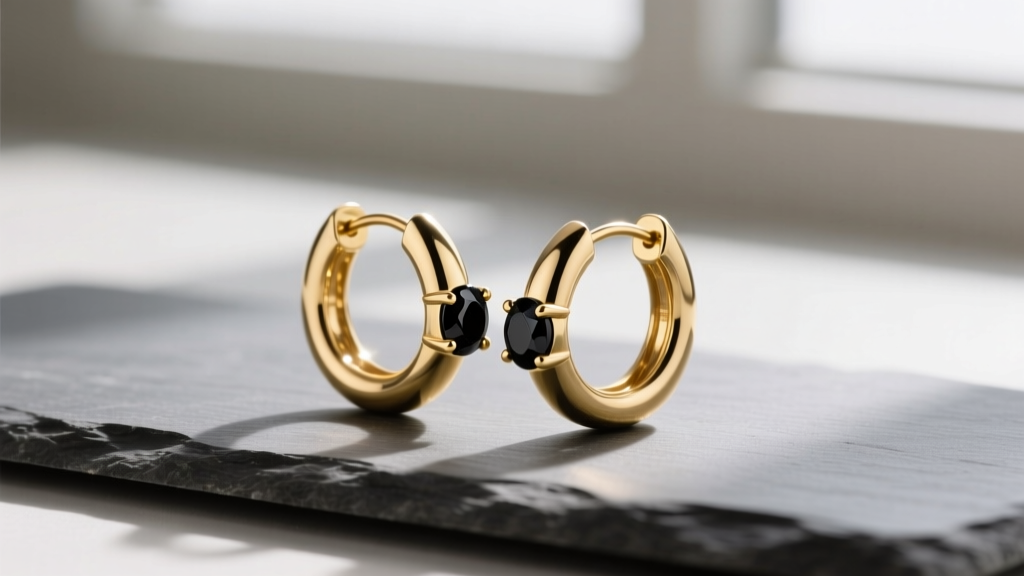
- Facial Asymmetry: Most faces are slightly asymmetrical. Identify your 'good side' or the side with a sharper jawline or more prominent cheekbone, and use a single, high-impact earring (like a diamond stud or a dark onyx huggie) to draw the eye to that geometry.
- Tattoo and Scar Placement: If you have neck or jaw tattoos on one side, a single earring on the opposite side prevents visual clutter, allowing both the ink and the metal to breathe.
Buying Guide: What to Look For in a Single Statement Piece
When you are only wearing one earring, that piece becomes a magnet for attention. You cannot hide behind a matching set; the craftsmanship, material, and fit of the single earring must be impeccable. Here is the technical breakdown of what to look for when shopping.
Material Grades and Metallurgy
The single most critical factor in buying any body jewelry is the material. Because a single earring is often worn 24/7 without being swapped out, it must be biocompatible. The Association of Professional Piercers (APP) strictly recommends specific alloys for long-term wear.
- Implant-Grade Titanium (ASTM F-136): The gold standard for sensitive ears and fresh piercings. It is completely nickel-free, lightweight, and can be anodized to create dark, masculine colors like gunmetal or deep bronze without using toxic platings.
- Solid 14k or 18k Gold: Ensure it is nickel-free and alloyed for body jewelry. Avoid gold-plated or gold-filled single earrings, as the friction of daily wear will eventually rub the plating away, exposing base metals that cause contact dermatitis.
- Avoid 'Surgical Steel' (316L): Despite the clinical-sounding name, 316L stainless steel contains up to 10% nickel. For a single, everyday earring, this can lead to chronic irritation and itching over time.
Gauge Sizing and Post Lengths
Buying a single earring online requires knowing your exact piercing dimensions. Guessing your gauge will result in jewelry that either won't fit or will cause the 'cheese-cutter effect' (where a post that is too thin slowly migrates through the lobe tissue).
| Gauge Size | Millimeter | Common Placement | Best Jewelry Type for Single Wear |
|---|---|---|---|
| 20g | 0.81mm | Mall/Gun Piercings | Thin wire hoops, lightweight friction backs |
| 18g | 1.0mm | Standard Needle Lobes | Threadless studs, small clickers |
| 16g | 1.2mm | Cartilage / Curated Lobes | Internally threaded ends, heavy huggies |
| 14g | 1.6mm | Stretched Lobes / Industrial | Straight barbells, statement seamless hoops |
Pro-Tip on Post Length: If you are buying a single stud, standard post lengths are 6mm (1/4 inch) for healed lobes, and 8mm (5/16 inch) for cartilage. If the post is too long, it will poke your neck when you sleep; if it is too short, the backing will embed into your skin.
Clasp and Closure Types for Single Hoops
If your single earring of choice is a hoop rather than a stud, the closure mechanism dictates both the security and the aesthetic of the piece. When you only have one focal point on your face, a bulky or messy clasp can ruin the look.
- Clickers: Features a hinged segment that 'clicks' securely into place. Clickers are incredibly secure, easy to put in with one hand, and offer a seamless visual flow. They are the top choice for a single, bold statement hoop.
- Seamless / Continuous Rings: A thin wire that threads through the piercing and tucks into the opposite hollow end. While they offer the most flawless, unbroken circle, they can be frustrating to insert and are prone to bending if the gauge is too thin (stick to 16g or 14g for durability).
- Hinged Segment Rings: Similar to clickers but often featuring a more discreet hinge. Excellent for masculine or minimalist styling where you want the hardware to remain invisible.

Asymmetrical Setups: Curating the Non-Matching Look
If you have multiple piercings but want to embrace the spirit of the single earring by creating a deliberate, unbalanced look, asymmetrical curation is the way to go. The key to pulling off an asymmetrical setup in 2026 is maintaining a cohesive metal tone or thematic element.
For example, you might wear a single, heavy 14k gold chain-link hoop in the right lobe, while the left ear features three delicate, threadless 16g gold stars spaced along the helix and lobe. The visual weight is entirely different, but the matching metal and high-end craftsmanship tie the look together. When buying for an asymmetrical setup, always purchase from brands that offer 'ends-only' threadless options, allowing you to mix and match gemstone shapes and geometric designs while using standard titanium posts.
Top Brands for Gender-Neutral and Single Ear Curation
To avoid the cheap, mass-market alloys found in standard mall kiosks, look to professional body jewelry brands that cater to curated, high-end aesthetics. Brands like BVLA, Maria Tash, and Industrial Strength offer exceptional single studs, threadless ends, and precision-machined clickers. These brands utilize genuine Swarovski crystals, high-grade synthetic opals, and solid gold, ensuring that your single earring catches the light and commands attention without causing allergic reactions.
Final Verdict: Wear It Where You Want
The concept of the gay side earring is a fascinating piece of sociological history, but it has no place in a modern jewelry box. Whether you choose to wear a single, 16-gauge black titanium clicker in your right ear, or a heavy gold huggie in your left, the only rule in 2026 is that the jewelry must be high-quality, properly fitted, and worn with absolute confidence. Measure your gauge, invest in implant-grade materials, and let your personal style dictate your placement.


