Hoop Stud Earrings: Technical Anatomy & Sizing Guide
Discover the technical anatomy of hoop stud earrings. We break down gauge sizes, clasp mechanics, and implant-grade materials for perfect lobe fit.

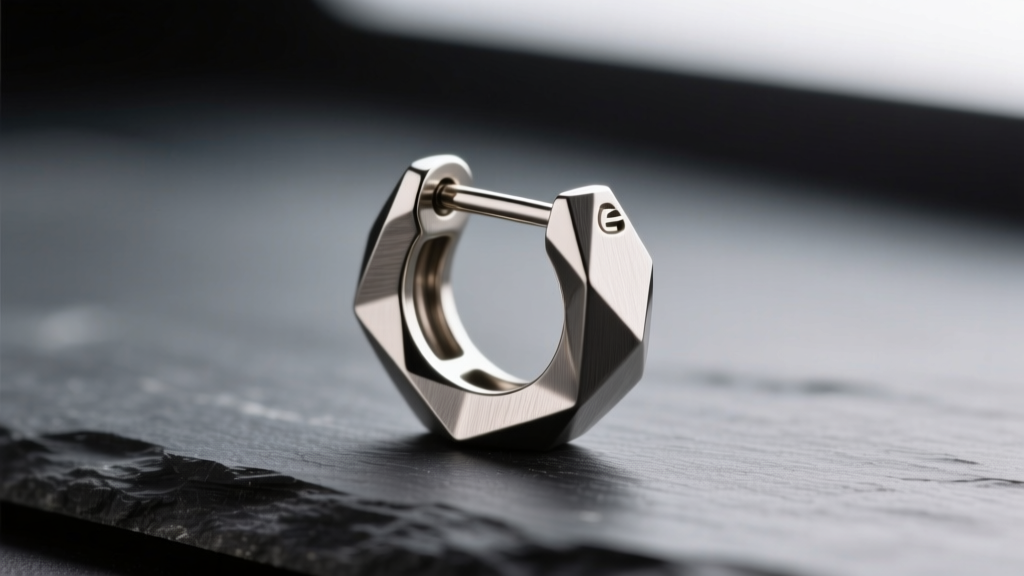
The search for the perfect everyday earring often leads to a fascinating hybrid category: the hoop stud. While traditional jewelry taxonomy strictly separates the continuous circle of a hoop from the static, post-mounted silhouette of a stud, modern precision manufacturing has blurred these lines. In 2026, 'hoop stud earrings' generally refers to two distinct technical designs: geometric circle studs (a hollow or solid metal ring mounted on a straight post) and post-back micro-huggies (small diameter hoops utilizing a straight post and clutch rather than a hinged clasp). Understanding the biomechanics, metallurgy, and structural engineering of these hybrids is critical for both comfort and long-term tissue health.
Defining the Hybrid: Geometric Circles vs. Post-Back Huggies
To properly evaluate hoop studs, we must first deconstruct the two primary architectures that dominate the market. The distinction lies entirely in the mounting mechanism and the center of gravity.
Geometric Circle Studs
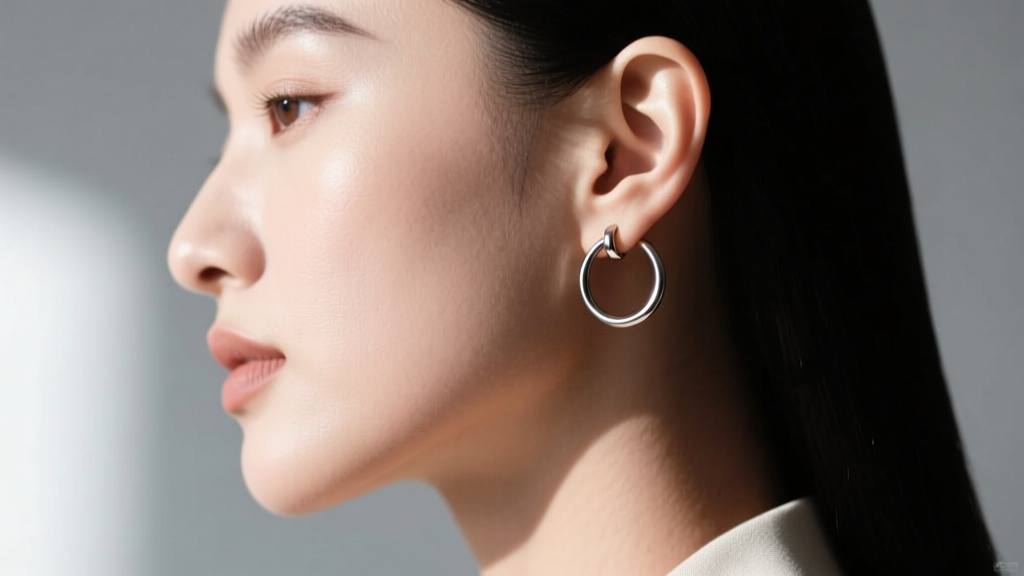
These feature a rigid, circular face—typically ranging from 8mm to 20mm in diameter—soldered or laser-welded to a standard straight post. The aesthetic is that of a miniature hoop resting flush against the earlobe. The primary engineering challenge here is the 'pendulum effect.' Because the visual weight of the circle extends outward from the post, it creates a lever arm that exerts torque on the fistula (the piercing channel).
Post-Back Micro-Huggies
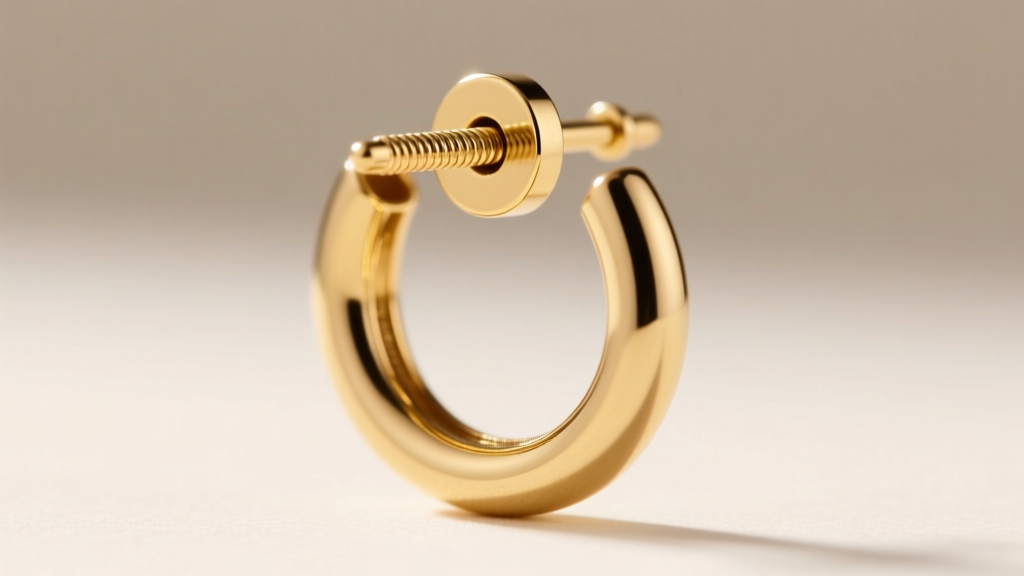
Unlike traditional huggies that rely on a hinged leverback or continuous clicker mechanism, post-back micro-huggies utilize a straight or slightly curved post that passes through the lobe, secured by a backing. This design offers the continuous, unbroken silhouette of a hoop with the superior security and adjustable tension of a stud. They are highly favored for active lifestyles where hinged clasps might accidentally snag and open.
The Physics of the Drop: Center of Gravity and Fistula Strain
When evaluating hoop stud earrings, especially geometric circle variations, jewelers and piercers must account for rotational torque. Torque is calculated as Force multiplied by Distance. In this context, the 'Force' is the weight of the earring, and the 'Distance' is the horizontal projection from the center of the post to the center of mass of the hoop.
Expert Insight: A 15mm geometric hoop crafted from dense 18k yellow gold will exert significantly more downward rotational force on the earlobe than a 15mm hoop crafted from grade 23 titanium. Over time, this localized torque can cause the fistula to elongate or migrate downward, a condition commonly known as 'lobe drooping.'
To counteract this, high-end manufacturers employ specific design interventions:
- Counterweighting: Adding a subtle, dense bead to the rear of the hoop's lower quadrant to shift the center of gravity closer to the post.
- Hollow Tubing: Utilizing hollow gold or titanium tubing for the hoop element, reducing overall mass by up to 40% without sacrificing the visual thickness of the design.
- Oversized Backings: Pairing the earring with a wide, flat-disc backing (typically 6mm to 8mm in diameter) to distribute the rotational load across a broader surface area of the posterior lobe.
Metallurgy and Biocompatibility: Beyond 'Hypoallergenic'
The term 'hypoallergenic' is largely unregulated and technically meaningless in modern jewelry standards. When selecting hoop studs for daily, long-term wear—especially for fresh piercings or sensitive tissue—we must look at exact metallurgical compositions and nickel release rates.
Implant-Grade Titanium (ASTM F136)
The gold standard for post-back hoop studs is Ti-6Al-4V ELI (Extra Low Interstitial) titanium, certified to ASTM F136 standards. This alloy contains zero nickel and boasts a highly stable oxide layer that prevents ion leaching. According to the Association of Professional Piercers (APP), implant-grade titanium is the only universally recommended metal for initial piercings and highly reactive tissue.
Karat Gold Alloys and Nickel Limits
For those preferring precious metals, 14k and 18k solid gold are acceptable, provided they are alloyed with palladium or silver rather than nickel or copper. Under the strict EU Nickel Directive, jewelry must not release more than 0.5 µg/cm²/week of nickel. Many commercial 'gold-filled' or low-karat hoop studs fail this test when the outer layer wears thin, exposing base-metal cores to the acidic environment of the skin's microbiome.
Technical Specifications: Gauge, Diameter, and Backing Mechanics
Selecting the correct gauge (thickness) and backing type is paramount for the structural integrity of hoop stud earrings. Below is a technical matrix detailing standard specifications and their ideal use cases.
| Gauge (AWG / mm) | Post Mechanism | Ideal Placement | Structural Notes |
|---|---|---|---|
| 20G (0.81mm) | Friction Post (Butterfly) | Standard Earlobe | Prone to bending under torque; requires lightweight hoop faces. |
| 18G (1.02mm) | Threaded Screw-Back | Lobe / Upper Lobe | Optimal balance of strength and comfort; prevents backing loss. |
| 16G (1.29mm) | Threadless Push-Pin | Cartilage / Helix | Maximum rigidity; tension-fit backing ensures zero snagging. |
Cartilage vs. Lobe Biomechanics
While hoop studs are predominantly worn in the earlobe, their application in cartilage piercings (such as the helix or tragus) requires a fundamentally different approach to post mechanics. Cartilage lacks the elasticity and vascularity of lobe tissue. A traditional butterfly clutch backing relies on pinching the tissue, which can cause severe pressure necrosis in cartilage.
For cartilage placements, hoop studs must utilize either internally threaded flat-disc backs or threadless push-pin mechanisms. The flat disc rests flush against the posterior cartilage shelf, distributing pressure evenly. Furthermore, the post length must be measured with a digital caliper to account for the exact thickness of the cartilage ridge plus 1.5mm of clearance for swelling; a post that is too long will act as a lever, catching on hair and clothing, potentially causing traumatic tearing of the fistula.
Troubleshooting Common Failure Modes
Even precision-machined hoop studs can experience mechanical failures. Recognizing these failure modes allows for immediate corrective action.
1. The 'Spinning' Post
The Issue: Geometric hoop studs mounted on perfectly round, smooth posts tend to rotate freely within the fistula. This constant spinning can introduce bacteria into the piercing channel and cause the decorative face to perpetually droop off-center.
The Fix: Upgrade to a post with a flattened edge or a 'D-shaped' cross-section, which locks into the natural shape of a healed fistula and prevents rotational movement.
2. Clutch Tension Fatigue
The Issue: Standard butterfly clutches rely on the tension of folded metal wings. Over months of daily wear, the metal fatigues, losing its grip on the post notch, leading to lost earrings.
The Fix: Transition to silicone O-ring backings for temporary grip, or permanently upgrade to internally threaded screw-backs or La Gard friction locks, which utilize mechanical threading rather than metal tension.
3. Solder Joint Fracture
The Issue: In cheaper geometric hoop studs, the circular face is attached to the post via soft lead-based or silver solder. The torque of the hoop snapping against the earlobe during sleep can cause micro-fractures at this joint.
The Fix: Invest in pieces that utilize laser welding or are CNC-machined from a single solid billet of titanium or gold, entirely eliminating the solder joint weak point.
Conclusion: Precision is Paramount
Hoop stud earrings represent a brilliant convergence of aesthetic versatility and structural security. However, their hybrid nature demands a rigorous approach to selection. By prioritizing implant-grade metallurgy, understanding the physics of rotational torque, and matching the exact gauge and backing mechanism to your specific anatomical placement, you ensure that your jewelry remains both a stunning focal point and a biocompatible extension of your body. In 2026, there is no excuse for compromising tissue health for the sake of design; modern manufacturing provides the tools to achieve both flawlessly.


