Best Earring Backs for Studs: Security and Comfort Buying Guide
Discover the best earring backs for studs. Compare butterfly, screw, and silicone options for security, comfort, and sensitive ears in our expert guide.

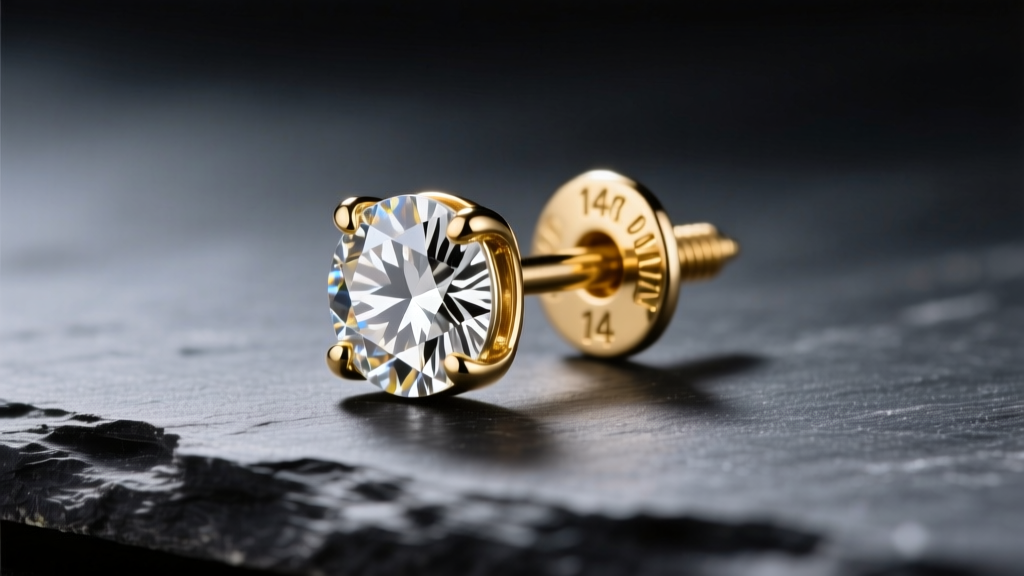
When investing in fine jewelry, most buyers obsess over the 4Cs of a diamond or the karat weight of the gold. Yet, the most critical component for the longevity and safety of your jewelry is often the least noticed: the earring back. Choosing the right earring backs for studs is not merely a matter of convenience; it is a precise calculation of tension, metallurgy, and anatomy. A poorly fitted back can lead to lost diamonds, stretched earlobes, and severe contact dermatitis.
This comprehensive buying guide cuts through the marketing fluff to deliver exact specifications, material grades, and mechanical insights into the best earring backs for studs available today.
Why Your Stud Earring Backs Matter More Than You Think
A stud earring operates on a simple cantilever principle. The decorative front acts as the load, the post is the beam, and the earring back is the fulcrum. If the back fails to provide adequate counter-tension, the earring droops. This drooping not only ruins the aesthetic profile of the stud but places asymmetric stress on the earlobe fistula (the piercing hole), leading to tissue thinning and stretching over time.
Furthermore, the mechanical interface between the post and the back dictates security. A friction-based system relies entirely on the yield strength of the metal wings, while a threaded system relies on the shear strength of the threads. Understanding these mechanics is the first step in selecting the perfect earring backs for studs.
The 5 Main Types of Earring Backs for Studs
Not all backs are created equal. Below is a detailed breakdown of the primary mechanisms available on the market, evaluated on security, comfort, and maintenance.
| Back Type | Security Level | Best For | Average Price Range |
|---|---|---|---|
| Butterfly / Friction | Medium | Everyday wear, standard lobes | $5 - $15 / pair |
| Screw Backs | High | High-value stones, children, active lifestyles | $25 - $60 / pair |
| La Pousette (Push-Pull) | Very High | Heirloom pieces, heavy diamond studs | $50 - $120 / pair |
| Silicone / Rubber | Medium-High | Sports, temporary comfort, travel | $3 - $8 / pack |
| Flat Backs (Labret) | High (Threaded) | Cartilage piercings, thick lobes, sleeping | $15 - $40 / each |
Butterfly / Friction Backs
The industry standard. These backs feature two metal "wings" that create friction against a notched post. While cost-effective, they suffer from metal fatigue. Over time, the wings lose their tensile memory and loosen. Pro Tip: Look for butterfly backs with a rolled edge rather than stamped flat metal, as the rolled edge provides a wider surface area against the ear, reducing pressure points.
Screw Backs
Screw backs feature a post with a threaded end (usually a 0.25mm or 0.3mm thread pitch) that screws into a threaded backing. They are exceptionally secure against accidental snags. However, they require careful alignment to avoid cross-threading, which can permanently strip the post. Always reverse-thread gently until you feel a "click" before tightening forward.
La Pousette (Push-Pull) Backs
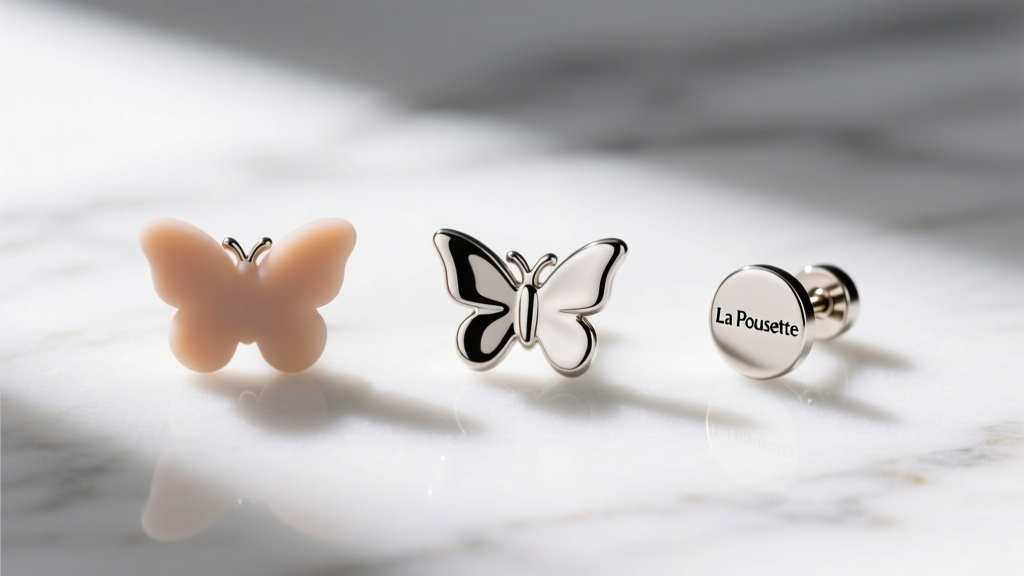
Often considered the pinnacle of earring security, La Pousette backs utilize a tiny internal spring mechanism with twin release buttons. You squeeze the buttons to slide the back onto the post, and releasing them locks the back into the post's groove. Because they contain microscopic moving parts, they must be machined from high-grade materials like 18k gold or 950 platinum to prevent internal corrosion.
Silicone / Rubber Backs
Made from medical-grade silicone, these provide excellent grip and are ideal for athletes or those with metal allergies. However, silicone is porous. It absorbs sebum, sweat, and cosmetics, causing the material to swell, degrade, and harbor bacteria. They should be treated as disposable and replaced every 3 to 6 months.
Flat Backs (Labret Studs)
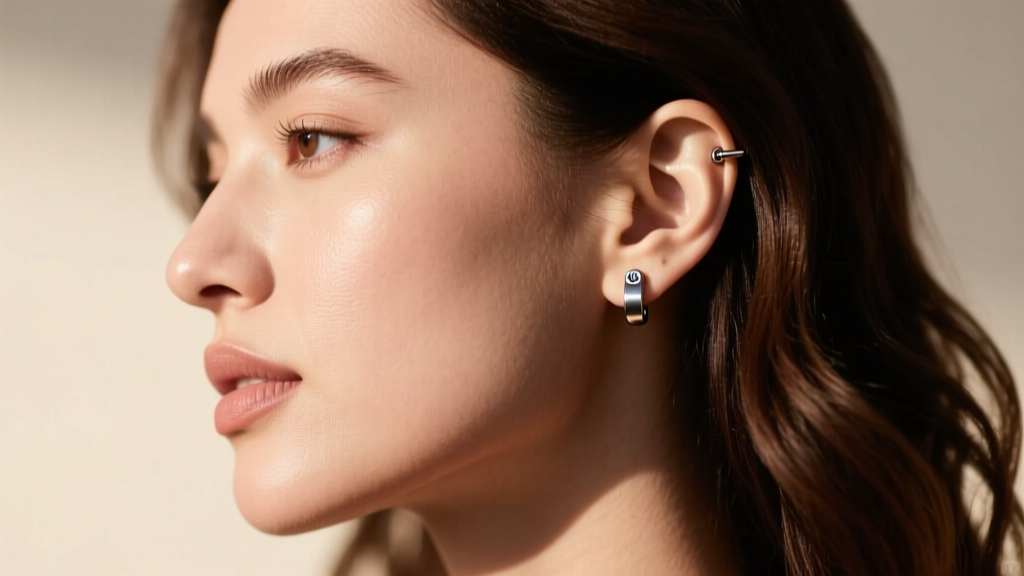
While technically the entire earring, flat back studs are essential for cartilage (helix, tragus, conch) and thick earlobes. The backing is a flat disc that sits flush against the skin, eliminating the painful "poke" of a traditional post. When buying flat backs, always opt for internally threaded or threadless (push-pin) options to avoid tearing the delicate fistula tissue during insertion.
Material Grades: What to Look For
The metal composition of your earring backs for studs is just as critical as the front. Contact dermatitis is frequently triggered by the back resting flush against the warm, slightly moist skin behind the earlobe.
- ASTM F136 Implant-Grade Titanium: The gold standard for sensitive ears and fresh piercings. It contains zero nickel and is highly biocompatible.
- Niobium: A highly unreactive elemental metal that can be anodized into various colors. Excellent for severe nickel allergies.
- 14k or 18k Solid Gold: Ensure it is alloyed for jewelry (nickel-free). According to the Gemological Institute of America (GIA), white gold is often alloyed with nickel, which can cause severe reactions in earring backs that sit tightly against the skin. Opt for yellow or rose gold, or rhodium-plated nickel-free white gold.
- Avoid "Surgical Steel": This is a largely unregulated marketing term. Many surgical stainless steels (like 316L) contain up to 10% nickel, which easily leaches when exposed to the slightly acidic pH of human skin.
"For initial piercings and highly sensitive lobes, the jewelry and the backing must both meet ASTM F136 or ASTM F138 standards to ensure nickel release remains below the EU Nickel Directive threshold of 0.5 µg/cm²/week." — Association of Professional Piercers (APP)
Sizing and Gauge Compatibility Guide
A common failure mode when buying replacement earring backs for studs is mismatching the gauge (thickness) of the post. If the back's aperture is too large, the earring will wobble and fall off. If it is too small, you will bend the post trying to force it on.
- 20 Gauge (0.81mm): Standard for lightweight, budget-friendly fashion jewelry and delicate diamond studs.
- 18 Gauge (1.02mm): The most common size for fine jewelry, mid-weight diamond studs, and standard lobe piercings.
- 16 Gauge (1.29mm): Standard for cartilage piercings and heavier, statement stud earrings.
- 14 Gauge (1.63mm): Used for heavy body jewelry and stretched lobe piercings.
Post Length Matters: Standard earring posts are 10mm to 11mm long. If you have thick earlobes (common in older adults or specific genetic profiles), a standard post will cause the butterfly back to compress the tissue, leading to ischemia (restricted blood flow) and discomfort. Look for "long post" options measuring 12mm to 14mm.
Troubleshooting Common Stud Back Failures
Even the best earring backs for studs can encounter mechanical issues. Here is how to troubleshoot the most common problems:
1. The Butterfly Back Keeps Sliding Off
The Cause: Metal fatigue or worn post notches.
The Fix: Use a pair of smooth-jawed nylon pliers to gently squeeze the wings of the butterfly back closer together to restore tension. If the post notches are worn smooth, the post must be replaced or re-notched by a jeweler.
2. The Screw Back is Stuck or Cross-Threaded
The Cause: Forcing the back on at an angle has misaligned the threads, or debris (lotion, dead skin) is lodged in the thread grooves.
The Fix: Do not use brute force. Soak the earring in warm water with a drop of mild dish soap to dissolve sebum and cosmetics. Use a soft toothbrush to clean the threads. When reattaching, always turn counter-clockwise first until you feel the threads drop into alignment, then turn clockwise.
3. Silicone Backs Smell or Turn Yellow
The Cause: Oxidation and bacterial buildup within the porous silicone matrix.
The Fix: There is no fix; the material has degraded. Discard them immediately and replace them with fresh, medical-grade silicone backs to prevent localized fungal or bacterial infections.
Final Verdict: Which Back Should You Buy?
Selecting the ideal earring backs for studs ultimately depends on the value of the earring and your daily lifestyle. For high-value diamond or gemstone studs, the investment in La Pousette backs or precision-machined screw backs is non-negotiable; the cost of the back is a fraction of the cost of replacing a lost stone. For everyday, active wear or children, screw backs offer the best balance of security and price. For those with sensitive skin or cartilage piercings, internally threaded ASTM F136 titanium flat backs remain the undisputed champion of comfort and biocompatibility. Always match the gauge precisely, prioritize hypoallergenic metals, and inspect your tension mechanisms bi-annually to ensure your jewelry stays exactly where it belongs.


