Beaded Butterfly Earrings: 2026 Trend Analysis & Styling
Explore the 2026 trend of beaded butterfly earrings. Discover styling tips, material grades, gauge sizes, and face-shape pairings for this Y2K revival.

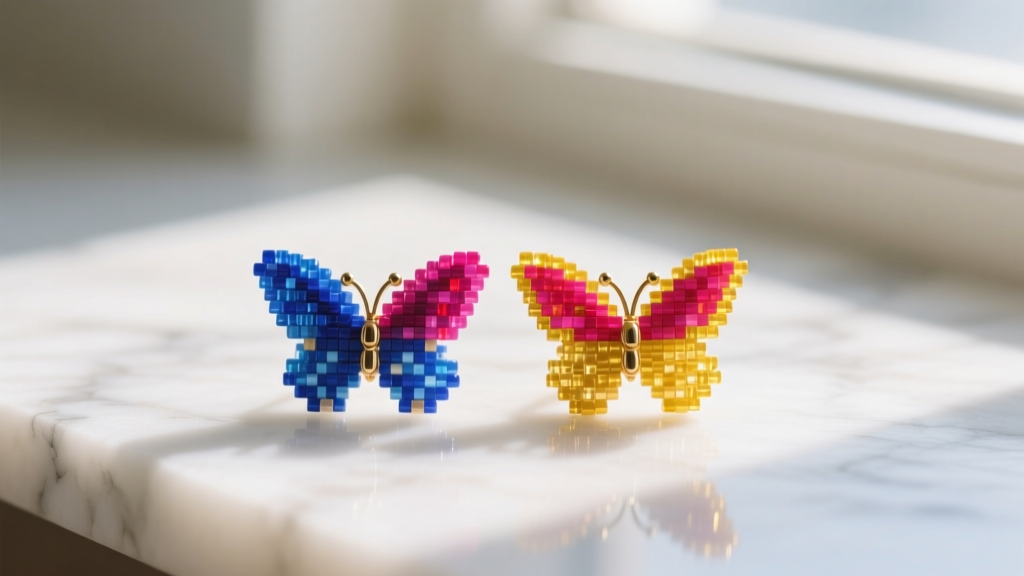
The Y2K Revival Evolves: Artisanal Beaded Butterflies in 2026
The transition from the minimalist 'quiet luxury' era into the expressive maximalism of 2026 has brought a highly specific nostalgic motif back to the forefront of jewelry design: the butterfly. However, the cheap, mass-produced plastic iterations of the early 2000s have been entirely replaced by meticulous, artisanal wirework and high-grade seed beads. Beaded butterfly earrings are no longer just a fleeting festival accessory; they are a testament to micro-craftsmanship. According to trend forecasting data, searches for hand-woven beaded jewelry have spiked as consumers seek tactile, nature-inspired pieces that offer a sense of whimsy without sacrificing structural integrity.
As a style analyst at Jewel Style Radar, I have tracked this shift from the runway to independent jewelry makers. The modern beaded butterfly earring relies on advanced bead-weaving techniques, such as the brick stitch and peyote stitch, mapped over rigid wire armatures. This guide breaks down the exact materials, structural anatomy, and styling frameworks you need to navigate this trend with a discerning eye.
Material Breakdown: Seed Beads vs. Czech Glass vs. Crystal
The visual impact and longevity of beaded butterfly earrings depend entirely on the beads selected. Not all beads are created equal; variations in glass composition, hole size, and finish durability dictate how the wings catch the light and withstand wear. According to the GIA Gem Encyclopedia, the optical properties of glass and crystal beads are determined by their lead content and faceting precision, which directly impacts light refraction in jewelry.
| Bead Type | Brand/Origin | Dimensions & Hole Size | Best Application in Butterfly Wings | Durability & Finish |
|---|---|---|---|---|
| Cylindrical Seed | Miyuki Delica (Japan) | 1.6mm (11/0), 0.8mm hole | Intricate wing patterns, sharp geometric edges | Highly uniform; galvanized finishes may tarnish with skin oils |
| Round Seed | Toho (Japan) | 3.0mm (8/0), 1.2mm hole | Filling wide wing spans, adding organic texture | Excellent; larger holes allow for multiple wire passes |
| Faceted Bicone | Preciosa (Czech Republic) | 4.0mm, 0.8mm hole | Thorax and body segments, light-catching accents | Brilliant refraction; highly resistant to scratching |
| Precision Crystal | Swarovski (Austria) | Varies, typically 3-6mm | High-end statement drops, dew-drop wing accents | Unmatched brilliance; lead-free advanced glass formula |
Anatomy of a Quality Butterfly Earring
When investing in artisanal beaded earrings, the hidden structural components are just as critical as the visible beadwork. A poorly constructed wire frame will cause the wings to droop, warp, or snap under their own weight.
Wire Gauges and Hardness
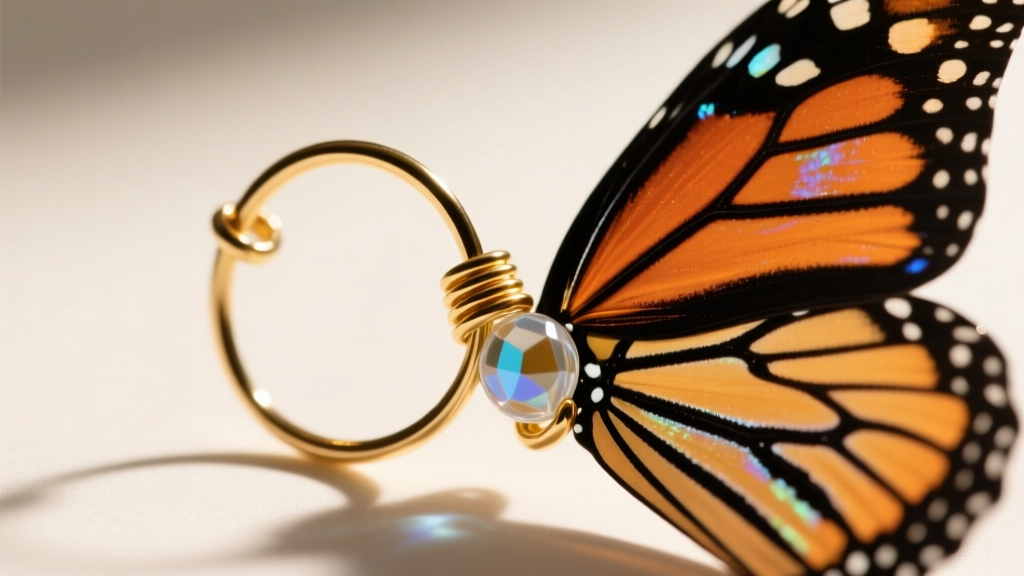
The skeleton of a beaded butterfly requires two distinct wire types. The ear hook and primary wing armature must be crafted from 20-gauge (0.81mm) half-hard wire. Half-hard wire has been work-hardened, meaning it holds its shape against the gravitational pull of heavy beadwork while remaining malleable enough for the jeweler to form a secure loop. Conversely, the weaving wire used to bind the seed beads to the frame should be 26-gauge or 28-gauge dead-soft wire. Dead-soft wire bends effortlessly around the sharp corners of the armature without springing back, ensuring tight, gap-free tension in the beadwork.
Weight Distribution and Lobe Health
A fully beaded, 2.5-inch Monarch butterfly wing can weigh up to 4.5 grams per earring. While standard earlobes can comfortably support up to 7 grams without long-term stretching, the distribution of that weight matters. High-quality beaded butterflies utilize a 'top-heavy' wire wrap, securing the beadwork close to the ear wire loop to prevent the earring from swinging violently and tearing the piercing. If you have fine or previously stretched lobes, opt for designs that incorporate a secondary support cuff or a wider, flattened French wire hook to disperse the pressure across a larger surface area of the lobe.
Styling by Face Shape and Butterfly Species
The natural world offers thousands of butterfly species, each with distinct wing geometries. As noted in entomological studies by Britannica, wing shapes have evolved for specific aerodynamic functions, but in jewelry design, these shapes serve a distinct aesthetic purpose. Mapping the silhouette of the beaded butterfly to your face shape is the key to achieving a harmonious look.
- Round Faces: Opt for the Swallowtail silhouette. Swallowtails feature elongated, angular hindwings that create a vertical drop. This elongates the jawline and draws the eye downward, counteracting the width of a round face.
- Square Faces: Choose the Monarch. Monarchs have broad, softly rounded wings. The curved edges of the beaded brick stitch soften the sharp angles of a square jaw and prominent cheekbones.
- Heart-Shaped Faces: The Morpho butterfly is ideal. Morphos possess wide, sweeping forewings that taper into a narrower bottom. This inverted triangle shape beautifully balances a wider forehead and narrower chin.
- Oval Faces: You have the versatility to wear the Luna Moth or Emperor styles. These feature dramatic, oversized wing spans that act as bold, horizontal statement pieces without throwing off your natural facial proportions.
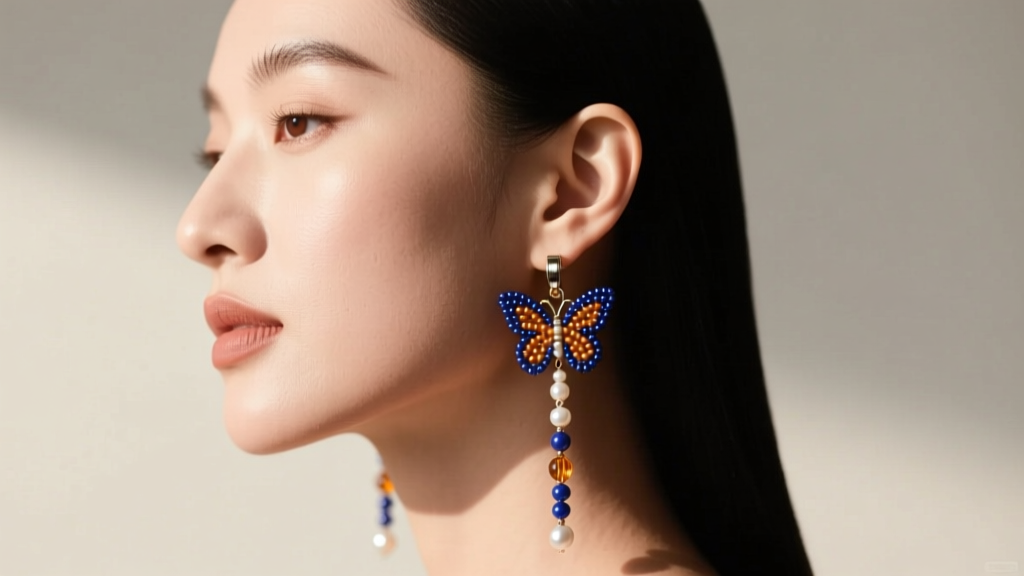
The Lobe vs. Cartilage Debate
While beaded butterfly earrings are traditionally designed for standard lobe piercings, the 2026 trend cycle has seen a surge in 'ear-scape' integration. Artisans are now creating miniature, flat-backed beaded butterflies specifically for cartilage placements like the tragus or conch.
Crucial Sizing Note: Cartilage piercings are typically done at 16-gauge (1.2mm) or 18-gauge (1.0mm), whereas standard lobe earrings use 20-gauge (0.81mm) posts. If you intend to wear a beaded butterfly in a cartilage piercing, you must verify the post thickness. Forcing a thick 16-gauge wire into a healing or delicate lobe piercing can cause micro-tears, while a thin 20-gauge wire in a 16-gauge conch piercing will lead to the 'cheese-cutter effect,' where the thin wire slowly migrates through the tissue.
Price Tiers and Where to Invest
Navigating the market requires understanding what you are actually paying for. The price disparity in beaded butterfly earrings is vast, driven by labor hours and material sourcing.
'A true artisanal beaded butterfly wing, utilizing the brick stitch over a wire frame, requires approximately four to six hours of meticulous hand-weaving per pair. The price reflects the labor of micro-craftsmanship, not just the raw materials.' — Elena Rostova, Master Beadweaver and Jewelry Educator
- Mass-Market ($15 - $35): Typically made with acrylic beads and base-metal alloy wires. The beadwork is often loose, and the wires are prone to oxidizing and turning the skin green. Avoid these for sensitive ears.
- Artisan / Independent Maker ($65 - $180): The sweet spot for quality. These pieces feature genuine Miyuki or Toho glass seed beads, woven with tarnish-resistant gold-filled or sterling silver wire. The tension is tight, and the ear hooks are properly hardened.
- Fine Jewelry ($1,500+): At this tier, the 'beads' are replaced by micro-pavé diamonds, sapphires, and tsavorites set into platinum or 18k gold armatures. These are heirloom investments rather than trend-driven accessories.
Care and Maintenance for Beaded Wirework
Seed beads and wirework require specialized care to maintain their structural integrity and optical brilliance. Never place beaded butterfly earrings in an ultrasonic cleaner; the high-frequency vibrations can shatter Czech glass and fray the delicate 28-gauge weaving wire.
Instead, clean your earrings using a soft-bristled makeup brush dipped in a solution of distilled water and a single drop of pH-neutral dish soap. Gently sweep the bristles across the beadwork to dislodge skin oils and cosmetic powders that accumulate in the microscopic gaps between the seed beads. Pat dry with a microfiber cloth. Store them flat in a lined jewelry box to prevent the wire armatures from bending under the weight of other pieces. By treating these pieces as wearable micro-sculptures rather than disposable accessories, your beaded butterflies will remain vibrant and structurally sound for years to come.


