How to Style and Wear Ball Drop Earrings for Any Face Shape
Master the art of wearing ball drop earrings. Learn how to match sphere sizes to your face shape, secure heavy orbs, and care for delicate materials.

The Anatomy and Weight Dynamics of Ball Drop Earrings
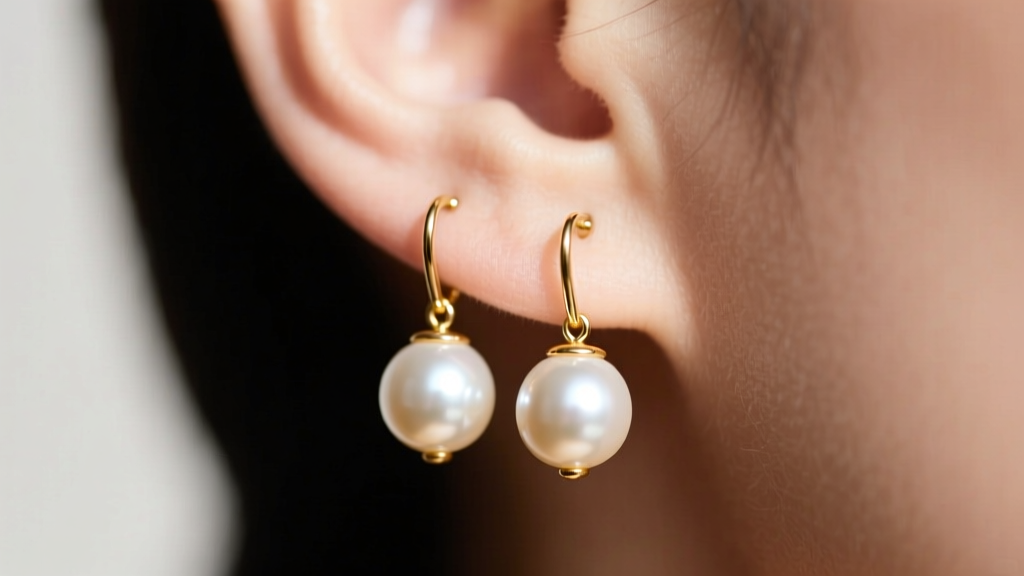
Ball drop earrings—characterized by a spherical element suspended from a post, hook, or delicate chain—are a masterclass in geometric jewelry design. Unlike flat pendants or intricate chandeliers, the sphere catches light uniformly from every angle, creating a continuous glow. However, their three-dimensional volume introduces unique structural challenges regarding weight and piercing health.
Standard lobe piercings are typically 20-gauge (0.81mm) or 18-gauge (1.02mm). When selecting ball drop earrings, the post thickness must match your piercing gauge to avoid the 'cheese-cutter effect.' This occurs when a heavy sphere is suspended on a thin 22-gauge wire, causing the wire to slowly slice through the earlobe tissue over time. According to guidelines referenced by the Association of Professional Piercers (APP), maintaining an appropriate gauge-to-weight ratio is critical for long-term tissue health.
The weight of the spherical drop is your most critical metric. A solid 12mm stainless steel sphere can weigh upwards of 9 grams, which is far too heavy for all-day wear on a standard lobe without causing irreversible stretching. For daily, all-day wear, aim for ball drops weighing under 4 grams. For statement evening wear, you can safely push to 7 grams, provided you utilize supportive earring backings and limit wear to a few hours.
Step-by-Step Guide: Matching Sphere Drops to Face Shapes
The visual weight of a sphere can dramatically alter the perceived geometry of your face. The key to styling ball drop earrings is using the sphere's volume and the drop's length to either contrast or complement your natural bone structure. Below is a step-by-step framework for selecting the ideal dimensions.
| Face Shape | Ideal Sphere Size | Ideal Drop Length | Styling Rationale & Geometry |
|---|---|---|---|
| Round | Small (4mm - 6mm) | Long (1.5 - 2.5 inches) | Elongates the face. Avoid large, wide spheres that mimic the face's circular geometry and add unwanted visual width. |
| Square | Medium (6mm - 8mm) | Medium-Long (1 - 2 inches) | Softens a strong jawline. The curved surface of the sphere contrasts beautifully with angular facial features. |
| Heart | Medium-Large (8mm - 10mm) | Short-Medium (0.5 - 1 inch) | Adds visual weight to the lower half of the face, balancing a wider forehead and narrower chin. |
| Oval | Any Size | Any Length | Oval faces are mathematically balanced. You can experiment with oversized 12mm statement orbs or delicate 3mm chain drops. |
| Oblong | Large (10mm+) | Short (Under 1 inch) | Adds horizontal width. Avoid long, dangling ball drops that will further elongate the facial profile. |
Pro Tip: When measuring drop length, measure from the base of the earlobe to the bottom of the sphere, not just the chain length. The sphere's diameter adds to the total visual drop.
How to Secure Heavy Orb Drops: A Backing Masterclass
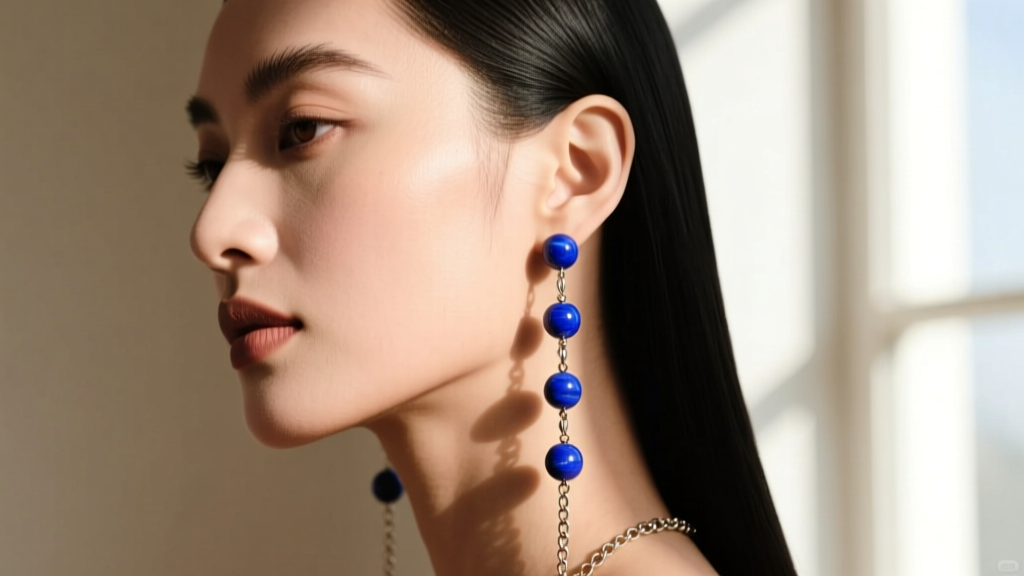
The most common failure point for ball drop earrings is the backing. A heavy metal or gemstone orb acts as a pendulum; every time you turn your head, the momentum pulls against the post. Standard friction backs (butterfly clutches) are entirely insufficient for ball drops weighing more than 3 grams. Here is how to properly secure them:
- La Pousette (Locking) Clutches: The gold standard for heavy drops. These feature a spring-loaded mechanism that clicks securely into a grooved post. They completely eliminate the risk of a heavy orb pulling off and getting lost in transit.
- Silicone Support Discs: If your ball drops tend to droop forward (pointing the sphere toward your cheek instead of hanging straight down), slide a 10mm silicone support disc onto the post before attaching the backing. This creates a wider base of support against the back of the earlobe, keeping the earring perfectly perpendicular.
- Screw Backs: Common in high-end diamond and pearl ball drops, the threaded post requires you to twist the backing on. While highly secure, ensure the threads are kept clean of lotion and debris to prevent cross-threading.
Material Deep-Dive: Caring for Pearl vs. Metal Spheres
The maintenance required for your ball drop earrings depends entirely on the material of the sphere. Pricing and care vary wildly: expect to pay $40–$80 for high-quality 14k gold-filled or vermeil ball drops, while solid 14k gold with genuine Akoya pearls typically starts around $150 and can exceed $500 depending on the pearl's luster grade.
Caring for Porous Gemstone Orbs
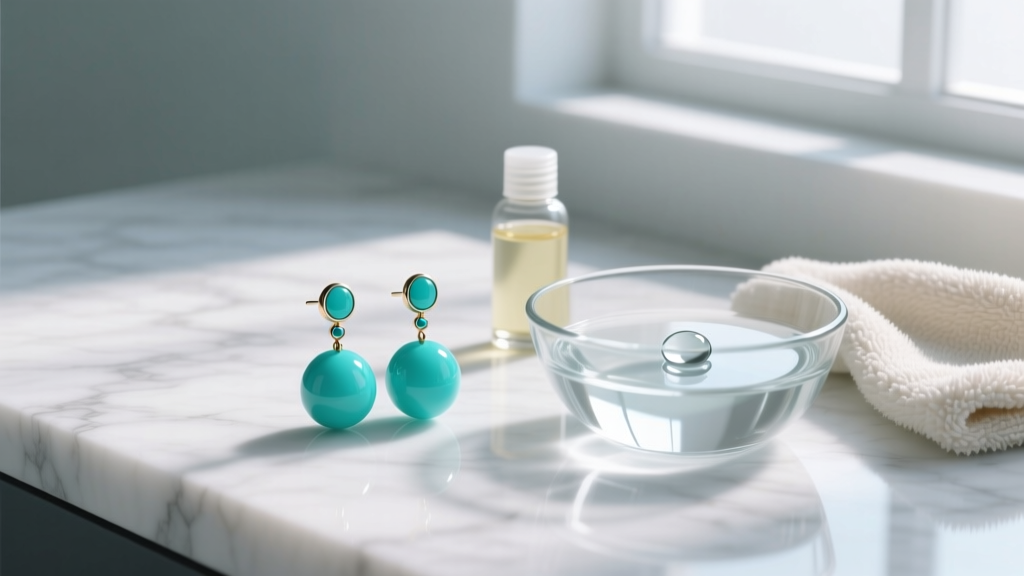
Spheres carved from pearls, turquoise, malachite, or lapis lazuli are highly porous and rank low on the Mohs hardness scale. According to the Gemological Institute of America (GIA), organic gems like pearls are particularly susceptible to chemical damage. Never use ultrasonic cleaners or steam cleaners on porous stone ball drops. The high-frequency vibrations can cause internal fracturing, especially in stones with natural inclusions or dyed turquoise. Instead, wipe them gently with a damp microfiber cloth after each wear to remove skin oils, which can degrade the luster over time.
Caring for Metal and Glass Spheres
Hollow 14k gold spheres, solid 316L surgical steel beads, and borosilicate glass orbs are incredibly durable. These can be safely cleaned in an ultrasonic jewelry cleaner for 3 to 5 minutes using a few drops of mild dish soap and warm water. However, if your metal sphere features a textured or hammered finish, avoid harsh polishing cloths, as they will gradually smooth out the intentional texturing and alter the way the sphere reflects light.
Troubleshooting Common Ball Drop Issues
Even with the perfect pair, you may encounter a few functional annoyances. Here is how to solve the most common ball drop earring problems:
- Problem: The 'Forward Droop'. The earring post is too thin for the weight of the sphere, causing it to tilt forward. Solution: Switch to a thicker 18-gauge post if your piercing allows, or use the silicone support disc trick mentioned above to distribute the weight across a wider area of the earlobe.
- Problem: Chain Tangling. If your ball is suspended on a delicate chain, it likely tangles in your hair. Solution: Look for ball drops that utilize a rigid, articulated metal bar instead of a flexible chain. Articulated bars offer the same 'drop' movement but cannot fold back on themselves, eliminating tangles entirely.
- Problem: The Sphere Snags on Clothing. Large, 12mm+ ball drops can easily catch on scarves or high-collared sweaters. Solution: Opt for 'huggie-style' ball drops, where the sphere is suspended from a tight-fitting hoop that hugs the earlobe, keeping the orb tucked safely close to the neck and out of the way of winter garments.
By understanding the physics of weight distribution, matching spherical geometry to your facial structure, and utilizing the correct locking mechanisms, ball drop earrings can transition from a delicate accessory to a structurally sound, everyday staple in your jewelry wardrobe.


