How to Make Beaded Earrings: DIY Cost vs Retail Value
Learn how to make beaded earrings with our detailed cost analysis. Compare DIY material costs against retail prices to maximize your jewelry budget.

The True Economics of Handcrafted Jewelry
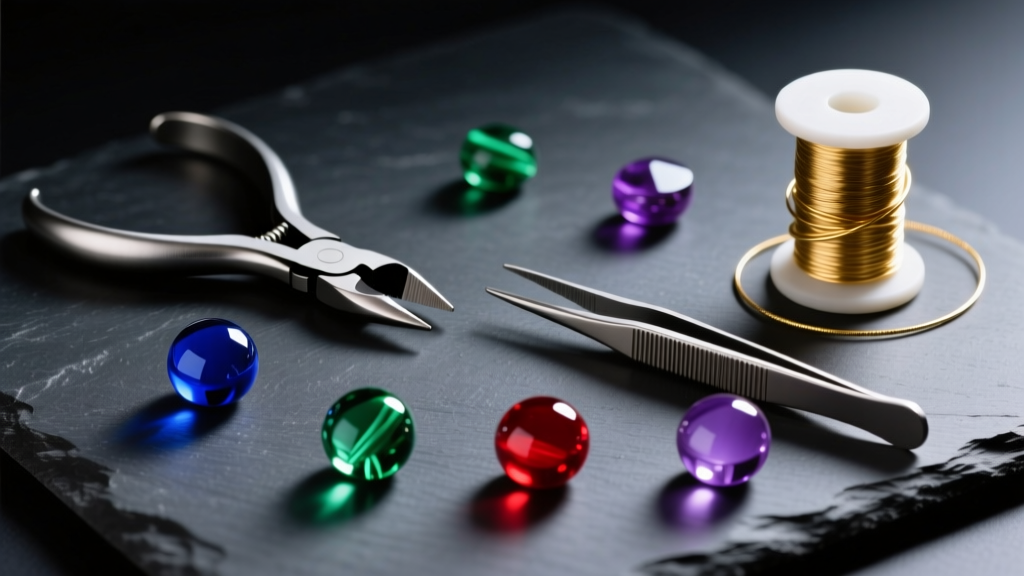
When learning how to make beaded earrings, most beginners focus entirely on aesthetics—color palettes, bead shapes, and overall silhouette. However, from a budget and value assessment perspective, the real mastery lies in understanding the unit economics of jewelry making. The retail jewelry industry typically operates on a keystone pricing model, marking up wholesale costs by 2.5 to 3 times to account for overhead, marketing, and retail space. By bringing the manufacturing process in-house, you bypass these markups, but you must carefully manage your raw material inputs to ensure your DIY creations actually yield financial value rather than just becoming an expensive hobby.
This comprehensive guide breaks down the exact metallurgical and gemological costs of crafting beaded earrings, comparing DIY material expenses directly against fast-fashion and independent boutique retail prices. Whether you are building a personal collection or launching a small-scale Etsy shop, understanding where your money goes is the first step to maximizing your jewelry budget.
Material Breakdown: Where Your Money Actually Goes
The foundation of any beaded earring relies on two primary cost centers: the structural metals (wire and findings) and the decorative elements (beads and gemstones). Skimping on either will result in a product that either falls apart or looks cheap, destroying the perceived value.
Wire and Headpins: The Structural Backbone
Wire is sold by gauge (thickness) and temper (hardness). For standard beaded dangles and French hooks, 21-gauge half-hard wire is the industry sweet spot. Dead-soft wire is too pliable and will bend out of shape when taking the earrings on and off, while full-hard wire is too brittle and will snap when you attempt to form the ear wire loop.
When assessing value, the metal composition is critical. Base metals (like brass or copper) are inexpensive but will oxidize and turn the wearer's skin green. Gold-plated wire is a false economy; the electroplated gold layer is often less than 1 micron thick and will wear off within months of friction. The highest value-to-cost ratio is found in 14/20 gold-filled wire. According to Rio Grande, gold-filled wire features a mechanical bond where at least 5% of the total weight is solid 14k gold, ensuring it will not flake or tarnish under normal wear. A 10-foot spool of 21g 14/20 gold-filled wire costs approximately $38.00. Since a standard French hook requires about 2.5 inches of wire, one spool yields roughly 48 pairs of ear wires, bringing the structural metal cost to just $0.79 per pair.
Beads: Glass, Crystal, and Gemstone Tiers
The decorative elements dictate the visual impact and the final price point. Mass-produced acrylic beads cost fractions of a penny but suffer from mold seams and low optical clarity. For high perceived value on a budget, fire-polished Czech glass and Preciosa crystal bicones are the premier choices. Preciosa, a heritage Czech manufacturer, produces lead-free crystals with a high refractive index that rivals the now-restricted Swarovski DIY market. A 100-piece pack of 4mm Preciosa bicones costs around $6.00, meaning a pair of earrings utilizing 8 beads costs just $0.48 in crystal elements.
DIY vs. Retail: A Value Assessment Matrix
To truly understand the financial advantage of learning how to make beaded earrings, we must compare the amortized DIY cost against current retail market tiers. The table below outlines the estimated cost per pair for a standard 1.5-inch gold-filled dangle earring featuring Czech glass teardrops and crystal accents.
| Cost Component | DIY Cost (Per Pair) | Fast Fashion Retail | Independent Boutique Retail |
|---|---|---|---|
| Ear Wires (14/20 Gold-Filled) | $0.79 | $0.15 (Gold-Plated Brass) | $1.50 (Solid Gold-Filled) |
| Headpins & Wire Wrapping | $0.45 | $0.10 (Base Metal) | $0.80 |
| Beads (Glass & Crystal Mix) | $1.10 | $0.50 (Acrylic/Resin) | $4.50 (Premium Crystal) |
| Findings (Jump Rings, Crimps) | $0.15 | $0.05 | $0.30 |
| Total Material Cost | $2.49 | $0.80 | $7.10 |
| Final Retail Price (Markup) | N/A | $12.00 - $18.00 | $35.00 - $55.00 |
As the matrix demonstrates, while fast fashion wins on raw material cost by utilizing cheap, allergenic base metals and plastics, the DIY approach allows you to match the boutique tier in material quality for a fraction of the cost. You are effectively capturing the $30 to $50 retail markup as your own labor value or savings.
Essential Tools: Upfront Investment vs. Long-Term Value
A common budgeting mistake is purchasing $15 jewelry tool kits from generic marketplaces. These tools feature misaligned jaws that mar soft metals and flush cutters that leave a sharp "pinch" rather than a flat cut, requiring excessive filing. To maintain the structural integrity of your wire and avoid work-hardening it prematurely, invest in precision tools.
- Flush Cutters: Brands like Tronex or Lindstrom (approx. $55) feature hardened steel blades that slice through 20-gauge wire like butter, leaving a perfectly flat end that won't scratch the wearer's ear.
- Chain-Nose Pliers: Used for opening jump rings and crimping. Look for smooth, untextured jaws to prevent leaving tool marks on gold-filled wire.
- Round-Nose Pliers: Essential for forming consistent, perfectly round loops on your headpins. Tapered jaws allow for varying loop sizes.
While a professional-grade tool set may cost $120 to $150 upfront, these tools will easily last through the creation of 1,000+ pairs of earrings. Amortized over a year of active jewelry making, the tool cost per pair drops below $0.05, making it a negligible factor in your value assessment.
Avoiding Costly Beginner Mistakes (Failure Modes)
Value isn't just about cheap materials; it's about preventing waste and product failure. Understanding metallurgical failure modes will save you from throwing away ruined components.
1. Work Hardening and Wire Fatigue: Every time you bend gold-filled or sterling silver wire, it becomes harder and more brittle—a process called work hardening. If you bend a loop, realize it's crooked, unbend it, and try again, the wire will likely snap. The cost-effective approach is to practice your loop formation on cheap copper wire before committing to expensive gold-filled stock.
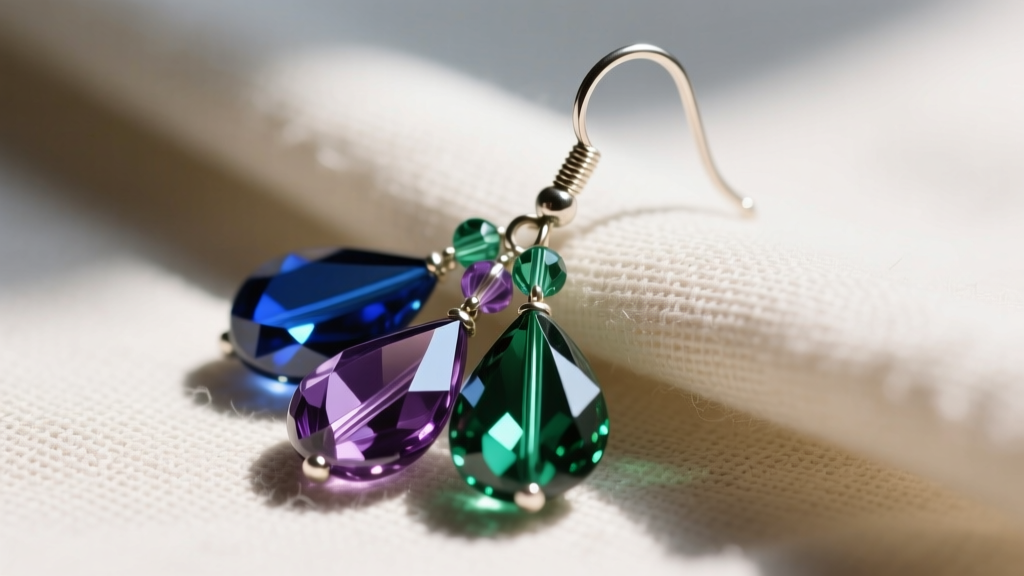
2. Earlobe Tearing from Heavy Beads: Natural gemstone beads (like agate or jasper) are significantly heavier than glass. Hanging a 15-gram stone teardrop from a thin 22-gauge wire will cause the wire to slice through the earlobe over time. To engineer value and comfort, use a thicker 18-gauge headpin for the stone, and always pair heavy earrings with clear silicone or leather support washers that slide onto the back of the ear wire to distribute the weight across a wider area of the lobe.
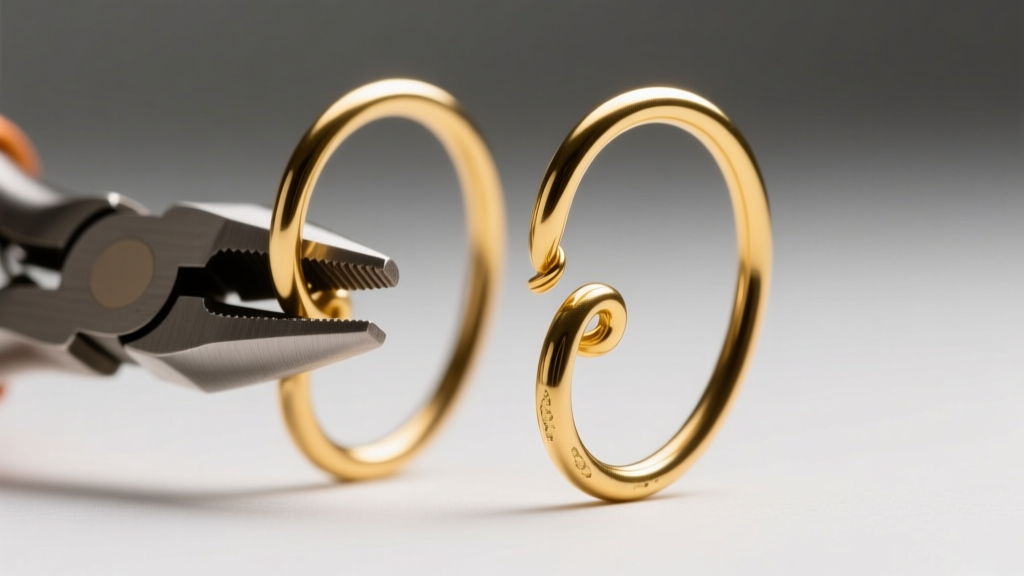
3. Improper Jump Ring Closure: Pulling jump rings apart side-to-side weakens the metal and distorts the circle. Always open them by twisting one end toward you and the other away. This maintains the structural tension and ensures the ring snaps back into a seamless closure, preventing expensive beads from falling off and getting lost.
Strategic Sourcing for Maximum Margin
Where you buy your materials dictates your baseline costs. Retail craft stores often mark up bead strands by 300% compared to dedicated wholesale suppliers. To maximize your budget, utilize tiered pricing structures offered by major industry suppliers like Fire Mountain Gems. Their assortable pricing model allows you to mix and match different types of beads and findings to reach higher discount tiers (e.g., spending $200 to unlock a 45% discount across your entire cart).
For precious metals and high-end findings, purchasing directly from refiners and specialized jewelry suppliers like Rio Grande ensures you are getting accurate metallurgical assays. This guarantees that your "sterling silver" is actually .925 purity and your gold-filled wire meets federal trade commission standards, protecting you from selling subpar goods if you decide to monetize your craft.
"True value in jewelry making isn't found by buying the cheapest components, but by strategically allocating your budget to the elements the wearer interacts with most: the ear wire and the focal bead. Upgrading to hypoallergenic titanium or niobium ear wires costs only $0.30 more per pair but exponentially increases the wearable value for sensitive ears."
Final Verdict: Is DIY Worth the Investment?
Learning how to make beaded earrings is a highly rewarding financial endeavor if approached with a manufacturer's mindset. By investing in proper 14/20 gold-filled metals, precision tooling, and high-clarity Czech or Preciosa crystals, you can produce boutique-quality earrings for roughly $2.50 to $4.00 per pair. Compared to the $40+ retail price of equivalent handcrafted pieces, the ROI on your time and material investment is substantial. Whether you are gifting them, building a personal collection, or selling them, the budget-conscious artisan who prioritizes structural integrity and optical clarity will always win the value game.


