Can You Wear Earrings in an MRI? The Ultimate Safety Guide
Wondering if you can wear earrings in an MRI? Discover which metals are safe, the risks of heating and artifacts, and expert removal tips.

The Short Answer: Can You Wear Earrings in an MRI?
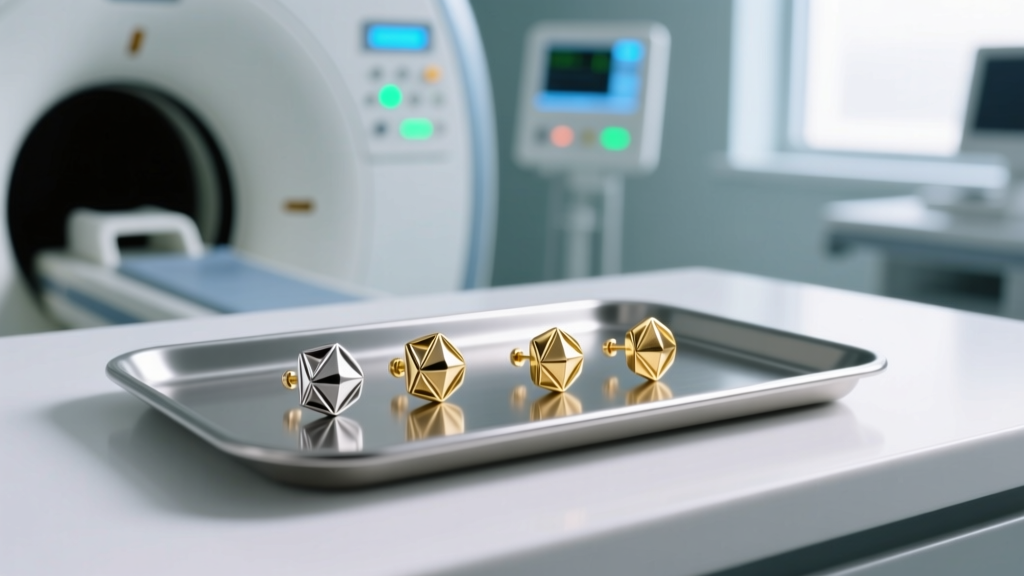
If you are scheduled for a magnetic resonance imaging scan, the short answer is: no, you generally cannot wear earrings in an MRI. While the exact protocol depends on the metal composition of your jewelry, the location of your piercings, and the specific body part being scanned, the vast majority of radiology clinics will require you to remove all ear jewelry before entering the scanner room.
As we navigate the advanced diagnostic landscape of 2026, with 3-Tesla (3T) and even 7-Tesla research MRI machines becoming more common, the magnetic forces and radiofrequency (RF) energy involved are immense. Wearing the wrong earrings can result in severe burns, ruined diagnostic images, or dangerous projectile accidents. This guide breaks down the exact physics, material grades, and clinical protocols you need to know to protect your piercings and your health.
The Physics of MRI and Your Earlobes
An MRI scanner utilizes a massive superconducting magnet to align the protons in your body's water molecules. This static magnetic field is always on, even when the machine is not actively scanning. When you introduce metal into this environment, three distinct physical reactions can occur depending on the metal's atomic structure.
Ferromagnetic, Paramagnetic, and Diamagnetic Metals
- Ferromagnetic Metals: Metals like iron, cobalt, and nickel are strongly attracted to magnetic fields. If your earrings contain these (common in cheap 'surgical steel' or brass alloys), the MRI will pull them with extreme force, potentially tearing your earlobe or cartilage.
- Paramagnetic Metals: Metals like platinum and certain titanium alloys are weakly attracted to the magnet. They generally will not fly out of your ear, but they can still interact with the machine's RF pulses.
- Diamagnetic Metals: Metals like pure gold, niobium, and copper slightly repel magnetic fields. While they are safe from the 'projectile effect,' they are highly conductive and pose a severe burn risk from RF heating.
According to the FDA MRI Safety Guidelines, any metallic object brought into the scanner room must be rigorously screened to prevent the 'missile effect' and thermal injuries.
ASTM F2503: Decoding MRI Safety Labels
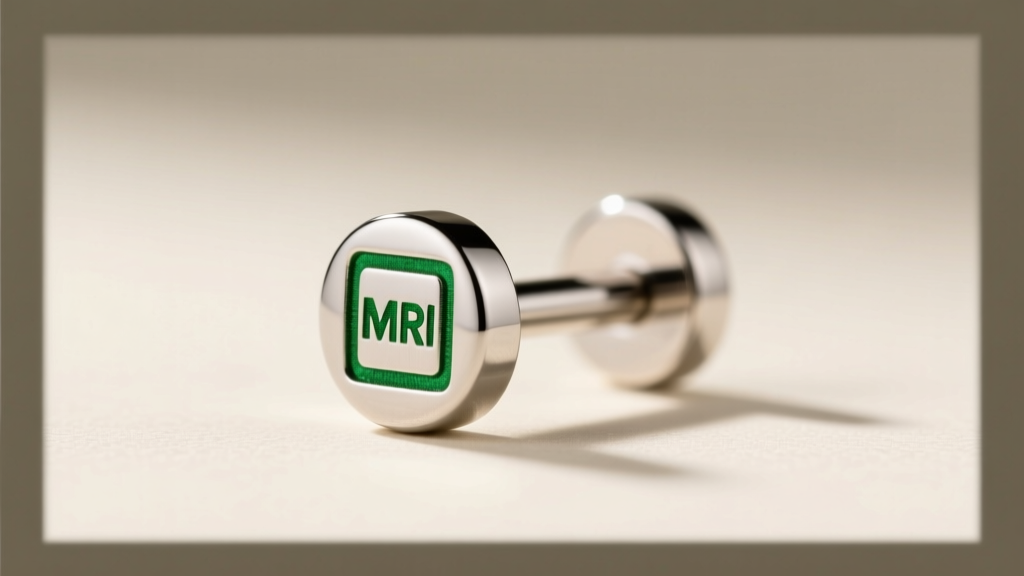
In the professional piercing and medical device industries, safety is governed by the ASTM F2503 standard. This standard categorizes items into three distinct tiers based on their behavior in the MRI environment. When buying high-end body jewelry, reputable brands will often laser-etch or document these classifications.
| ASTM F2503 Marking | Classification | Meaning for Ear Piercings |
|---|---|---|
| Green Square | MR Safe | Poses no known hazard in all MRI environments. Usually non-conductive or specific non-magnetic metals. |
| Yellow Triangle | MR Conditional | Safe only under highly specific conditions (e.g., 1.5T scanner only, specific SAR limits). Most implant-grade titanium falls here. |
| Red Circle / Slash | MR Unsafe | Known magnetic or conductive hazard. Must be removed. Includes most fashion jewelry and magnetic clasps. |
The Hidden Dangers: RF Heating and Image Artifacts
Even if your earrings are not magnetic, they can still cause severe harm or ruin your medical scan due to the secondary systems inside the MRI machine.
The Antenna Effect: Gauge Size and Post Length
To generate images, the MRI machine fires rapid Radiofrequency (RF) pulses. These pulses induce electrical currents in conductive materials. If you wear metallic earrings, the jewelry can act as an antenna, concentrating this RF energy at the tip of the post where it touches your tissue. This is known as Specific Absorption Rate (SAR) heating.
The risk of thermal burns scales with the mass and length of the metal. A delicate 20-gauge gold wire poses a lower heating risk than a thick 10-gauge or 8-gauge titanium barbell. Furthermore, long flat-back labrets (often 8mm to 12mm in length) worn in conch or lobe piercings have enough surface area to absorb significant RF energy, potentially causing second-degree burns inside the piercing fistula.
Susceptibility Artifacts on Brain and Neck Scans
If you are undergoing an MRI of the brain, jaw, temporomandibular joint (TMJ), or cervical spine, even 'MR Safe' metals will ruin the scan. Metals distort the local magnetic field, creating what radiologists call 'susceptibility artifacts.' On the final image, this looks like a massive black void or a bright starburst emanating from your ear, completely obscuring the adjacent brain tissue or lymph nodes. The American College of Radiology (ACR) strictly mandates the removal of all jewelry near the scan field of view to ensure diagnostic accuracy.

Metal-by-Metal Breakdown for Ear Piercings
Not all earrings are created equal. Here is how common piercing metals react inside an MRI scanner:
- Implant-Grade Titanium (ASTM F136): The gold standard for body jewelry. It is non-ferromagnetic and will not rip out of your ear. However, it is still conductive and causes image artifacts. It is classified as MR Conditional.
- Niobium: Highly biocompatible and completely non-magnetic. It is generally considered MR Safe, but like titanium, it will cause artifacts on head and neck scans.
- 14k and 18k Solid Gold: Non-magnetic and safe from the projectile effect. However, gold is highly conductive and poses a significant RF heating risk, especially in thicker gauges or hoop earrings that form a closed conductive loop.
- Surgical Stainless Steel (316L / 316LVM): Contains trace amounts of ferromagnetic elements. While often used in healed piercings without issue, the massive pull of a 3T MRI can cause migration, tearing, or discomfort. It is generally deemed MR Unsafe for high-tesla scans.
- Gold-Plated or PVD-Coated Brass/Copper: Highly dangerous. The base metals are reactive, and the thin plating can flake or heat unevenly. Always remove these before any medical procedure.
Troubleshooting: What If You Cannot Remove Your Earrings?
A common dilemma occurs when a patient has a fresh, unhealed piercing, or a threadless flat-back labret that has become stuck due to dried lymph or stripped pins. If you are facing an emergency MRI and cannot remove your jewelry, follow these steps:
- Inform the MRI Technologist Immediately: Do not hide your jewelry. Tell the technician the exact metal, the gauge, the location, and whether the piercing is healed.
- Request Glass Retainers: If the piercing is healing and you fear closure, ask if you can swap the metal for implant-grade borosilicate glass retainers. Glass is 100% non-conductive, non-magnetic, and MR Safe.
- Use Sterile Hemostats: If a threadless pin is stuck, a professional piercer or a helpful nurse can use sterile rubber-tipped hemostats to grip the decorative end while pulling the flat back, bypassing the need for finger grip strength.
- Delay Non-Urgent Scans: If the scan is elective and you have a fresh cartilage piercing (like a daith or rook) that cannot be removed without risking severe trauma, consult your doctor about postponing the scan or using an alternative imaging modality like a CT scan, as noted in Mayo Clinic's imaging guidelines.
Expert Aftercare: Reinserting and Cleaning Post-MRI
Once your scan is complete, you will need to reinsert your earrings. Because the piercing fistula can tighten within minutes, preparation is key. Before your appointment, clean your jewelry thoroughly with warm water and mild, fragrance-free soap. Bring a small kit containing:
- Sterile saline wound wash (0.9% sodium chloride).
- A water-based lubricant (like pure jojoba oil or a dedicated piercing insertion taper gel) to help the post glide back in without micro-tearing the tissue.
- Clean nitrile gloves to ensure you have a firm grip on small earring backings, which are notoriously difficult to handle with bare, slippery fingers.
After reinserting, spray the area generously with sterile saline and gently pat dry with non-woven gauze. Avoid twisting or rotating the jewelry, as this disrupts the delicate epithelial lining of the piercing channel.
Final Verdict and Clinic Protocols
Ultimately, the rule of thumb for 2026 radiology protocols is simple: leave your earrings at home. The risks of RF thermal burns, lobe tearing, and compromised diagnostic imaging far outweigh the inconvenience of leaving your jewelry behind. Invest in high-quality, implant-grade titanium or glass retainers for easy swapping, and always maintain open communication with your radiology team to ensure both your piercings and your medical health remain perfectly intact.


