Earring Gauge Size mm Guide: Budget & Value Assessment
Discover how earring gauge size mm impacts price and durability. Our budget guide helps you assess metal weight, material grades, and true value.

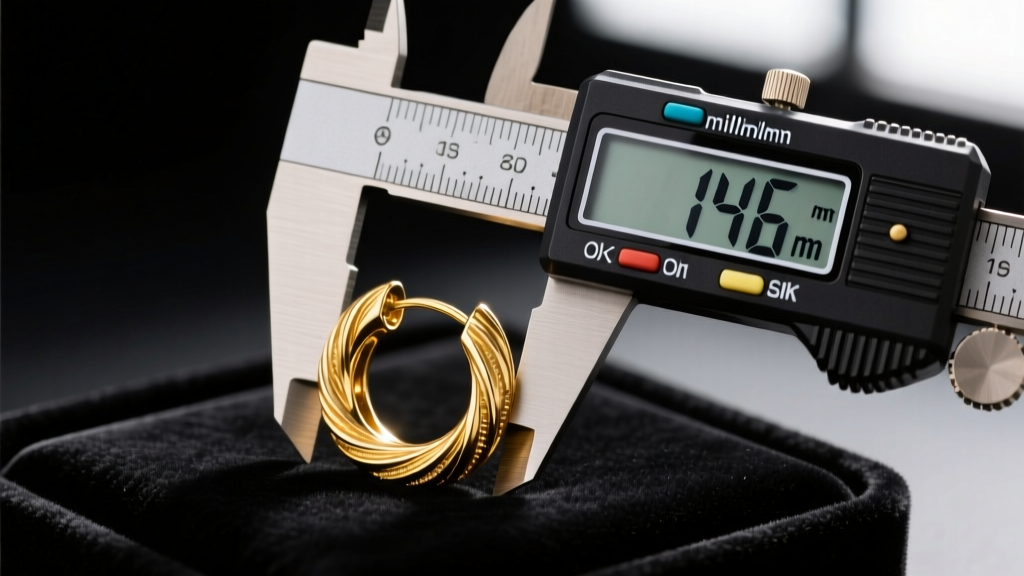
The Hidden Cost of Thickness: Why Earring Gauge Size mm Matters
When shopping for fine jewelry, the average consumer obsesses over gemstone carat weight, gold purity, and brand prestige. Yet, one of the most critical factors dictating both the longevity and the true baseline cost of a piece is frequently ignored: the wire thickness. Understanding the exact earring gauge size mm conversion is the ultimate cheat code for budget-conscious buyers in 2026. With precious metal markets experiencing significant volatility, the actual volume of metal used in your jewelry directly impacts the retail markup.
The jewelry industry uses the American Wire Gauge (AWG) system, which is notoriously counterintuitive. As the gauge number decreases, the physical thickness in millimeters increases. A standard lobe piercing is usually 20g or 18g, while cartilage and structural hoops often require 16g or 14g. Failing to understand these millimeter conversions can lead to overpaying for hollow, fragile pieces or inadvertently purchasing jewelry that will cause long-term tissue damage.
The Master Conversion Chart: Gauge, Millimeters, and Price Impact
To accurately assess value, you must first translate the archaic gauge system into measurable metric data. Below is the definitive conversion chart used by professional piercers and high-end jewelry manufacturers, alongside the relative metal weight impact that drives pricing.
| Gauge (AWG) | Thickness (mm) | Decimal Inch | Primary Application | Metal Weight Premium (vs. 18g) |
|---|---|---|---|---|
| 20g | 0.81 mm | 0.032" | Standard lightweight lobe studs, delicate ear cuffs | Baseline (0%) |
| 18g | 1.0 mm | 0.040" | Standard lobe hoops, nose studs, lightweight dangles | +52% Volume |
| 16g | 1.2 mm | 0.051" | Cartilage (helix, flat), tragus, structural labrets | +122% Volume |
| 14g | 1.6 mm | 0.064" | Heavy lobe hoops, daith, rook, industrial barbells | +293% Volume |
| 12g | 2.0 mm | 0.081" | Stretched lobes, heavy gauge ear cuffs, conch hoops | +611% Volume |
As the table illustrates, jumping from an 18g (1.0mm) to a 14g (1.6mm) earring doesn't just represent a 60% increase in diameter; it represents a nearly 300% increase in metal volume and weight. When buying solid 14k or 18k gold, this volumetric leap is the primary reason a 14g seamless hoop can cost three times as much as an 18g hoop of the exact same diameter.
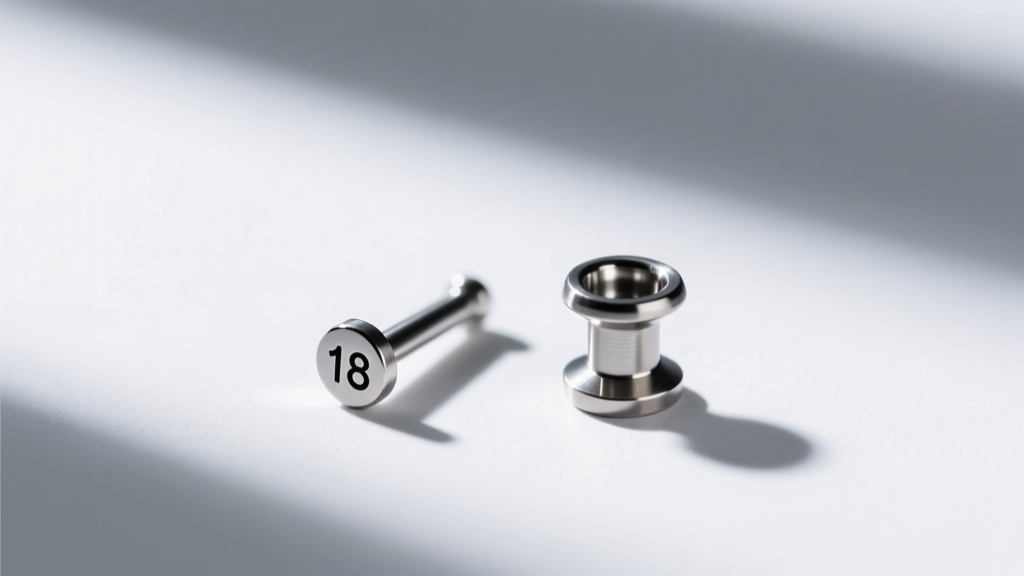
Material Grades vs. Gauge: Finding the True Value Sweet Spot
A thick gauge does not automatically equate to high value if the material grade is subpar. Conversely, a thin gauge in a premium material can offer exceptional longevity if engineered correctly. Here is how to assess the intersection of thickness and metallurgy.
The Titanium Advantage at 1.2mm (16g)
For cartilage piercings and sensitive ears, Implant-Grade Titanium (ASTM F-136) is the undisputed standard. According to the Association of Professional Piercers (APP), this specific aerospace-grade alloy is biocompatible and contains virtually no nickel. Because titanium possesses immense tensile strength, a 1.2mm (16g) titanium post will resist bending and warping under daily pressure. Budget buyers should prioritize 16g titanium for cartilage over 14g surgical steel, as the superior yield strength of titanium compensates for the thinner profile, saving you money without sacrificing structural integrity.
The Gold Plating Trap in Thick Gauges
Many fast-fashion and mid-tier brands market "heavy duty" 14g (1.6mm) or 12g (2.0mm) hoops as premium items. However, if these are made of gold-plated brass or stainless steel, they represent a poor long-term value. Thick base metals plated in gold are highly susceptible to friction wear at the hinge and clasp mechanisms. Once the plating wears through on a 1.6mm wire, the exposed brass will oxidize and turn the skin green. A 1.0mm (18g) solid 14k gold hoop will always outlast and outperform a 1.6mm gold-plated brass hoop, offering a vastly superior cost-per-wear value.
Structural Integrity: Avoiding the "Cheese-Cutter" Failure Mode
One of the most expensive mistakes a jewelry buyer can make is ignoring the physics of tissue migration. The "cheese-cutter effect" occurs when a thin wire supports a disproportionately heavy load.
If you purchase a beautiful, heavy gemstone dangle earring but it hangs from a standard 20g (0.81mm) wire, the pressure per square millimeter on your fistula (the piercing hole) exceeds the earlobe's tensile strength. Over months of wear, gravity will slowly pull the thin wire downward, causing painless but irreversible tissue tearing.
The Value Fix: Always check the gauge of heavy drop earrings. Upgrading to a 16g (1.2mm) or 14g (1.6mm) ear wire distributes the gravitational load across a 48% to 96% wider surface area. While the initial cost of a heavier gold ear wire might add $30 to $60 to the retail price, it preserves the anatomical integrity of your earlobe, saving you hundreds of dollars in potential reconstructive piercing procedures down the line.
Cartilage and Hoops: Budgeting for the Right Fit
Different ear placements require specific earring gauge size mm profiles to heal correctly and sit flush against the anatomy. Buying the wrong size not only wastes money but leads to irritation bumps and rejected piercings.
The 1.2mm (16g) Standard for Flat and Helix Piercings
The vast majority of professional cartilage piercings are performed at 16g (1.2mm). When shopping for flat studs or helix hoops, sticking to this exact millimeter size ensures a snug fit that minimizes movement. Excessive movement in a cartilage piercing delays healing and causes hypertrophic scarring. High-end brands like Anatometal and BVLA engineer their 1.2mm labret posts with precision threading, ensuring the gemstone sits perfectly flush without irritating the surrounding tissue.
Sizing Up to 1.6mm (14g) for Seamless Hoops
While 16g is standard for studs, continuous seamless hoops in the conch, daith, or rook often perform better at 14g (1.6mm). The thicker wire prevents the hoop from warping or bending out of a perfect circle when you insert or remove it. When budgeting for high-quality gold or niobium continuous rings, allocate a slightly higher budget for 14g options to ensure the metal retains its temper and shape over years of daily wear.
How to Verify Earring Gauge Size mm at Home
Never blindly trust the gauge size listed on an e-commerce product description, especially from overseas marketplaces where quality control can be lax. A listing might claim a hoop is 16g (1.2mm), but physical measurement often reveals it is actually 18g (1.0mm) or even 20g (0.81mm).
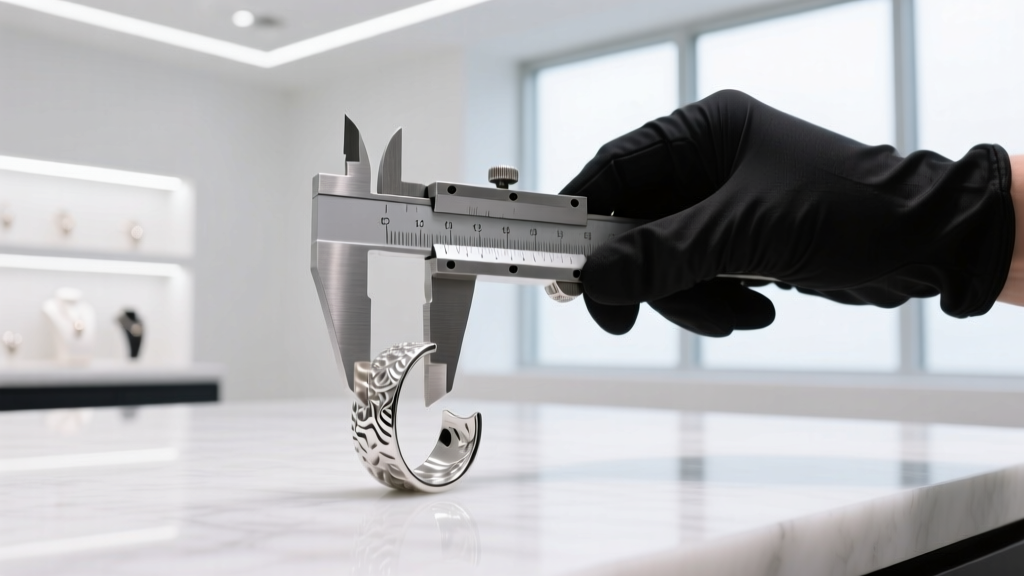
To protect your budget and your piercings, invest in a basic digital vernier caliper (available for under $15).
- Zero the Caliper: Close the jaws completely and press the zero button.
- Measure the Wire: Gently clamp the caliper jaws around the thickest part of the earring wire or post (avoiding the hinges or decorative ends).
- Read the mm Value: Compare the digital readout to the master chart above. If your "14g" earring measures 1.02mm, you have been sold an 18g earring and should request a refund.
This simple verification step is crucial when buying vintage jewelry, second-hand fine jewelry, or pieces from independent artisans who may not use standardized manufacturing molds.
Final Verdict: Maximizing Your Jewelry Budget
True value in fine jewelry is not just about the lowest upfront price; it is about the intersection of material purity, structural engineering, and anatomical safety. By mastering the earring gauge size mm conversions, you transition from a passive consumer to an informed buyer.
Prioritize solid 14k or 18k gold at 18g (1.0mm) for standard lobe hoops to balance precious metal costs with everyday durability. For cartilage and heavy dangles, invest the extra capital into 16g (1.2mm) or 14g (1.6mm) implant-grade titanium or solid gold to prevent tissue migration and jewelry warping. Armed with a digital caliper and an understanding of metal volume, you can confidently audit your jewelry box and ensure every dollar spent translates into lasting quality.


