Finding Beaded Earrings Green: A Beginner's Guide
Discover how to choose, style, and care for beaded earrings green styles. Learn about gemstone types, wire gauges, and face-shape matching.

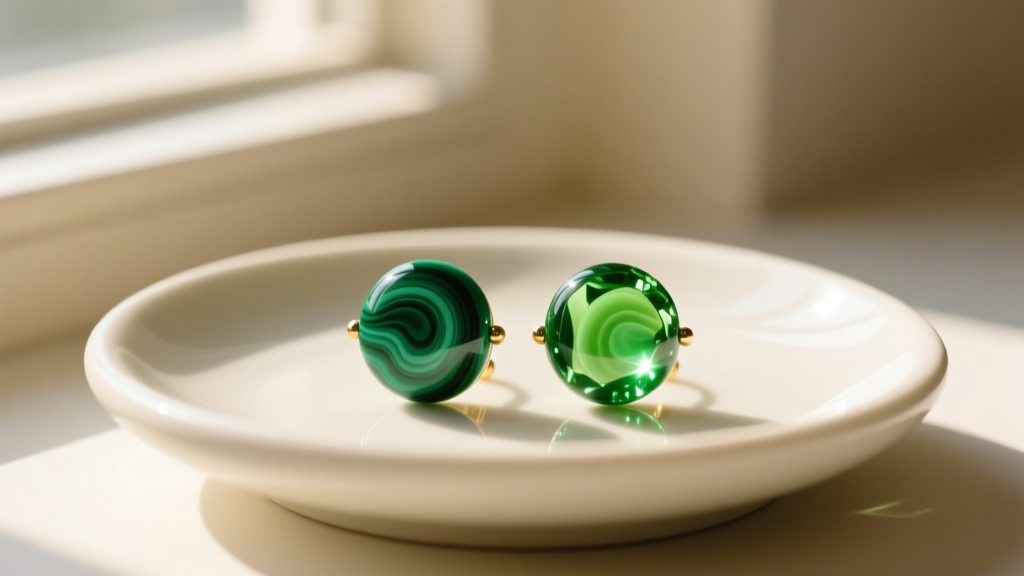
The Timeless Appeal of Green Beaded Earrings
When building a versatile jewelry collection, finding beaded earrings green hues is often a top priority for both seasoned collectors and newcomers. Green is nature's most abundant color, bridging the gap between neutral earth tones and vibrant statement shades. In 2026, the trend has shifted heavily toward ethically sourced gemstones and artisan-crafted glass beads, moving away from mass-produced plastics. For beginners, navigating the sheer volume of options—from translucent peridot briolettes to opaque malachite rounds—can be overwhelming. This guide breaks down the material science, structural anatomy, and styling frameworks you need to confidently select, wear, and care for green beaded earrings.
Decoding the Greens: Gemstone vs. Glass vs. Seed Beads
Not all green beads are created equal. The material dictates the earring's weight, durability, and price point. According to the Gemological Institute of America (GIA), understanding the Mohs hardness scale is critical when choosing gemstone beads, as it determines how well the material will resist scratching and chipping during daily wear.
| Material | Mohs Hardness | Avg. Price (per pair) | Weight Profile | Best For |
|---|---|---|---|---|
| Malachite | 3.5 - 4.0 | $45 - $120 | Heavy | Statement drops, occasional wear |
| Jade (Nephrite) | 6.0 - 6.5 | $60 - $200 | Medium-Heavy | Everyday studs, carved dangles |
| Peridot | 6.5 - 7.0 | $80 - $250 | Light-Medium | Faceted briolettes, fine wire wrapping |
| Czech Glass | 5.5 - 6.0 | $15 - $40 | Light | Cluster earrings, fringe designs |
| Miyuki Seed Beads | N/A (Glass) | $20 - $60 | Ultra-Light | Intricate weaving, ear cuffs |
For beginners, Czech glass and Miyuki seed beads offer the best entry point. They are uniform in size, highly durable, and won't break the bank if you accidentally drop them. If you prefer natural stones, Jade is exceptionally tough due to its interlocking fibrous structure, making it far less prone to shattering than Peridot, which has distinct cleavage planes that can split if struck against a hard surface.
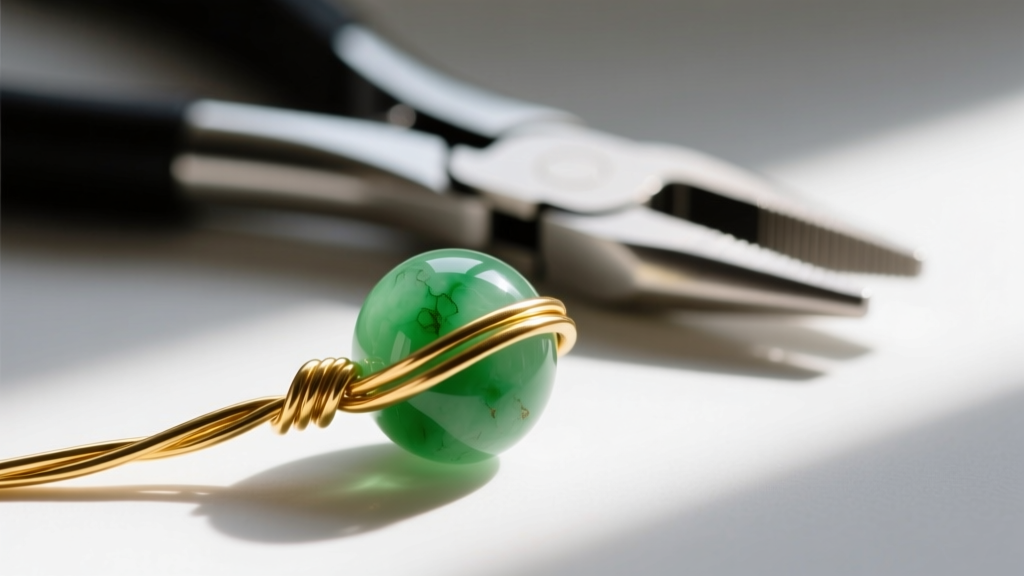
Wire Gauges and Findings: What Beginners Must Know
The structural integrity of your beaded earrings green designs relies entirely on the wire gauge and findings. Wire gauge refers to the thickness of the metal. In the American Wire Gauge (AWG) system, a higher number means a thinner wire. Sourcing high-quality wire from reputable suppliers like Rio Grande ensures you are getting accurate temper and purity.
- 20-Gauge (0.81mm): The industry standard for ear wires (fishhooks). It is thick enough to hold its shape when bent into a loop but thin enough to comfortably pass through a standard ear piercing (which is typically 20g or 18g).
- 22-Gauge (0.64mm): Ideal for wire-wrapping medium-sized gemstone beads and creating headpins. It offers a delicate look while maintaining structural rigidity.
- 24-Gauge (0.51mm): Used exclusively for wrapping small briolettes or weaving seed beads. It is too thin for ear wires, as it will easily bend out of shape under the weight of the beads.
Pro Tip for Sensitive Ears: If you are crafting or buying for sensitive lobes, avoid cheap brass or nickel-plated wires. Opt for Niobium or Implant-Grade Titanium (ASTM F136). Niobium is highly biocompatible and can be anodized to create a permanent, non-toxic green finish that perfectly complements green beads without relying on plating that might wear off.
Matching Green Beads to Your Face Shape and Skin Tone
Styling beaded earrings is an exercise in visual balance. The cascading nature of dangle and drop earrings can dramatically alter the perceived proportions of your face.
Face Shape Guidelines
- Round Faces: Avoid circular hoops or short, chunky cluster studs. Instead, opt for long, angular green bead dangles (like emerald-cut peridot or rectangular jade bars) to elongate the face.
- Square Faces: Soften a strong jawline with curved, organic shapes. Teardrop-shaped green glass beads or circular malachite hoops add necessary softness.
- Oval Faces: The universal shape. You can pull off everything from heavy malachite chandeliers to minimalist green seed bead huggies.
- Heart Faces: Balance a wider forehead and narrow chin with bottom-heavy designs, such as triangle-shaped beaded fringe earrings that draw the eye downward.
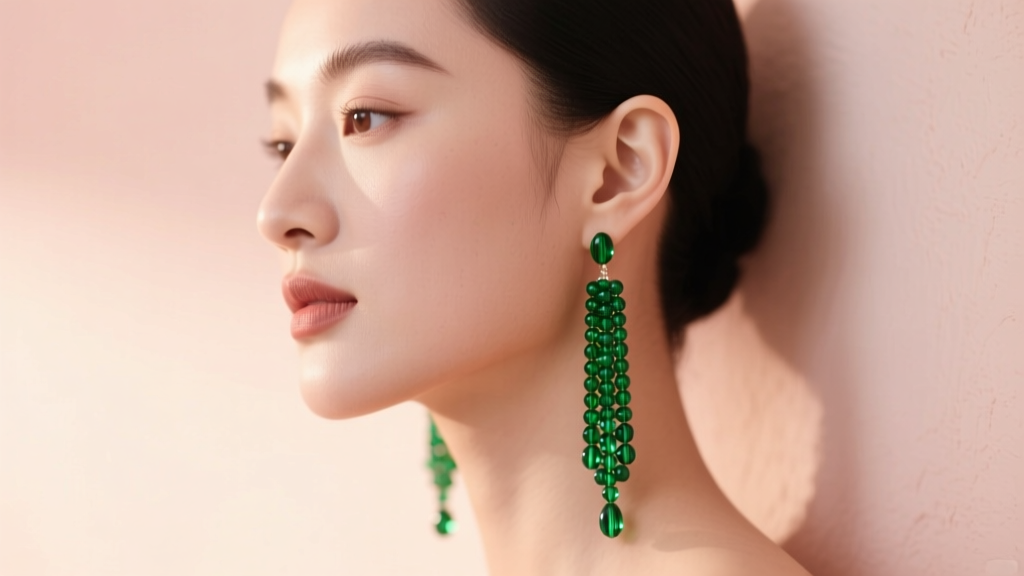
Skin Tone Undertones
Green is uniquely versatile because it spans both warm and cool color palettes. To find your perfect shade, look at the veins on your wrist: blue/purple indicates cool undertones, while green/olive indicates warm undertones.
- Warm Undertones: Look for earthy, yellow-based greens. Olive jade, moss agate, and warm-toned Czech glass in 'chrysolite' will make your skin glow.
- Cool Undertones: Seek out blue-based greens. Mint peridot, emerald, and turquoise-green seed beads will provide a striking, harmonious contrast.
Common Failure Modes and How to Prevent Them
Even the most beautiful beaded earrings green styles will fail if constructed or maintained poorly. According to beading authorities like Fire Mountain Gems, understanding material fatigue is crucial for longevity.
The Work-Hardening Trap: When you bend a piece of wire (like forming a loop on a headpin), the metal 'work-hardens' and becomes brittle. If you use your pliers to open and close a wire loop by pulling the ends apart sideways, you will eventually snap the wire. Always open loops by twisting them forward and backward, like a door on a hinge.
Drill Hole Chipping: Gemstones like peridot and malachite are notoriously fragile around the drill hole. If a heavy bead swings freely on a rigid wire, the metal will act like a chisel, eventually cracking the top of the bead. The Fix: Always use a tiny rubber O-ring or a micro-bead cushion between the wire loop and the gemstone to absorb kinetic shock.
Thread Degradation: If your green seed bead earrings are strung on nylon or silk thread, be aware that UV exposure and skin oils will degrade the fibers over 2 to 3 years. For structural longevity, beginners should learn to weave seed beads using Fireline braided gel-spun polyethylene thread (6lb test), which is virtually impervious to stretching and moisture.
Final Thoughts on Building Your Collection
Curating a collection of green beaded earrings is a rewarding journey that blends geology, metallurgy, and personal style. By understanding the Mohs hardness of your chosen gemstones, selecting the correct wire gauge for your findings, and matching the silhouette to your face shape, you elevate your jewelry from mere accessories to intentional, lasting art. Whether you are drawn to the deep, banded mysteries of malachite or the playful, lightweight fringe of green seed beads, applying these foundational principles will ensure your earrings remain vibrant and structurally sound for years to come.


