Simple Hoop Earrings: The Ultimate Budget & Value Guide 2026
Discover the true value of simple hoop earrings in 2026. We compare materials, gauge sizes, and pricing tiers to help you invest wisely.

The Illusion of "Cheap" Jewelry in 2026
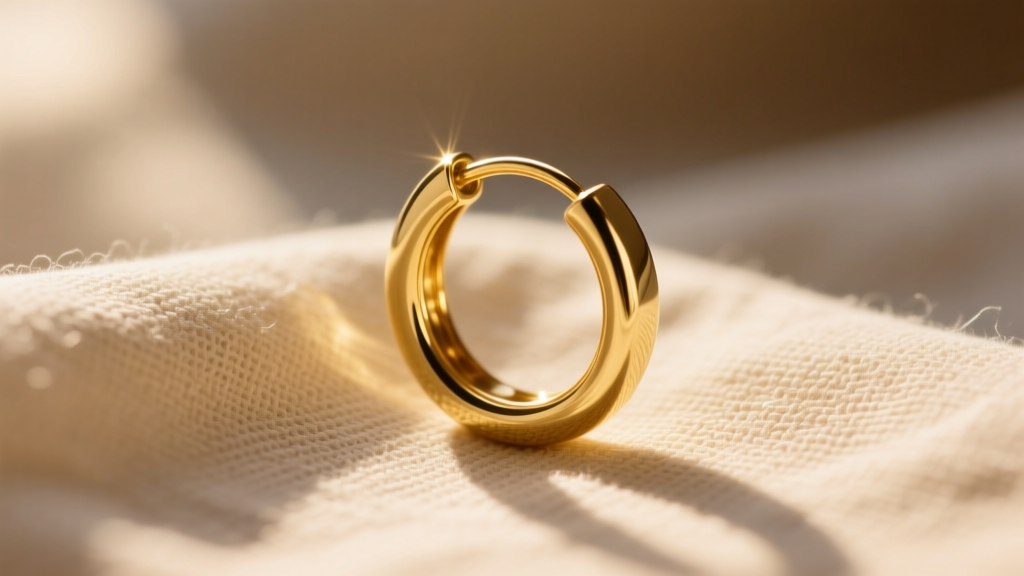
When shopping for simple hoop earrings, the market presents a dizzying array of price points, from $12 fast-fashion finds to $400 designer staples. As a jewelry style guide tracking market shifts into 2026, we have seen a massive influx of "demi-fine" marketing that obscures the actual material value of everyday hoops. A budget-friendly price tag is only a true value if the earrings survive daily wear without tarnishing, snapping, or causing contact dermatitis. To assess the true budget and value of simple hoops, we must look past the brand name and scrutinize the metallurgy, gauge thickness, and hardware engineering.
Material Grades & Pricing Tiers
The foundation of any hoop earring's value lies in its base metal and surface treatment. According to the Gemological Institute of America (GIA), the purity and alloy composition of gold directly dictate its durability and color stability. In the budget and mid-tier markets, manufacturers use various methods to mimic the look of solid gold while cutting material costs.
- Flash Plated (Brass Base): Often priced under $20. These feature a microscopic layer of gold (less than 0.01 microns) over a brass or copper base. They will tarnish within weeks of exposure to skin oils and moisture.
- Gold Vermeil (Sterling Silver Base): Priced between $40 and $80. True vermeil requires a sterling silver base and a minimum of 2.5 microns of gold plating. This offers excellent value for those who want the look of gold without the solid gold price tag, though the plating will eventually wear through at friction points.
- Gold-Filled (Jeweler's Brass Base): Priced between $50 and $110. By law, gold-filled items must contain at least 5% (or 1/20th) gold by weight. The gold layer is mechanically bonded, making it exponentially more durable than vermeil.
- Solid 14k Gold: Priced $150 to $350+. The ultimate investment. 14k gold (58.5% pure gold) offers the perfect balance of rich color and structural rigidity for hoops that will never tarnish or flake.
| Material Type | 2026 Price Range | Expected Lifespan | Tarnish Resistance | Value Rating |
|---|---|---|---|---|
| Flash Plated Brass | $10 - $25 | 1 - 3 Months | Very Poor | Low |
| Gold Vermeil (925) | $40 - $85 | 1 - 3 Years | Moderate | Medium |
| 14k Gold-Filled | $55 - $120 | 5 - 10+ Years | High | High |
| Solid 14k Gold | $150 - $350+ | Lifetime | Excellent | Premium |
Gauge, Diameter, and Hardware Failure Points
Where budget brands truly compromise is in the structural engineering of the hoop. The gauge (thickness) of the wire dictates how well the earring holds its shape. Standard lobe piercings are typically done at 20g (0.81mm) or 18g (1.02mm).
The 22-Gauge Trap
To save on precious metal weight, many budget brands manufacture simple hoop earrings using 22-gauge (0.64mm) or even 24-gauge wire. While this makes the earrings lightweight and cheap to produce, 22g wire lacks the structural integrity to withstand daily life. If you sleep in a 22g hoop or accidentally catch it on a sweater, the metal will warp, bend, or snap. For long-term value, always seek out 18-gauge or 16-gauge hoops. The slight increase in material cost pays for itself by preventing the heartbreak of a permanently misshapen favorite pair.
Hinge and Clasp Mechanics
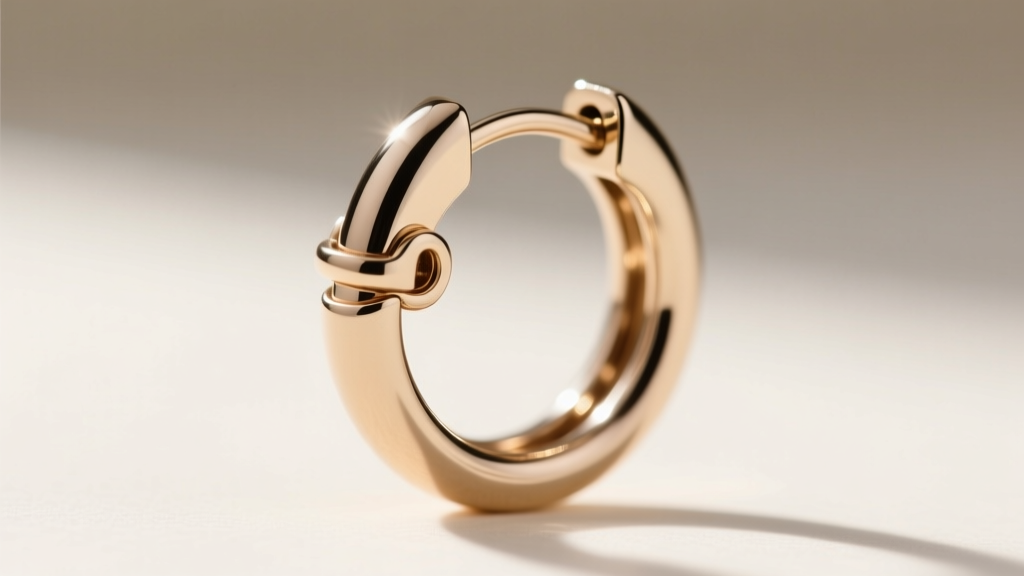
The closure mechanism is the most common point of failure on mid-sized hoops (15mm to 30mm). Budget hinged hoops often use weak tension pins that loosen over time, leading to the earring popping open and falling out. When assessing value, look for a "click-lock" or "saddle" closure where the post physically snaps into a machined groove. Avoid hollow-tube hoops in the budget category; the thin metal walls of hollow tubes are prone to denting and cannot be repaired by a jeweler once crushed.
Dermatological Considerations on a Budget
A cheap pair of earrings is entirely worthless if it causes an allergic reaction. Nickel is a common alloy used in cheap white gold and brass bases to increase hardness and lower costs. The American Academy of Dermatology notes that nickel allergy is one of the most common causes of allergic contact dermatitis. Once you develop a nickel sensitivity, it is lifelong.
Expert Tip: If you are buying budget-friendly silver hoops, ensure they are stamped "925" and explicitly labeled "nickel-free." For gold-toned budget options, 316L surgical stainless steel or titanium are vastly superior, hypoallergenic alternatives to mystery-metal alloys.
The Cost-Per-Wear (CPW) Framework
To truly evaluate the budget versus value proposition of simple hoop earrings, jewelry economists use the Cost-Per-Wear (CPW) metric. Because simple hoops are a foundational wardrobe staple, they are often worn 4 to 5 times a week.
Let us compare two purchasing scenarios over a three-year period:
- Scenario A (The Budget Cycle): You buy three pairs of $30 gold-plated brass hoops over three years because each pair tarnishes or breaks after 12 months. Total Cost: $90. Total Wears: ~450. CPW: $0.20 per wear.
- Scenario B (The Value Investment): You buy one pair of solid 14k gold 18-gauge hoops for $220. They last a lifetime and can be worn in the shower, pool, and bed. Total Cost: $220. Total Wears (over 3 years): ~750. CPW: $0.29 per wear.
While the CPW is close, Scenario B eliminates the frustration of broken clasps, green earlobes, and the time spent constantly replacing your jewelry. Furthermore, solid gold retains intrinsic scrap value, whereas tarnished brass has zero resale value.
Final Verdict: Where to Put Your Money
If your strict budget is under $40, abandon the search for gold-plated simple hoop earrings. Instead, pivot your budget toward high-quality, nickel-free 316L stainless steel or solid sterling silver hoops with robust 18-gauge wire and secure click-closures. If you can stretch your budget to the $150–$250 range, bypass the "demi-fine" vermeil trap entirely and invest directly in solid 14k gold. In the world of everyday jewelry, true value is not about spending the least amount of money today; it is about buying a piece that will seamlessly integrate into your life for the next decade.


