Advanced Beaded Earrings Tutorial: Wire Gauges & Tension
Master structural integrity with this advanced beaded earrings tutorial. Learn wire gauge selection, metallurgy, and tension techniques for fine jewelry.

Beyond the Basics: Engineering Fine Beaded Jewelry
Most beginner guides treat jewelry making as a simple craft of threading beads onto a string. However, crafting high-end, durable beaded earrings requires a fundamental understanding of physics, metallurgy, and biomechanics. When a heavy lapis lazuli teardrop pulls on a 24-gauge dead-soft wire, the resulting tensile stress can easily deform the loop, leading to lost gemstones and frustrated clients. This advanced beaded earrings tutorial bypasses basic stringing techniques to focus entirely on structural integrity, wire temper selection, and the ergonomics of earlobe piercings. Whether you are designing for a boutique or refining your personal craft, mastering these technical details is what separates amateur crafts from fine jewelry.
The Metallurgy of Earring Wire: Choosing the Right Alloy and Temper
Before selecting a wire gauge, you must understand the crystalline lattice of the metal you are manipulating. Wire temper dictates how the metal behaves under stress. According to Rio Grande's metallurgical guidelines, wire is generally sold in three primary tempers:
- Dead Soft: The metal has been annealed, relaxing its grain structure. It bends with zero resistance but lacks memory. It is ideal for intricate wire weaving but will deform if used for structural earring loops unless heavily work-hardened.
- Half-Hard: The wire has been drawn or tumbled to introduce dislocations in the crystal lattice, increasing its yield strength. It holds its shape well and is the industry standard for wrapped loops and ear wires.
- Spring-Hard: Maximum tensile strength. It snaps if bent at a sharp angle and is primarily reserved for clasps, pin stems, and heavy-duty jump rings.
For beaded drop earrings, half-hard 14/20 gold-filled or Argentium silver are the premier choices. Argentium silver contains germanium, which drastically reduces tarnish and offers a higher Vickers hardness than traditional sterling, making your structural loops far more resistant to daily wear and tear.
Wire Gauge Matrix for Beaded Earrings
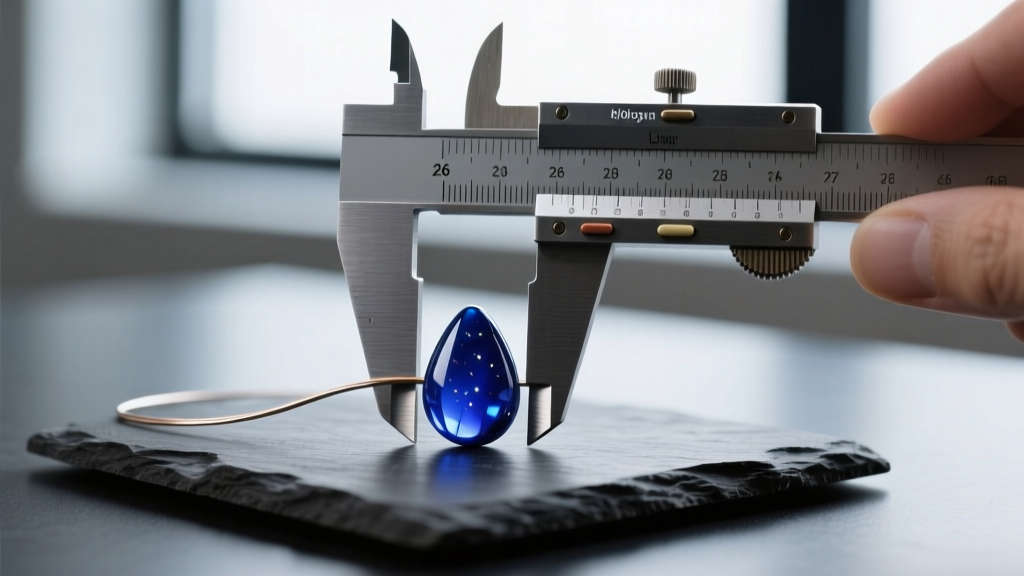
Selecting the correct American Wire Gauge (AWG) is a balancing act between the bead's drill hole diameter and the tensile load of the finished piece. A common failure mode in amateur jewelry is forcing a 22-gauge wire through a 0.6mm freshwater pearl drill hole, which micro-fractures the nacre. Conversely, using a 28-gauge wire for a 40-gram quartz briolette guarantees structural failure. Below is a technical matrix for gauge selection:
| Gauge (AWG) | Diameter (mm) | Ideal Bead Types | Max Tensile Load (Est.) | Primary Failure Mode |
|---|---|---|---|---|
| 28-Gauge | 0.32mm | Micro-pearls, seed beads, wire-wrapping accents | < 5 grams | Snapping under minimal lateral torque |
| 26-Gauge | 0.40mm | Freshwater pearls, small briolettes, faceted crystals | 5 - 12 grams | Loop deformation if not work-hardened |
| 24-Gauge | 0.51mm | Standard gemstone beads, glass, ceramic | 12 - 25 grams | Bead hole fracture if forced |
| 22-Gauge | 0.64mm | Heavy stone briolettes, large lampwork beads | 25 - 45 grams | Ear lobe stretching / fistula migration |
Always verify the drill hole size of your specific gemstone batch. As noted by the Gemological Institute of America (GIA), the durability of a gemstone bead is not just about its Mohs hardness, but its structural integrity around the drill channel, which is a natural fault line for cleavage and chipping.
Structural Looping: The Physics of the Wrapped Loop
The simple loop (a basic circle closed with pliers) is a structural liability in fine beaded earrings. Lateral pressure from catching on clothing will easily pull a simple loop open. The wrapped loop is mandatory for high-end drops. Here is the technical breakdown of executing a flawless, high-tension wrapped loop using half-hard wire:
- The 90-Degree Bend: Thread your bead and bend the wire at exactly 90 degrees, precisely 1.5mm above the top of the bead. This 1.5mm gap is critical; it allows the wire to seat flush against the bead without creating a fulcrum that cracks the stone.
- The Fulcrum Grip: Use chain-nose pliers to grip the wire exactly at the apex of the 90-degree bend. Do not use round-nose pliers here, as they will create a weak, rounded stress point.
- The Tension Wrap: Using your fingers or nylon-jaw pliers, pull the tail wire horizontally, wrapping it tightly around the vertical stem. You must maintain constant outward tension to ensure the wraps stack perfectly flush without overlapping.
- Work Hardening the Tail: After 3 to 4 wraps, trim the tail flush with flush-cutters. Use the flat nose of your chain-nose pliers to gently squeeze and compress the final wrap against the stem, effectively work-hardening the terminal point so it cannot catch on fabrics.
For an exhaustive visual breakdown of these mechanics, Fire Mountain Gems' EncycloBEADia offers excellent metallurgical context on how wrapping compresses the wire's grain structure, locking the loop permanently in place.
Weight Distribution and Ear Lobe Ergonomics
An often-ignored aspect of beaded earring design is the biomechanical impact on the human ear. The healed piercing tunnel, known as the fistula, is composed of delicate scar tissue. When you design a beaded earring that exceeds 15 grams, gravity exerts a continuous downward and forward pull on the fistula.
Mitigating Earlobe Migration
If your design requires heavy materials like large turquoise cabs or dense jasper briolettes, you must alter your earring findings to distribute the load:
- Leverback Findings: A 20-gauge or 22-gauge leverback hooks securely behind the ear, transferring a significant portion of the weight to the cartilage ridge rather than the soft lower lobe.
- French Wire with Silicone Stoppers: While French wires are elegant, they allow heavy earrings to swing freely, creating a pendulum effect that stretches the piercing. Always pair heavy drops with high-friction silicone ear nuts to anchor the piece.
- Omega Clips: For extremely heavy, chandelier-style beaded earrings, omega clips provide a broad surface area that hugs the earlobe, entirely bypassing the stress on the fistula.

Troubleshooting Common Structural Failures
Even experienced jewelers encounter structural anomalies. Here is how to diagnose and fix the most common technical failures in beaded earring fabrication:
The Diagnosis Framework: Never blame the material until you have audited your technique. 90% of wire snapping issues are caused by over-manipulation, not poor metal quality.
- Failure: Wire snaps at the base of the loop during wrapping.
Cause: You are using half-hard wire and bending it back and forth to adjust the angle. Every time you bend metal, you introduce dislocations in the crystal lattice. Bending it back work-hardens it past its yield point, causing a brittle fracture.
Solution: Commit to the bend. If you misjudge the angle with half-hard wire, cut it off and start with a fresh piece. - Failure: The bead spins freely on the wire, causing the wraps to loosen.
Cause: Insufficient tension during the initial 90-degree bend, or the bead's drill hole is conical (wider at one end) rather than cylindrical.
Solution: Introduce a micro-bead or a tiny coil of 28-gauge wire inside the drill hole to act as a friction sleeve, locking the main structural wire in place. - Failure: Gold-filled wire turns black at the wrapped joints.
Cause: You used liver of sulfur or a harsh chemical patina that stripped the microscopic gold layer, exposing the brass core beneath.
Solution: Never chemically oxidize gold-filled wire. Use mechanical tumbling with stainless steel shot and a mild dish soap solution to polish and work-harden the wraps simultaneously.
Final Thoughts on Precision Crafting
Creating fine beaded earrings is an exercise in applied physics. By respecting the tensile limits of your wire gauges, understanding the temper of your alloys, and designing with the biomechanics of the human ear in mind, you elevate your work from fragile crafts to enduring jewelry. Keep your tools calibrated, measure your drill holes, and never compromise on the structural integrity of your wrapped loops.