Essential Earring Tools for Beginners: Care & Repair Guide
Discover the essential earring tools every beginner needs for cleaning, repairing, and maintaining fine jewelry at home. Build your kit today.

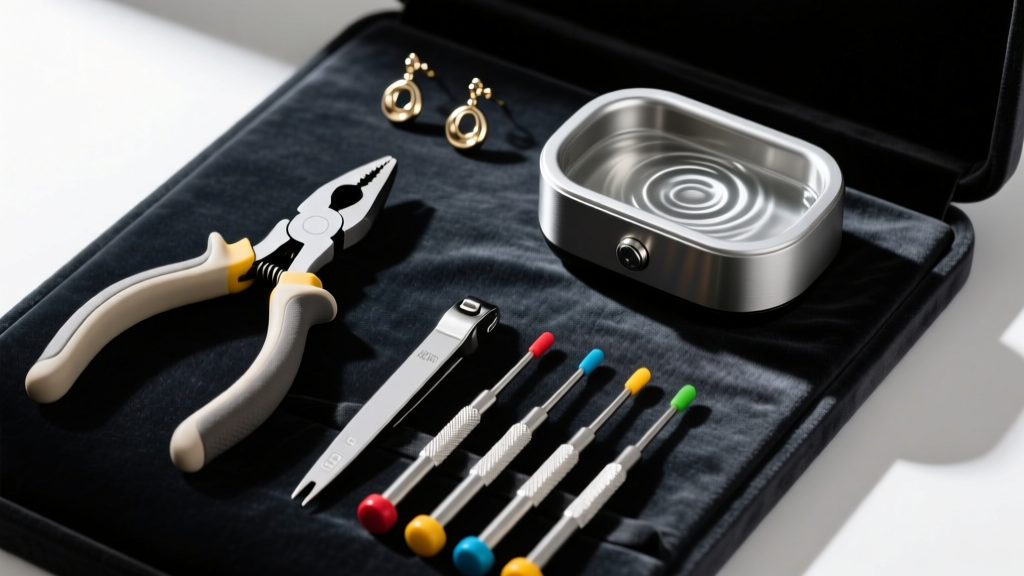
Whether you are managing a growing collection of vintage studs, maintaining everyday 14k gold hoops, or simply trying to rescue a favorite pair of pearl drops from a tangled jewelry box, having the right equipment is non-negotiable. Many beginners assume that fine jewelry requires professional bench tools, but the truth is that a well-curated, at-home toolkit can solve 90% of common earring maintenance issues. From tightening loose jump rings on dangle earrings to safely removing built-up sebum from cartilage piercings, mastering your earring tools will save you hundreds of dollars in jeweler fees and extend the lifespan of your most cherished pieces.
In this beginner-friendly explainer, we will break down the exact tools you need, the specific material grades to look for, and how to perform basic earring triage without damaging delicate gemstones or precious metals.
The Core Earring Tools Every Beginner Needs
Before you start bending wires or scrubbing diamonds, you need to assemble a foundational toolkit. Skip the generic household pliers; they are designed for hardware, not 18-karat gold or delicate 20-gauge wire.
1. Nylon-Jaw Pliers
Standard metal pliers will instantly mar, scratch, and dent soft precious metals like 24k gold, 18k gold, and sterling silver. Nylon-jaw pliers feature replaceable plastic inserts that grip the metal firmly without leaving tool marks. They are essential for closing jump rings on charm earrings, straightening bent earring posts, and adjusting the tension on French wire hooks.
- Top Pick: Beadalon or Eurotool Nylon-Jaw Pliers.
- Price Range: $12 – $18.
- Best For: Shaping ear wires, closing 3mm and 4mm jump rings (usually 22-gauge or 20-gauge).
2. 10x Triplet Loupe
A loupe is a small magnification device used by jewelers and gemologists. A 'triplet' lens features three fused optical elements that eliminate edge distortion and color fringing. When inspecting the prongs on your diamond studs or checking the threading on a screw-back earring, a 10x triplet loupe is the industry standard.
- Top Pick: SE 3022-10X Illuminated Jeweler's Loupe.
- Price Range: $15 – $25.
- Best For: Inspecting prong tension, verifying hallmarks (like '750' for 18k gold), and checking for micro-fractures.
3. Precision Micro-Screwdrivers
High-end body jewelry and secure earring backs often utilize internal threading or microscopic tension screws. A set of watchmaker-style micro-screwdrivers (ranging from 0.8mm to 1.4mm flathead) allows you to tighten the tiny screws on La Pousette-style earring backs or adjust the tension on huggie hoop hinges.
Earring Cleaning Tools: Ultrasonic vs. Manual
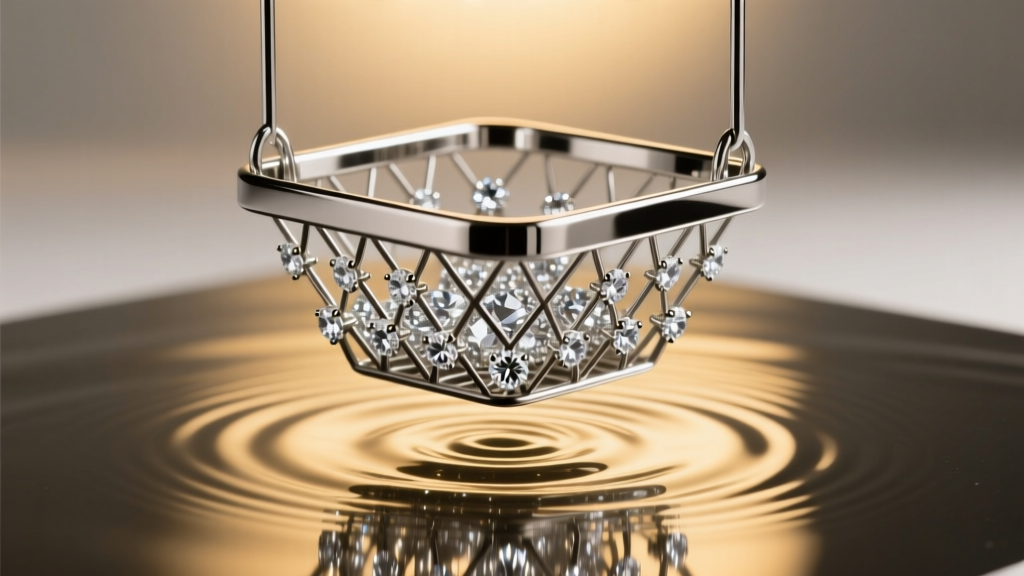
Dull earrings are rarely damaged; they are usually just coated in a microscopic layer of dead skin cells, sebum, and lotion. Choosing the right cleaning tool depends entirely on the gemstone and metal composition of your earrings.
| Tool Type | Mechanism | Safe For | UNSAFE For | Avg. Cost |
|---|---|---|---|---|
| Ultrasonic Cleaner (42kHz) | High-frequency sound waves create microscopic cavitation bubbles that blast away dirt. | Diamonds, sapphires, rubies, solid gold, platinum. | Pearls, opals, emeralds, turquoise, enamel, fracture-filled stones. | $35 - $55 |
| Soft-Bristle Baby Toothbrush | Gentle mechanical agitation with a mild surfactant (dish soap). | Almost all jewelry, including porous gems and delicate pave settings. | None, though it requires more manual effort. | $2 - $5 |
| Steam Cleaner | Pressurized bursts of hot steam to dislodge grime. | High-durability stones (diamond, corundum) in secure bezel or prong settings. | Heat-sensitive gems (amber, opal, tanzanite) and glued settings. | $40 - $80 |
Expert Warning: According to the Gemological Institute of America (GIA), ultrasonic cleaners can shake loose stones from their settings if the prongs are already worn or bent. Always inspect your earring prongs with a 10x loupe before placing them in an ultrasonic bath. Furthermore, never use ultrasonics on emeralds, as the process will strip the cedar oil used to mask natural surface-reaching fractures.
How to Use Jewelry Pliers Without Scratching Your Gold
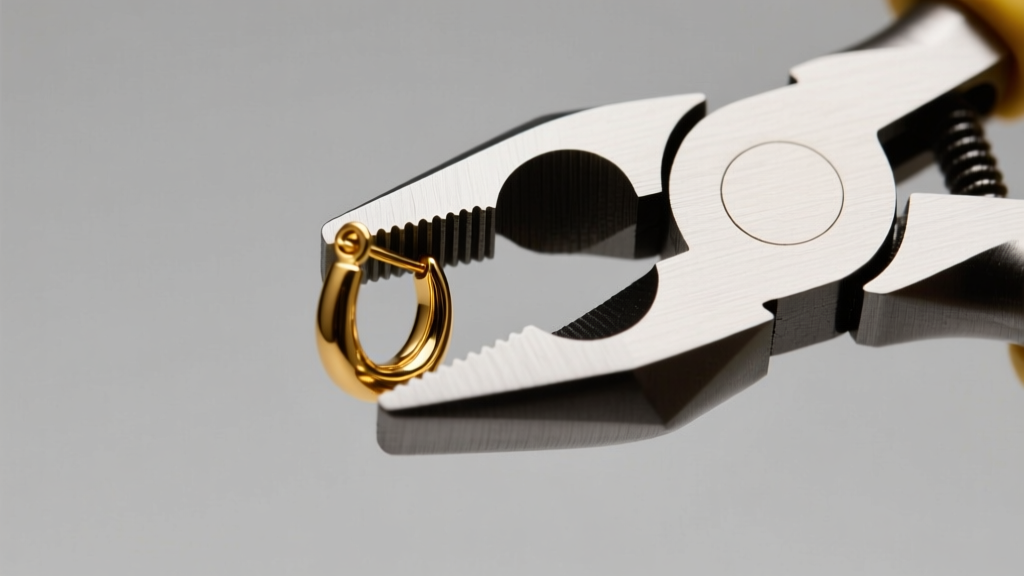
Even with the right tools, improper technique can ruin a pair of vintage earrings. When working with earring posts and wires, understanding gauge sizes and leverage is critical.
Understanding Earring Gauges
The 'gauge' refers to the thickness of the earring wire. The higher the number, the thinner the wire. Standard lobe earrings are typically 20-gauge (0.81mm) or 18-gauge (1.02mm). Cartilage and body jewelry often step up to 16-gauge (1.29mm) or 14-gauge (1.63mm). When using pliers to straighten a bent 20-gauge post, you must apply pressure gradually. Bending it back and forth will cause 'work hardening,' eventually snapping the metal due to fatigue.
The Two-Plier Method for Jump Rings
If your dangle earring is missing a charm because a jump ring pulled apart, do not simply squeeze the split closed. This weakens the ring and creates a gap that will catch on hair. Instead, use the two-plier method:
- Grip each side of the jump ring split with a pair of flat-nose or chain-nose pliers.
- Twist one hand toward you and the other away from you (opening it laterally, not outward).
- Hook the charm back on.
- Twist the ends back together, applying slight inward pressure to ensure the ends cross over each other, creating a seamless, flush closure.
Fixing Common Earring Emergencies
Keep a small 'triage kit' on hand for when things go wrong. Here is how to handle the most frequent earring malfunctions using basic tools.
1. The Stuck Butterfly Back
Butterfly backs (friction backs) can become impacted with soap and dead skin, effectively gluing them to the earring post. The Fix: Do not yank. Soak the earlobe and earring back in a small cup of warm water mixed with a drop of gentle dish soap for 10 minutes. Use a pair of rubber-tipped tweezers to grip the butterfly back while holding the front stud with your other hand. The rubber provides the necessary traction to twist and pull without slipping.
2. Loose Internal Threading
Premium body jewelry and high-end cartilage studs often use internal threading (where the screw is inside the ball, not on the post), which the Association of Professional Piercers (APP) highly recommends to prevent tissue damage during insertion. If the decorative end keeps unscrewing, it is usually due to degraded Loctite (threadlocker). The Fix: Unscrew the end completely. Clean the threads with a cotton swab and rubbing alcohol. Apply a microscopic drop of Loctite 222 (low-strength, purple) to the threads. Let it cure for 12 hours before wearing. Never use superglue (cyanoacrylate), as it will permanently fuse the jewelry and emit harmful fumes near your eyes.
3. Tension Loss in Huggie Hoops
If your huggie earrings won't click shut or feel loose on the hinge, the tension wire inside the clasp has flattened. The Fix: Open the huggie fully. Use a micro-screwdriver or a fine sewing needle to gently pry the tiny metal tension tab inside the clasp upward by a fraction of a millimeter. Snap it shut to test. Repeat until you hear a crisp 'click'.
Building Your First Earring Repair Kit on a Budget
You do not need to spend hundreds of dollars on professional bench equipment to maintain your jewelry. A highly effective, beginner-friendly earring tools kit can be assembled for under $60. Here is your shopping list:
- Nylon-Jaw Pliers: $14 (Essential for bending and closing).
- Chain-Nose Pliers (Smooth Jaw): $12 (For gripping jump rings).
- 10x Triplet Loupe: $18 (For inspecting prongs and hallmarks).
- Rubber-Tipped Tweezers: $6 (For handling small backs and stones).
- Ultrasonic Cleaner (Entry-Level 42kHz): $35 (Optional, but highly recommended for diamond and sapphire studs).
By investing in these specific earring tools, you transition from a passive jewelry wearer to an active custodian of your collection. Proper maintenance not only keeps your earrings sparkling and secure but also ensures that the precious metals and gemstones resting against your skin remain hygienic, safe, and beautiful for decades to come.


