The Ultimate Guide to 8mm Diamond Earrings for Beginners
Confused by earring sizing? Our beginner-friendly guide breaks down 8mm diamond earrings, from 2-carat stud diameters to diamond-accented hoops.

When you begin shopping for fine jewelry, the terminology can quickly become overwhelming. Millimeters, carats, gauges, and inner diameters all blend into a confusing matrix of numbers. One of the most common search terms that causes confusion among first-time buyers is '8mm diamond earrings.' Does this refer to the size of the diamond itself? The diameter of a hoop? The thickness of the post? The truth is, '8mm' can mean three entirely different things depending on the style of earring you are looking at. Understanding these distinctions is critical to ensuring you get exactly what you want, whether you are investing in luxury studs or shopping for everyday huggies.
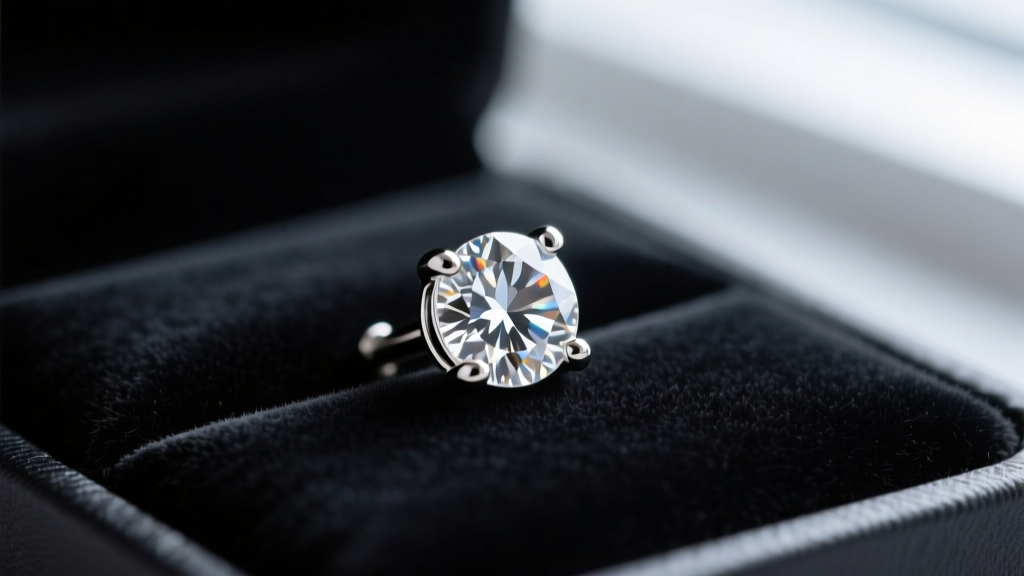
The Measurement Matrix: Decoding '8mm' in Fine Jewelry
In the jewelry industry, millimeters (mm) are used to measure the physical dimensions of a piece, while carats (ct) measure the weight of a gemstone. However, because round brilliant diamonds are cut to specific proportions, there is a direct, predictable correlation between a diamond's millimeter diameter and its carat weight. Furthermore, when dealing with hoops and huggies, 8mm refers to the physical circle of the metal. Let us break down the two primary ways '8mm diamond earrings' manifest in the market so you can shop with absolute confidence.
Scenario A: 8mm Diamond Stud Earrings (The 2-Carat Standard)
If you are looking at stud earrings and the description highlights an '8mm diamond,' this refers to the diameter of the gemstone itself. According to the Gemological Institute of America (GIA), a perfectly proportioned round brilliant diamond that measures 8.0mm to 8.1mm across weighs approximately 2.00 carats. Therefore, a pair of 8mm diamond stud earrings represents a massive 4.00 Carat Total Weight (CTW). This is a significant luxury investment and a major statement piece.
Pricing and the 4Cs for an 8mm Stone
Because 2-carat diamonds are exceptionally rare in nature, the pricing curve is exponential, not linear. A pair of natural, earth-mined 8mm diamond studs (4.00 CTW) with respectable clarity (VS1) and color (G) will typically range from $45,000 to over $80,000. However, the rise of lab-grown diamonds has completely disrupted this tier. In 2026, a pair of identical 8mm lab-grown diamond studs can be acquired for $2,500 to $4,500, offering the exact same optical and physical properties at a fraction of the cost.
| Diamond Diameter (mm) | Approximate Carat Weight (Per Stone) | Total Weight (Pair) | Visual Impact |
|---|---|---|---|
| 6.5mm | 1.00 ct | 2.00 CTW | Classic, prominent everyday stud |
| 7.4mm | 1.50 ct | 3.00 CTW | Luxury statement, noticeable from a distance |
| 8.0mm - 8.1mm | 2.00 ct | 4.00 CTW | Red-carpet scale, covers most of the earlobe |
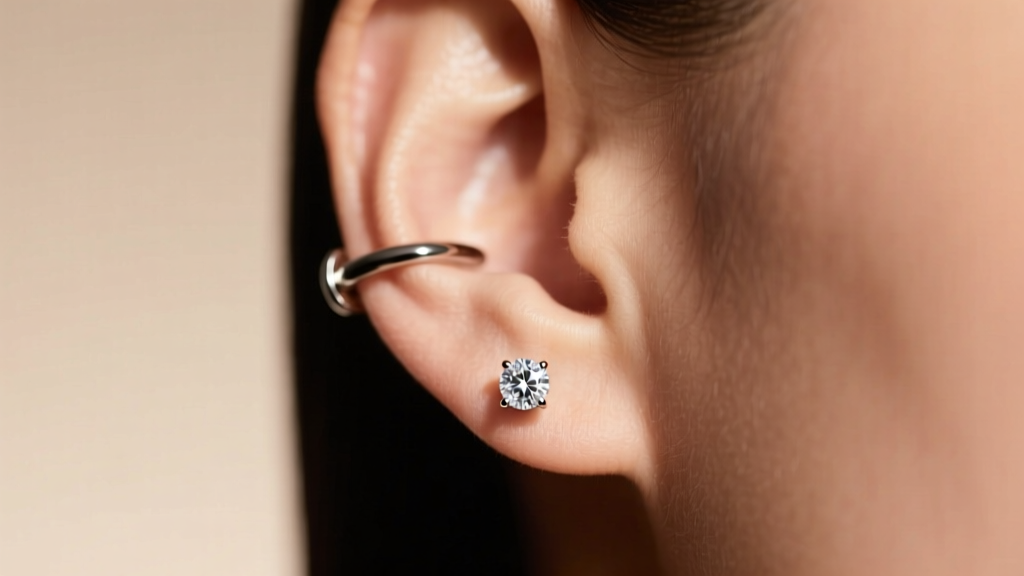
Structural Integrity: Gauges and Backings for Heavy Studs
An 8mm diamond is heavy. A 2-carat stone weighs about 0.4 grams, and once set in a platinum or gold basket, the total weight can easily exceed 0.8 grams per ear. Standard earring posts are 20-gauge (0.81mm thick) or 18-gauge (1.02mm thick). For an 8mm diamond, you must insist on an 18-gauge or even a 16-gauge (1.29mm thick) post. A thinner post will bend under the weight, causing the heavy diamond to droop forward on your earlobe. Furthermore, standard friction 'butterfly' backs will fail to support this weight. You must use La Pousette locking backs, screw-backs, or jumbo 10mm silicone disc backs to distribute the pressure and keep the 8mm stone facing forward.
Scenario B: 8mm Diamond Hoops and Huggies
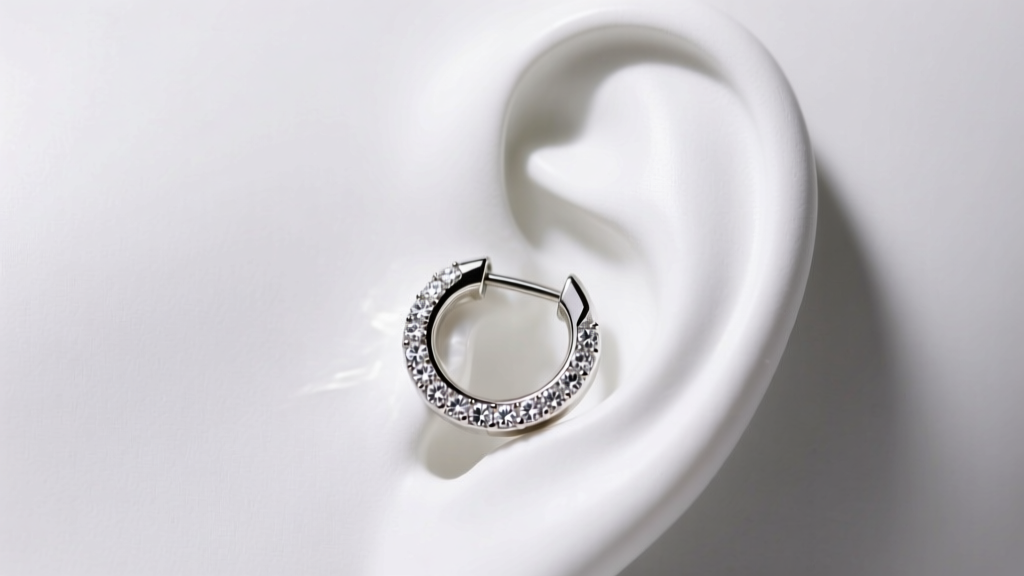
If you are shopping for hoops, '8mm' refers to the diameter of the metal circle, not the size of a single diamond. An 8mm inner diameter (ID) is classified as a 'huggie' earring because it is designed to literally hug the earlobe. When buying diamond huggies, it is vital to understand the difference between Inner Diameter (ID) and Outer Diameter (OD).
- Inner Diameter (ID): The measurement from the inside of the hoop to the opposite inside edge. An 8mm ID fits snugly against a standard pierced lobe.
- Outer Diameter (OD): The total footprint of the earring. If an 8mm ID huggie is set with 1.5mm pave diamonds, the OD will be roughly 11mm.
- Clicker Hinges: High-quality 8mm diamond huggies utilize a 'clicker' hinge mechanism that snaps securely into place, preventing the earring from pulling out of the lobe during sleep or exercise.
Metal Choices for 8mm Diamond Settings
The metal you choose dramatically impacts both the aesthetics and the longevity of your 8mm earrings. For large 2-carat studs, Platinum (950 grade) is the industry standard. Its natural white color enhances the perceived color of the diamond, and its density provides a secure grip on the prongs. For 8mm huggie hoops, 14k or 18k solid gold is preferred. 18k gold offers a richer yellow hue and higher purity, making it ideal for those with nickel allergies, while 14k gold provides superior scratch resistance for everyday wear. Always look for the American Gem Society recommended hallmarks stamped inside the post or hoop to verify metal purity.
Expert Advice: Insuring Your 8mm Investment
Never rely solely on the receipt provided by the retailer for insurance purposes. For any 8mm diamond studs (2-carat per ear), always obtain an independent appraisal from a certified gemologist who is not affiliated with the selling jeweler. This ensures your replacement value is accurately documented in the event of loss or theft.
Navigating the world of fine jewelry requires a bit of homework, but understanding the metrics removes the guesswork. Whether you are saving up for a breathtaking pair of 8mm natural diamond studs, opting for the modern brilliance of lab-grown 2-carat stones, or simply treating yourself to a delicate pair of 8mm diamond-accented huggie hoops, you now possess the technical knowledge to evaluate quality, demand the correct structural components, and make a confident, informed purchase.


