How to Wear Big Pink Earrings: A Beginner's Style Guide
Discover how to choose, style, and comfortably wear big pink earrings. Learn about face shapes, lightweight materials, and lobe support in our beginner guide.

Why Big Pink Earrings Are a Statement Staple
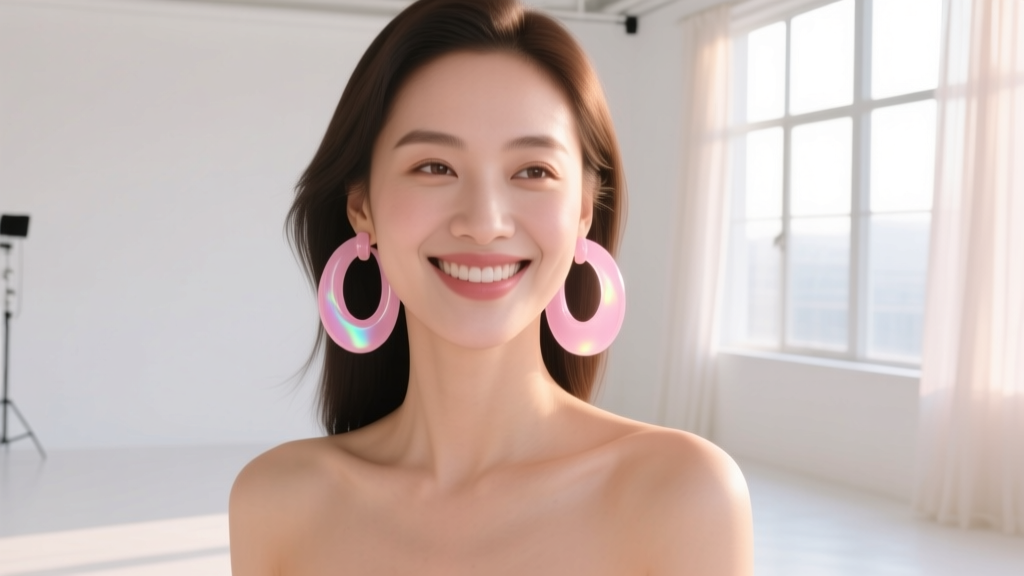
In the landscape of 2026 fashion, the concept of "dopamine dressing" has evolved from a fleeting trend into a permanent wardrobe philosophy. At the forefront of this joyful sartorial movement are big pink earrings. Whether you are drawn to the electric energy of hot magenta, the romantic softness of dusty rose, or the playful nostalgia of bubblegum pink, oversized pink earpieces offer an instant focal point for any outfit. However, transitioning from delicate, barely-there studs to massive, face-framing statement pieces requires a strategic approach. Beginners often struggle with the physical weight, proportion balancing, and hardware mechanics of oversized jewelry. This comprehensive guide will walk you through the exact science and styling frameworks needed to wear big pink earrings with confidence, comfort, and undeniable flair.
Matching Silhouettes to Your Face Shape
The most common mistake beginners make when buying oversized earrings is ignoring their underlying bone structure. A three-inch pink tassel earring will look vastly different on a square jawline than it will on a heart-shaped face. The goal is not to hide your natural features, but to create optical balance. Below is a decision framework to help you select the right silhouette for your specific facial geometry.
| Face Shape | Ideal Big Pink Silhouette | Styling Rationale |
|---|---|---|
| Round | Long, angular pink dangles or geometric drops | Creates vertical lines that elongate the face and counterbalance full cheeks. |
| Oval | Oversized pink hoops or wide fan shapes | Oval faces are naturally balanced; wide shapes add striking horizontal drama without distorting proportions. |
| Square | Curved pink teardrops or soft resin hoops | Soft, rounded edges help to soften a strong, angular jawline and prominent cheekbones. |
| Heart | Chandelier styles or bottom-heavy pink clusters | Adds visual weight to the lower half of the face, balancing a wider forehead and narrow chin. |
Material Deep-Dive: Beating Heavy Lobe Fatigue
When scaling up jewelry size, weight becomes your primary enemy. A standard, healthy earlobe can comfortably support about 7 to 10 grams of weight per earring for an extended period. Once an earring exceeds 12 to 15 grams, you risk micro-tears, lobe elongation, and tension headaches. Understanding material density—measured in specific gravity (SG)—is crucial for finding big pink earrings that look heavy but feel featherlight.
The Lightweight Champions
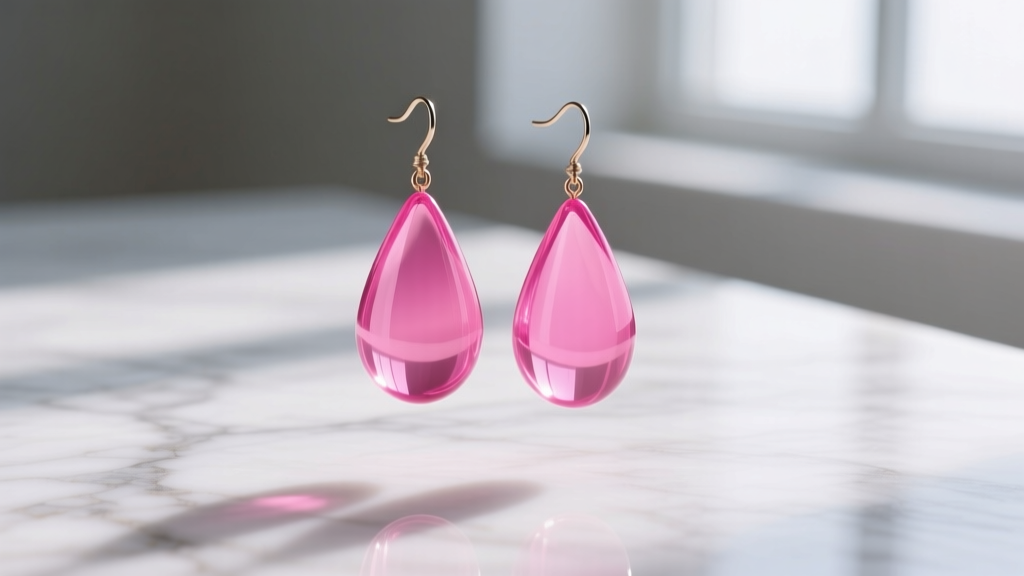
- Cellulose Acetate (SG ~1.3): Derived from natural cotton fibers and wood pulp, high-quality acetate is the gold standard for oversized hoops and chunky geometric drops. A massive 3-inch acetate hoop might weigh a mere 3 to 4 grams, making it virtually imperceptible on the ear.
- Hollow Resin & 3D Printed Polymers: Modern 3D printing allows for intricate, lattice-like internal structures that maintain a massive outer volume while keeping the weight under 5 grams.
- Enamel over Hollow Brass: While solid brass is heavy, hollow-cast brass dipped in vibrant pink enamel offers a glossy, high-end finish at a fraction of the weight of solid metal.
The Heavyweights (Proceed with Caution)
If you prefer genuine gemstones, be aware of their density. According to data from the Gemological Institute of America (GIA), stones like rose quartz and pink tourmaline have a specific gravity of roughly 2.6 to 3.1. A large, solid pink tourmaline cabochon can easily weigh over 20 grams. If you want the look of solid stone without the drag, opt for lab-created pink sapphires set in hollowed 14k gold, or choose pink cubic zirconia, which can be cut thinner while retaining intense color refraction.
The Hardware: Gauges, Backs, and Lobe Support
The structural integrity of your earring's hardware is just as important as the decorative front. The Association of Professional Piercers (APP) emphasizes that improper jewelry thickness can lead to severe tissue damage, especially when supporting heavy statement pieces.
Avoiding the "Cheese-Cutter" Effect
The "cheese-cutter effect" occurs when a thin wire bears heavy weight, slowly slicing downward through the earlobe tissue over time. Standard fashion earrings often use 20-gauge (0.81mm) or even 22-gauge (0.64mm) posts. For big pink earrings, you must actively seek out 18-gauge (1.02mm) or 16-gauge (1.29mm) posts. This slightly thicker metal distributes the weight across a wider surface area of the piercing channel, preventing downward migration.
Upgrading Your Earring Backs
The standard "butterfly" friction back is entirely inadequate for heavy dangles. The small surface area digs into the back of the ear, and the tension spring easily slips off the post groove. Instead, look for:
- Screw Backs: These thread securely onto the post, ensuring the earring cannot fall off, and feature a wider, flat disc that rests comfortably against the back of the lobe.
- Omega Backs: Often found on clip-ons or heavy vintage-style pieces, the hinged omega wire snaps shut and hugs the earlobe, providing exceptional structural support.
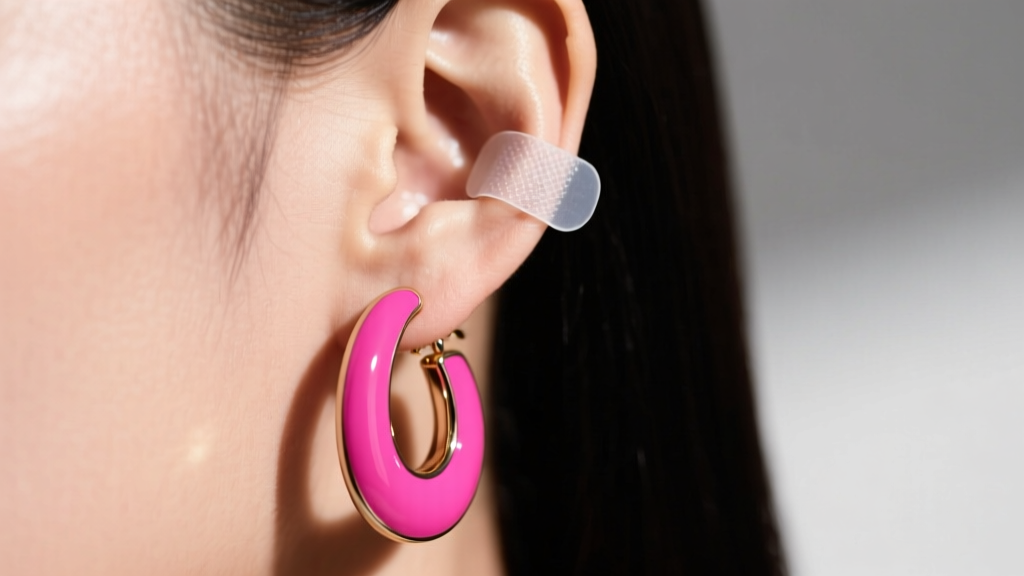
- Adhesive Support Patches: For earrings that already have thin posts, products like BlingDots or LobeWonder are essential. These clear, medical-grade adhesive patches stick to the back of your earlobe, providing a rigid, supportive barrier that stops heavy pink drops from pulling your piercing downward.
Color Theory: Choosing Your Perfect Pink
Pink is not a monolith. The undertone of your skin will dictate which shade of big pink earrings makes you look radiant versus washed out.
- Cool Undertones (Veins appear blue/purple): Opt for jewel-toned pinks like fuchsia, magenta, and icy pastel pink. These shades have blue bases that harmonize with the natural pinkness in cool skin.
- Warm Undertones (Veins appear green/olive): Lean into peachy pinks, coral-pinks, and warm salmon hues. These yellow-based pinks will make warm skin glow, whereas cool fuchsias can make warm skin look slightly sallow.
- Neutral Undertones: You have the luxury of wearing the entire spectrum, but dusty rose and muted mauve-pinks offer a sophisticated, understated elegance that bridges the gap between warm and cool.
Troubleshooting Common Beginner Mistakes
Even with the right materials and hardware, beginners often stumble on styling and maintenance. Here is how to troubleshoot the most frequent issues:
- The "Clown" Proportion Error: Wearing big pink earrings with a loud, patterned, high-necked top creates visual clutter. The Fix: Let the earrings be the star. Pair them with a sleek, low-neckline garment (like a strapless top, a deep V-neck, or an off-the-shoulder sweater) to provide negative space around the face.
- Green Skin Discoloration: If your cheap pink-painted alloy earrings leave a green or black smudge on your neck or earlobe, it is due to copper reacting with your skin's natural acids. The Fix: Always verify the base metal. Look for surgical steel, titanium, or solid brass coated in high-quality enamel, and avoid mysterious "alloy" blends.
- Hair Snagging: Large, intricate pink dangles are notorious for catching on loose waves or curls. The Fix: If wearing your hair down, opt for smooth, continuous shapes like oversized hoops or polished resin teardrops. Save the intricate, multi-tiered chandeliers for updos and slicked-back buns.
Pro-Tip for Non-Pierced Ears: If you don't have pierced lobes, avoid heavy screw-back clip-ons, which cause intense cartilage pain after 30 minutes. Instead, look for lightweight pink resin pieces fitted with modern, invisible ear cuffs that grip the outer helix, or invest in high-quality magnetic clip-ons lined with silicone padding for all-day comfort.
Final Thoughts on Mastering the Trend
Embracing big pink earrings is an exercise in joyful self-expression. By respecting the physics of jewelry weight, matching silhouettes to your facial architecture, and upgrading your hardware, you can transform a potentially cumbersome accessory into your most empowering style asset. Start with a lightweight pair of fuchsia acetate hoops, master the art of the adhesive lobe patch, and let your confidence dictate the scale of your next statement piece.


