A Beginner's Guide to the Different Types of Earring Backs
Discover the different types of earring backs, from push backs to screw backs. Learn which secure earring back is best for your lifestyle and ear health.

Why Your Choice of Earring Back Matters More Than You Think
When shopping for earrings, most beginners focus entirely on the front: the sparkle of the gemstone, the shine of the gold, or the unique shape of the design. However, the unsung hero of any earring is the back. The back secures your investment, protects your piercing from tearing, and plays a massive role in your long-term ear health. Understanding the different types of earring backs is crucial for anyone building a jewelry collection.
Before diving into specific styles, you must understand gauge sizes. Standard lobe piercings are typically 20-gauge (0.81mm) or 18-gauge (1.02mm), while cartilage piercings often sit at 16-gauge (1.29mm). If you try to force a 20G friction back onto a thicker 16G post, you risk bending the metal or damaging the threading. Always match your back to your post's gauge. Furthermore, the Association of Professional Piercers (APP) emphasizes that the physical design of an earring back can either promote healthy tissue or trap bacteria, leading to chronic irritation bumps.
The Most Common Different Types of Earring Backs Explained
Push Backs (Butterfly or Friction Backs)
The push back, commonly known as a butterfly back, is the most ubiquitous earring back in the world. It features a small metal clutch with two loops (resembling butterfly wings) that you slide onto a notched post. The notches on the post create friction, holding the back in place.
- Pros: Inexpensive, easy to manufacture, and widely available.
- Cons: The crevices in the butterfly loops are notorious traps for sebum, dead skin cells, and shampoo residue. Over time, this buildup can cause contact dermatitis and foul odors. They are also the most likely to fall off and get lost in carpets or bedsheets.
Screw Backs
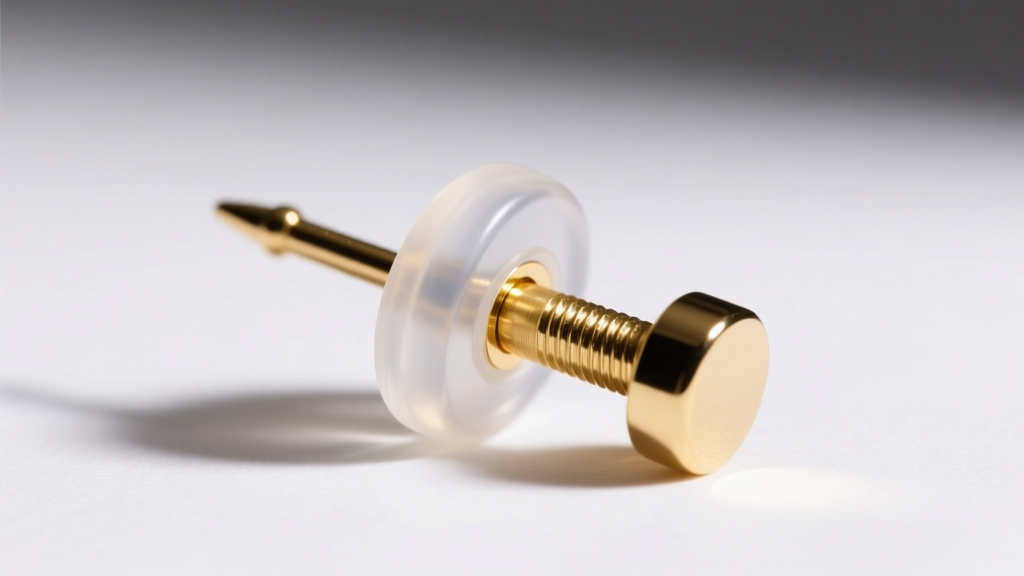
Screw backs offer a massive upgrade in security. Instead of sliding on, the back threads onto a grooved post. There are two main types of threading: external (the threads are on the post) and internal (the threads are inside the back). Internal threading is vastly superior for healing or sensitive piercings, as the post remains perfectly smooth when passing through the fistula (the piercing channel), preventing micro-tears.
La Pousette (Locking) Backs
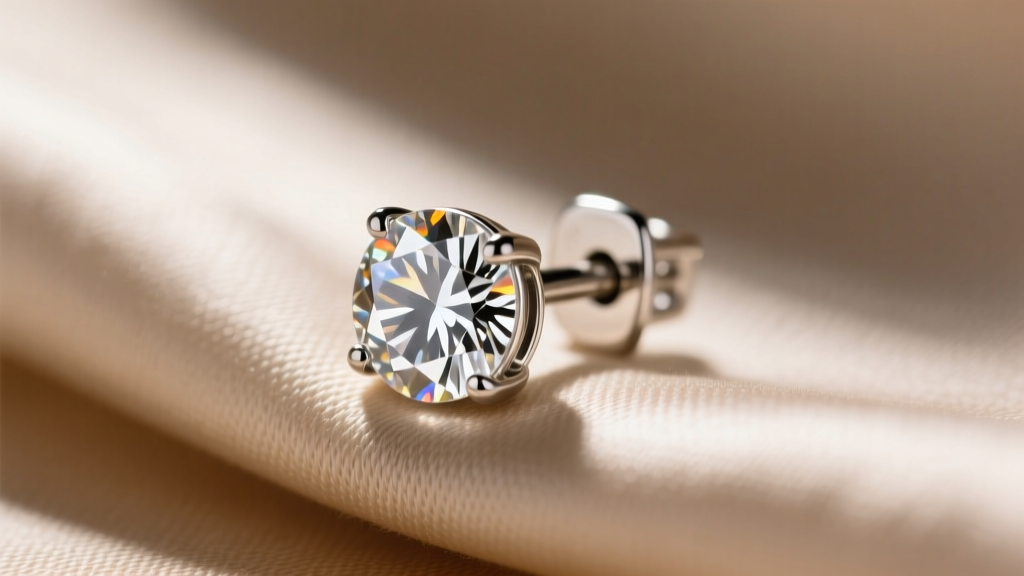
Often found on high-end diamond studs, La Pousette backs utilize a dual-spring locking mechanism. You squeeze the two small side tabs to slide the back onto a smooth, notched post. When you release the tabs, the internal springs lock the back securely into the nearest groove. They are virtually impossible to pull off accidentally, making them the gold standard for securing expensive fine jewelry.
Specialty and Secure Earring Backs for Active Lifestyles
Silicone and Rubber Clutches
If you are an athlete, a frequent traveler, or someone who constantly loses metal friction backs, silicone clutches are a lifesaver. They slide onto standard posts and grip the metal tightly through sheer material friction. They are also excellent for preventing metal-on-skin contact if you have a mild nickel allergy. However, silicone degrades over time. Exposure to sweat, oils, and UV light will cause them to stretch out and eventually snap. Plan to replace them every 6 to 12 months.
Lobe Wonder Pads
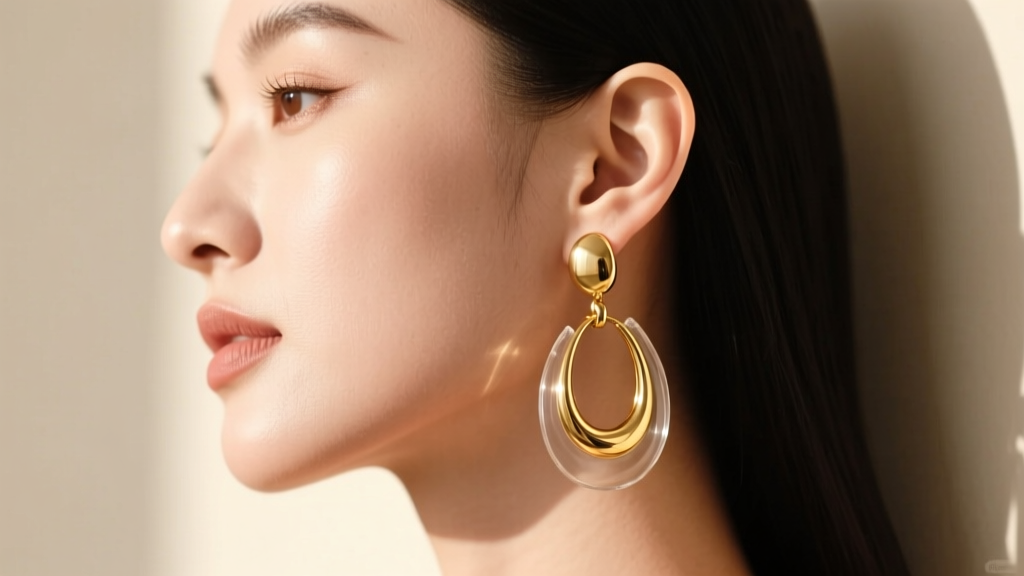
While not a traditional 'back', Lobe Wonder pads are essential for heavy dangle and drop earrings. These are small, clear, medical-grade plastic discs with a slit in the center. You slide them onto the post before attaching your standard earring back. The pad rests flush against the back of your earlobe, distributing the weight of heavy jewelry across a wider surface area. This prevents the 'stretched lobe' look and stops heavy earrings from drooping forward awkwardly.
Material Matters: Hypoallergenic Backs for Sensitive Ears
According to the Mayo Clinic, nickel allergy is one of the most common causes of allergic contact dermatitis. Because earring backs sit flush against the highly sensitive skin behind the ear, the material is just as important as the design.
Expert Tip: As of 2026, implant-grade titanium (ASTM F136) remains the absolute best material for sensitive ears and healing piercings. It is entirely nickel-free and biocompatible. Avoid 'surgical steel' if you have known metal sensitivities, as it still contains trace amounts of nickel.
If you cannot find titanium backs, 14k or 18k solid gold, or pure niobium are your next safest bets. Never use cheap, plated brass or copper backs, as the plating will inevitably wear off, exposing reactive base metals directly to your skin.
Quick Comparison Chart: Security, Price, and Best Use Case
| Back Type | Security Level | Best For | Avg. Replacement Cost |
|---|---|---|---|
| Push (Butterfly) | Low to Medium | Everyday casual wear, lightweight studs | $1 - $5 per pair |
| Screw Back | High | Active individuals, children, cartilage studs | $10 - $25 per pair |
| La Pousette | Very High | High-value diamond and gemstone studs | $30 - $60 per pair |
| Silicone Clutch | Medium | Sports, sleeping, temporary nickel barriers | $3 - $8 for a multi-pack |
| Lobe Wonder Pads | N/A (Support) | Heavy drops, chandelier earrings, stretched lobes | $5 - $10 for a pack of 60 |
Expert Troubleshooting: Stuck or Lost Earring Backs
Even the most experienced jewelry wearers encounter mechanical failures. Here is how to troubleshoot common issues without damaging your ears or your jewelry.
- The Stuck Push Back: If a friction back gets pushed on too tightly and won't budge, do not use pliers. Instead, apply a drop of sterile saline solution or pure jojoba oil to the post where it meets the back. Let it sit for two minutes to break down any dried sebum acting as glue, then gently twist and pull.
- The Cross-Threaded Screw Back: If your screw back feels stuck but won't tighten, you have likely cross-threaded it. Forcing it will strip the metal. Reverse it immediately. To re-thread, place the back on the post and turn it counter-clockwise (lefty-loosey) until you feel a tiny 'click' or drop. That drop means the threads have aligned. Now, turn clockwise to tighten.
- The Lost Back in a Rush: If you lose a back and need to leave the house, a clean, standard pencil eraser can be used as a temporary emergency push back. Simply push the earring post into the eraser and snap off a small piece. Replace it with a proper back immediately upon returning home.
How to Clean and Maintain Your Earring Backs
To extend the life of your jewelry and protect your piercings, maintenance is non-negotiable. Metal backs (titanium, gold, platinum) can be soaked in a small ultrasonic jewelry cleaner with a few drops of mild dish soap for 3 to 5 minutes. This vibrates the trapped debris out of the tiny crevices of butterfly backs. Alternatively, soaking them in 70% isopropyl alcohol for 10 minutes will disinfect them and dissolve oils. Never use alcohol or ultrasonic cleaners on silicone or plastic backs, as this will cause them to dry out, crack, and degrade rapidly. Wash non-metal backs with warm water and gentle antibacterial soap instead.


