How to Style and Clean Sterling Silver Bunny Earrings
Learn how to properly clean, maintain, and style 925 sterling silver and enamel bunny earrings with our expert step-by-step guide and material tips.

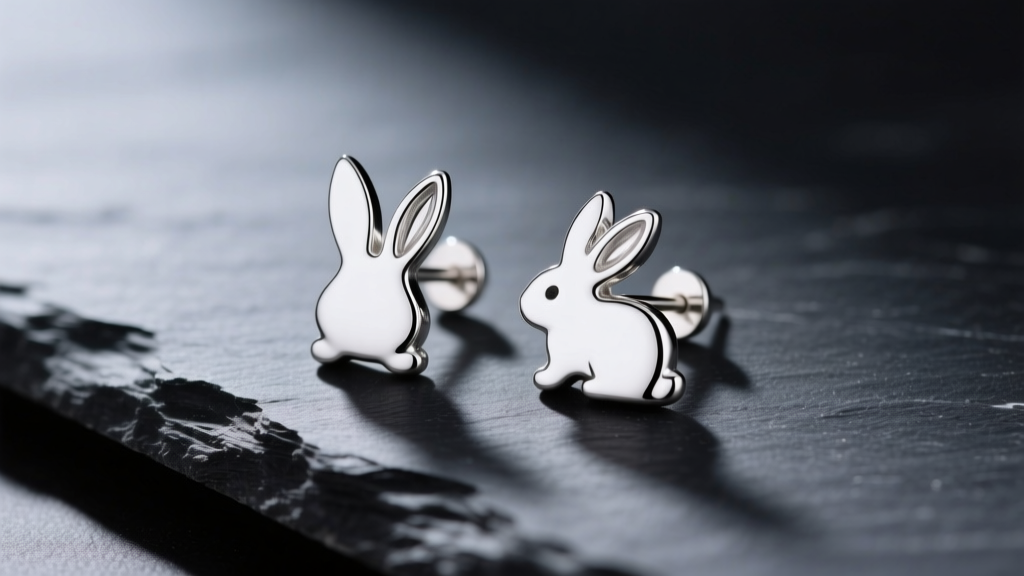
Bunny earrings have evolved far beyond childhood novelties. In 2026, whimsical fine jewelry dominates the accessory market, with leporine motifs appearing in high-end sterling silver, gold vermeil, and vitreous enamel designs. However, the intricate crevices of a bunny silhouette and the delicate nature of precious metals require specialized care. Whether you own minimalist bunny studs, intricate drop earrings, or cartilage-hugging bunny cuffs, improper maintenance can lead to rapid tarnishing, enamel degradation, and post bending.
This comprehensive, step-by-step guide will teach you how to clean, maintain, and style your bunny earrings to ensure they remain a sophisticated staple in your jewelry wardrobe for years to come.
Decoding Material Grades for Bunny Motifs
Before applying any cleaning solution, you must identify the exact material composition of your earrings. The market is flooded with misleading terms, and treating gold vermeil like solid gold will strip the plating.
- 925 Sterling Silver: Composed of 92.5% pure silver and 7.5% alloy (usually copper). The copper adds strength but is also responsible for oxidation (tarnish) when exposed to humidity and skin acids.
- Gold Vermeil: A heavy plating of gold (minimum 2.5 microns thick) over a 925 sterling silver base. According to the Silver Institute, vermeil requires gentler care than standard gold plating to prevent wearing through to the silver core.
- Vitreous vs. Cold Enamel: Vitreous enamel is kiln-fired glass fused to metal, highly resistant to chemicals. Cold enamel is essentially painted epoxy resin, which will dissolve or cloud if exposed to harsh solvents or ultrasonic cleaners.
| Material | Tarnish Risk | Enamel Compatibility | Best For |
|---|---|---|---|
| 925 Sterling Silver | High | Excellent (Both types) | Everyday studs, huggies |
| Gold Vermeil (18k) | Low | Good (Avoid abrasives) | Statement drops, dangles |
| Surgical Steel (316L) | None | Poor (Adhesion issues) | Initial piercings, budget cuffs |
Step-by-Step Guide to Cleaning Silver and Enamel
Forget the baking soda and aluminum foil hacks you see on social media. While effective for solid silver chains, this electrochemical reaction will permanently cloud cold enamel and degrade the rhodium plating often used on white gold or silver bunny earrings to prevent tarnish.
Step 1: Preparation and Soaking
Mix three drops of phosphate-free, mild dish soap (like Dawn) into a bowl of lukewarm distilled water. Tap water contains chlorine and minerals that can leave microscopic water spots on polished silver. Submerge your bunny earrings for exactly three to five minutes. This loosens sebum, dead skin cells, and cosmetic residue trapped in the intricate ear and whisker details of the motif.
Step 2: Targeted Agitation
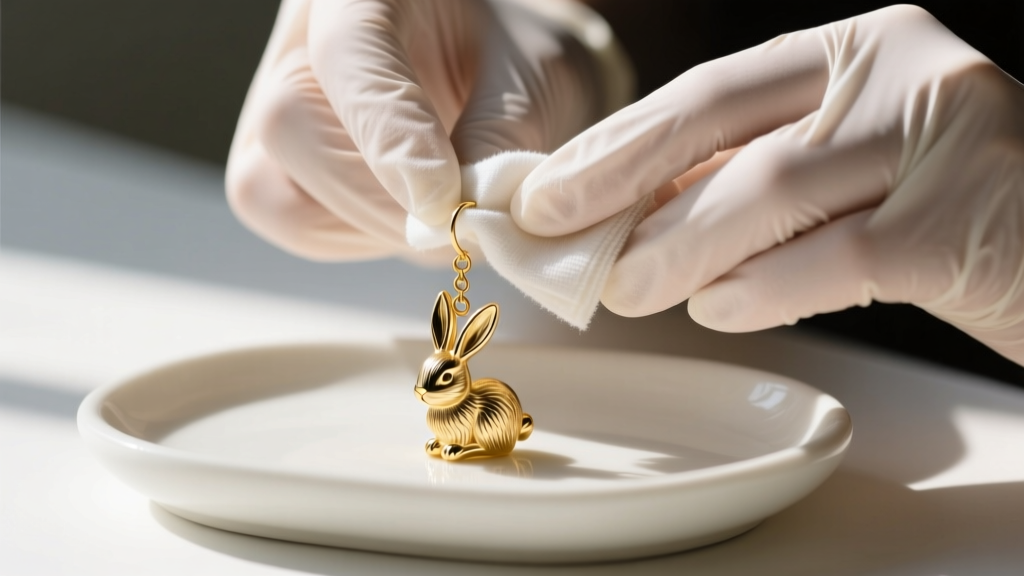
Using an extra-soft baby toothbrush (never a standard adult brush, as the bristles will scratch 925 silver), gently brush the earrings. Pay special attention to the post junction and the back of the bunny silhouette, where hair products and sweat accumulate. Brush in small, circular motions rather than harsh back-and-forth strokes.
Step 3: Rinsing and Drying
Rinse the earrings under a gentle stream of lukewarm distilled water. Immediately pat them dry with a lint-free microfiber cloth. Do not use paper towels or tissues; the wood pulp fibers will leave micro-scratches on high-polish silver surfaces. Allow them to air dry completely on a clean towel before storing to prevent trapped moisture from accelerating tarnish.
Selecting the Correct Gauge and Backing
The whimsical shape of bunny earrings often distracts buyers from the crucial structural element: the post. According to the Association of Professional Piercers (APP), standard lobe piercings are typically 20G (0.81mm) or 18G (1.02mm).
Because silver is a relatively soft metal, a 20G sterling silver post supporting a heavy, solid-silver bunny dangle is prone to bending. If your bunny earrings feature a heavy drop or a wide silhouette, look for designs that utilize an 18G or even 16G (1.29mm) post for structural integrity. Furthermore, upgrade your backings. Standard butterfly backs trap bacteria and dig into the neck. Swap them for flat-back labret studs or silicone O-rings to secure the earring comfortably, especially if the bunny motif is top-heavy.
Styling Bunny Earrings for Your Face Shape
Styling animal motifs requires a balance between playfulness and elegance. The key is to use the earring's silhouette to complement your facial geometry.
Round Faces
Avoid circular bunny studs or wide huggies, which will emphasize the roundness of your face. Instead, opt for elongated bunny drop earrings or vertical bar designs featuring a small bunny silhouette at the base. The vertical line draws the eye downward, creating a lengthening illusion.
Square Faces
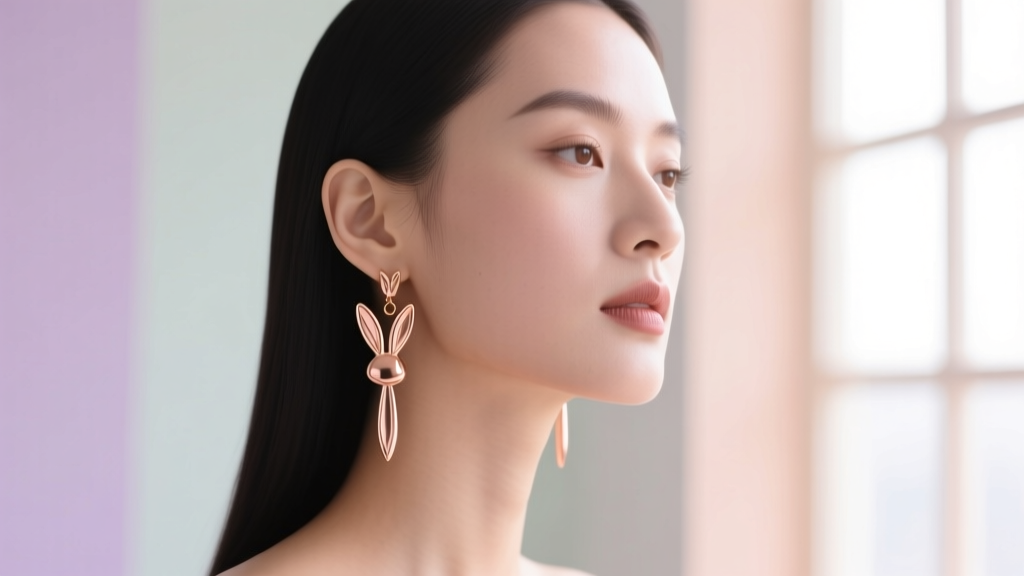
Angular jawlines benefit from soft, curved lines. Choose rounded bunny silhouette studs or organic, asymmetrical bunny ear cuffs that wrap around the helix. Avoid sharp, geometric drops that mirror the angles of your jaw.
Heart and Oval Faces
Oval faces can pull off almost any style, from tiny minimalist bunny studs to dramatic, shoulder-grazing chandelier earrings. Heart-shaped faces, characterized by a wider forehead and narrow chin, look exceptional in teardrop-shaped bunny dangles or bottom-heavy huggies that add visual width to the lower half of the face.
Cartilage Placement: Bunny Ear Cuffs and Helix Studs
Bunny motifs are uniquely suited for cartilage styling. The elongated shape of a bunny ear naturally mimics the curve of the human helix. When purchasing bunny ear cuffs (which require no piercing), ensure the tension band is made of memory metal or features an adjustable screw mechanism. Cheap slip-on cuffs lose their grip after repeated wear and will slide off the ear cartilage.
For pierced helix or flat placements, ensure the post length is appropriate. Cartilage is thicker than the lobe; a standard 6mm post might be too short, causing the backing to press into the tissue and cause irritation bumps. Look for 8mm posts for fresh or thick cartilage piercings, downsizing to 6mm once fully healed.
Troubleshooting Common Wear Issues
- Bent Posts: If your 925 silver post bends, do not repeatedly bend it back into place. Silver suffers from metal fatigue and will eventually snap. Take it to a jeweler to have the post laser-welded or replaced with a stronger titanium or white gold post.
- Chipped Enamel: If your cold-enamel bunny stud chips, avoid wearing it in the shower. Water will seep under the remaining enamel and cause it to lift. A jeweler can sometimes fill minor chips with UV-cured resin, though vitreous enamel must be re-fired in a kiln.
- Stubborn Tarnish: If your silver bunny has turned black in the deep crevices, use a specialized silver polishing cloth impregnated with anti-tarnish agents (like a Sunshine cloth). Gently rub the raised, polished areas, but avoid aggressively rubbing the recessed, oxidized details if the designer intended for them to remain dark for contrast.
By understanding the metallurgy of your jewelry and adopting a meticulous, gentle cleaning routine, your bunny earrings will maintain their sophisticated charm and structural integrity, proving that whimsical jewelry can indeed be a lifelong investment.


