Best Metals for French Back Earrings: Material Properties
Discover the best metals for french back earrings. Compare titanium, gold, and silver properties, wire gauges, and allergy safety for sensitive ears.

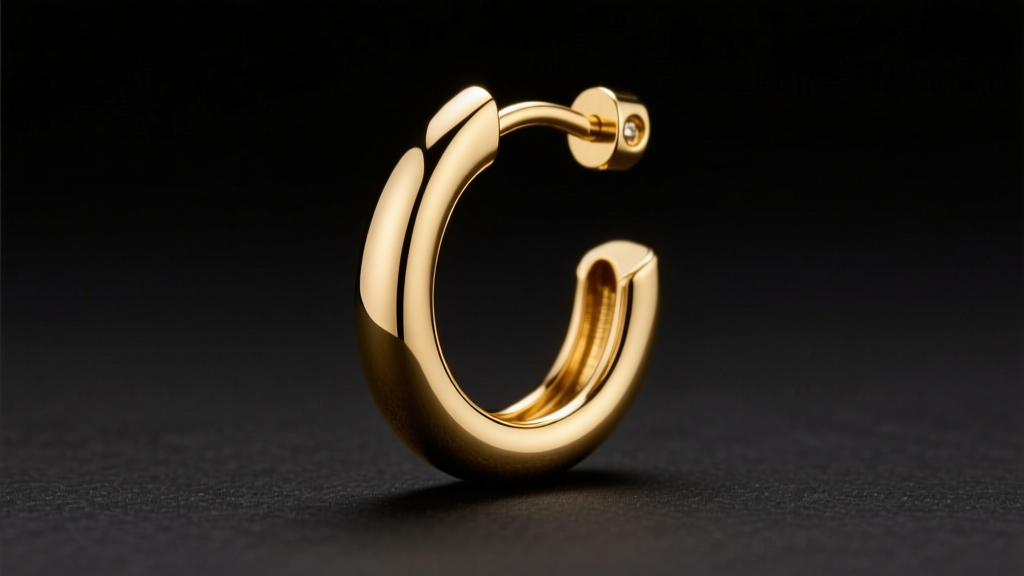
The Biomechanics of French Back Earrings
French back earrings—commonly referred to as fishhook wires, kidney wires, or J-hooks—are a staple in fine and fashion jewelry. Unlike rigid posts or secure leverbacks, the traditional French wire relies on a delicate balance of gravity, friction, and metal tension to stay seated in the earlobe. The wire passes through the piercing channel, curves down behind the ear, and features a small tension notch or relies on a silicone stopper to prevent the earring from sliding off.
Because the wire itself is the primary structural component bearing the weight of the dangle, the metallurgical properties of the chosen metal are paramount. A metal that is too soft will permanently deform under the weight of a gemstone drop, while a metal that is too brittle may snap when adjusted. Furthermore, because the wire sits entirely inside the piercing fistula (the healed skin tube of the earlobe), biocompatibility and nickel-release rates are critical factors for long-term wear. In this comprehensive guide, we break down the exact material properties, gauge requirements, and failure modes of the most common metals used in French back earrings.
Material Comparison Chart: Hardness, Memory, and Safety
Not all metals behave the same way when drawn into a 20-gauge wire. The table below compares the Vickers Hardness (HV), spring memory (the ability to return to its original J-curve after being slightly bent), and biocompatibility of standard jewelry metals used for French wires.
| Metal / Alloy | Vickers Hardness (HV) | Spring Memory | Nickel Content | Best Use Case |
|---|---|---|---|---|
| Implant-Grade Titanium (ASTM F136) | ~350 HV | Low | 0% | Hyper-sensitive ears, lightweight drops |
| 14k Yellow / White Gold | ~130-150 HV | High | 0% (usually) | Heavy chandelier drops, daily wear |
| 18k Yellow Gold | ~110-125 HV | Medium | 0% | High-end luxury, lightweight dangles |
| Sterling Silver (925) | ~60-80 HV | Low | 0% | Fashion jewelry, occasional wear |
| Surgical Stainless Steel (316L) | ~220-250 HV | Very High | 8-10% | Cost-effective fashion, non-sensitive ears |
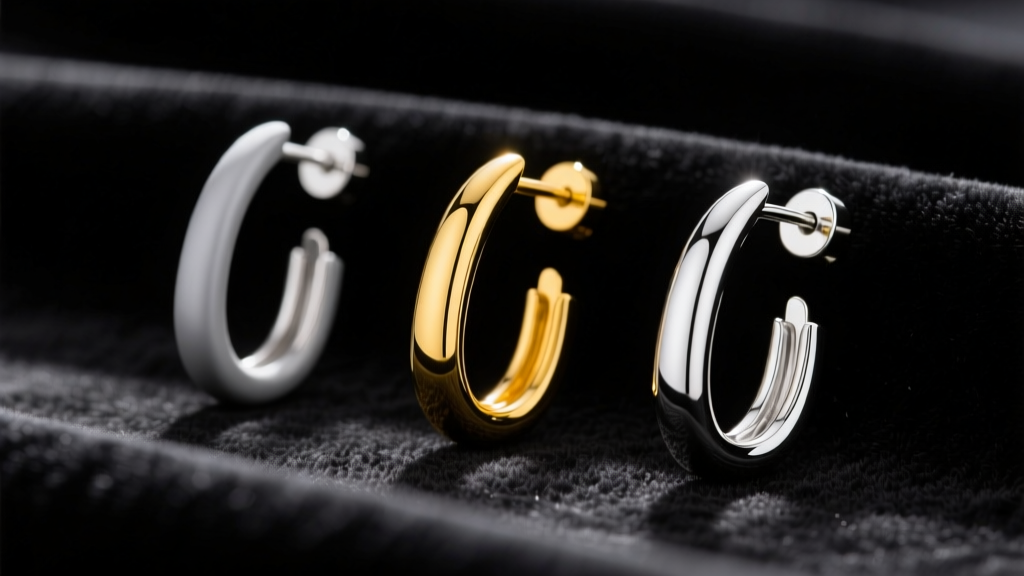
Deep Dive: Metallurgical Performance as Ear Wires
Implant-Grade Titanium (ASTM F136)
Titanium is the undisputed champion of biocompatibility. According to the Association of Professional Piercers (APP), ASTM F136 implant-grade titanium contains zero nickel and is highly resistant to corrosion from bodily fluids. For individuals with contact dermatitis or freshly healed piercings, titanium French wires are the safest option. However, titanium has a significant mechanical drawback for this specific earring style: poor spring memory. When a titanium J-hook is bent out of shape by a heavy earring or by catching on a sweater, it does not easily snap back to its original curve. It requires careful manual reshaping. Furthermore, titanium is notoriously difficult to solder, meaning the decorative dangle must be attached via mechanical jump rings or cold connections rather than direct soldering to the wire.
14k vs. 18k Gold: The Karat Dilemma for Wire Tension
Pure 24k gold is far too soft for any structural jewelry component. Therefore, gold is alloyed with metals like copper, silver, and zinc. 14k gold (58.5% pure gold) contains a higher percentage of these alloy metals, which increases its Vickers hardness and gives it excellent 'spring memory.' A 14k gold French wire will hold its J-curve beautifully, even when supporting a 5-gram gemstone drop. 18k gold (75% pure gold), while richer in color and more hypoallergenic, is noticeably softer. An 18k gold French wire is prone to 'creep'—a metallurgical term for gradual deformation under constant stress. If you hang a heavy chandelier earring on an 18k wire, the bottom of the curve will slowly elongate over months of wear, requiring periodic maintenance by a bench jeweler. As noted by the Gemological Institute of America (GIA), understanding these alloy trade-offs is essential for selecting the right gold karat for functional jewelry components.
Sterling Silver (925) and the Work-Hardening Trap
Sterling silver is an alloy of 92.5% silver and 7.5% copper. While it is entirely nickel-free, the copper content makes it highly susceptible to tarnishing when exposed to the sulfur and moisture present in the earlobe's piercing channel. More critically, sterling silver is subject to 'work hardening.' Every time a silver French wire is bent, flexed, or adjusted, its crystalline lattice structure becomes more rigid and brittle. Over time, the base of the J-curve—where the most stress is concentrated—will become work-hardened and eventually snap. To prevent this, bench jewelers must periodically 'anneal' (heat and cool) silver wires to restore their malleability, a maintenance step rarely performed by consumers.
Surgical Stainless Steel (316L)
316L surgical steel offers the best mechanical spring memory of any metal on this list. It is incredibly resilient, cheap to produce, and holds a high polish. However, it contains between 8% and 10% nickel. While the low-carbon 'L' variant reduces the nickel release rate to comply with the EU Nickel Directive (limiting release to 0.5 micrograms per square centimeter per week), it is still a known trigger for severe nickel allergies. A study published in the National Center for Biotechnology Information (NCBI) highlights that prolonged contact with nickel-containing alloys in pierced tissue can lead to chronic allergic contact dermatitis, making 316L French wires a poor choice for sensitive ears despite their superior structural performance.
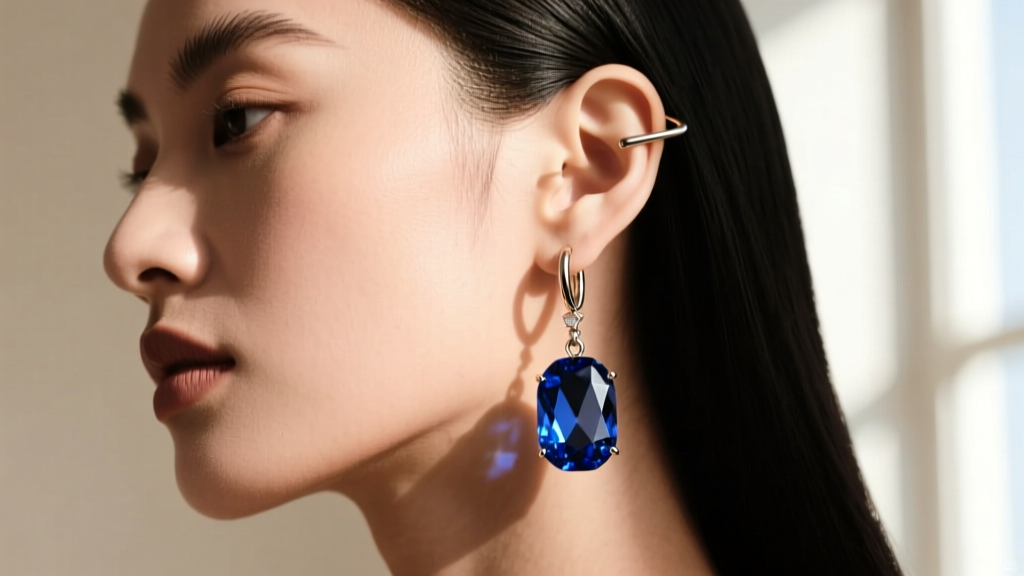
Gauge Sizing: Matching Wire Thickness to Earring Weight
The gauge (thickness) of the French wire is just as critical as the material. Using a wire that is too thin for the earring's weight will result in immediate deformation, while a wire that is too thick can cause discomfort or 'cheese-cutter' migration in delicate earlobes.
- 22-Gauge (0.64mm): The standard for lightweight, delicate drops and pearl dangles. It slides effortlessly through the earlobe but will easily bend if the earring weighs more than 2 grams. Best paired with 14k gold or steel for adequate rigidity.
- 20-Gauge (0.81mm): The industry standard for most commercial and fine jewelry French wires. It provides an excellent balance of comfort and structural integrity, capable of supporting drops weighing up to 5-7 grams without permanent deformation, especially when crafted in 14k gold or spring-tempered steel.
- 18-Gauge (1.02mm): Reserved for heavy chandelier earrings, large hoop attachments, or statement pieces. An 18-gauge wire requires a fully healed, mature piercing channel. It is highly recommended to use titanium or 14k gold in this gauge to ensure the earlobe is not subjected to the weight of heavy steel or the snapping risk of thick, work-hardened silver.
Troubleshooting and Maintenance: Preserving the J-Curve
Even the highest quality French back earrings will occasionally lose their shape. When a wire bends outward, the earring sits awkwardly on the earlobe and is at a high risk of falling off. To reshape a French wire without marring the metal finish or compromising its structural integrity, never use standard steel jewelry pliers. The hardened steel teeth will gouge soft gold, silver, and titanium.
Instead, invest in a pair of nylon-jaw pliers. The soft polymer jaws grip the wire firmly without scratching the surface. To restore the curve, gently pinch the base of the J-hook and apply slow, steady pressure to bend it back into a smooth, continuous arc. Avoid sharp, angular bends, as these create stress risers—microscopic weak points where the metal will eventually fracture. If you are dealing with a sterling silver wire that feels stiff and resistant to bending, stop immediately; it has likely work-hardened and needs to be annealed by a professional to avoid snapping.
Final Verdict: Selecting Your Ideal Metal
Choosing the right material for French back earrings requires balancing biocompatibility with mechanical performance. If you suffer from metal allergies or have sensitive earlobes, ASTM F136 Implant-Grade Titanium is the safest choice, provided you are wearing lightweight dangles and are willing to occasionally reshape the wire with nylon pliers. For heavy, statement gemstone drops that require excellent spring memory and structural rigidity, 14k Gold remains the gold standard, offering the perfect metallurgical compromise between purity, hardness, and tension. Avoid sterling silver for daily-wear French wires due to work-hardening and tarnish risks, and reserve 316L surgical steel strictly for those without nickel sensitivities.


