Faux Leather Earrings: A Beginner's Guide to Styling & Care
Discover everything about faux leather earrings. Learn about vegan materials, hypoallergenic posts, thickness guides, and care tips for lasting wear.

What Exactly Are Faux Leather Earrings?
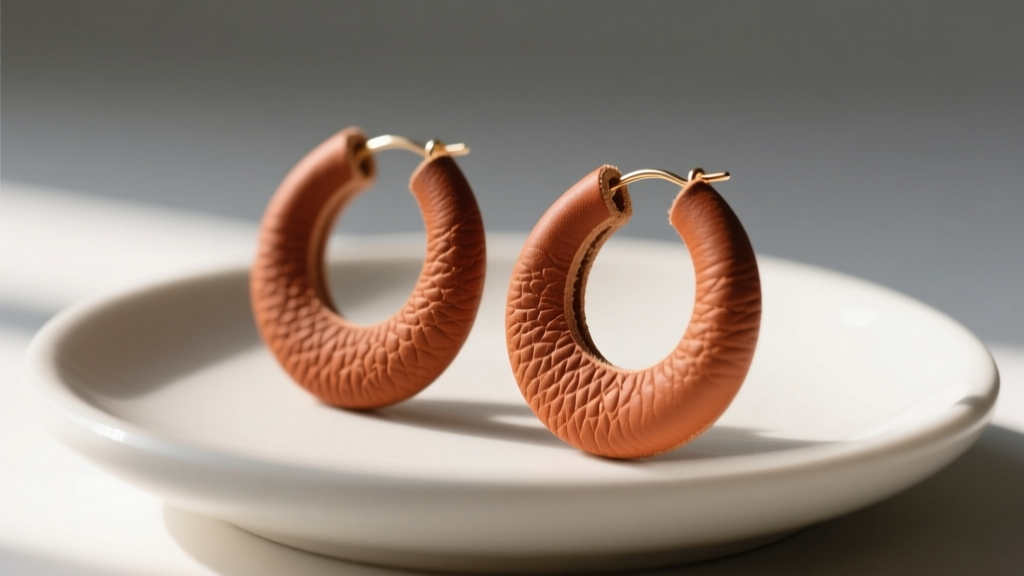
If you are stepping into the world of sustainable and lightweight jewelry, faux leather earrings are the perfect starting point. Historically dismissed as cheap plastic alternatives, the landscape of vegan leather has undergone a massive transformation by 2026. Today, these earrings are crafted from advanced polyurethanes (PU), recycled polyvinyl chlorides (PVC), and innovative plant-based bio-materials. They offer the rich texture and visual depth of genuine animal hide without the environmental footprint or the heavy weight that often drags down earlobes.
According to PETA's guide on vegan alternatives, modern faux leathers are engineered to mimic the grain and supple drape of traditional leather, making them ideal for intricate laser-cut dangles, bold geometric studs, and oversized hoops. However, not all faux leathers are created equal. Understanding the material composition is your first step toward buying a pair that will last.
Material Comparison Chart
| Material | Composition | Durability | Eco-Impact | Best Earring Style |
|---|---|---|---|---|
| PU (Polyurethane) | Synthetic polymer on fabric backing | Medium (2-3 years) | Moderate | Flexible dangles, hoops |
| PVC (Polyvinyl Chloride) | Plastic-based, rigid | High (5+ years) | Low (High toxicity) | Structured geometric studs |
| Plant-Based (e.g., Cactus/Apple) | Bio-resins mixed with organic waste | High (4-5 years) | High (Sustainable) | Premium drops, ear cuffs |
| Cork | Natural bark harvest | Medium | High (Renewable) | Lightweight boho dangles |
The Hidden Trap: Hardware and Hypoallergenic Posts
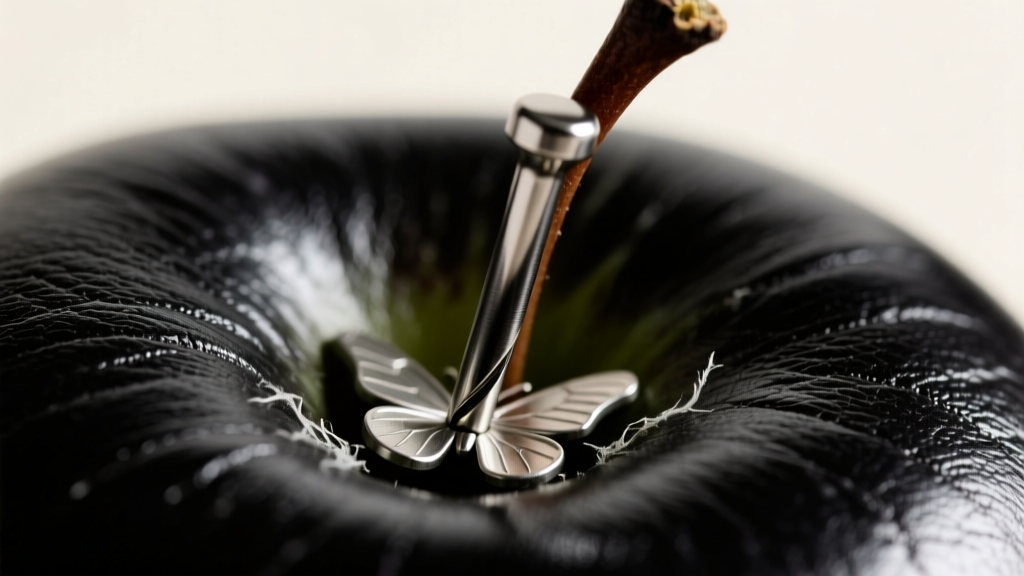
One of the most common beginner mistakes when buying faux leather earrings is assuming the entire earring is hypoallergenic. While the faux leather itself is completely safe for sensitive skin, the metal post that pierces your ear is an entirely different story. Many budget-friendly vegan earrings use cheap brass or nickel-plated posts to keep costs down, which can trigger severe contact dermatitis.
The American Academy of Dermatology notes that nickel allergy is one of the most common causes of allergic contact dermatitis, often manifesting as red, itchy earlobes within hours of wearing the wrong jewelry. When shopping, always check the hardware specifications.
Gauge Sizes and Metal Grades
For standard lobe piercings, you will typically encounter two gauge sizes:
- 20-Gauge (0.81mm): The industry standard for most lightweight faux leather studs and small hoops. It slides easily into healed piercings without stretching them.
- 18-Gauge (1.02mm): Slightly thicker, providing better structural support for heavier, oversized faux leather dangles or statement pieces.
Expert Tip: Always look for posts made from ASTM F-136 Implant-Grade Titanium or 316L Surgical Steel. If you have severe metal sensitivities, insist on solid titanium or niobium posts, as even surgical steel contains trace amounts of nickel.
Weight, Thickness, and Drape: A Technical Breakdown
The primary advantage of faux leather over genuine leather in jewelry making is weight control. Genuine leather can be dense and heavy, causing earlobe fatigue or stretching over time. Faux leather can be engineered to precise millimeter thicknesses, allowing for dramatic, oversized silhouettes that feel virtually weightless.
However, thickness dictates the behavior of the earring. If a manufacturer uses a 0.5mm PU leather for a large, 3-inch dangle, the earring will lack structural integrity. It will fold, crease, and eventually suffer from 'edge curling' when exposed to ambient humidity.
The Golden Rules of Thickness
- 0.8mm to 1.2mm: Ideal for medium-sized dangles and hoops. This thickness provides enough flexibility for a beautiful, fluid drape while resisting humidity-induced curling, provided it has a microfiber backing.
- 1.5mm to 2.5mm: Necessary for structured, geometric studs and architectural ear cuffs. This thickness mimics the rigid, premium feel of heavy saddle leather and holds laser-cut edges perfectly crisp.
When buying online, check the product descriptions for millimeter (mm) thickness specifications. Brands that hide this metric are often using ultra-thin, low-grade materials that will warp within a month.
Caring for Your Vegan Leather Jewelry
Faux leather requires a different care regimen than metals or gemstones. The most common failure mode for traditional PU leather is hydrolysis—a chemical breakdown where moisture in the air causes the polyurethane coating to separate from its fabric backing, resulting in that dreaded 'peeling' effect. To maximize the lifespan of your faux leather earrings, follow these strict maintenance protocols.
Cleaning and Storage Best Practices
- Never Use Alcohol: Rubbing alcohol or harsh chemical jewelry cleaners will strip the protective topcoat of PU and plant-based leathers, leading to immediate drying and cracking. Use a slightly damp microfiber cloth with a drop of mild, fragrance-free soap instead.
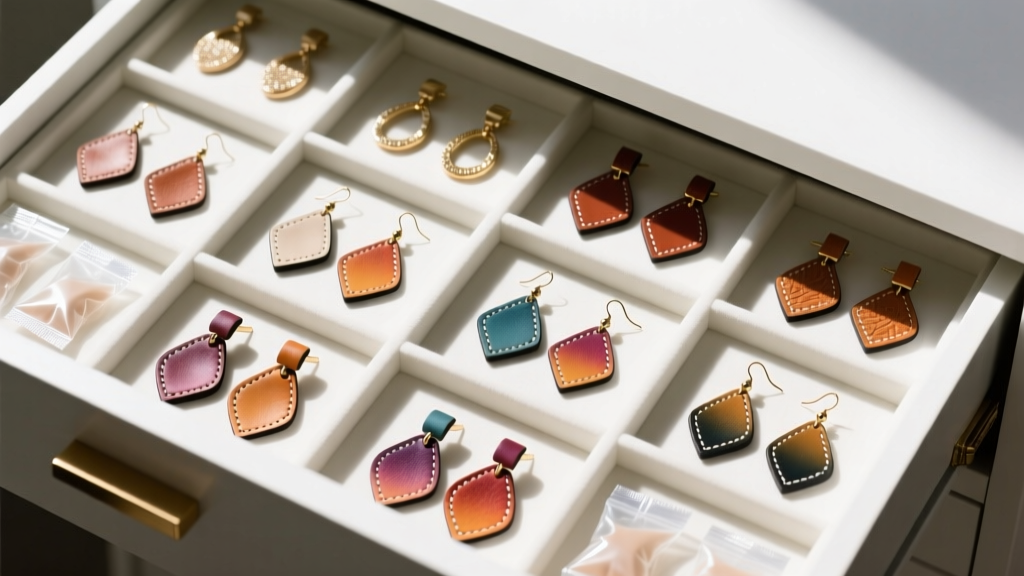
- Combat Humidity: Store your earrings in a drawer or jewelry box with silica gel packets. Controlling the ambient moisture is the single most effective way to prevent hydrolysis and edge curling.
- Store Flat, Never Hanging: While hanging works for metal chains, hanging heavy faux leather dangles by their posts can stress the puncture hole, causing the leather to tear away from the hardware over time. Always lay them flat.
- Keep Away from Direct Heat: Leaving your earrings on a sunlit windowsill or near a radiator will bake the plasticizers out of PVC and PU, making them brittle and prone to snapping in cold weather.
Quick Buyer’s Checklist for Beginners
Before you click 'Add to Cart' on your next pair of vegan leather earrings, run through this quick E-E-A-T checklist to ensure you are getting a quality product:
- [ ] Post Material Verified: Is the post explicitly listed as Titanium, Niobium, or 316L Steel? (Avoid 'alloy' or 'nickel-free brass' if you are highly sensitive).
- [ ] Backing Type: Does the faux leather have a microfiber or cotton backing? (Single-layer PU peels much faster).
- [ ] Edge Finishing: Look at the zoomed-in photos. Are the edges painted/sealed, or are they raw? Sealed edges prevent moisture from entering the layers.
- [ ] Hardware Attachment: Are the jump rings securely crimped, or just loosely looped through the leather? Crimped metal caps offer vastly superior tear resistance.
Faux leather earrings are a brilliant, ethical, and lightweight addition to any jewelry collection. By understanding the nuances of material grades, hardware safety, and proper thickness, you can build a curated collection of vegan pieces that look luxurious and stand the test of time.


