How to Properly Clean and Store Dangling Cross Earrings
Discover expert techniques to clean, polish, and store dangling cross earrings. Prevent tarnish and protect delicate jump rings with our complete guide.

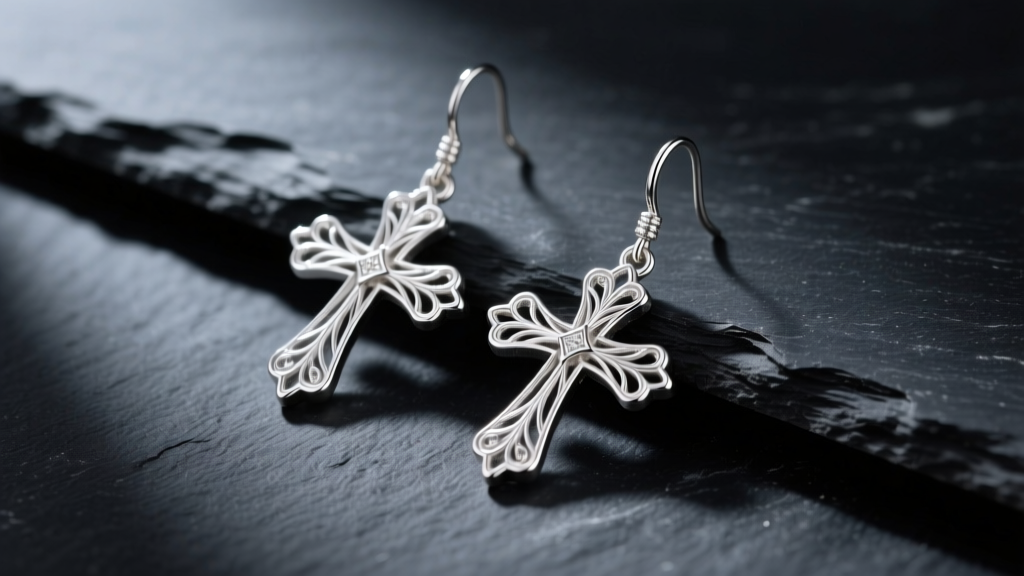
The Unique Maintenance Challenges of Dangling Crosses
Dangling cross earrings are a timeless jewelry staple, blending spiritual symbolism with striking vertical aesthetics. However, their unique structural design presents specific maintenance challenges that standard stud or hoop earrings do not face. Because they are suspended from a moving pivot point, dangling crosses experience constant kinetic motion. This pendulum effect means they are more likely to swing into your hair, catching aerosol sprays, dry shampoo, and natural scalp oils. Furthermore, the elongated vertical axis of a cross pendant means the bottom tip frequently brushes against collars, scarves, and necklines, transferring fabric dyes, lint, and skin oils directly onto the metal.
Beyond surface dirt, the intricate geometry of many cross designs—featuring filigree, milgrain detailing, or channel-set gemstones—creates microscopic crevices where dead skin cells and cosmetic residue accumulate. If left untreated, this buildup not only dulls the metal's luster but can also accelerate localized corrosion, particularly in humid environments. To keep your pieces looking pristine, you must adopt a care regimen that addresses both the metallurgical properties of the earrings and the mechanical stress placed on their moving parts.
Material-Specific Cleaning Protocols
Before applying any cleaning solution, you must identify the base metal and plating of your earrings. Using the wrong chemical agent can permanently ruin the finish.
Sterling Silver (925) and Oxidation
Sterling silver is highly prone to tarnishing, a chemical reaction where silver reacts with sulfur compounds in the air to form silver sulfide. For standard polished silver crosses, a simple wash with warm water and a few drops of pH-neutral dish soap (like Dawn) is sufficient for weekly maintenance. However, if your cross features intentional oxidation (blackened crevices used to highlight filigree or gothic details), you must never use commercial silver dip solutions or the aluminum-foil-and-baking-soda electrochemical method. These aggressive treatments will strip the intentional antiquing, leaving the piece looking flat and overly bright. Instead, use a treated silver polishing cloth, carefully rubbing only the raised surfaces while avoiding the recessed, oxidized areas.
Gold Vermeil and Plated Metals
Gold vermeil consists of a thick layer of gold (legally required to be at least 2.5 microns in the US) bonded over a sterling silver base. Because the gold layer is relatively thin, abrasive cleaning pastes, baking soda scrubs, and ultrasonic cleaners are strictly prohibited. The high-frequency vibrations of an ultrasonic machine can cause the gold layer to delaminate or flake off entirely. Clean vermeil dangling cross earrings using only a microfiber cloth and a mild, non-detergent soap solution, patting them dry immediately to prevent water spots.
Solid Gold (14k/18k) and Platinum
Solid gold and platinum are highly durable and chemically inert, making them the easiest to maintain. These metals can withstand ultrasonic cleaning and mild ammonia-based jewelry solutions. However, if your solid gold cross contains fracture-filled diamonds or soft, porous gemstones, you must revert to manual cleaning methods to prevent catastrophic stone damage.
Step-by-Step Deep Cleaning Method
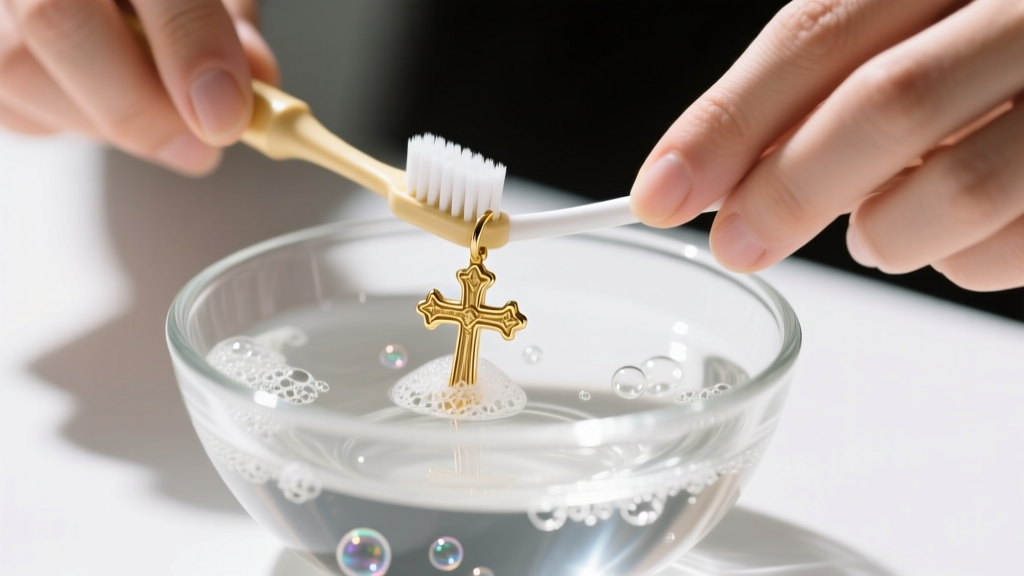
For a thorough, safe clean that reaches the deepest crevices of your dangling cross earrings, follow this professional jeweler's protocol:
- Prepare the Solution: Fill a small glass bowl with lukewarm (not hot) distilled water. Hot water can cause thermal shock to certain gemstones. Add three drops of mild, phosphate-free dish soap.
- Soak Briefly: Submerge the earrings for 3 to 5 minutes. This softens hardened cosmetics and sebum trapped in the filigree.
- Agitate Gently: Using an extra-soft baby toothbrush (with bristles no thicker than 0.1mm), gently brush the cross pendant. Always brush in the direction of the metal's grain or detailing to avoid micro-scratches.
- Rinse Thoroughly: Rinse the earrings under a gentle stream of distilled water. Avoid tap water, as the dissolved minerals and chlorine can leave hard water spots or react with silver alloys.
- Dry Completely: Pat the surface dry with a lint-free microfiber cloth. Use a hairdryer on the 'cool' setting to blow air into the crevices and jump rings, ensuring no moisture remains trapped against the metal.
Gemstone and Enamel Considerations
Many dangling cross earrings feature gemstone accents or enamel work. According to the Gemological Institute of America (GIA), gemstones have vastly different porosity and hardness levels, dictating how they must be cleaned. Below is a quick reference guide for common stones found in cross pendants.
| Gemstone | Mohs Hardness | Ultrasonic Safe? | Recommended Cleaning Method |
|---|---|---|---|
| Diamond | 10 | Yes | Warm soapy water, ultrasonic, or mild ammonia solution |
| Sapphire | 9 | Yes | Warm soapy water, ultrasonic |
| Emerald | 7.5 - 8 | No | Damp cloth only; emeralds are oil-treated and ultrasonics will strip the oil |
| Opal | 5.5 - 6.5 | No | Dry microfiber cloth; highly porous and sensitive to thermal shock |
| Turquoise | 5 - 6 | No | Dry cloth; avoid all liquids and chemicals as it is highly porous |
Enamel detailing, often seen in vintage-inspired or heraldic cross designs, is essentially fused glass. While hard, it is brittle. Never use sharp metal tools (like a needle or pin) to pick dirt out of enameled grooves, as a single slip will chip the glass and permanently ruin the design.
Structural Maintenance: Jump Rings and Ear Wires
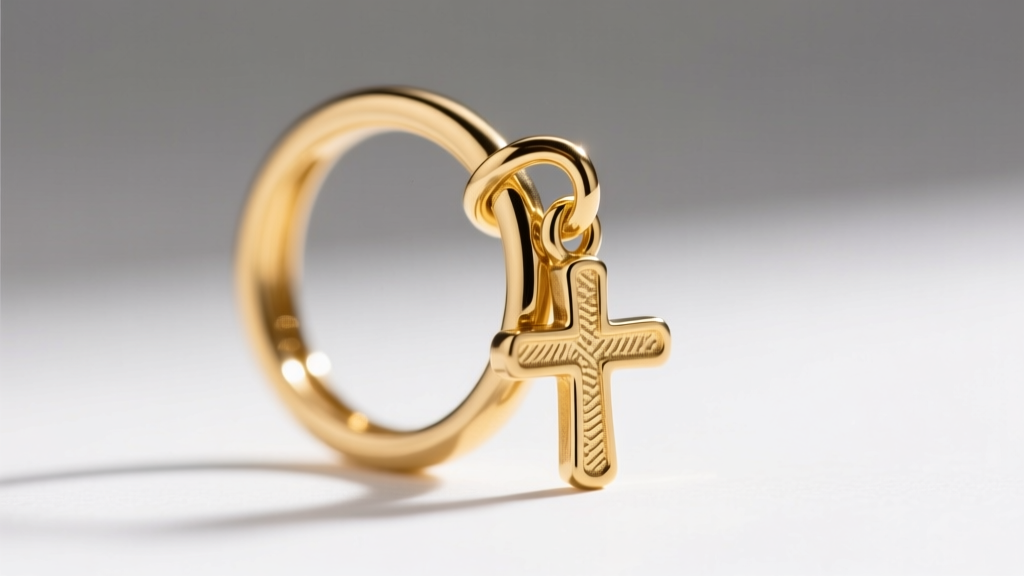
The most common failure point on any dangling earring is the jump ring—the small metal loop connecting the cross pendant to the ear wire or chain. Because dangling crosses swing and catch on clothing, the jump ring is subjected to continuous lateral tension. Over time, this kinetic stress can cause the gap in the jump ring to pull open, resulting in the loss of the pendant.
Most mass-market dangling cross earrings utilize 22-gauge or 20-gauge jump rings. If your cross pendant is particularly heavy (e.g., cast in solid bronze or thick 14k gold), a 22-gauge ring is insufficient. Inspect the jump ring monthly using a 10x jeweler's loupe. If you notice the gap separating, use two pairs of flat-nose jewelry pliers to gently twist the ring closed. Never pull the ends apart laterally to close the gap, as this weakens the metal's crystalline structure and makes it oval-shaped. Always twist one end toward you and one end away from you.
For heavy or highly sentimental pieces, consider taking the earrings to a professional jeweler to have the jump ring soldered shut, or upgraded to a split ring (which resembles a miniature keychain ring) for added security.
Proper Storage to Prevent Tangles and Tarnish
How you store your dangling cross earrings is just as critical as how you clean them. The elongated shape of the cross, combined with the hooked ear wire, makes these pieces highly susceptible to tangling when thrown loosely into a jewelry box. Tangled chains and ear wires can bend, and the friction between pieces can cause micro-scratches on polished metals.
According to Jewelers of America, proper storage significantly extends the lifespan of fine jewelry. Follow these storage rules:
- Individual Compartments: Store each pair in its own soft fabric pouch or individual compartment in a lined jewelry box. This prevents the ear wire of one pair from scratching the gemstone of another.
- Anti-Tarnish Strips: For sterling silver crosses, place a 3M anti-tarnish strip inside the storage compartment. These strips absorb airborne sulfur compounds, preventing the silver sulfide reaction before it starts.
- Hang When Possible: If you use a jewelry tree or organizer, hang dangling crosses by the ear wire. This keeps the pendant suspended freely, preventing the chain or jump ring from kinking.
- Climate Control: Never store jewelry in the bathroom. The high humidity and temperature fluctuations from showers create an ideal environment for rapid tarnishing and can degrade the adhesives used in some gemstone settings.
Conclusion
Maintaining the brilliance and structural integrity of dangling cross earrings requires a proactive approach. By understanding the specific metallurgical needs of your pieces, utilizing the correct cleaning tools, and regularly inspecting the mechanical stress points like jump rings, you can ensure your earrings remain a flawless part of your wardrobe for decades. Consistent, gentle care will always outperform aggressive, reactive cleaning, preserving both the sentimental and material value of your jewelry.


