Women's Big Earrings: 2026 Maximalist Trend Analysis
Discover the 2026 trend analysis for women's big earrings. Learn to style oversized hoops, architectural drops, and lightweight statement pieces.

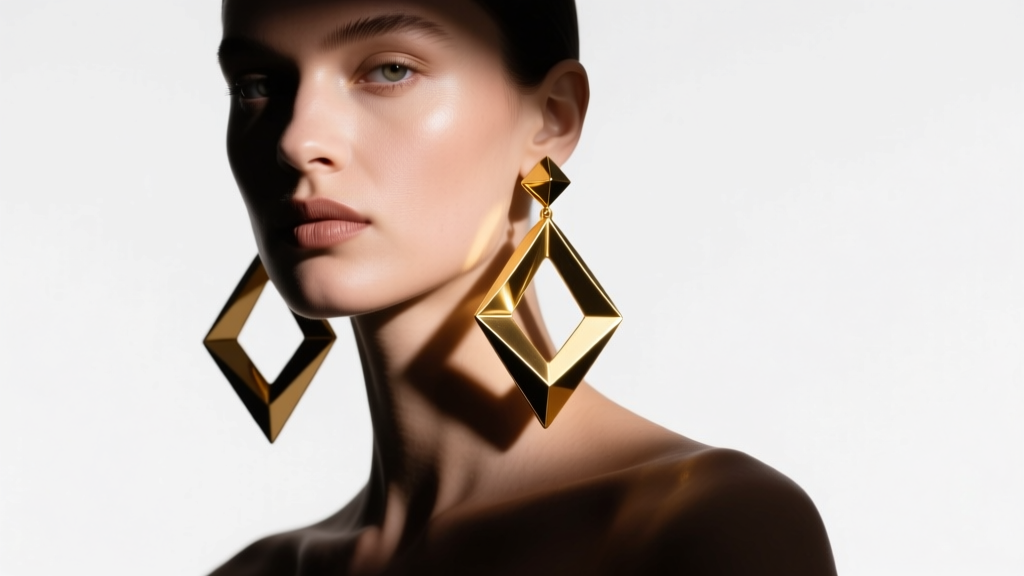
The Evolution of Volume: Redefining Statement Jewelry
The landscape of maximalist jewelry has undergone a radical transformation. As we navigate the 2026 fashion cycle, the demand for women's big earrings has shifted away from the heavy, solid-cast metals of the early 2020s toward architectural volume and material engineering. Today's statement pieces are defined by their spatial presence rather than their mass. According to Vogue's trend forecasting, the modern consumer demands earrings that command attention on the runway and in boardrooms without compromising lobe health or all-day comfort.
This analysis breaks down the structural innovations, face-shape scaling frameworks, and biomechanical supports defining the 2026 oversized earring market. Whether you are a collector of avant-garde silhouettes or a stylist curating editorial looks, understanding the intersection of material science and aesthetic proportion is essential for mastering this trend.
Material Engineering: Electroforming and 3D Titanium
The primary barrier to wearing oversized earrings has historically been gravity. A solid 18-karat gold hoop measuring 70mm in diameter can easily exceed 25 grams per ear—a weight that causes immediate lobe fatigue and long-term tissue stretching. The 2026 market solves this through two dominant manufacturing techniques:
1. Electroformed Gold and Silver
Electroforming allows jewelers to deposit microscopic layers of gold or silver over a wax or resin mold, which is later melted or dissolved away. The result is a hollow, seamless metal structure that retains the exact visual dimensions of a solid cast piece but weighs up to 70% less. When shopping for women's big earrings in precious metals, look for the term "hollow-form" or "electroformed" in the product specifications. These pieces typically range from $400 to $1,200, offering luxury volume without the structural penalty.
2. Aerospace-Grade Titanium and Resin Composites
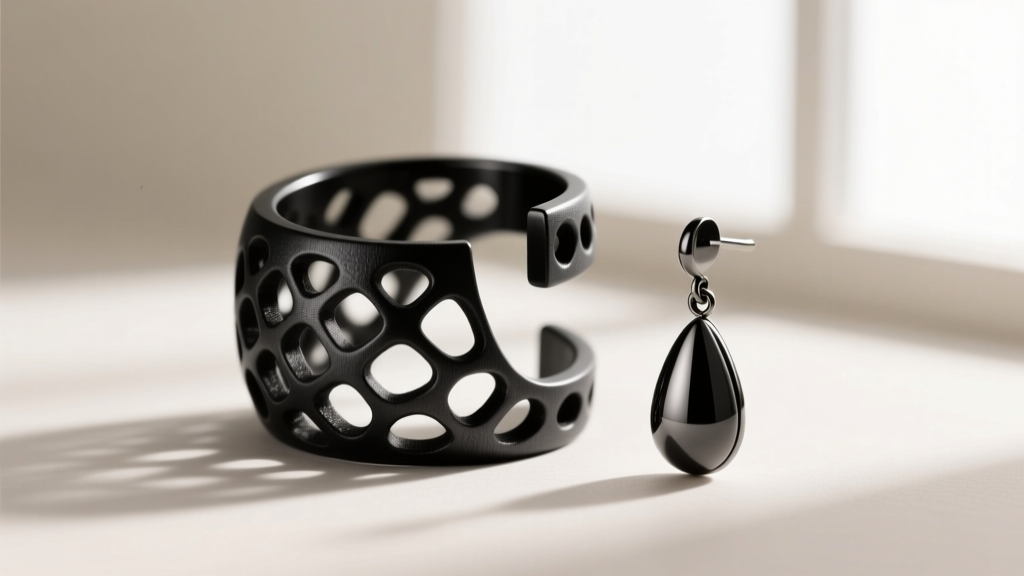
For the avant-garde market, 3D-printed Grade 5 titanium (Ti-6Al-4V) has emerged as a premier material. Titanium is roughly 45% lighter than steel and possesses immense tensile strength, allowing for impossibly thin, sweeping architectural wires that won't bend or warp. Furthermore, titanium is entirely hypoallergenic and nickel-free, making it the gold standard for sensitive cartilage and lobe piercings.
Face-Shape Scaling Framework
Wearing large-scale jewelry requires an understanding of facial geometry. The goal of a statement earring is to create optical balance, not to overwhelm the wearer's natural features. Below is the 2026 proportional scaling matrix used by editorial stylists to match oversized silhouettes to specific face shapes.
| Face Shape | Ideal Oversized Silhouette | Maximum Drop Length | Design Elements to Avoid |
|---|---|---|---|
| Round | Elongated geometric drops, linear chandeliers | 3.5 to 4.5 inches | Wide circular hoops, clustered spheres |
| Square | Softened oversized hoops, teardrop cascades | 2.5 to 3.5 inches | Sharp angular squares, harsh horizontal lines |
| Oval | Asymmetrical brutalist shapes, wide cuffs | Any (up to 5 inches) | Overly narrow, elongated needles |
| Heart | Bottom-heavy chandeliers, wide teardrops | 2.5 to 3.0 inches | Inverted triangles, top-heavy clusters |
Lobe Biomechanics: Supporting the Statement
The dermatological and piercing communities have been vocal about the long-term effects of heavy jewelry. A standard earlobe piercing (usually 20-gauge or 18-gauge) is not engineered to support sustained loads exceeding 10 to 12 grams. When women's big earrings cross the 15-gram threshold, the risk of micro-tearing, elongation, and eventual lobe splitting increases exponentially.
To mitigate this, the 2026 jewelry market has introduced integrated support systems. If you are investing in heavy brass, bronze, or solid stone statement pieces, you must employ one of the following stabilization methods:
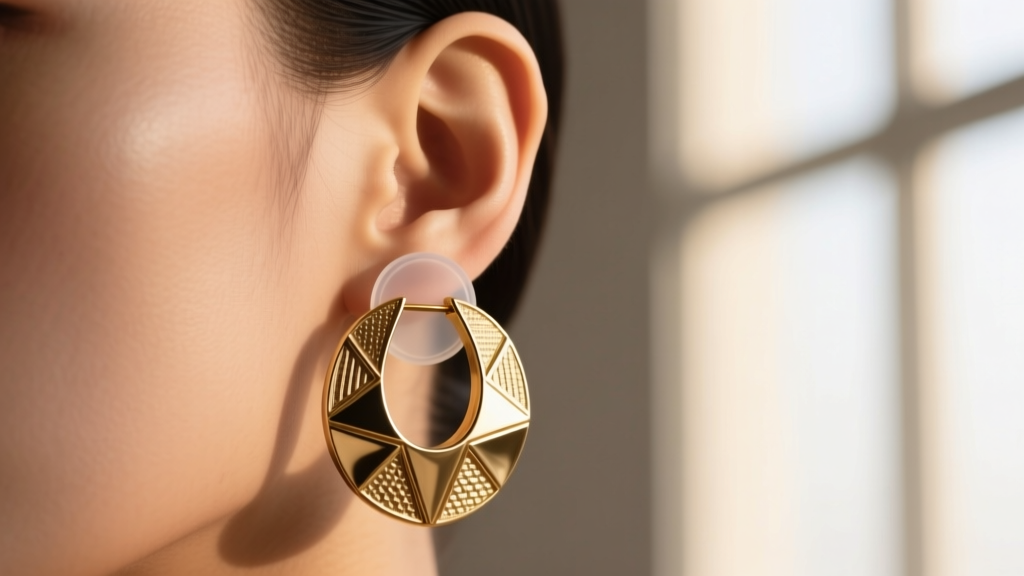
- La Pousette Backs: Originally designed for high-carat diamond studs, these spring-loaded, push-pull backs feature a wide, flat disc that distributes the earring's weight across a broader surface area of the posterior lobe. They lock securely into a grooved post, preventing the earring from drooping forward.
- Silicone Stabilizer Patches: Brands like BlingGuard and LobeWonder produce medical-grade, invisible silicone patches that adhere to the back of the earlobe. These patches feature a pre-punched hole for the earring post, effectively acting as a structural splint that prevents the metal from slicing through the tissue.
- Omega Clip Conversions: For non-pierced ears or those seeking extra support, converting heavy posts to hinged omega clips with adjustable tension screws provides a secondary anchor point on the cartilage ridge, relieving up to 40% of the pressure on the primary piercing hole.
The 2026 Styling Matrix: Necklines and Hair Pairings
Styling oversized earrings is an exercise in negative space. According to jewelry styling principles outlined by the GIA, the visual weight of your jewelry must be balanced by your wardrobe and grooming choices. Here is the definitive styling matrix for the current season:
The High-Neckline Rule
When wearing turtlenecks, mock necks, or structured collared shirts, opt for oversized hoops or ear cuffs that sit flush against the jawline. Long drops will tangle with the fabric and disrupt the clean lines of the garment. A 50mm hollow gold tube hoop provides the necessary framing without the vertical interference.
The Deep-V and Strapless Protocol
Plunging necklines and strapless gowns demand vertical elongation. This is the ideal environment for 4-inch linear drop earrings or articulated chandeliers. The bare skin of the décolletage acts as a canvas, allowing the light to catch the movement of the lower earring components. Ensure the earring's terminal gemstone or metal drop aligns perfectly with your collarbone for optimal visual harmony.
Hair Dynamics: The Tuck vs. The Sweep
The "ear tuck" remains the most effective way to showcase architectural ear cuffs and oversized studs. However, for heavy drop earrings, an updo or a severe, slicked-back chignon is mandatory. Allowing heavy earrings to swing through loose hair not only risks snagging the earring components (which can tear the lobe) but also obscures the design intent of the piece. If wearing hair down, utilize a deep side part and sweep the hair entirely over the opposite shoulder to create a dedicated showcase zone for the jewelry.
Final Thoughts on the Maximalist Shift
The 2026 era of women's big earrings is defined by intelligent design. It is no longer about simply making jewelry larger; it is about making it smarter. By prioritizing electroformed metals, respecting facial geometry, and utilizing biomechanical supports, you can confidently embrace the maximalist trend without sacrificing comfort or the longevity of your piercings. Invest in structural integrity, and let the volume speak for itself.


