How to Sanitize Earrings: A Buyer's Guide to Safe Metals
Learn how to sanitize earrings safely before wearing. Our buyer's guide covers autoclave-safe metals, porous materials to avoid, and sterilization tips.

The Hidden Risks of Unsanitized Jewelry
When you purchase new earrings, especially from independent artisans, vintage shops, or international online marketplaces, you are often skipping a critical step in ear health: proper sterilization. As of 2026, while mainstream retailers have largely adopted stricter hygiene standards, the secondary market and fast-fashion sectors still frequently ship jewelry coated in manufacturing residues, handling oils, and environmental bacteria. Understanding how to sanitize earrings is not just about wiping them with an alcohol pad; it is a fundamental aspect of the buying process that dictates which materials you should invest in and which you must avoid.
Perichondritis (cartilage infection) and severe contact dermatitis are frequently traced back to jewelry that was worn immediately out of the packaging without proper decontamination. To protect your piercings, you must evaluate the material grade before you buy, ensuring the metal can withstand the sanitization methods required to make it safe for your body.
Sanitizing vs. Disinfecting vs. Sterilizing: What Buyers Must Know
Before diving into material grades, it is vital to understand the terminology used by professional piercers and microbiologists. The method you use to clean your jewelry depends entirely on the metal's porosity and heat tolerance.
- Cleaning: The physical removal of visible debris, oils, and skin cells using mild soap and water. This does not kill pathogens.
- Disinfecting (Sanitizing): Using chemical agents (like 70% isopropyl alcohol) to reduce the number of vegetative bacteria on a non-porous surface. This is the standard at-home method for healed piercings.
- Sterilizing: The complete destruction of all microbial life, including bacterial spores. This requires an autoclave (steam under pressure) and is mandatory for fresh piercings or jewelry shared between individuals.
"Consumers often mistake a quick wipe with rubbing alcohol as sterilization. For non-porous, implant-grade metals, chemical disinfection is sufficient for healed lobes, but true sterilization requires temperatures of 121°C at 15 PSI for a minimum of 30 minutes."
How to Sanitize Earrings Based on Material Grade
When shopping for earrings, the material dictates your sanitization options. If a material cannot be properly sanitized without degrading, it should not be purchased for long-term wear.
Implant-Grade Titanium & Niobium (The Gold Standard)
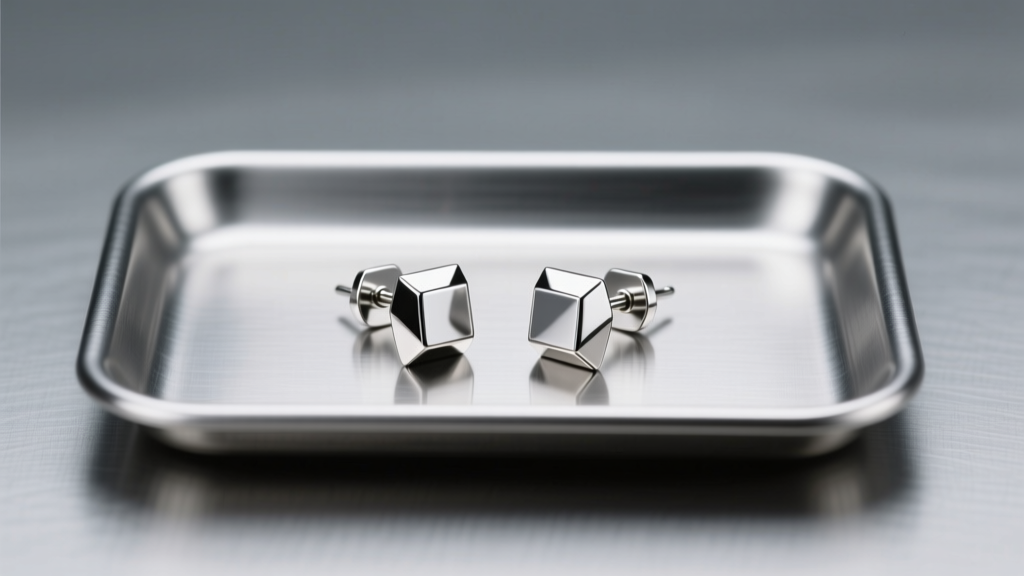
If you are buying earrings for sensitive ears or fresh piercings, look for ASTM F-136 Implant-Grade Titanium or pure Niobium. According to the Association of Professional Piercers (APP), these metals are completely non-porous and highly resistant to corrosion. You can safely boil them, run them through a home ultrasonic cleaner, or soak them in 70% isopropyl alcohol (IPA) for 10 minutes without damaging the structural integrity or the mirror-polish finish. Note that anodized niobium can shift colors if exposed to harsh ultrasonic frequencies for too long, but the metal itself remains safe.
Solid Gold & Platinum (High-Heat Tolerance)
High-quality solid gold (14k to 18k) and platinum are excellent, non-porous choices that can be fully sterilized in an autoclave. However, buyers must be wary of gold-plated or gold-vermeil earrings. The sanitization process—especially chemical soaks and ultrasonic vibrations—will strip the thin microscopic layer of gold right off the brass or silver core, exposing your skin to highly reactive base metals and nickel alloys.
Sterling Silver & Surgical Steel (The Caveats)
Surgical steel (ASTM F-138) is widely sold, but it contains up to 10% nickel. While you can sanitize it with alcohol, the metal's microscopic porosity can harbor bacteria over time, and the nickel can leach into the skin. Sterling silver (925) tarnishes rapidly when exposed to the high heat and moisture of an autoclave, and it reacts poorly to prolonged chemical soaks. If you buy silver or surgical steel, stick to chemical disinfection for healed ears only.
Materials You Can Never Fully Sanitize (Buyer Beware)
The most critical part of learning how to sanitize earrings is knowing which materials to leave on the shelf. Porous, organic, and soft synthetic materials harbor bacterial biofilms deep within their micro-fissures. No amount of surface wiping will kill the anaerobic bacteria trapped inside.
| Material | Autoclave Safe? | Chemical Disinfection | Porosity & Biofilm Risk |
|---|---|---|---|
| Implant Titanium (ASTM F-136) | Yes | Highly Effective | Zero (Non-porous) |
| Solid 14k/18k Gold | Yes | Highly Effective | Zero (Non-porous) |
| Acrylic / Bio-Plast | No (Melts/Warps) | Degrades over time | High (Micro-cracks harbor bacteria) |
| Wood / Bone / Horn | No (Cracks/Dries) | Absorbs chemicals | Extreme (Organic matter rots) |
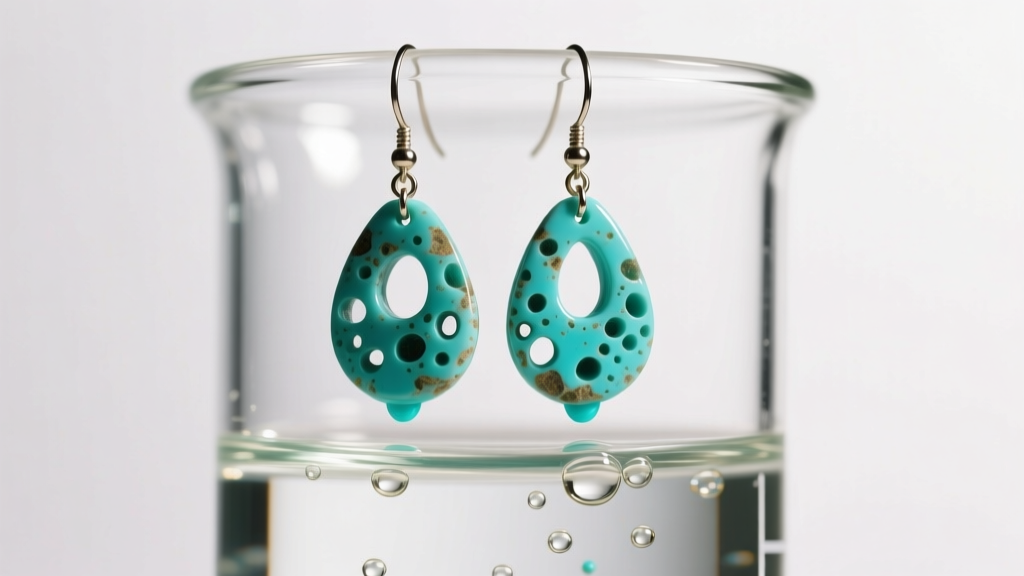
| Opal / Turquoise (Natural) | No (Shatters) | Leaches color/minerals | Moderate (Naturally porous stone) |
As highlighted by the CDC's Sterilization Guidelines, porous materials cannot be reliably sterilized using standard steam or chemical methods. If you are buying heavy-gauge (00g or larger) wooden plugs or bone hooks, understand that they are meant for short-term wear in fully healed, non-reactive tissue, and they must be regularly oiled and eventually replaced, not permanently sanitized.
Step-by-Step: At-Home Disinfection Protocol
When your new, non-porous earrings arrive in the mail, follow this exact protocol before inserting them into your ears:
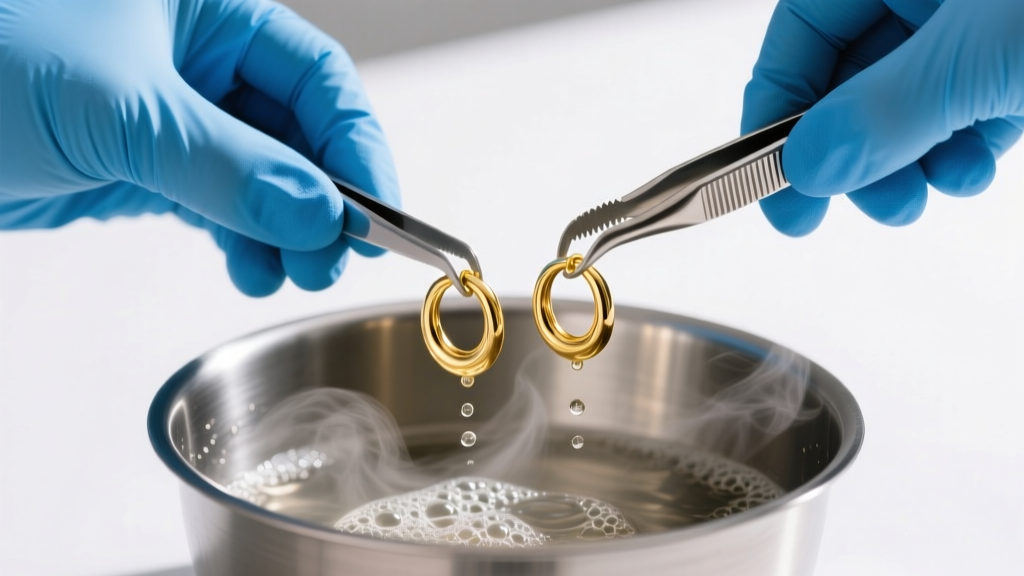
- Initial Wash: Wash your hands thoroughly. Place the earrings in a small glass dish and add a few drops of sterile saline or mild, fragrance-free antibacterial soap. Gently agitate to remove shipping dust and manufacturing oils.
- Rinse: Rinse the jewelry under warm, distilled water. Avoid tap water, which can contain trace minerals and microbes.
- Chemical Soak: Submerge the earrings completely in a small cup of 70% Isopropyl Alcohol. Do not use 99% IPA; the 30% water content in the 70% solution is actually required to penetrate bacterial cell walls and coagulate their proteins effectively.
- Dwell Time: Let the jewelry soak for exactly 10 minutes. Leaving it longer will not make it "cleaner" and may degrade certain gemstone settings.
- Dry: Remove with clean, lint-free gauze and allow to air dry completely on a sterile paper towel before insertion.
Buying Vintage or Second-Hand: A Sanitization Checklist
The vintage jewelry market has exploded, but buying second-hand earrings carries inherent biological risks. Previous owners may have had undiagnosed staph infections or fungal issues. When buying vintage, use this checklist to ensure the piece can be safely reclaimed:
- Check for deep scratches: Run your fingernail over the post and the back of the earring head. Deep grooves in gold or silver act as safe havens for biofilms that alcohol cannot penetrate.
- Inspect the earring backs: Butterfly push-backs and rubber O-rings are highly porous and impossible to fully sanitize. Always throw away second-hand earring backs and purchase brand-new, implant-grade titanium nuts or flat-back labret studs.
- Verify the gemstones: Many vintage pieces feature glued-in rhinestones or soft pearls. Submerging these in alcohol will dissolve the adhesive and ruin the nacre. For these pieces, you are limited to surface-level UV light sanitizers, which are vastly inferior to chemical soaks.
Final Verdict: What to Look For at the Checkout
Ultimately, knowing how to sanitize earrings starts long before you reach the checkout cart. It begins with demanding transparency from the manufacturer. Look for explicit mentions of "ASTM F-136" or "Implant-Grade" rather than vague marketing terms like "hypoallergenic" or "surgical steel." Invest in high-quality, non-porous metals that can withstand rigorous chemical disinfection or professional autoclaving. By treating material porosity and sanitization tolerance as primary buying criteria, you protect your ear health and ensure your jewelry remains a safe, lifelong investment.


