Custom Earring Card ROI: 2026 Budget & Value Guide
Evaluate custom earring card packaging costs, material grades, and ROI for jewelry sellers. Discover 2026 budget strategies to boost perceived value.

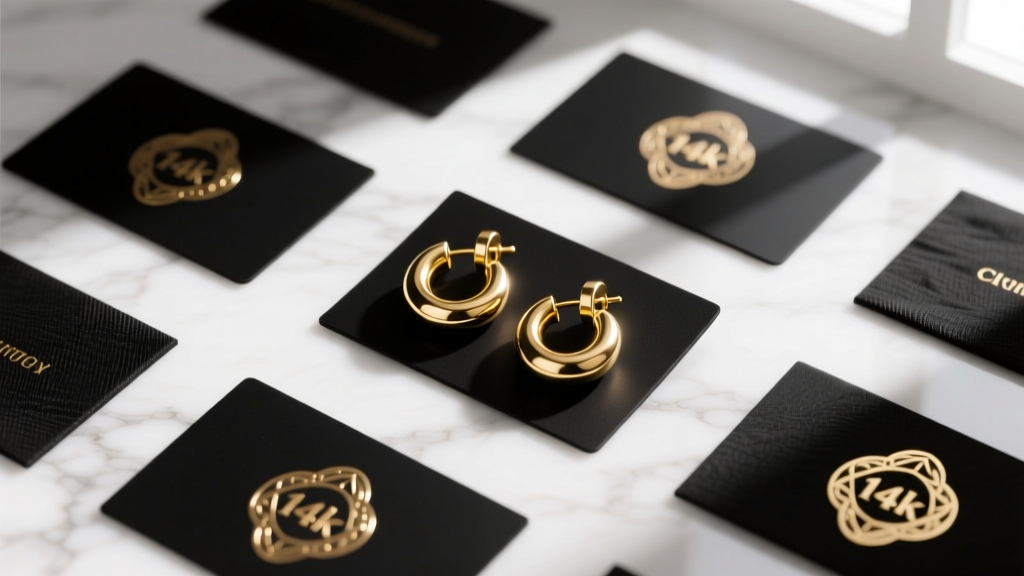
The True Cost of Earring Card Packaging in 2026
For independent jewelry makers and boutique brands, the unboxing experience is no longer just a bonus—it is a critical component of perceived value and customer retention. When selling earrings, the humble earring card serves as the primary physical touchpoint between your brand and the buyer before the jewelry is even worn. But with rising material and shipping costs in 2026, how much should you actually invest in your packaging? Assessing the budget and true ROI of your earring card packaging requires looking beyond the initial unit cost and examining material longevity, brand positioning, and failure rates.
According to the Etsy Seller Handbook, memorable packaging can increase repeat purchase rates by up to 30%. However, overspending on luxury packaging for low-ticket items can destroy your profit margins. The goal is to find the exact intersection where the packaging elevates the jewelry without cannibalizing your bottom line.
Material Grades, GSM, and Unit Cost Breakdown
Paper weight, measured in GSM (grams per square meter), dictates the rigidity and premium feel of your earring card. A flimsy card will bend during transit, potentially warping the earring post or causing the jewelry to look cheap upon arrival. Below is a 2026 market breakdown of standard earring card materials and their associated costs at a 1,000-unit MOQ (Minimum Order Quantity).
| Material Grade | GSM Weight | Est. Cost (per unit) | Best Application |
|---|---|---|---|
| Standard Uncoated Kraft | 250-300 GSM | $0.05 - $0.08 | Budget brass studs, craft fairs |
| Matte Art Card (Coated) | 350 GSM | $0.12 - $0.18 | Everyday hoops, gold-filled huggies |
| Soft-Touch Lamination | 400 GSM | $0.25 - $0.45 | Premium dangles, 14k vermeil |
| Cotton / Seed Paper | 300-600 GSM | $0.40 - $0.85 | Eco-conscious fine jewelry lines |
As highlighted by Packlane's ROI Guide, upgrading from a standard 250 GSM kraft card to a 350 GSM soft-touch matte card often costs less than $0.15 more per unit, but can easily justify a $5 to $10 price increase on the retail jewelry itself due to the elevated tactile experience.
Material Science: Tarnishing and Failure Modes
A common and costly mistake made by new jewelry brands is ignoring the chemical composition of the earring card. Standard, cheap cardboard and recycled paper stocks often contain high levels of acid and lignin. When sterling silver, raw brass, or copper earrings are stored against acidic paper, it accelerates oxidation and tarnishing. If your customer opens their package to find their new silver studs tarnished, the perceived value drops to zero, regardless of how beautiful the foil stamping on the card is.
The Solution: Always specify acid-free and lignin-free paper stocks when ordering custom cards. For high-end silver and copper pieces, investing in 100% cotton rag paper (which is naturally acid-free) is non-negotiable.
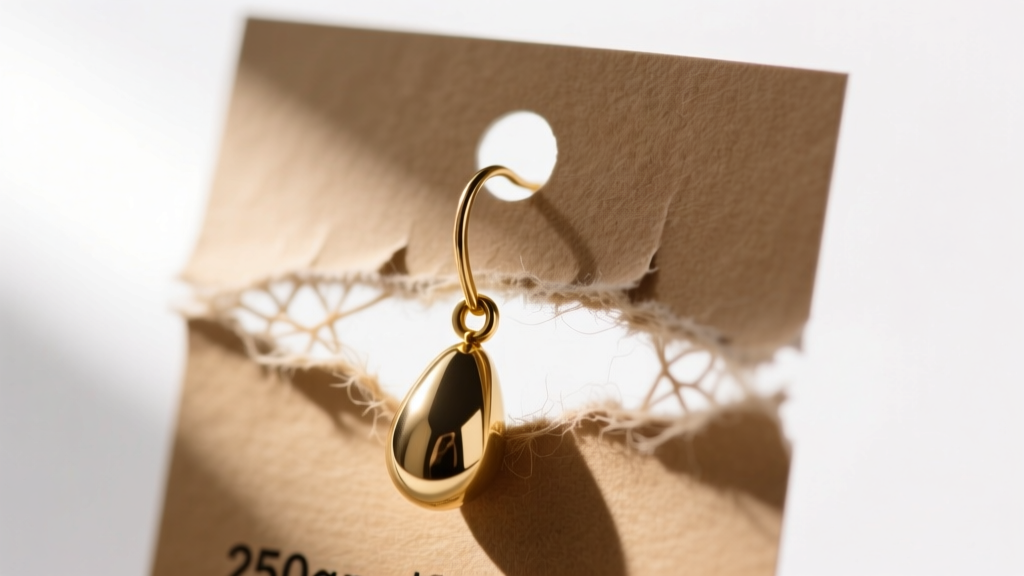
The 'Hole Tear-Out' Failure Mode
Another structural failure point is the earring slit or hole. Heavy dangle earrings and thick-gauge hoops (such as 16-gauge or 14-gauge wire) place immense shear stress on the paper. A standard 1.5mm die-cut hole on a 250 GSM card will inevitably tear out during shipping, leaving the earring loose in the mailer. To prevent this, request reinforced PET-lined holes from your printer, or opt for a wider 'slit and fold' die-cut design that distributes the weight of the earring across a broader surface area of the card stock.
Sizing and Die-Cut Specifications by Earring Type
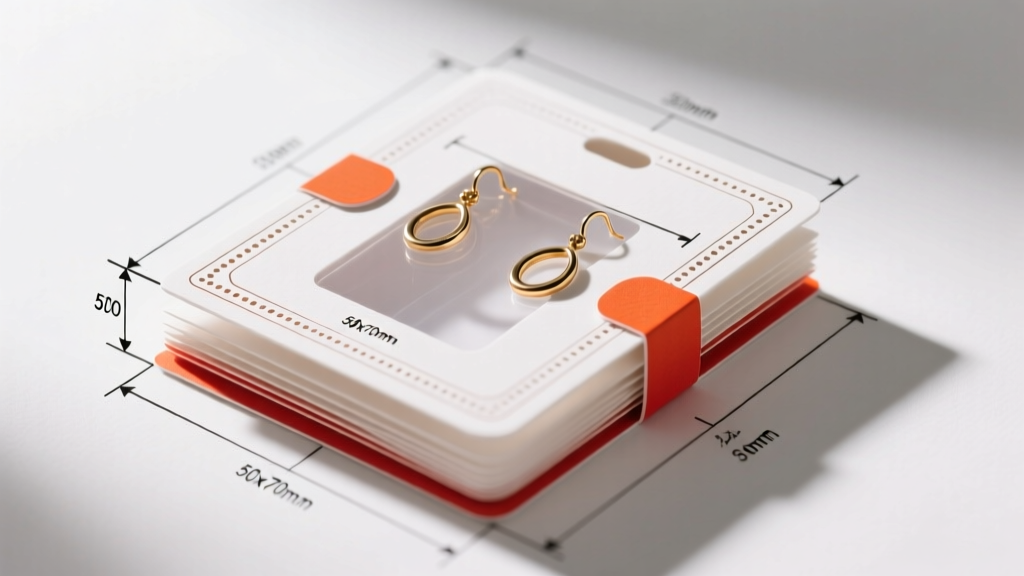
One size does not fit all. Using a massive 2.5 x 3.5-inch card for a pair of tiny 8mm huggie hoops makes the jewelry look insignificant and wastes valuable shipping real estate. Conversely, cramming a 3-inch dangle earring onto a 2x2 inch card results in bent wires and a frustrated customer. Here are the exact dimensional frameworks you should use based on your earring silhouettes:
- Studs & Huggies (Micro Jewelry): Use a 2 x 2 inch (50x50mm) or 2 x 2.5 inch card. This creates a dense, luxurious feel and allows the small jewelry to pop. Place the holes 15mm apart to prevent the earrings from clinking together.
- Standard Hoops & Small Drops: The industry standard 2 x 3.5 inch (50x89mm) business-card size is ideal. Position the holes in the upper third of the card (approx. 25mm from the top edge) to allow the drops to hang freely without hitting the bottom edge.
- Statement Dangles & Chandeliers: Opt for an oversized 2.5 x 4 inch or even 3 x 5 inch card. You must leave at least 1.5 inches of negative space below the earring holes to accommodate the length of the drop and prevent the metal from creasing the card edges.
Eco-Friendly Alternatives: The 2026 Plantable Trend
Sustainability is no longer a niche marketing angle; it is a baseline consumer expectation. In 2026, plantable seed paper earring cards have surged in popularity. Embedded with wildflower or herb seeds, these cards encourage the buyer to plant the packaging rather than throw it away. While the unit cost is significantly higher (often $0.60+ per card), the marketing ROI is immense. Brands utilizing seed paper report a 40% increase in user-generated social media content, as customers film the planting and blooming process, tagging the jewelry brand months after the initial purchase. If your brand identity leans into nature, bohemian aesthetics, or raw crystals, the premium paid for seed paper easily pays for itself in organic social reach.
Final ROI Verdict for Jewelry Makers
When conducting your budget assessment, stop viewing the earring card as a mere consumable expense. It is a vital marketing asset and a protective structural component. For jewelry priced under $25, stick to a high-quality, acid-free 300 GSM kraft or matte card with a simple, elegant one-color ink stamp to protect your margins. For jewelry priced between $30 and $80, upgrade to a 350-400 GSM soft-touch card with foil detailing to justify the premium price point. By matching your earring card's material grade, structural integrity, and dimensions precisely to your jewelry's weight and price tier, you maximize both profitability and brand loyalty.


