How to Choose Large Baroque Pearl Earrings: A Buyer's Guide
Discover how to evaluate luster, nacre, and hardware when shopping for large baroque pearl earrings. Expert tips on pairing, grading, and pricing.

The Shift Toward Organic Luxury
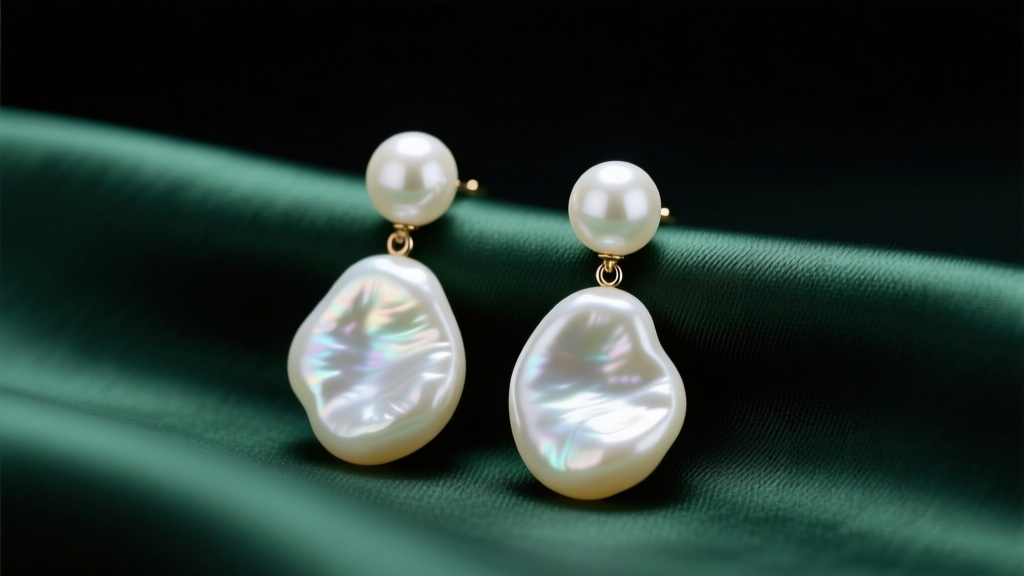
The modern jewelry landscape has decisively pivoted away from the rigid perfection of spherical gems, embracing the organic, free-form silhouettes of baroque pearls. When we discuss large baroque pearl earrings, we are generally referring to specimens measuring between 13mm and 20mm or more. These substantial dimensions transform a simple accessory into a sculptural statement piece. However, buying large, asymmetrical pearls requires a highly specific gemological approach. Unlike perfectly round pearls, where symmetry dictates value, baroque pearls are judged on the artistry of their unique topography, the depth of their luster, and the structural integrity of the jewelry hardware required to support their significant weight.
Freshwater vs. Saltwater: Sourcing Your Baroque
Historically, if a buyer wanted a large pearl, they had to look exclusively to saltwater oysters like the Pinctada maxima (South Sea) or Pinctada margaritifera (Tahitian). As of 2026, the market has been entirely disrupted by bead-nucleated freshwater pearls, commonly known as Edison pearls. These freshwater mollusks are implanted with a single, large spherical bead, yielding massive pearls with thick nacre and intense luster that rival their saltwater counterparts at a fraction of the cost.
| Feature | Freshwater Baroque (Edison) | Saltwater Baroque (Tahitian/South Sea) |
|---|---|---|
| Typical Size Range | 13mm - 18mm | 11mm - 20mm+ |
| Nacre Type | Bead-nucleated, thick crystalline nacre | Bead-nucleated, exceptionally thick nacre |
| Color Palette | White, peach, metallic lavender, gold | Peacock, aubergine, silver, champagne |
| Price per Pair (15mm) | $150 - $600 | $800 - $3,500+ |
| Luster Profile | Sharp, highly metallic, mirror-like | Deep, satiny, complex overtones |
According to the Gemological Institute of America (GIA), the origin of the pearl fundamentally dictates its color potential and luster type. While South Sea baroques offer a luxurious, satiny glow, modern metallic freshwater baroques provide a razor-sharp, mirror-like reflection that is highly coveted in contemporary designs.
The 5-Point Inspection Checklist
Evaluating large baroque pearl earrings requires looking past the irregular shape to assess the underlying gemological quality. Use this five-point framework when reviewing high-resolution images or inspecting pearls in person.
1. Luster and Orient: The Mirror Test
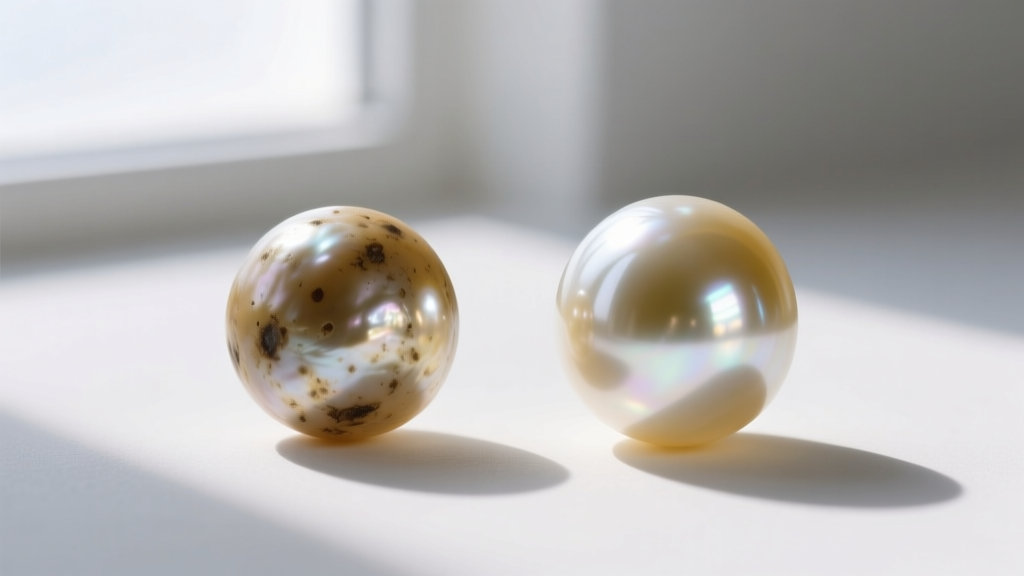
Luster is the single most critical value factor for any pearl. In baroque shapes, the undulating surface can either amplify light or scatter it. You want a "sharp" or "excellent" luster grade, meaning the reflections of light sources on the pearl's surface have crisp, well-defined edges. Avoid pearls with a "chalky" or "hazy" appearance, as this indicates poor nacre crystallization or premature harvesting. High-quality baroques will also display "orient"—an iridescent play of colors just beneath the surface that shifts as the earring moves.
2. Nacre Thickness and Durability
Because large baroque pearls are bead-nucleated, nacre thickness is paramount. If the nacre is too thin, the pearl may exhibit a dull, lifeless spot where the internal bead shows through, or worse, the nacre may flake or peel over time. When examining the drill hole of the earring (if visible), the nacre should appear as a thick, distinct layer over the bead. The American Gem Society (AGS) emphasizes that thick nacre not only ensures durability but also contributes to the deep, glowing luster that defines a premium pearl.
3. Surface Topography: Blemishes vs. Cracks
Baroque pearls are inherently characterized by ridges, grooves, and asymmetrical bumps. These natural "fingerprints" are desirable and hide minor surface blemishes like tiny pits or spots. However, you must strictly avoid pearls with structural fissures, deep cracks, or chalky fractures running through the ridges. A crack compromises the structural integrity of the pearl, making it highly susceptible to splitting if the earring is dropped or subjected to pressure.
4. The Art of Pairing: Matching vs. Mirroring
Matching two inherently asymmetrical objects is the most labor-intensive part of creating baroque pearl earrings. Expert jewelers do not look for identical twins; they look for "mirror images" or harmonious counterparts. When evaluating a pair, hold them side-by-side. Do they share a similar visual weight? Do the color overtones match perfectly? A well-paired set of large baroque pearl earrings will feel cohesive, even if the specific ridges and bumps are entirely unique to each side.
5. Color and Overtone Analysis
Color in pearls is divided into body color and overtone. A large Tahitian baroque might have a dark gray body color with a vibrant peacock (green/purple) overtone. Ensure that both earrings share the exact same overtone profile. Under different lighting conditions (natural daylight vs. warm indoor LEDs), the overtones should shift identically across both pearls.
Hardware Engineering: Supporting Heavy Drops
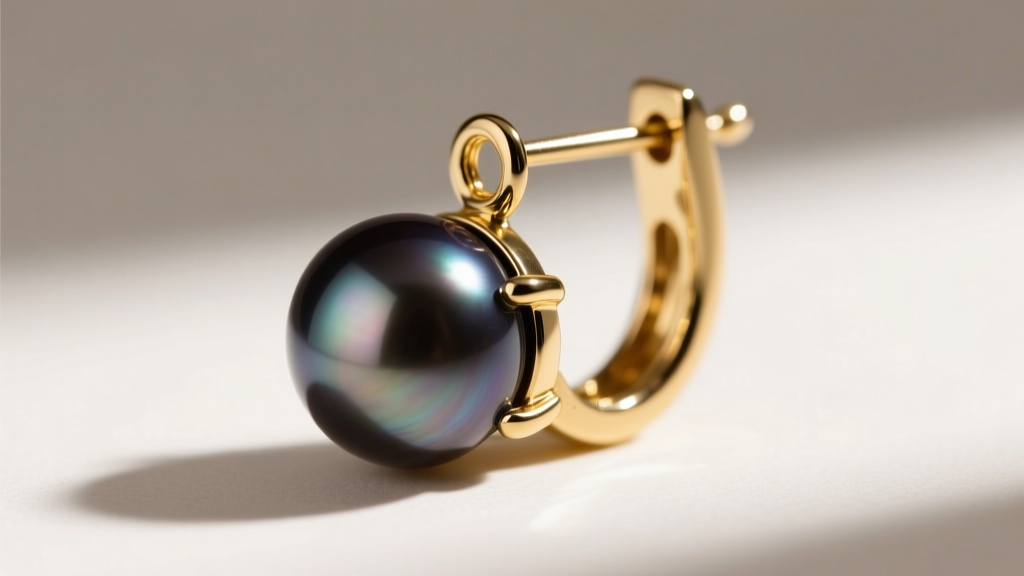
A 15mm to 18mm baroque pearl can weigh anywhere from 4 to 8 grams per earring. This is exceptionally heavy for a pierced earlobe. Standard 20-gauge friction posts and butterfly backs will inevitably fail, causing the heavy pearl to droop uncomfortably against the neck and stretching the piercing over time.
"For pearl drops exceeding 5 grams, structural support is just as important as the gemstone itself. The finding must distribute weight evenly to prevent lobe fatigue."
When buying large baroque pearl earrings, insist on the following hardware specifications:
- Post Gauge: Look for 18-gauge or 16-gauge posts for added rigidity.
- Earring Backs: For studs or drops, require Omega clips or screw-backs, which grip the earlobe securely and support the weight from the back.
- French Wires / Leverbacks: If the earrings are on hooks, ensure they are leverbacks with a secure snap closure. A heavy pearl swinging on an open French wire is a lost pearl waiting to happen.
- Jump Rings: The metal loop connecting the pearl cap to the earring finding must be soldered shut. An open, unsoldered jump ring will easily pull apart under the dynamic weight of a swinging 16mm baroque pearl.
Market Pricing Tiers in 2026
Understanding current market valuations prevents overpaying for misgraded goods. Here is what you should expect to pay for high-quality, 14mm-16mm large baroque pearl earrings set in 14k gold or sterling silver:
- Entry-Level ($80 - $200): Tissue-nucleated freshwater baroques. Often smaller (10-12mm), lower luster, set in sterling silver with basic hardware.
- Mid-Tier ($250 - $700): High-luster, bead-nucleated Edison freshwater baroques (14-16mm) with metallic overtones, set in 14k gold with reinforced leverbacks or Omega clips.
- Premium ($800 - $1,800): Tahitian baroque pearls (13-15mm) with intense peacock or aubergine overtones, excellent surface quality, set in 18k gold with diamond-accented caps.
- Luxury ($2,500+): Extra-large South Sea baroques (16mm+), rare golden or white hues, flawless luster, custom-designed artisan settings.
Authoritative Care Protocols
Large baroque pearls are organic gems composed of calcium carbonate and conchiolin. They are highly susceptible to acids, including the natural acids in human sweat, as well as chemicals found in perfumes and hairsprays. Always adhere to the "last on, first off" rule. Put your earrings on after your cosmetics have fully dried, and wipe them gently with a damp, lint-free microfiber cloth immediately upon removal. Never use ultrasonic cleaners or steamers, as the high-frequency vibrations can shatter the nacre along the natural ridges of the baroque shape. Store them flat in a soft pouch, separate from harder gemstones like diamonds or sapphires that can easily scratch the pearl's surface.


