How to Clean & Restore Vintage Enamel Flower Earrings
Learn expert techniques to safely clean, restore, and store vintage enamel flower earrings without damaging fragile glass or historical metal bases.

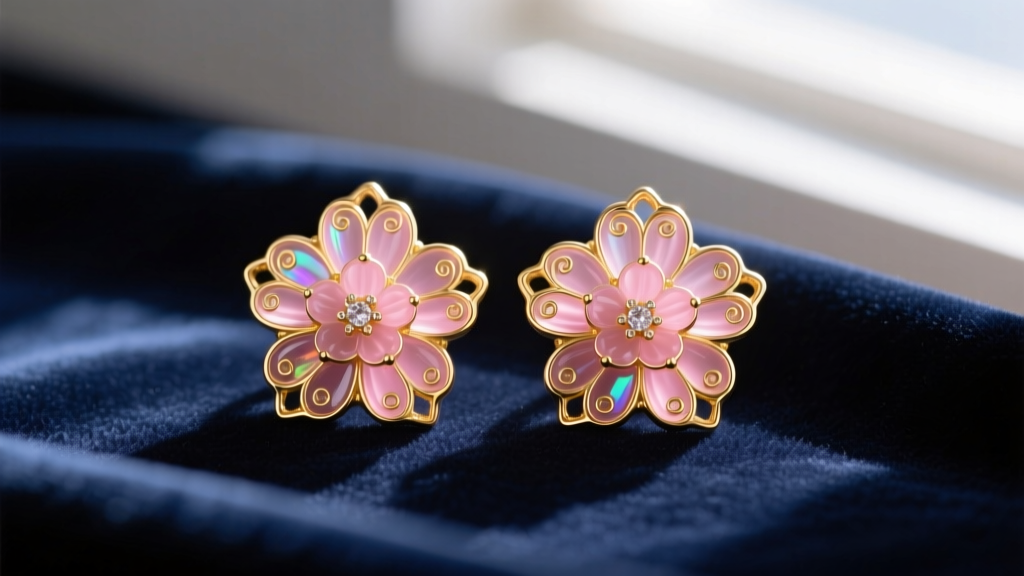
As estate jewelry markets in 2026 see a massive surge in demand for mid-century and Art Nouveau botanical pieces, vintage enamel flower earrings have become highly coveted collector items. However, the very chemistry that gives these floral motifs their vibrant, glass-like luster also makes them exceptionally vulnerable to improper care. Enamel is essentially vitreous glass—silica fused to a metal base at temperatures exceeding 1400°F (760°C). Because glass and metal expand and contract at different rates, vintage enamel is inherently prone to thermal shock, micro-fractures, and chemical degradation.
Whether you have inherited a pair of 1940s guilloché roses or recently acquired mid-century cloisonné daisies, maintaining these wearable artifacts requires a conservation-first mindset. This guide provides professional-grade cleaning protocols, material-specific troubleshooting, and archival storage techniques to preserve your vintage enamel flower earrings for generations.
Understanding Your Vintage Enamel Florals
Before applying any cleaning solution, you must identify the specific enameling technique used on your earrings. The structural integrity and cleaning tolerance vary drastically across historical methods:
- Guilloché: Translucent enamel applied over an engine-turned (mechanically engraved) metal base. Common in Victorian and Edwardian floral pieces. Highly susceptible to moisture trapping if the glass is cracked.
- Cloisonné: Colored enamel paste packed into tiny wire cells (cloisons) soldered to the metal. Frequently seen in mid-century Asian-export floral earrings. The exposed wire grid can trap dirt and polishing compounds.
- Champlevé: Enamel filled into carved-out troughs of a thick metal base. More durable than guilloché, but deep recesses around the flower petals can accumulate decades of skin oils and cosmetics.
- Plique-à-jour: A highly fragile, stained-glass effect with no metal backing. Extremely rare in vintage floral earrings; requires absolute dry-cleaning methods only.
The Golden Rules of Enamel Conservation
According to the Victoria and Albert Museum's conservation guidelines, the majority of irreversible damage to historical enamel occurs during well-intentioned but misguided cleaning attempts. To protect your vintage enamel flower earrings, strictly avoid the following:
1. Never Use Ultrasonic Cleaners
Ultrasonic jewelry cleaners use high-frequency sound waves to create microscopic cavitation bubbles in liquid. When these bubbles collapse against the rigid, brittle surface of enamel, they cause micro-chipping and can instantly shatter hairline fractures (crazing) that are invisible to the naked eye.
2. Avoid Thermal Shock
Never wash enamel earrings in hot water or use steam cleaners. The sudden temperature change causes the metal base to expand faster than the glass enamel, leading to immediate cracking or "popping," where entire petals of enamel detach from the metal.
3. Ban Harsh Chemicals and Dips
Ammonia, bleach, and commercial silver-dip solutions are strictly prohibited. These chemicals can strip the glossy finish off the enamel, alter historical pigments (especially copper-based greens and blues), and cause severe corrosion if they seep into microscopic cracks and reach the base metal.
Step-by-Step Cleaning Guide for Enamel Florals
For standard guilloché, cloisonné, and champlevé vintage enamel flower earrings in stable condition (no loose or flaking glass), follow this gentle, conservation-approved surfactant bath method.
Assess the Metal Base First
Check the earring posts, clips, and backing. If the piece is made of a base metal alloy (like pot metal or pinchbeck) or features glued components, do not submerge it. Moisture will cause irreversible rust or dissolve historical adhesives. For these, use a barely damp microfiber swab instead of a bath.
The Distilled Water & Mild Surfactant Bath
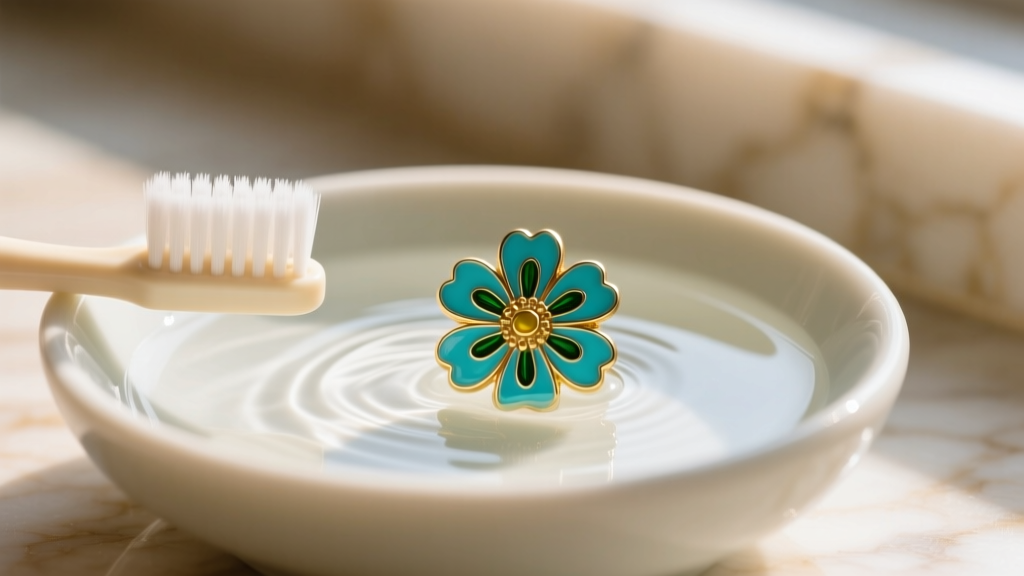
- Prepare the Solution: In a small glass bowl, mix 1 cup of room-temperature distilled water (68°F/20°C) with 2 drops of pH-neutral, dye-free dish soap (such as Dawn Free & Clear). Tap water contains chlorine and heavy minerals that can leave a permanent cloudy film on vintage glass.
- Soak Briefly: Submerge the earrings for no more than 3 to 5 minutes. This softens accumulated sebum, hairspray, and cosmetic residue without compromising the metal-enamel bond.
- Agitate Gently: Using an extra-soft baby toothbrush (bristles rated 'ultra-soft'), lightly sweep over the enamel petals. Always brush in the direction of the metal wires (for cloisonné) or the engraved lines (for guilloché) to avoid catching and lifting the glass.
- Rinse and Dry: Rinse under a gentle stream of room-temperature distilled water. Immediately pat dry with a lint-free microfiber cloth. Use a can of compressed air (held at least 6 inches away) to blow moisture out of the earring post crevices and wire cells.
Troubleshooting Common Enamel Issues
Vintage botanical jewelry often presents specific conservation challenges. Consult the Gemological Institute of America (GIA) Gem Encyclopedia for material identification, and refer to the table below for actionable solutions to common problems.
| Issue | Underlying Cause | Expert Solution |
|---|---|---|
| Micro-Crazing (Spiderweb Cracks) | Age, thermal stress, or impact | Stop all liquid cleaning immediately. Moisture trapped under crazing causes the underlying silver or copper to oxidize, pushing the enamel off. Seek a professional conservator to stabilize with Paraloid B-72 resin. |
| Cloudy or Chalky Enamel | Hard water mineral buildup or chemical etching | Lightly dampen a cotton swab with distilled white vinegar and wipe only the glass surface. Avoid touching the metal. Rinse immediately with distilled water and dry. |
| Black Tarnish Creeping Under Edges | Silver sulfide reacting with sulfur in the air/skin | Use a dry, treated silver-polishing cloth (like a Sunshine cloth) to gently buff the exposed metal edges. Never use liquid silver dips, which will ruin the enamel's gloss. |
| Dull, Matte Finish on Glossy Petals | Micro-scratches from years of friction or abrasive pastes | Do not attempt to machine-polish. A professional lapidary can sometimes apply a microscopic layer of jeweler's rouge, but this risks altering the historical patina. |
Proper Storage to Prevent Micro-Abrasions and Fading
Enamel ranks around 5 to 6 on the Mohs hardness scale, meaning it can easily be scratched by diamonds, sapphires, or even other metal jewelry pieces tumbling in a shared box. Furthermore, certain historical enamel pigments—particularly manganese-based purples and copper-based greens—are photosensitive and will fade or turn brown if exposed to prolonged UV light.
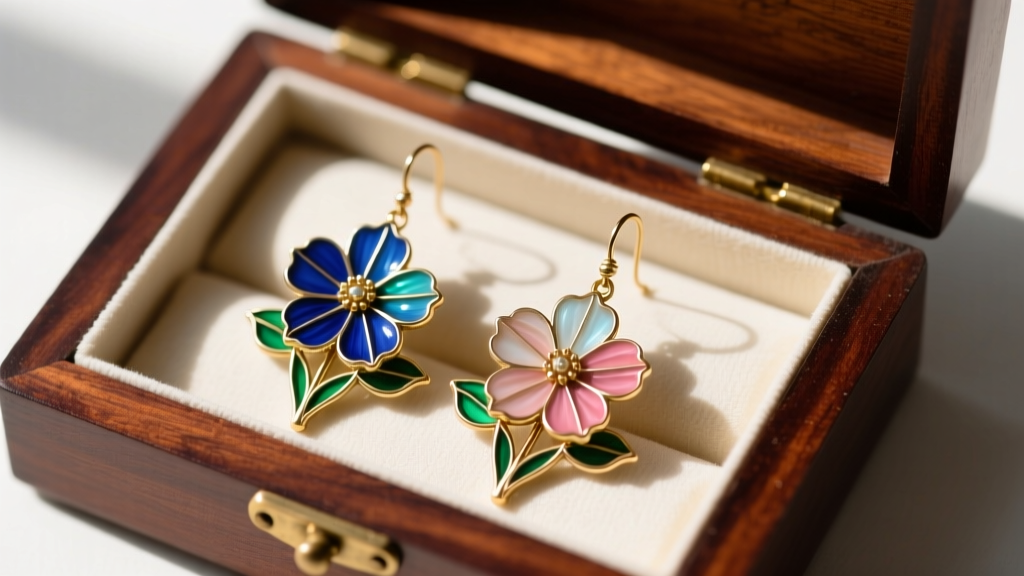
- Individual Pouches: Store each pair of vintage enamel flower earrings in its own acid-free, unbleached cotton pouch or wrapped in archival tissue paper.
- Anti-Tarnish Strips: Place 3M anti-tarnish strips in your jewelry box drawer. These absorb airborne sulfur compounds before they can react with the metal base and creep beneath the enamel edges.
- Climate Control: Avoid storing enamel in high-humidity environments like bathrooms. Fluctuating humidity causes the metal base to expand and contract, slowly weakening the glass-to-metal seal over decades.
When to Call a Professional Conservator
While routine maintenance can be safely performed at home, structural issues require expert intervention. If your vintage enamel flower earrings exhibit lifting glass, missing enamel chips, or a compromised earring post that requires soldering near the glass, do not attempt DIY repairs. Standard jewelry soldering torches generate localized heat exceeding 1200°F, which will instantly vaporize the moisture inside adjacent enamel and cause it to explode.
Instead, locate a certified specialist through the American Institute for Conservation (AIC). Professional conservators utilize specialized cold-soldering techniques, laser welding, and museum-grade consolidants to repair vintage botanical jewelry without risking the historical integrity of the enamel. By treating your vintage enamel florals as delicate historical artifacts rather than mere accessories, you ensure their vibrant, glass-like petals continue to bloom for decades to come.


