Understanding Piercing Gun Earrings: Beginner Guide
Discover the truth about piercing gun earrings. Learn about materials, gauge sizes, and safety risks for lobe and cartilage piercings in our beginner guide.

What Exactly Are Piercing Gun Earrings?
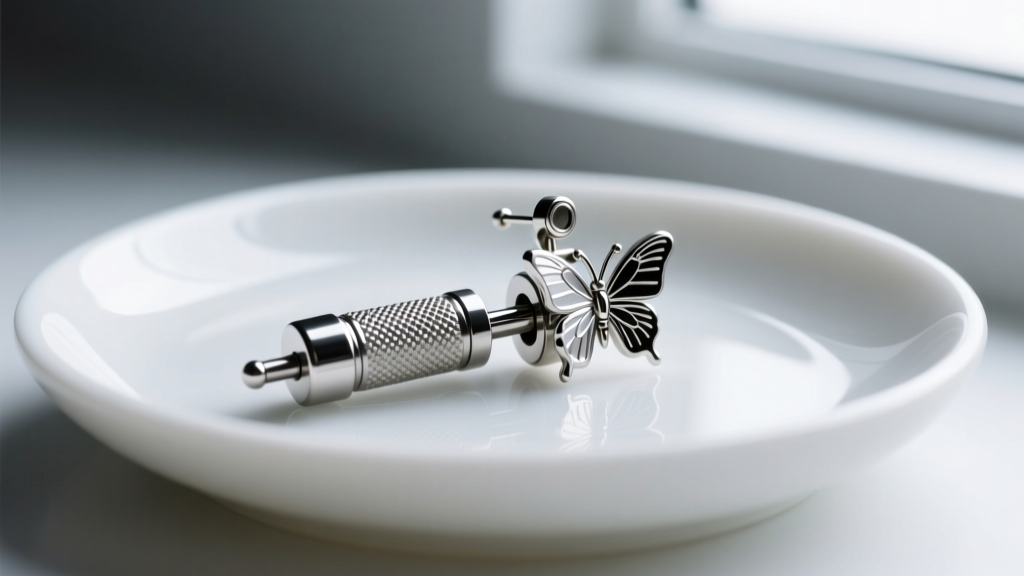
When most beginners decide to get their ears pierced, their first stop is often a mall kiosk or a retail jewelry store. The jewelry used in these settings is commonly referred to as 'piercing gun earrings' or simply gun earrings. These are the pre-loaded, single-use (or sometimes reusable) starter studs that come packaged in the plastic cassettes of spring-loaded piercing devices. While they have been a cultural staple for decades, modern body modification standards have heavily scrutinized their design, materials, and insertion methods.
As we navigate the jewelry landscape in 2026, understanding the difference between mall-kiosk jewelry and professional body jewelry is critical for your health, comfort, and long-term style. This beginner-friendly explainer will break down the metallurgy, mechanics, and medical realities of gun earrings so you can make an informed decision for your lobes and cartilage.
The Material Reality: 'Surgical Steel' vs. Implant-Grade Titanium
The most significant issue with standard gun earrings is the metal they are made from. Retailers often market these studs as 'hypoallergenic' or 'surgical steel.' However, in the professional piercing community, the term 'surgical steel' is largely considered a marketing buzzword rather than a verified metallurgical standard.
Decoding the Alloys
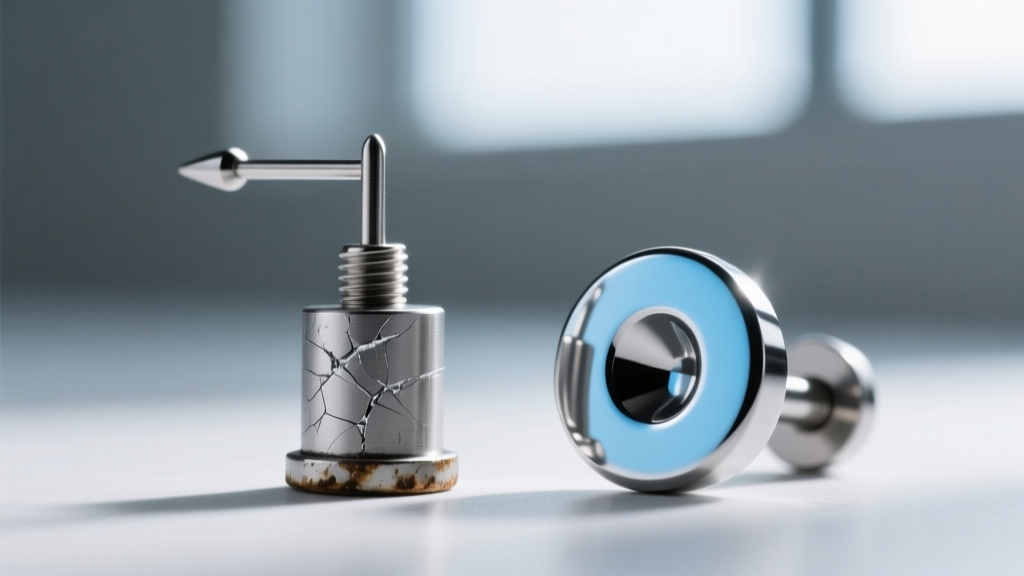
Most gun earrings are manufactured from 316L stainless steel. While 316L is perfectly safe for external medical tools, it contains between 8% and 10.5% nickel. When this metal is pushed inside an open wound, body fluids can cause the nickel to leach into the tissue, triggering contact dermatitis, localized swelling, and in severe cases, systemic allergic reactions. According to the Association of Professional Piercers (APP), the only metals recommended for initial piercings are implant-grade titanium (ASTM F-136), niobium, or solid 14k/18k gold.
| Feature | Standard Gun Earrings | Professional Needle Jewelry |
|---|---|---|
| Material | 'Surgical' Steel (often unverified, contains nickel) | Implant-Grade Titanium (ASTM F-136, nickel-free) |
| Surface Finish | Microscopically rough, prone to scratching | Mirror-polished to prevent tissue adhesion |
| Gauge (Thickness) | Usually 20g (0.81mm) or 18g (1.02mm) | Customizable (16g, 14g, etc., for stability) |
| Backing Style | Butterfly clutch (traps debris and bacteria) | Threadless or internally threaded flat-back |
| Insertion Method | Blunt force trauma via spring-loaded plastic gun | Clean slice via single-use hollow medical needle |
The Mechanics: Blunt Force Trauma vs. Hollow Needles
To understand why professional piercers warn against gun earrings, you have to look at how they enter the body. A professional hollow needle is beveled to act like a scalpel; it cleanly removes a tiny crescent of tissue, creating a smooth, uniform channel for the jewelry to rest in. This promotes rapid healing and minimal scarring.
A piercing gun, however, does not cut. It relies on extreme, sudden blunt force to push a relatively blunt stud through the skin. The post of a gun earring is essentially a nail being hammered into your ear. This causes severe micro-tearing and crushing of the surrounding cells. The audible 'pop' you hear when a piercing gun is fired is not the sound of the tool working correctly—it is the sound of your tissue tearing under pressure. This unnecessary trauma drastically extends the healing timeline, turning a standard 6-week lobe healing period into a months-long ordeal of swelling and tenderness.
Why Cartilage and Piercing Guns Don't Mix
While using gun earrings on soft earlobes is highly discouraged, using them on the upper ear cartilage is considered outright dangerous by medical professionals. Cartilage is avascular, meaning it lacks its own direct blood supply and relies on surrounding tissue for nutrients and immune responses.
The Risk of Perichondritis and Cauliflower Ear
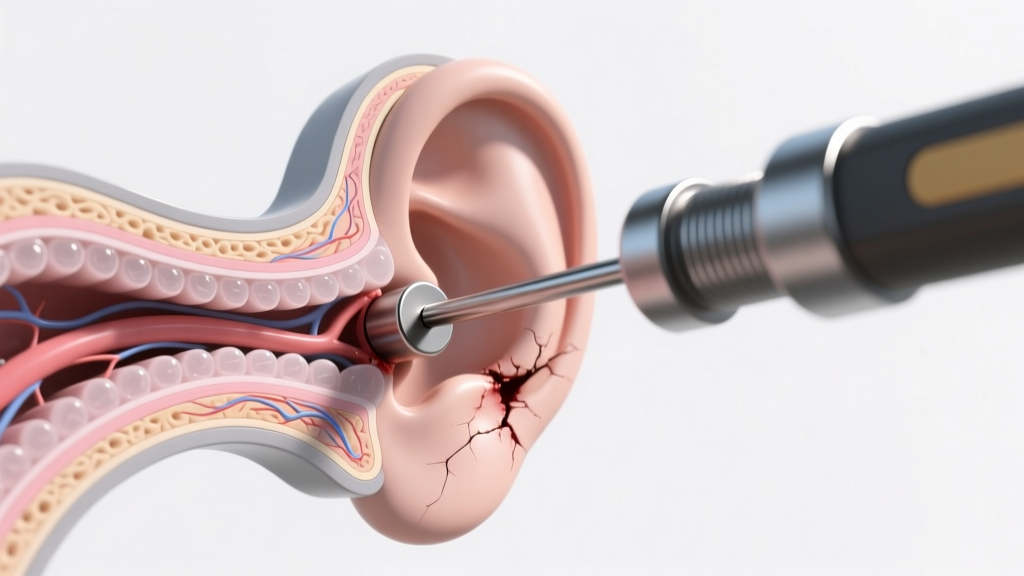
When the blunt force of a piercing gun shatters the delicate cartilage matrix, it can lead to severe complications. The crushing action creates hematomas (blood pooling) and dead tissue, which become breeding grounds for bacteria. This can result in auricular perichondritis, a severe infection of the tissue surrounding the cartilage. If left untreated, the cartilage can die and collapse, leading to permanent cosmetic deformity known as cauliflower ear. The Cleveland Clinic notes that blunt trauma to the ear is a primary catalyst for these deformities, which is exactly what a spring-loaded piercing gun delivers.
'There is no safe way to use a piercing gun on cartilage. The kinetic force required to push a blunt stud through dense tissue causes micro-fractures that a hollow needle completely avoids.' — Consensus guidelines from modern body modification safety advocates.
The Hygiene Hazard of Butterfly Backings
Beyond the insertion method and the metal alloy, the design of the gun earring itself poses a daily hygiene challenge. The standard 'butterfly' or 'clutch' backing features multiple tiny crevices and a coiled metal spring. These microscopic gaps are impossible to clean thoroughly during the shower.
- Debris Trapping: Dead skin cells, sebum, shampoo residue, and hair products become permanently lodged in the clutch.
- Bacterial Growth: The trapped moisture and organic matter create an ideal incubator for staph and strep bacteria, sitting millimeters from an open wound.
- The Embedding Risk: Gun earrings come in fixed, universally short lengths. When the ear inevitably swells from the blunt force trauma, the butterfly backing has nowhere to go. It is frequently pushed into the swollen flesh, causing the earring to become embedded and requiring a minor surgical procedure for removal.
Safe Alternatives for Beginners
If you are a beginner looking to get your ears pierced safely, skip the mall kiosk entirely. Instead, seek out a reputable, professional piercing studio. You can use the APP piercer locator to find vetted professionals in your area who adhere to strict sterilization protocols.
What to Ask Your Piercer
When you sit down in the chair, ensure your piercer is using implant-grade titanium flat-back labrets. These feature a smooth, flat disc that sits flush against the back of the ear, eliminating the pressure points and debris traps of a butterfly clutch. Furthermore, they utilize a hollow needle for insertion and offer longer posts to accommodate initial swelling, which are later downsized once the piercing has stabilized. By choosing professional-grade jewelry and techniques from day one, you ensure your ears heal beautifully, setting the perfect canvas for your future jewelry collection.


