Emerald Diamond Hoop Earrings: Best Metals & Settings
Discover the best metals and settings for emerald diamond hoop earrings. Compare alloy hardness, gem durability, and setting mechanics for lasting wear.

The Kinetic Challenge of Hoop Earrings
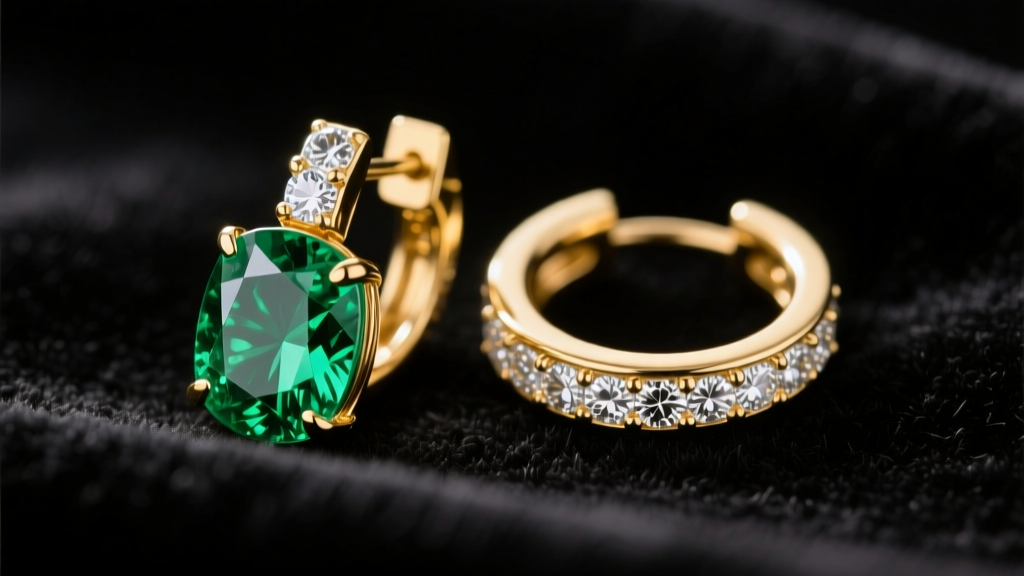
Hoop earrings are inherently kinetic jewelry. Unlike studs or ear cuffs that sit flush against the anatomy, hoops swing, catch on hair, and endure continuous micro-impacts throughout the day. When you introduce a complex gemstone pairing into this high-movement silhouette, structural engineering becomes just as critical as aesthetic design. The combination of emerald diamond hoop earrings presents a unique metallurgical and gemological paradox: you are pairing one of the most brittle, inclusion-heavy gemstones on earth (emerald) with the hardest, most unforgiving material known to science (diamond). To ensure these earrings survive daily wear without catastrophic stone loss or metal fatigue, we must examine the precise material properties, alloy choices, and setting mechanics required for 2026 and beyond.
Gemological Clash: Emerald vs. Diamond Properties
To understand how to set these stones securely, we must first separate the concept of hardness from toughness. Hardness (measured on the Mohs scale) dictates a gem's resistance to scratching. Toughness dictates its resistance to chipping, breaking, and fracturing under kinetic stress.
The Emerald Vulnerability
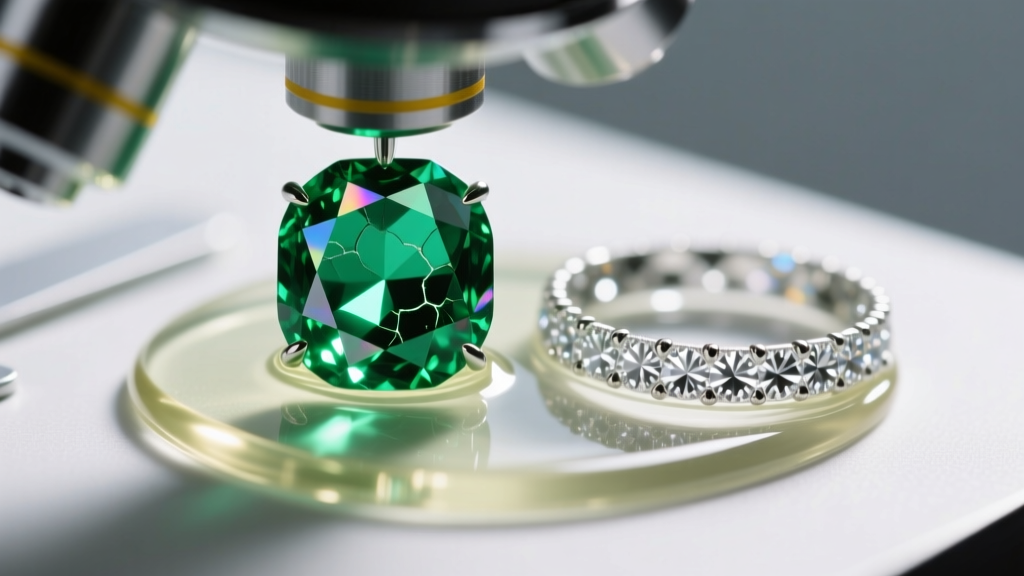
Emeralds rank between 7.5 and 8 on the Mohs scale, but their toughness is notoriously poor. This is due to 'jardin'—the internal fractures and inclusions that give emeralds their characteristic fingerprint. Because of these natural fissures, nearly all commercial emeralds are fracture-filled with cedar oil or synthetic resins to improve clarity. If a hoop earring swings and strikes a hard surface, the shockwave travels through the metal and can easily cause an included emerald to cleave along its internal fracture lines. Furthermore, as noted in the GIA Emerald Quality Factors guide, exposure to heat or harsh chemicals can dry out these oils, leaving the stone structurally compromised and cloudy.
The Diamond Paradox
Diamonds sit at a perfect 10 on the Mohs scale, meaning they will easily scratch the emeralds if they rub against each other in a shared setting. However, diamonds possess distinct cleavage planes. A sharp, direct blow to the diamond's girdle (its widest edge) while the hoop is in motion can cause the diamond to chip or split, despite its supreme hardness. The GIA Diamond Care guidelines explicitly warn against wearing diamond jewelry during high-impact activities for this exact reason.
Metallurgical Framework: Choosing the Right Alloy
The metal you choose for the hoop's body and the setting's prongs must balance structural rigidity with malleability. A common mistake in mass-produced jewelry is using a single alloy for both the hoop structure and the stone settings, which often leads to failure.
| Metal Alloy | Vickers Hardness (HV) | Tensile Strength | Best Application in Hoops |
|---|---|---|---|
| 14K Yellow/White Gold | ~135 - 150 HV | High | Hoop body/tubing (resists bending and warping) |
| 18K Yellow/White Gold | ~115 - 125 HV | Medium | Prongs and bezels (malleable, grips stones securely) |
| Platinum 950 (Ru/Ir) | ~110 - 130 HV | Very High | Prongs and high-stress hinges (work-hardens, doesn't lose metal) |
For high-end emerald diamond hoop earrings, a bi-metal construction is ideal. The main body of the hoop should be cast or drawn in 14K gold or Platinum 950 to maintain its circular geometry and resist warping when pulled or snagged. However, the settings holding the gems should utilize 18K gold or Platinum. 14K gold is too stiff and brittle for delicate prongs; when a 14K prong is bent back to tighten a loose stone, it is highly prone to snapping. 18K gold and Platinum offer the necessary malleability to be pushed tightly against the gemstone's girdle without fracturing.
Setting Mechanics: Protecting the Jardin and the Girdle
Because hoops move constantly, the setting style must mitigate kinetic transfer. Alternating emeralds and diamonds requires a hybrid setting approach.
Bezel Settings for Emeralds
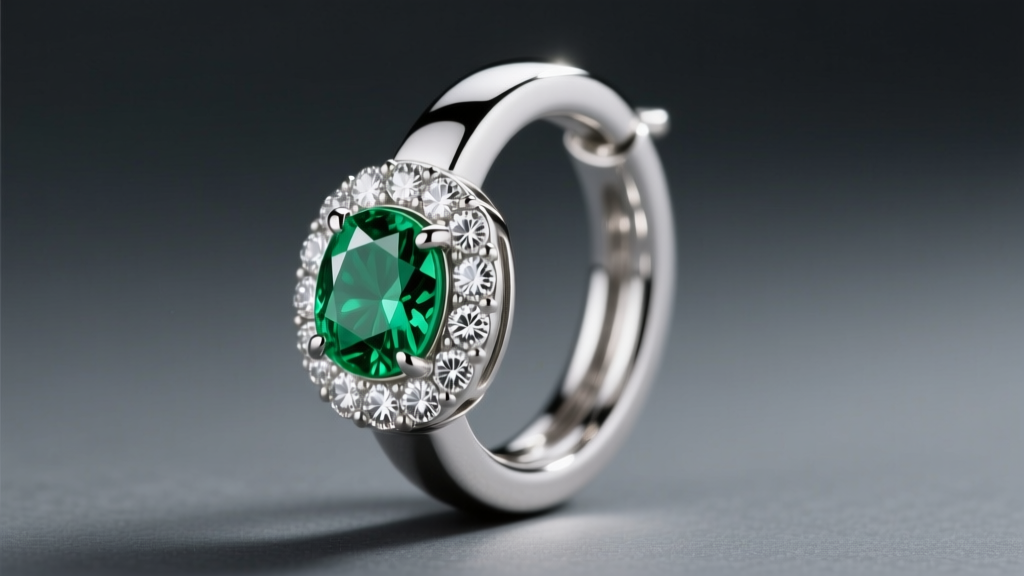
Emeralds in hoop earrings should almost exclusively be set in bezels or half-bezels. A bezel features a continuous rim of metal that wraps entirely around the emerald's girdle. This accomplishes two vital goals: it protects the brittle edges of the emerald from direct lateral impacts, and it hides the jagged edges that are often present in step-cut emeralds. A well-engineered bezel will have a slightly domed top edge to prevent the metal from catching on silk or hair, which could pry the setting open.
Prong Settings for Diamonds
Diamonds require maximum light return to exhibit their signature brilliance, which a full bezel would obstruct. Therefore, diamonds on the same hoop should be set in four-prong or six-prong settings. For hoops, low-profile 'V-prongs' are highly recommended for any diamond with a sharp corner (such as a princess or pear cut), as the V-prong completely encapsulates the vulnerable point of the diamond, absorbing impact shocks that would otherwise shatter the stone's tip.
Maintenance, Cleaning, and Failure Prevention
The most common cause of ruined emerald diamond hoop earrings is not physical impact, but improper cleaning. The kinetic nature of hoops means they accumulate hair products, sebum, and lotions rapidly, dulling the diamonds and clouding the emeralds.
Critical Warning: Never place emerald jewelry in an ultrasonic or steam cleaner. The high-frequency vibrations will shatter the internal fractures of the emerald, and the heat will boil away the fracture-filling oils, leaving the stone opaque and heavily fractured.
To clean these earrings safely, use a solution of lukewarm water and a few drops of mild, ammonia-free dish soap. Use a baby-hair brush to gently agitate the dirt from behind the diamond settings (where light blockage occurs), but avoid scrubbing the emeralds directly. Rinse with distilled water to prevent hard water spots and dry with a microfiber cloth.
Finally, inspect the hoop's hinge and clasp mechanism every six months. The 'saddleback' or 'click-top' closures commonly used on hoops endure the most friction. If the closure feels loose or fails to produce a sharp 'click' when closed, the internal tension wire has fatigued. A jeweler can easily re-tension the wire or replace the clasp head before the hoop accidentally opens and is lost.
By respecting the gemological limitations of the emerald, leveraging the optical superiority of the diamond, and engineering the metal alloys to handle kinetic stress, your emerald diamond hoop earrings will remain a secure, brilliant staple in your rotation for decades. For more detailed insights on gemstone durability, consult the GIA Emerald Care Guide before purchasing your next pair.


