Lab Created Emerald Earrings: Material Properties & Buying Guide
Discover the material properties of lab created emerald earrings. Compare hydrothermal vs flux synthetics, durability, and ideal settings.

The Science of Synthetic Beryl: What Makes Lab Emeralds Different?
When evaluating lab created emerald earrings, it is critical to understand that these are not simulants like green glass or cubic zirconia. According to the Gemological Institute of America (GIA), synthetic emeralds share the exact same chemical composition (Be3Al2(SiO3)6), crystal structure, and optical properties as their mined counterparts. They are genuine beryl, colored by trace amounts of chromium and vanadium. However, the controlled environment of a laboratory fundamentally alters their physical inclusions, clarity, and structural integrity, which directly impacts how they should be set and worn in earring formats.
Hydrothermal vs. Flux-Grown: A Crucial Distinction
Not all lab created emeralds are born equal. The two primary synthesis methods dictate the stone's internal landscape and overall durability:
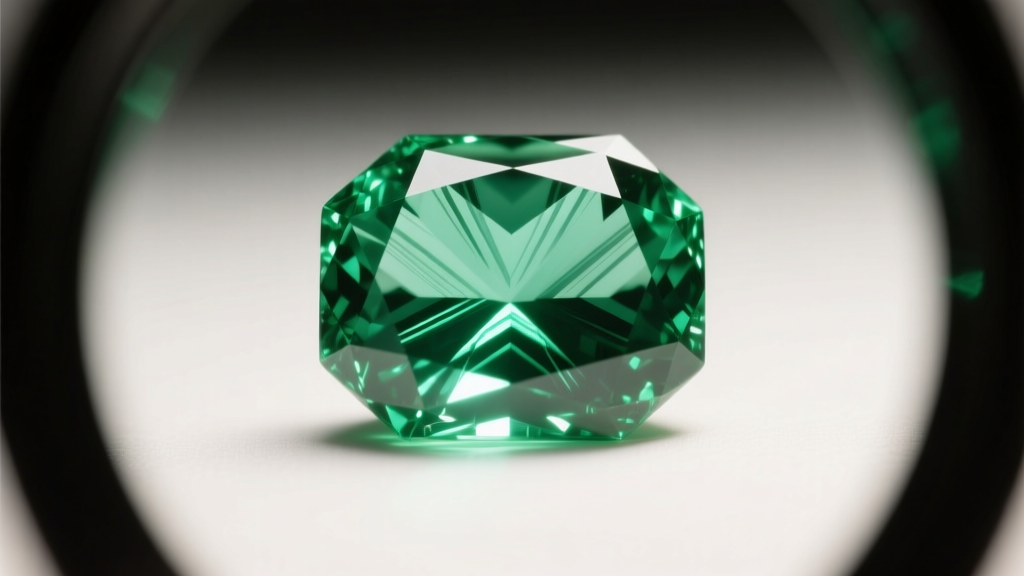
- Hydrothermal Growth: This method mimics the natural formation of emeralds in hydrothermal veins. A nutrient-rich aqueous solution is subjected to extreme heat and pressure in an autoclave. Hydrothermal lab emeralds often exhibit subtle 'chevron' or jagged growth patterns under magnification. They tend to be more structurally sound and less prone to internal fracturing than flux-grown stones.
- Flux-Grown Synthesis: Pioneered by companies like Chatham and Linde, this process dissolves beryllium and aluminum oxides in a molten flux (often lithium molybdate). Flux-grown emeralds typically have higher clarity but can contain microscopic flux inclusions or 'veils' that resemble natural fingerprints. These veils can sometimes act as structural weak points if subjected to hard impacts.
Lab Created vs. Natural Emeralds: A Hard Data Comparison
Understanding the gemological data is essential for jewelers and consumers alike. While the baseline chemistry is identical, the manifestation of physical properties varies due to the growth environment.
| Property | Natural Mined Emerald | Lab Created Emerald |
|---|---|---|
| Refractive Index (RI) | 1.577 - 1.583 | 1.568 - 1.575 (Slightly lower in some flux synthetics) |
| Specific Gravity (SG) | 2.67 - 2.78 | 2.65 - 2.74 (Often slightly lighter) |
| Mohs Hardness | 7.5 - 8.0 | 7.5 - 8.0 |
| Clarity & Inclusions | Heavily included ('Jardin'), 3-phase inclusions common | Eye-clean to VVS; chevron patterns or flux veils |
| Fracture Filling | 90%+ are oil/resin filled to hide surface-reaching fissures | Rarely filled; structural integrity is inherently higher |
| Avg. Price per Carat (2026) | $3,000 - $10,000+ (Fine quality) | $300 - $800 (Fine quality) |
As noted in the GIA Emerald Quality Factors guide, the lack of surface-reaching fissures in high-grade lab stones means they do not require the traditional cedar oil or Opticon treatments that natural emeralds demand. This makes lab created emerald earrings significantly more stable for daily wear.
Durability & Failure Modes: Setting Lab Emerald Earrings
Despite ranking a respectable 7.5 to 8 on the Mohs scale, emerald is notoriously brittle due to its basal cleavage and inherent crystal structure. However, because lab created emeralds lack the extensive internal fracturing (the 'jardin') of natural stones, their practical toughness is vastly superior. Still, specific failure modes must be addressed during the setting process.
Why Prong Settings Risk Fracture (and What to Do Instead)
Traditional four-prong or six-prong settings concentrate immense point-pressure on the girdle and corners of an emerald cut stone. Even in a lab-created stone with high structural integrity, a sharp blow to a prong can cause a corner chip. For drop earrings or dangles, which are prone to swinging and catching on hair or clothing, the risk of impact is magnified.
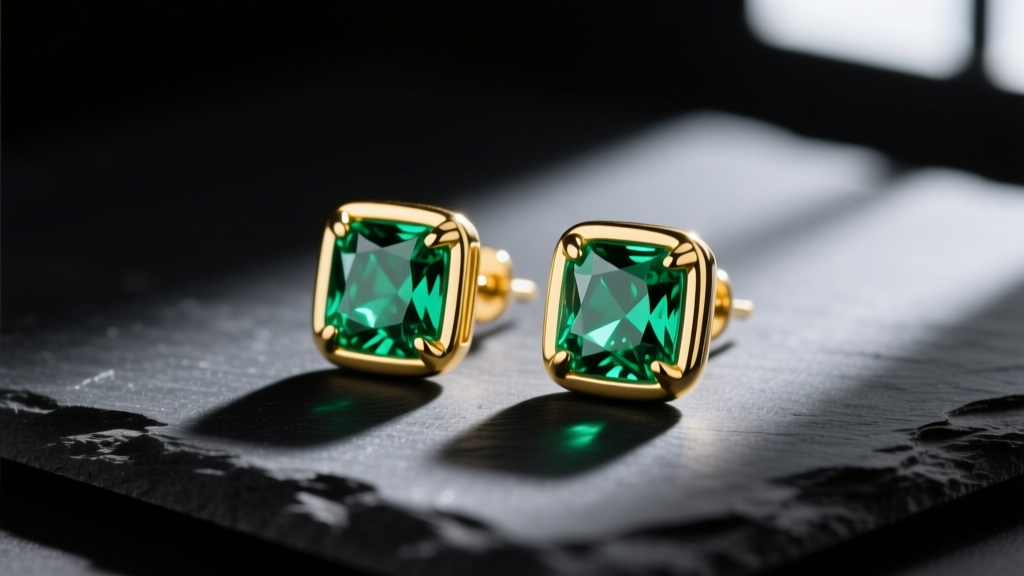
Expert Recommendation: Opt for bezel settings or half-bezel / corner-prong (V-prong) settings. A V-prong completely encapsulates the vulnerable 90-degree corners of an emerald-cut or pear-cut lab stone, distributing mechanical stress and preventing corner cleavage. For stud earrings, a low-profile bezel not only protects the girdle but prevents the earring from snagging on sweaters.
Metal Pairings: Matching Carat Gold and Platinum to Synthetic Greens
The vivid, slightly bluish-green hue of chromium-rich lab emeralds interacts differently with various metal alloys. Choosing the right metal is a matter of both aesthetics and material longevity.
- 18k Yellow Gold: The classic pairing. The warm, rich tones of 18k gold (75% pure gold) neutralize any overly cool or dark undertones in the synthetic emerald, making the green appear more vibrant and 'alive'. However, 18k gold is softer, requiring thicker bezel walls for protection.
- 14k White Gold / Platinum: These white metals provide a high-contrast, modern backdrop that emphasizes the 'icy' clarity of a hydrothermal lab emerald. Platinum is highly recommended for huggie hoops or dangle earring hooks due to its superior tensile strength and resistance to metal fatigue, ensuring the earring mechanism won't snap over time.
- Rose Gold: While trendy, the copper in rose gold can sometimes clash with the blue undertones of top-tier lab emeralds, creating a muddy visual effect. If using rose gold, ensure the lab stone has a pure, slightly yellowish-green body color (often found in vanadium-colored synthetics) rather than a chromium-heavy bluish-green.
Pricing Realities in 2026: What You Should Actually Pay
The market for lab created emerald earrings has matured significantly. Consumers should no longer accept near-natural pricing for synthetic stones. A high-quality, 1-carat total weight (TCW) pair of lab created emerald studs, set in solid 14k gold, should retail between $450 and $850 in 2026. If a retailer is charging upwards of $2,000 for a basic pair of lab-created studs without exceptional designer provenance, you are overpaying for the brand name rather than the material properties.
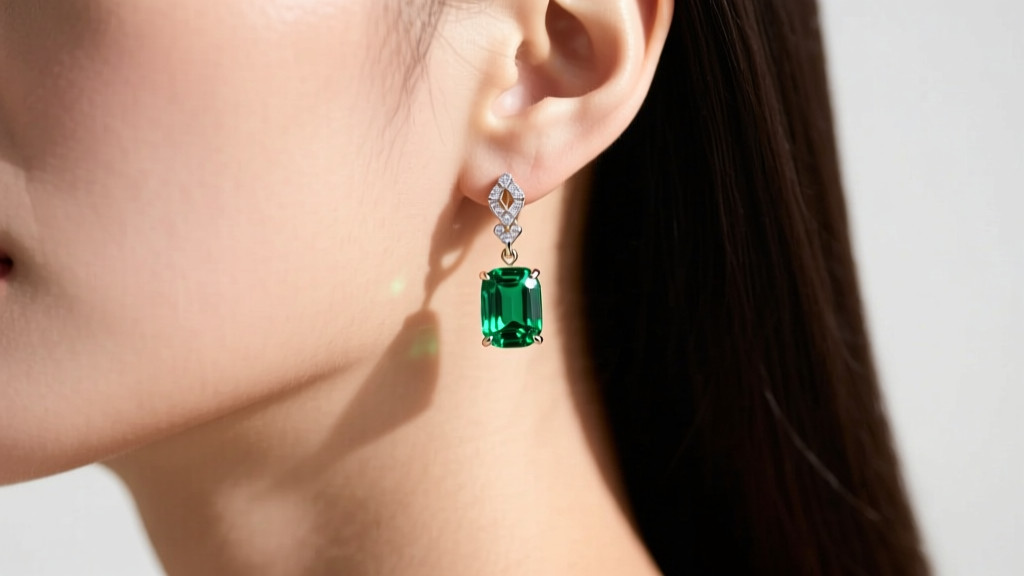
For intricate dangle earrings featuring melee diamond accents alongside larger 2-carat TCW lab emeralds, expect to pay between $1,200 and $2,500, primarily driven by the gold weight and the craftsmanship of the articulation joints rather than the center stones.
Care, Cleaning, and Ultrasonic Warnings
One of the most significant material advantages of lab created emerald earrings is their maintenance profile. Because they are rarely fracture-filled with oils or resins, they do not suffer from the 'drying out' or clouding that plagues natural emeralds over time. You can clean them with mild dish soap, warm water, and a soft-bristled toothbrush without fear of dissolving internal fillers.
The Ultrasonic Cleaner Caveat
While lab emeralds are structurally superior to natural ones, ultrasonic cleaners should still be avoided. The high-frequency vibrations can cause microscopic internal stress, particularly in flux-grown stones that contain flux veils. Furthermore, if your earrings feature secondary stones like opals, pearls, or fracture-filled natural melee diamonds, the ultrasonic waves will destroy them. Stick to manual, gentle cleaning to preserve the polish of both the beryl and the precious metal settings.
Ultimately, choosing lab created emerald earrings offers a masterclass in material optimization. You gain the breathtaking optical properties of chromium-beryl, combined with a structural toughness that actually permits confident, everyday wear—a feat nearly impossible with heavily included, oil-treated natural emeralds.


