Beginner Guide to Choosing the Perfect Earring Wall Organizer
Learn how to choose, install, and style an earring wall organizer. Protect your studs, hoops, and dangles from tarnish and tangles with this beginner guide.

Why Your Collection Demands a Dedicated Wall Display
If you have ever spent ten minutes untangling a delicate gold chain from a French wire dangle, or worse, realized a diamond stud is missing its butterfly backing, you already understand the limitations of traditional jewelry boxes. For earring enthusiasts, a standard lined box often leads to bent posts, scratched gemstones, and a frustrating lack of visual inventory. Transitioning to an earring wall organizer is not just an aesthetic upgrade for your bedroom or dressing area; it is a critical preservation strategy for your jewelry.
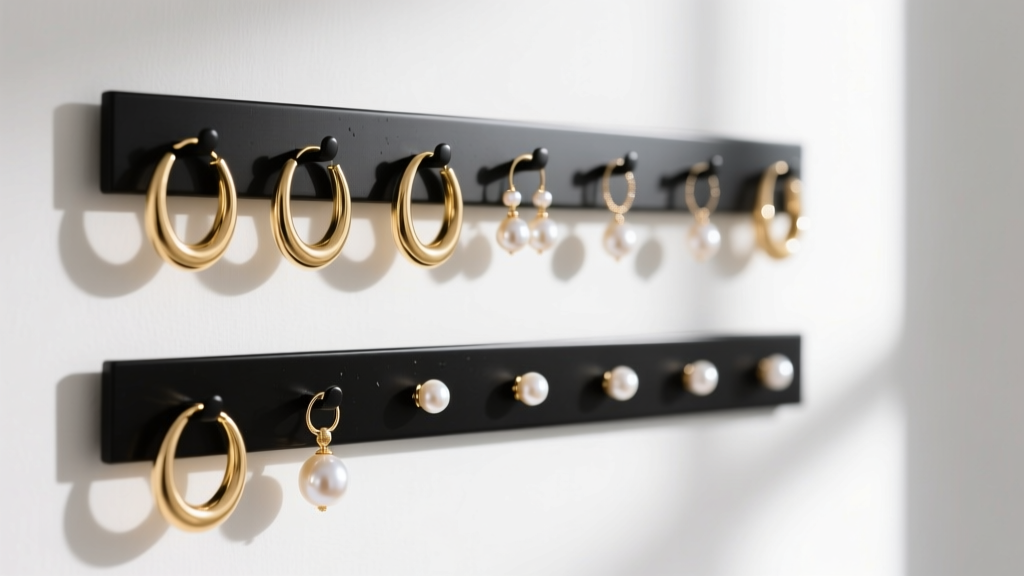
Utilizing vertical space allows gravity to work in your favor. Dangle earrings and chandeliers hang freely, preventing the kinking of fine wirework and the crushing of fragile enamel details. Furthermore, a well-designed wall display transforms your collection into a functional art piece, making it significantly easier to coordinate your accessories with your daily wardrobe. However, not all organizers are created equal. Choosing the wrong material or structural design can inadvertently accelerate tarnishing or cause physical damage to your most prized pieces.
The Chemistry of Storage: Material Compatibility
The most common mistake beginners make when selecting an earring wall organizer is ignoring material chemistry. Many rustic or budget-friendly organizers are crafted from raw, untreated wood or lined with standard cotton. While visually appealing, these materials can be highly destructive to fine jewelry over time.
Raw woods, particularly oak, pine, and MDF (medium-density fiberboard), naturally off-gas acetic acid and formaldehyde. According to the Gemological Institute of America (GIA), acidic environments accelerate the oxidation of sterling silver, leading to rapid, stubborn black tarnish. Furthermore, these acidic vapors can etch the delicate nacre of freshwater and saltwater pearls, permanently dulling their luster.
When shopping for an organizer, prioritize the following safe materials:
- Powder-Coated Metals: Steel or aluminum frames with a baked-on powder coating are entirely inert and will not react with silver, gold, or platinum.
- Sealed Acrylic: High-grade, UV-resistant acrylic is non-porous and completely safe for all metals and gemstones.
- Anti-Tarnish Fabrics: If you prefer a fabric-based hanging organizer, ensure it is lined with treated materials like Pacific Silvercloth, which contains microscopic silver particles that intercept hydrogen sulfide gases before they reach your jewelry.
Matching the Organizer to Your Earring Anatomy
An effective earring wall organizer must accommodate the specific structural anatomy of your collection. Standard earring posts typically range from 20-gauge (0.81mm) to 18-gauge (1.02mm) in thickness. Therefore, any pegs or punched holes in your organizer should be precisely 1.5mm in diameter. Holes that are too tight will force you to apply pressure, eventually bending the post and compromising the structural integrity of the earring's head.
Below is a decision framework to help you match your specific earring types to the correct organizer features:
| Earring Type | Structural Requirement | Best Organizer Feature |
|---|---|---|
| Standard Studs (18g-20g) | Secure post housing without scratching the face | 1.5mm punched holes in acrylic or velvet-lined peg boards |
| French Wire Dangles | Unobstructed vertical drop to prevent wire kinking | Open horizontal metal rods (minimum 3 inches in length) |
| Huggies & Small Hoops | Easy access to hinged clasps without snagging | Shallow, angled display trays or thin, tapered pegs |
| Heavy Chandeliers | High weight-bearing support to prevent sagging | Reinforced steel hooks; avoid fabric pockets which will stretch |
| Ear Cuffs & Climbers | Secure grip without relying on a traditional post | Magnetic display strips or shallow velvet-lined ledge shelves |
Structural Integrity: Installation and Weight Limits
A fully loaded wooden or acrylic wall organizer holding 100 pairs of earrings, combined with the weight of the frame itself, can easily exceed 10 to 15 pounds. Relying on the small, plastic expansion anchors that often come included in the hardware kit is a recipe for a catastrophic wall failure. To ensure your collection remains safely mounted, you must upgrade your installation hardware based on your wall type.
Drywall Installation Best Practices
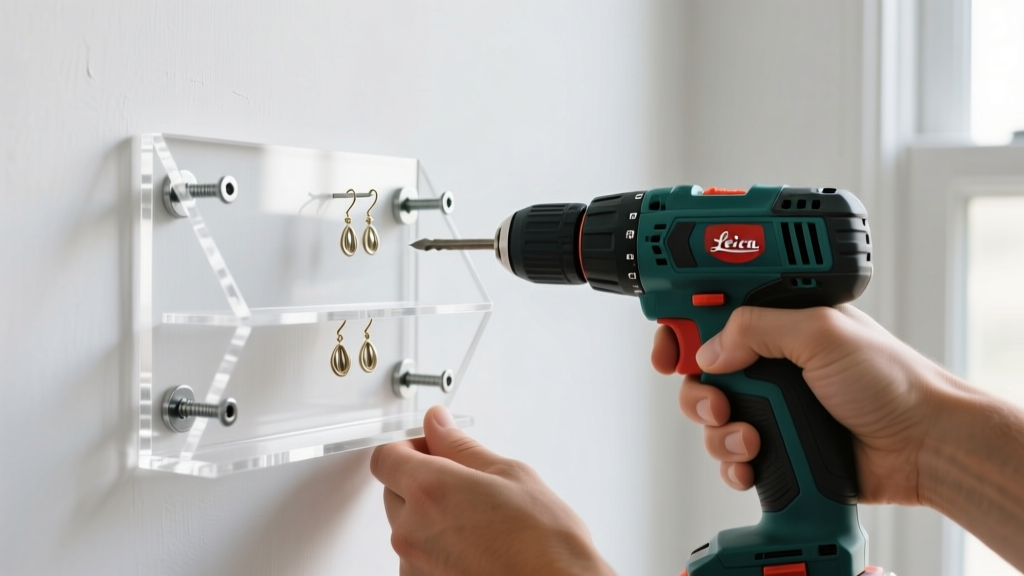
For standard 1/2-inch drywall, bypass plastic ribbed anchors entirely. Instead, use #8 x 1.5-inch zinc-plated threaded drywall anchors or toggle bolts. Threaded anchors provide a much wider surface area inside the drywall cavity, offering a holding power of up to 25 pounds per screw. When mounting a wide organizer, always use a stud finder to secure at least one side of the frame directly into a wooden wall stud using a 2-inch wood screw, ensuring absolute stability.
For those renting or unable to drill large holes, heavy-duty adhesive strips (like 3M Command Strips rated for 16+ pounds) can be used on lightweight acrylic mesh organizers, provided the wall is cleaned with isopropyl alcohol prior to application and the adhesive is allowed to cure for a full 24 hours before bearing any weight.
Ongoing Maintenance and Tarnish Prevention
Installing your earring wall organizer is only the first step; maintaining the micro-environment around your jewelry is an ongoing process. Even in a climate-controlled bedroom, airborne humidity and sulfur compounds from everyday items (like wool clothing, rubber bands, and certain paints) will cause silver to oxidize.
"The secret to maintaining a wall display isn't just about dusting; it's about creating localized anti-tarnish zones. By integrating sacrificial metals or chemical interceptors, you can keep silver bright for months without polishing."
The 3M Anti-Tarnish Strip Hack
If your organizer is an open-frame design (like a metal grid or acrylic rod system), you can discreetly attach 3M Anti-Tarnish Strips to the back or underside of the frame. These strips absorb airborne sulfur compounds and typically remain effective for six months. For enclosed shadow-box style wall organizers, place a small, breathable muslin bag filled with indicating silica gel beads in the bottom corner to control ambient moisture. Replace or bake the silica gel when the beads turn from orange to dark green.
Finally, establish a bi-weekly dusting routine using a clean, ultra-soft makeup brush (like a powder brush) to gently sweep dust away from gemstone settings and intricate metal filigree without applying the abrasive pressure that a standard cloth might cause.
Final Thoughts on Building Your Display
Upgrading to a dedicated earring wall organizer is an investment in the longevity and accessibility of your jewelry collection. By prioritizing chemically inert materials, respecting the specific gauge and structural needs of your earrings, and executing a secure, weight-appropriate installation, you will protect your pieces from both physical and environmental damage. Take the time to audit your collection, measure your available wall space, and select a system that not only safeguards your jewelry but elevates your daily styling routine. For more comprehensive guides on jewelry preservation and metal care, consult the GIA Gem Care guidelines to ensure your most valuable pieces remain pristine for generations.