Egyptian Earrings: A Beginner's Guide to Ancient Symbols & Styles
Discover the meaning behind Egyptian earrings. Learn how to style Ankh, Scarab, and Eye of Horus designs using modern metals and genuine stones.

The Allure of Ancient Egypt in Modern Jewelry
Egyptian earrings have transcended their archaeological origins to become a staple in modern jewelry boxes. Unlike fleeting fashion trends, the motifs born along the Nile thousands of years ago carry profound symbolic weight, making them both aesthetically striking and deeply personal. For beginners, navigating the world of Egypt-inspired jewelry can be overwhelming. The market is flooded with everything from cheap, mass-produced costume pieces to high-end, historically accurate reproductions crafted by master jewelers. According to the Metropolitan Museum of Art's extensive Egyptian jewelry archives, ancient artisans used jewelry not merely for adornment, but as amulets for protection, status, and divine connection. Today, wearing these symbols is a way to carry a piece of that enduring legacy. This guide will decode the most popular Egyptian earring motifs, explain the materials you should look for, and provide actionable advice on how to style them for the modern era without crossing into costume territory.
Decoding the Symbols: What Your Egyptian Earrings Mean
Before purchasing a pair of Egyptian earrings, it is crucial to understand the iconography. Ancient Egyptian art was highly codified, and every symbol had a specific purpose.
The Ankh (Key of Life)
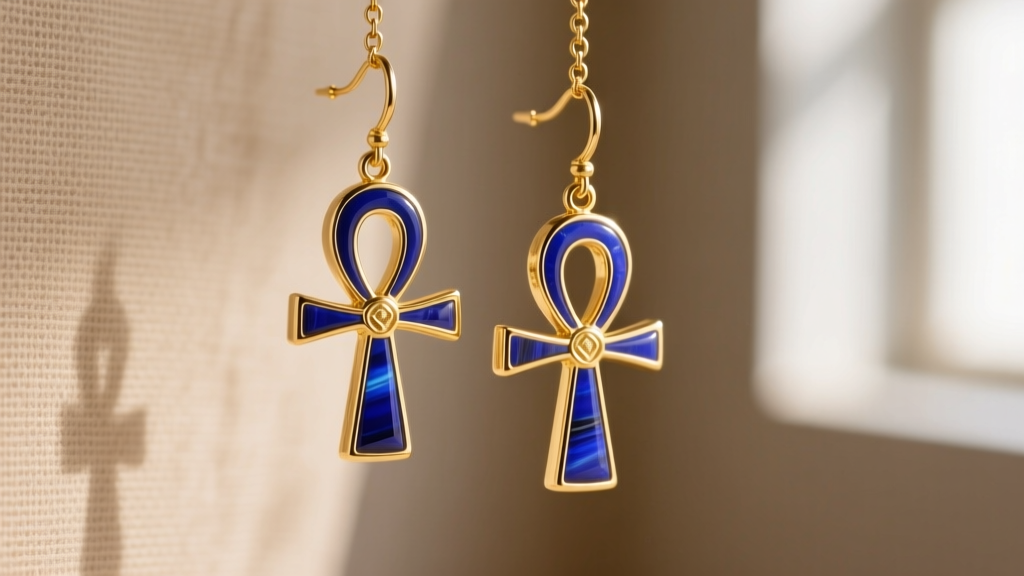
Perhaps the most recognizable Egyptian symbol, the Ankh represents eternal life and the divine breath of the universe. In earring designs, the Ankh is frequently rendered as a drop or dangle, with the loop at the top serving as the natural attachment point for the ear wire. It is a universal symbol of vitality, making it an excellent gift or personal talisman for new beginnings.
The Eye of Horus (Wedjat)
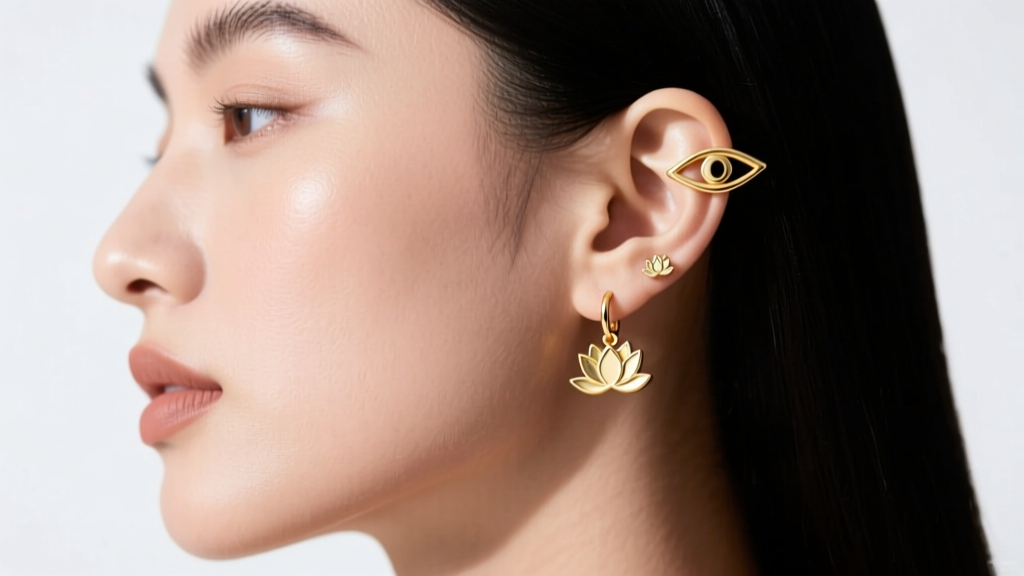
The Wedjat eye symbolizes protection, royal power, and good health. Historically, it was believed to have healing properties. In modern jewelry, the Eye of Horus is often featured in stud earrings or intricate ear cuffs. The sweeping lines of the eye's 'teardrop' marking lend themselves beautifully to asymmetric earring designs or delicate huggie hoops.
The Scarab Beetle (Khepri)
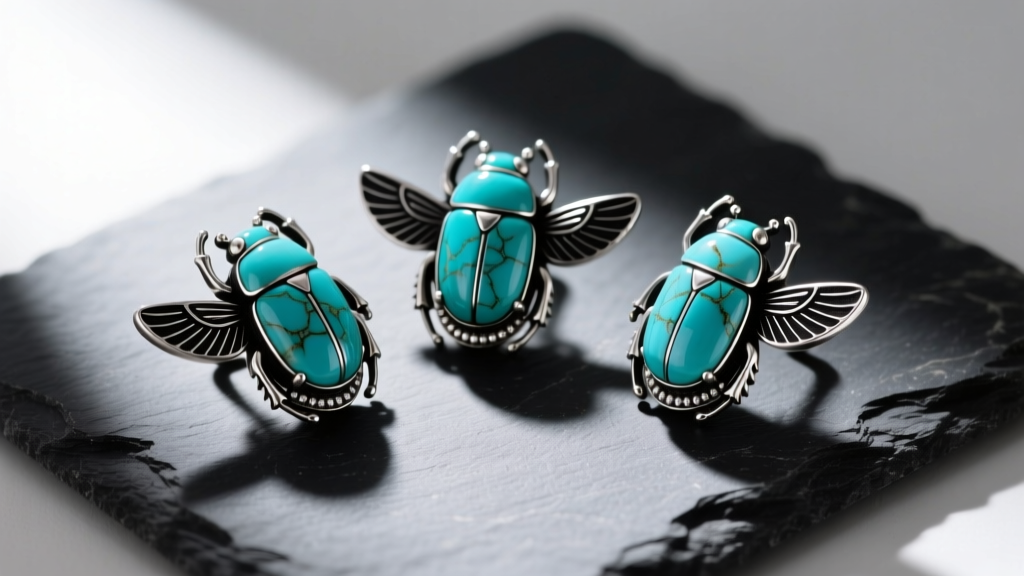
The dung beetle was associated with Khepri, the god of the rising sun and rebirth. Scarab earrings are incredibly popular and are often carved from semi-precious stones with a flat base and a domed, detailed back. They are most commonly found as stud earrings or the centerpiece of heavy statement dangles.
The Lotus Flower
The blue lotus was a symbol of creation, rebirth, and the sun, as it closes at night and sinks underwater, only to rise and bloom again at dawn. Lotus motifs in earrings are usually highly detailed, featuring layered petals that fan out elegantly, often used in chandelier or drop earring styles.
Materials Matter: From Pharaohs to Modern Jewelers
The material composition of your Egyptian earrings dictates not only their price but also their longevity and skin compatibility. Ancient Egyptians favored gold, lapis lazuli, turquoise, and carnelian. Today, you must be vigilant to ensure you are getting genuine materials rather than dyed imitations.
| Material | Traditional Use | Modern Buying Advice | Expected Price Range |
|---|---|---|---|
| Lapis Lazuli | Royalty, heavens | Look for uneven deep blue with golden pyrite flecks. Avoid perfectly uniform, dye-free stones. | $60 - $250+ |
| Turquoise | Joy, protection | Genuine turquoise has a natural matrix (veining). Beware of dyed howlite passed off as turquoise. | $45 - $180 |
| Carnelian | Energy, blood | Should be a translucent, fiery orange-red. Opaque, solid red is often dyed agate. | $30 - $120 |
| Gold Vermeil | Flesh of the gods | Ensure it is 18k or 22k gold plated over sterling silver (minimum 2.5 microns thick). | $80 - $300 |
When evaluating blue stones, the Gemological Institute of America (GIA) notes that genuine lapis lazuli should exhibit a slightly uneven distribution of color with natural flecks of golden pyrite. If the blue is perfectly uniform and lacks pyrite, you are likely looking at dyed howlite or synthetic spinel, which holds little long-term value and can irritate sensitive piercings if the dye bleeds.
How to Style Egyptian Earrings Without Looking Costume-y
The line between a sophisticated nod to antiquity and a Halloween costume is drawn by how you style the pieces. Egyptian motifs are inherently bold, so the key is balance and modernization.
- Pair with Minimalist Wardrobes: Let the earrings be the focal point. A crisp white linen shirt, a tailored black blazer, or a simple slip dress provides a clean canvas that allows the intricate goldwork and vibrant stones to pop without competing with loud patterns.
- Mix Metals Thoughtfully: While traditional Egyptian jewelry is almost exclusively yellow gold, modern styling allows for mixed metals. Pairing a yellow gold vermeil Ankh drop with a subtle white gold or platinum band ring creates a curated, contemporary look.
- Scale Down for Daily Wear: Reserve the heavy, shoulder-dusting chandelier earrings for evening events. For the office or daytime errands, opt for small Scarab studs or delicate Eye of Horus huggies that sit close to the earlobe.
- Avoid the 'Full Set' Trap: Wearing a matching Egyptian necklace, bracelet, and heavy earrings simultaneously often tips the scale into costume territory. If you are wearing statement dangles, skip the necklace entirely and opt for a simple, unadorned bangle instead.
Buying Guide: Practical Specs and Ear Lobe Care
Beyond aesthetics, the physical construction of Egyptian earrings requires careful consideration, especially for dangles and drops which can be surprisingly heavy.
"When selecting historical replica dangles, always check the earring wire gauge and overall weight. Heavy cast brass replicas can easily exceed 20 grams per ear, leading to irreversible earlobe stretching and sagging over time."
To protect your piercings, look for hollow-backed castings or sterling silver designs that keep the weight under 12 grams per earring. The ear wire itself should ideally be 18-gauge (1.02mm) or 20-gauge (0.81mm) to fit comfortably through a standard piercing without causing micro-tears. If you do invest in heavier, solid-stone Egyptian statement pieces, you must use silicone O-ring earring backs (specifically 4mm to 6mm in diameter) or specialized support patches worn behind the earlobe. These accessories distribute the downward force and prevent the earring from drooping awkwardly forward.
Finally, always check for hallmarks. Authentic modern pieces crafted from precious metals will bear a '925' stamp for sterling silver or a maker's mark alongside a karat stamp (like '14K' or '18K') for solid gold. Pieces lacking any stamps and priced under $30 are almost certainly made of base metals like brass or nickel-silver, which can cause contact dermatitis and turn your skin green due to oxidation.
Final Thoughts on Wearing History
Egyptian earrings offer a unique intersection of art, history, and personal expression. By understanding the deep symbolism of the Ankh, the protective gaze of the Eye of Horus, and the regenerative power of the Scarab, you elevate your jewelry from mere accessories to meaningful artifacts. Focus on high-quality materials like genuine lapis lazuli and thick gold vermeil, respect the physical weight of the pieces to protect your earlobes, and style them with modern restraint. When chosen and worn with intention, Egyptian earrings remain as captivating and powerful today as they were in the courts of the Pharaohs.


