How to Choose Hypoallergenic Gold Stone Earrings for Sensitive Ears
Discover how to choose hypoallergenic gold stone earrings for sensitive ears. Learn about karats, safe settings, and post types in this beginner guide.


Stepping into the world of fine jewelry is an exciting milestone, but for those with sensitive skin, it can quickly turn into an itchy, frustrating ordeal. If you have ever experienced redness, swelling, or flaking after wearing jewelry, you are likely part of the 10% to 15% of the global population with a nickel allergy. When shopping for your first pair of high-quality gold stone earrings, navigating the jargon of karats, alloys, and setting types can feel overwhelming. This beginner-friendly explainer will demystify the buying process, ensuring you invest in pieces that are both visually stunning and biologically compatible with your skin.
Why Your Ears React to "Gold" Jewelry (The Nickel Problem)
Pure gold is naturally hypoallergenic. The culprit behind allergic contact dermatitis is almost always the secondary metals used to create gold alloys. According to the American Academy of Dermatology, nickel is the most common cause of jewelry-related skin reactions. Many commercial jewelers alloy yellow and white gold with nickel to increase hardness and lower costs. White gold, in particular, is notorious for this. To achieve a bright white color, cheaper white gold is mixed with nickel and plated with rhodium. Once that rhodium plating wears off—usually within six to twelve months—the nickel is exposed directly to your piercing, triggering a reaction.
The Fix: Always look for nickel-free alloys. For white gold, seek out pieces alloyed with palladium or silver. For yellow and rose gold, the secondary metals are typically copper, zinc, and silver, which are generally safe for sensitive ears. When in doubt, ask the jeweler for the exact alloy breakdown or opt for brands that explicitly guarantee nickel-free compositions.
Decoding Karats: 14k vs. 18k vs. 24k for Stone Settings
The "karat" (k) system measures the purity of gold, with 24k being 99.9% pure. While 24k gold sounds like the ultimate luxury, it is a terrible choice for jewelry featuring gemstones. Pure gold is incredibly soft (measuring around 25-30 on the Vickers hardness scale). If a jeweler uses 24k gold to create the tiny prongs holding a diamond or sapphire, those prongs will easily bend when snagged on a sweater, leading to a lost stone.
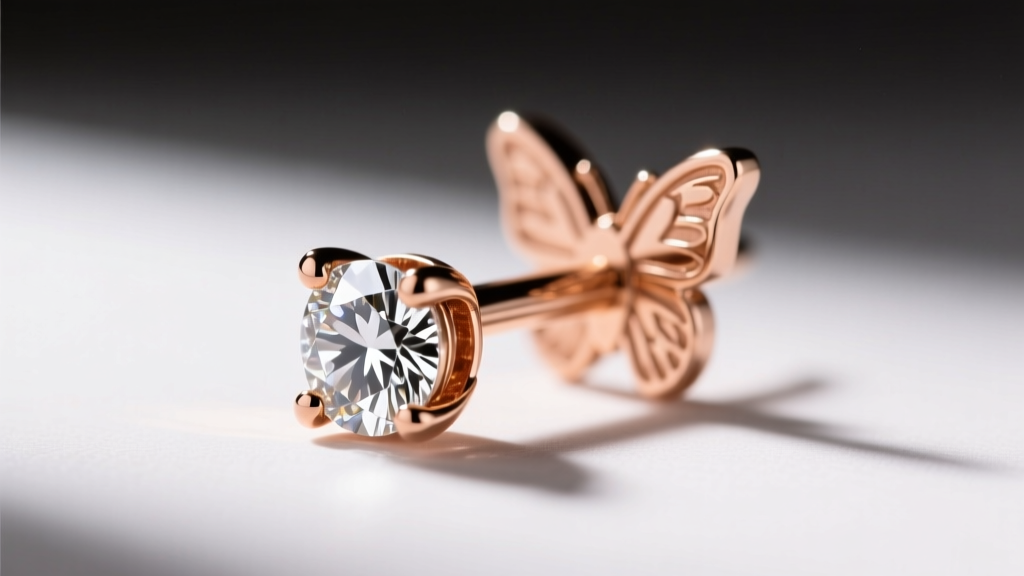
Here is how the most common karats break down for everyday wear:
- 14k Gold (58.5% pure gold): The gold standard for durable, everyday stone settings. It offers an excellent balance of rich color, structural integrity, and affordability. The alloy metals make it hard enough to securely grip gemstones for decades.
- 18k Gold (75% pure gold): Prized for its deeper, warmer yellow hue and higher hypoallergenic properties (since there is less room for reactive alloy metals). It is slightly softer than 14k but still perfectly safe for secure stone settings, provided you treat them with moderate care.
- 24k Gold (99.9% pure gold): Best reserved for solid hoops, simple bands, or bezel-set designs where the metal entirely encases the stone. Avoid 24k prong settings entirely.
For a comprehensive breakdown of gold purity and alloy compositions, the Gemological Institute of America (GIA) remains the definitive educational resource.
Safe Stone Settings for Beginners: Prong vs. Bezel
The way your gemstone is secured impacts both the aesthetic and the longevity of your earrings. As a beginner, understanding the mechanical failure points of different settings will save you money and heartbreak.
The Prong Setting
Prong settings use small metal claws (usually four or six) to grip the girdle of the stone. This design allows maximum light to enter the gemstone, enhancing its brilliance. However, prongs are vulnerable. They can catch on hair, clothing, and towels. Over time, friction can wear down the metal tips, or a hard impact can bend a prong outward, releasing the stone.
The Bezel Setting
A bezel setting features a continuous rim of metal that completely encircles the gemstone. While it slightly reduces the light return compared to prongs, it is vastly superior for active lifestyles. The metal rim protects the fragile edges (girdle) of the stone from chipping and completely eliminates the risk of snagging. If you are buying gold stone earrings for daily, never-take-off wear, a bezel setting is the smartest investment.
Post Types and Gauge Sizes: What Actually Fits Your Piercing?
Buying beautiful earrings is only half the battle; they must physically fit your anatomy. The Association of Professional Piercers (APP) establishes strict standards for body jewelry, including gauge (thickness) and post styles. Wearing a post that is too thick can cause micro-tears, while one that is too thin can lead to the "cheese-cutter effect," where the thin metal slowly migrates through the tissue.
| Post Style | Standard Gauge Size | Best Piercing Location | Pros & Cons |
|---|---|---|---|
| Butterfly Push-Back | 20g (0.81mm) or 18g (1.02mm) | Standard Earlobes | Pros: Easy to put on. Cons: Traps sebum and bacteria; sharp pins can poke the neck while sleeping. |
| Flat-Back Labret | 18g (1.02mm) or 16g (1.29mm) | Lobes, Cartilage, Helix | Pros: Extremely comfortable for sleeping; hygienic. Cons: Requires a threading tool or practice to insert from the back. |
| Lever-Back / French Wire | 20g (0.81mm) or 18g (1.02mm) | Standard Earlobes (Dangles) | Pros: Secure closure; elegant movement. Cons: The curved wire can harbor debris if not cleaned regularly. |
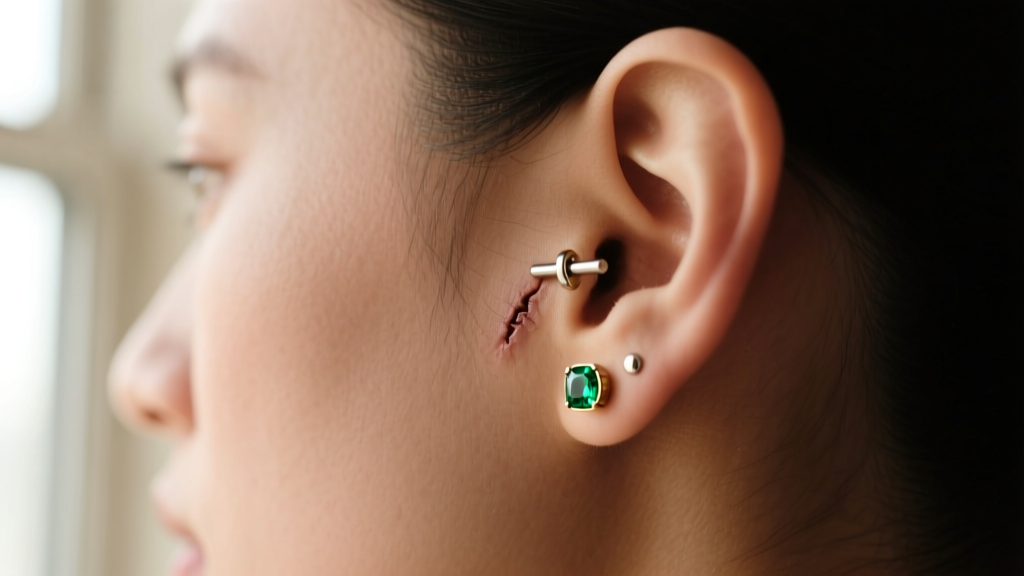
For fresh piercings or highly reactive ears, always opt for internally threaded or threadless (push-pin) flat-back labrets. Externally threaded posts (where the screw is on the post itself) scrape the delicate fistula tissue upon insertion, introducing microscopic tears that invite infection and irritation bumps.
Real-World Pricing: What Should You Actually Pay?
Understanding market pricing prevents you from overpaying for plated metals disguised as solid gold. As of 2026, the raw material costs for precious metals and ethically sourced gemstones dictate specific price floors.
- Gold Vermeil / Gold-Filled (Base Metal + Gold Layer): $30 - $80. These are excellent for trendy, seasonal styles, but the gold layer will eventually wear off, exposing the brass or sterling silver core. Not recommended for sensitive ears or 24/7 wear.
- Solid 14k Gold with Semi-Precious Stones (e.g., Amethyst, Topaz): $120 - $250. This is the sweet spot for durable, hypoallergenic everyday jewelry.
- Solid 14k/18k Gold with Precious Stones (e.g., Sapphire, Ruby, Diamond): $300 - $800+. The price scales heavily based on the carat weight, color grade, and clarity of the gemstone.
Always verify that the listing explicitly states "Solid 14k" or "Solid 18k." Terms like "gold tone," "gold plated," or "14k HGE" (Heavy Gold Electroplate) indicate a base metal core.
Maintenance and Cleaning: Keeping Stones Secure and Gold Bright
Proper maintenance extends the life of your gold stone earrings and keeps your piercings healthy. Many beginners make the critical mistake of tossing all their jewelry into an ultrasonic cleaner. While ultrasonic waves are great for bare diamond solitaires, they can be disastrous for other stones.
Stones to NEVER put in an ultrasonic cleaner:
- Emeralds: Almost all emeralds are oil-filled to mask natural inclusions. Ultrasonic vibrations will shake the oil out, leaving the stone looking cloudy and heavily fractured.
- Opals and Pearls: Both are highly porous and soft. The heat and vibrations can cause internal cracking or completely strip a pearl's nacre.
- Tanzanite and Turquoise: Prone to cleavage and structural fracturing under high-frequency stress.
The Safest Cleaning Method: Fill a small bowl with warm water and a few drops of mild, fragrance-free dish soap. Let your earrings soak for 10 minutes. Use a baby-soft toothbrush to gently scrub behind the stone and along the post, where sebum and dead skin cells accumulate. Rinse thoroughly under lukewarm water and pat dry with a lint-free microfiber cloth. Perform this routine once every two weeks to maintain maximum brilliance and piercing hygiene.
By prioritizing nickel-free alloys, choosing structurally sound bezel or sturdy prong settings, and matching the correct gauge to your specific piercing anatomy, you can confidently build a collection of gold stone earrings that you can wear comfortably from morning to night.


