Gold Cross Earrings Men: The Ultimate Buying Guide
Discover how to choose the perfect gold cross earrings men love. Learn about karats, gauge sizes, backings, and pricing in our expert buying guide.

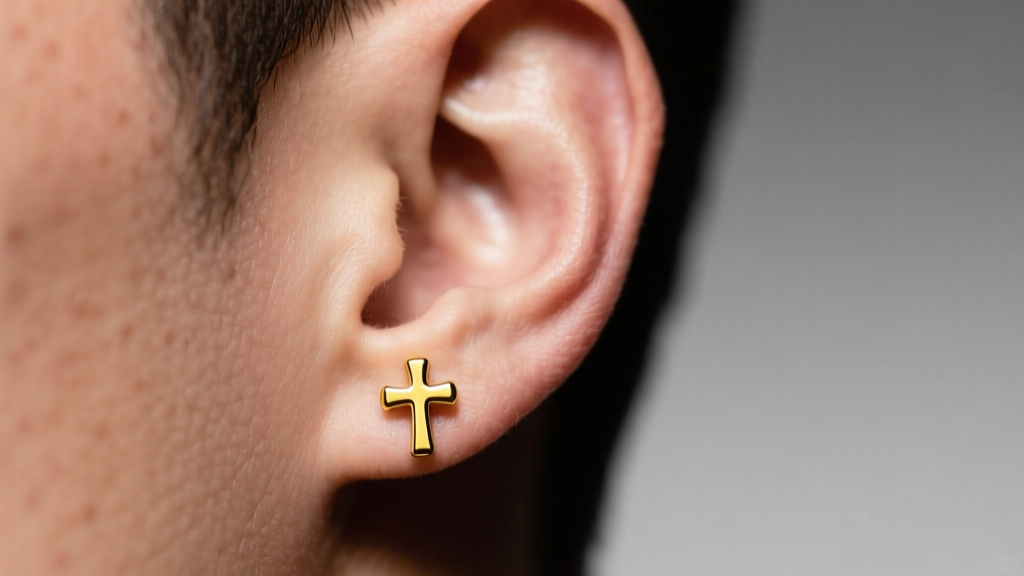
The landscape of men's jewelry has undergone a massive transformation over the last decade. As we navigate the style landscape in 2026, the cross earring has evolved from a niche subculture staple into a mainstream, sophisticated accessory. Whether you are drawn to the geometric minimalism of a simple Latin cross or the intricate detailing of a diamond-accented crucifix, finding the right piece requires more than just an eye for design. It demands an understanding of metallurgy, anatomy, and mechanical security.
This comprehensive buying guide will walk you through the exact specifications, material grades, and structural considerations you need to evaluate before investing in gold cross earrings men can wear daily with confidence and comfort.
Solid Gold vs. Plated Alternatives: The Daily Wear Test
When shopping for men's earrings, the first critical decision is the material composition. Men's earrings endure a uniquely harsh environment compared to other jewelry. They are subjected to the friction of over-ear headphones, the pull of hoodies and hats, and the acidic pH of daily sweat. Because of this, gold-plated or gold vermeil options are strongly discouraged for daily-wear studs.
Plated earrings feature a microscopic layer of gold over a base metal like brass or copper. Within months of daily wear, the friction from sleeping and cleaning will wear through this layer, exposing the base metal and leading to rapid tarnishing and severe contact dermatitis. For a piece meant to be worn every day, solid gold is not a luxury; it is a functional necessity. Solid gold ensures that even if the earring is deeply scratched, the material beneath remains identical in color and hypoallergenic properties.
Decoding Gold Purity: 10K vs. 14K vs. 18K
Gold purity is measured in karats, which dictates the ratio of pure gold to alloy metals. Pure 24K gold is far too soft for jewelry; it will bend, warp, and lose its shape within days. According to the Gemological Institute of America (GIA), alloying gold with metals like copper, silver, and zinc is essential to provide the tensile strength required for jewelry posts and clasps.
| Karat | Gold Content | Durability | Color Profile | Best Use Case |
|---|---|---|---|---|
| 10K | 41.7% | Extremely High | Pale, slightly brassy | Budget-friendly, high-impact sports |
| 14K | 58.5% | High | Rich, warm yellow | The ultimate sweet spot for daily wear |
| 18K | 75.0% | Moderate | Deep, luxurious yellow | Occasional wear, high-end luxury pieces |
For gold cross earrings men will wear constantly, 14K gold is the undisputed champion. It offers the perfect equilibrium between a rich, authentic gold color and the structural rigidity needed to keep the earring post from bending. If you prefer white gold, be aware that it is alloyed with nickel or palladium and plated with rhodium. Men with sensitive skin should opt for nickel-free 14K white gold or stick to yellow gold to avoid allergic reactions.
Sizing, Gauge, and Proportions
The visual impact of a cross earring is dictated by two distinct measurements: the gauge (thickness of the post) and the millimeter dimensions of the cross itself. Getting these wrong can lead to physical discomfort or a disproportionate aesthetic.
Understanding Gauge Thickness
The standard lobe piercing for men is typically done at 20G (0.81mm) or 18G (1.02mm). If you are purchasing a small, lightweight cross (under 8mm), a 20G post is perfectly adequate. However, if you are opting for a larger, solid 14K gold cross that carries significant weight, you must ensure the post is at least 18G. A heavy cross on a thin 20G post will cause the earring to droop forward and can lead to the "cheese-cutter effect," where the thin metal slowly migrates through the earlobe tissue due to gravity and weight.
For those with cartilage piercings (like the helix or tragus) or stretched lobes, you will need to look for 16G (1.2mm) or 14G (1.6mm) posts. The Association of Professional Piercers (APP) provides extensive guidelines on matching jewelry gauge to specific piercing types to prevent tissue rejection and migration.
Millimeter Dimensions
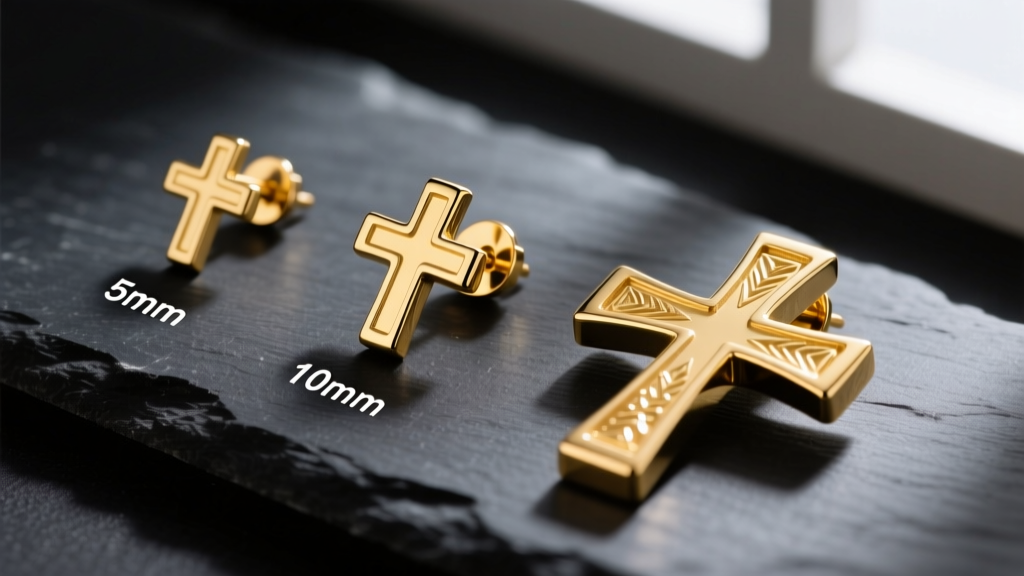
- 5mm - 8mm (The Minimalist): Sits flush against the lobe. Ideal for professional environments, first-time wearers, or those who prefer a subtle, understated glint.
- 10mm - 12mm (The Standard): The most popular size for men. It provides clear visibility and makes a distinct style statement without overwhelming the ear's anatomy.
- 15mm+ (The Statement): Bold and highly visible. Best suited for those with larger earlobes or those who curate a heavily accessorized, avant-garde aesthetic.
Backing Mechanisms: Securing Your Investment
A solid gold cross is a financial investment, and losing it due to a faulty backing is a preventable tragedy. The backing mechanism is just as important as the earring itself.
Friction Backs (Butterfly/Push Backs)
The most common and economical backing. They rely on the tension of the metal wings gripping a notched post. While convenient, they are prone to loosening over time, especially if the earring is caught on a towel or shirt collar. If you use friction backs, ensure the post has deep, distinct notches to maximize grip.
Screw Backs (La Pousette)
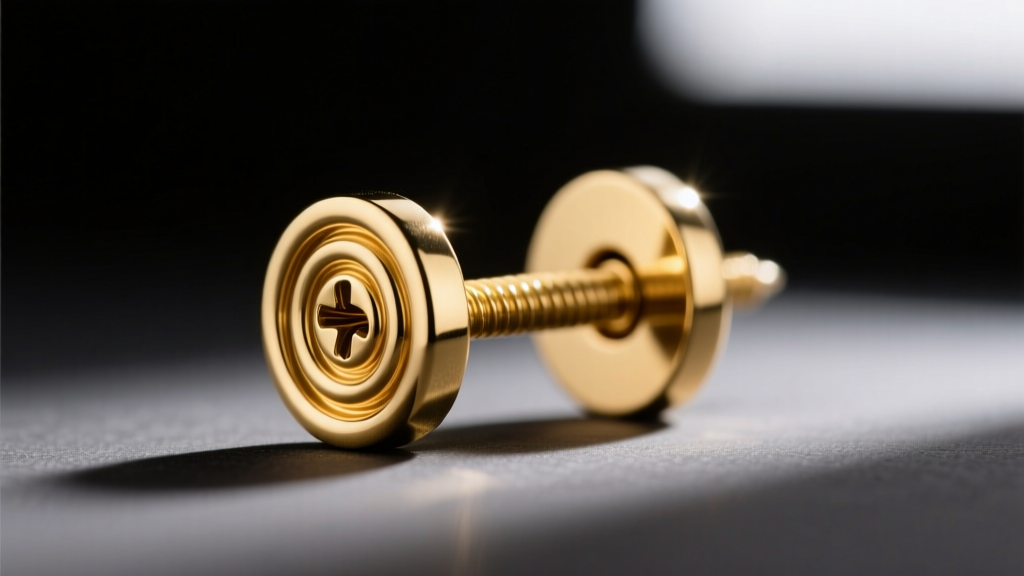
The gold standard for security. These backs feature internal threading that screws directly onto the threaded earring post. They are virtually impossible to lose accidentally and are highly recommended for heavy gold crosses or diamond-accented pieces. The only drawback is the slight inconvenience of threading them on and off, but the peace of mind is worth the extra three seconds.
Silicone O-Rings
For active men who hit the gym or play contact sports, replacing metal backs with medical-grade silicone O-rings provides a secure, comfortable fit that won't dig into the neck when lying down or wearing helmets.
Design Variations and Aesthetics
The silhouette of the cross drastically alters the vibe of the earring. When browsing gold cross earrings men often gravitate toward three main categories:
The Latin Cross: The traditional shape with a longer descending arm. It is universally recognized and offers a classic, timeless appeal. A high-polish finish reflects light beautifully, while a matte or brushed finish offers a more rugged, masculine edge.
The Greek Cross: Featuring four arms of equal length, this design is highly geometric and symmetrical. It sits perfectly centered on the earlobe and appeals to those who prefer modern, architectural jewelry designs.
Diamond-Cut and Accent: For a touch of luxury, many 14K gold crosses feature diamond-cut facets (grooves carved into the metal to catch light) or small pavé-set diamonds. If choosing diamonds, ensure they are set in a bezel or flush setting rather than prong settings, which can snag on hair and clothing.
Pricing Tiers: What to Expect in 2026
Understanding the market value of solid gold jewelry protects you from overpaying for branded markup or underpaying for suspicious, potentially counterfeit goods. Based on current precious metal markets and standard jewelry manufacturing costs, here is what you should expect to pay for authentic solid gold cross earrings:
- Entry-Level ($80 - $150): Small (5mm-8mm), lightweight 10K or 14K gold crosses. Often hollow-backed to reduce gold weight and cost. Perfect for beginners.
- Mid-Range ($150 - $350): Standard size (10mm-12mm), solid 14K gold with high-quality polishing, secure screw-backs, and potentially minor diamond accents. This is the sweet spot for quality and longevity.
- Premium ($400 - $800+): Heavyweight solid 18K gold, intricate custom designs, high-clarity diamond pavé, or pieces from established luxury heritage brands.
Care, Maintenance, and Longevity
While solid gold is highly resistant to tarnish, it is not immune to environmental damage. The alloys mixed with gold (particularly copper and silver) can react to harsh chemicals. You must remove your gold cross earrings before swimming in chlorinated pools or using harsh household cleaning agents, as chlorine can cause "stress corrosion cracking" in gold alloys, leading to the post snapping off entirely.
For routine maintenance, a simple soak in warm water with a few drops of mild dish soap, followed by a gentle scrub with a soft-bristled baby toothbrush, will remove sebum and dead skin buildup from the back of the cross. Dry thoroughly with a microfiber cloth to maintain the high-polish finish. By prioritizing solid 14K gold, selecting the correct gauge for your anatomy, and investing in a secure screw-back mechanism, your cross earring will remain a staple of your personal style for decades to come.


