How to Repair and Maintain Your Favorite Straw Earrings
Discover expert troubleshooting for straw earrings. Learn how to fix fraying, reattach posts, and seal woven raffia against moisture damage.

The Unique Challenges of Woven Straw Jewelry
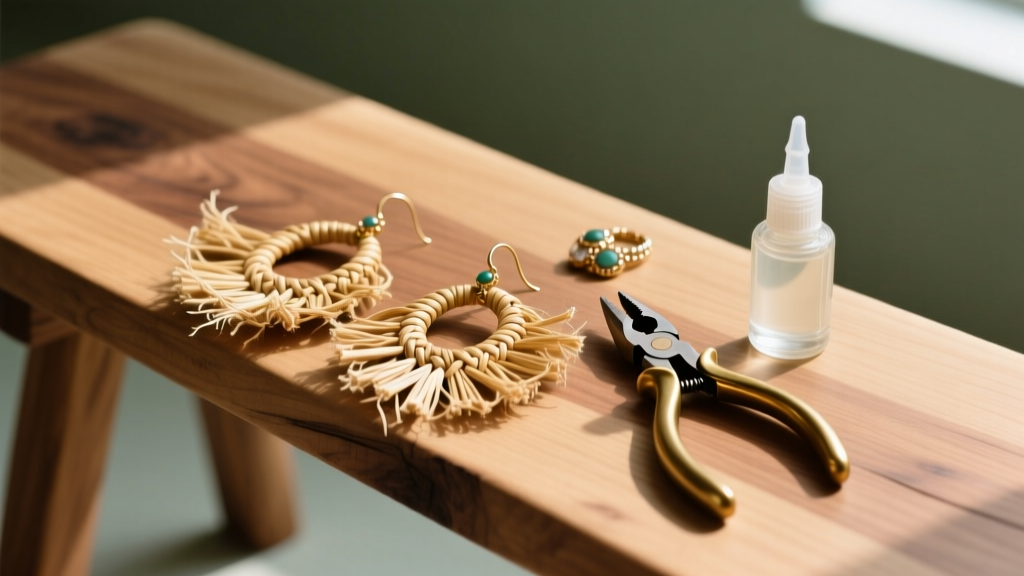
As sustainable fashion continues to dominate the 2026 jewelry market, straw earrings—crafted from woven raffia, seagrass, bamboo, and palm leaves—have become a staple of boho-chic and eco-conscious wardrobes. However, natural plant fibers present a unique set of structural challenges. Unlike metals or gemstones, straw is composed of cellulose and hemicellulose, making it highly porous, hygroscopic (moisture-absorbing), and prone to mechanical fraying. When you combine the delicate nature of woven fibers with the sheer stress of earlobe movement, hardware detachment and unraveling are almost inevitable without proper intervention. This comprehensive troubleshooting guide will teach you how to diagnose, repair, and weatherproof your favorite straw earrings using professional jewelry-making techniques.
Troubleshooting Matrix: Diagnosing Straw Earring Failures
Before applying any adhesives or sealants, it is crucial to identify the exact failure point. Use the matrix below to diagnose your specific issue and determine the correct course of action.
| Problem | Root Cause | Quick Fix | Permanent Solution |
|---|---|---|---|
| Fraying Edges | Mechanical abrasion and dry cellulose | Trim with sharp shears | Bind edges with jewelry resin and seal |
| Post Detachment | Porous straw absorbing liquid glue | Hot glue (temporary) | UV resin or 2-part epoxy with a backing pad |
| Warping / Bending | Ambient humidity absorption | Reshape with steam | Apply a solvent-based polyurethane sealant |
| Earlobe Tearing | Thin wire acting as a 'cheese-cutter' | Wear for shorter periods | Upgrade to 18g or 16g titanium ear wires |
Solving the Adhesive Dilemma: Why Superglue Fails on Straw
The most common repair needed for straw earrings is reattaching the metal stud post or hoop wire. Most consumers reach for cyanoacrylate (CA) glue, commonly known as superglue. This is a critical mistake. CA glue undergoes an exothermic reaction and polymerizes rapidly in the presence of moisture. Because natural straw retains trace amounts of ambient moisture, the CA glue cures too quickly, leaving a chalky, brittle residue that lacks shear strength. According to the adhesive experts at Fire Mountain Gems, porous materials require adhesives that can penetrate and flex.
The 2026 Standard: UV Resin and Two-Part Epoxy
For a permanent bond on woven raffia or bamboo, you need an adhesive that accommodates the natural expansion and contraction of plant fibers. Jewelry-grade UV resin is ideal for surface-level post attachments. By applying a small drop of thick-viscosity UV resin to the base of the post and curing it with a 36W UV lamp for 60 seconds, you create a rigid, waterproof cap that locks the hardware into the woven matrix. For deeper structural bonds, a two-part clear epoxy (such as Devcon 5-Minute Epoxy) is superior. The 5-minute working time allows the resin to wick deep into the cellulose fibers before cross-linking into a flexible, high-strength polymer.
Upgrading Hardware: Preventing the 'Cheese-Cutter' Effect
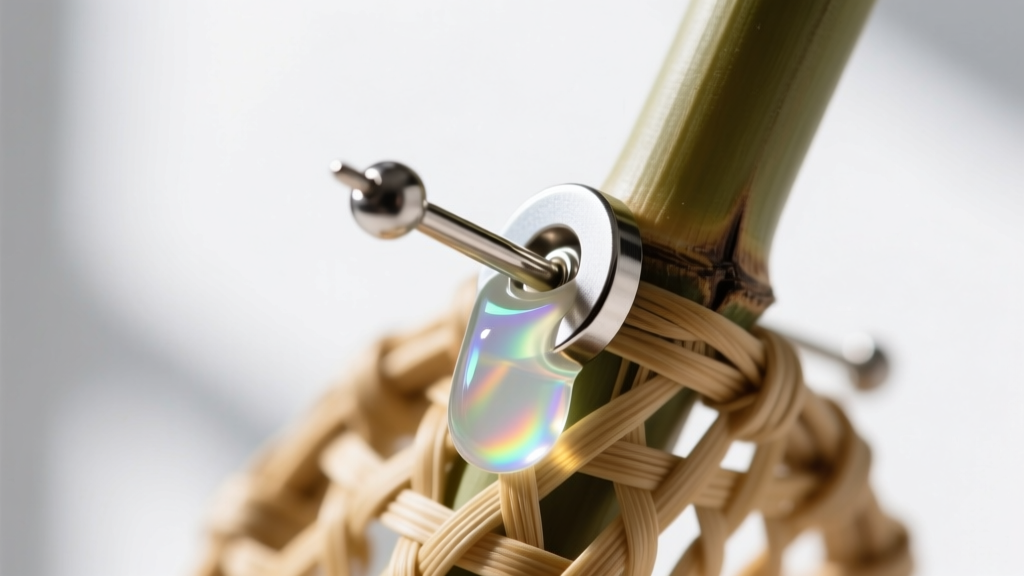
Large woven straw hoops are surprisingly heavy, especially after they absorb humidity from the air. Many mass-produced straw earrings are fitted with cheap, 22-gauge (0.64mm) base-metal wires. When suspended from a standard lobe piercing, this thin wire concentrates the downward force onto a microscopic surface area of the fistula, effectively acting like a cheese-cutter that will stretch, migrate, or tear your piercing.
Gauge Sizing and Material Upgrades
To troubleshoot heavy straw hoops, you must upgrade the ear wire. Using flush cutters and round-nose pliers, remove the cheap wire and replace it with an 18-gauge (1.02mm) or 16-gauge (1.29mm) ear wire. According to Rings & Things, thicker gauges distribute weight more evenly across the earlobe. Furthermore, opt for ASTM F136 implant-grade titanium or niobium. These metals are not only hypoallergenic but possess a high strength-to-weight ratio, ensuring the wire will not bend or warp under the load of the woven straw.
Sealing and Weatherproofing: Banishing Moisture Damage
Water is the natural enemy of straw jewelry. Unsealed raffia and palm leaf earrings will warp, lose their tension, and eventually develop mold if exposed to rain or high humidity. Sealing your earrings is a mandatory step for longevity, but choosing the wrong sealant can cause immediate, irreversible warping.
Why Water-Based Sealants Are a Trap
Crafters often use PVA-based sealants (like Mod Podge) to protect natural fibers. However, PVA is water-based. Applying it to dry straw introduces a massive dose of moisture directly into the cellulose, causing the fibers to swell and warp unevenly as they dry.
The Professional Approach: Solvent-Based and 100% Solids Sealants
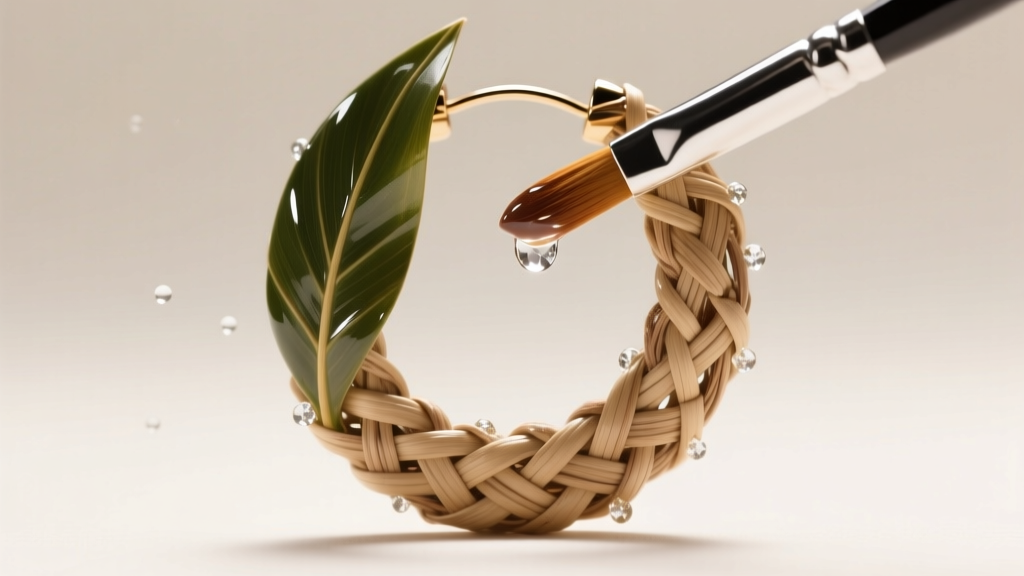
To seal straw earrings safely, you must use a product that contains zero water. Solvent-based polyurethane sprays or Paraloid B-72 (an acrylic resin used in museum conservation) are the gold standards. Paraloid B-72, dissolved in acetone, penetrates the woven fibers and dries completely clear, leaving a flexible, non-yellowing, and entirely waterproof barrier. Apply two light coats using a soft-bristled brush, allowing 24 hours of off-gassing in a well-ventilated area between coats.
Step-by-Step Fraying Repair Guide
If the edges of your woven straw earrings have begun to unravel, follow this precise restoration protocol:
- Preparation: Place the earring on a cutting mat. Use a pair of micro-shears to carefully trim the severely frayed fibers, cutting as close to the primary weave knot as possible without severing the structural binding thread.
- Binding: Dip a fine-tipped applicator brush into a thin-viscosity UV resin. Carefully paint the resin directly onto the cut edge, ensuring it wicks into the end-grain of the straw fibers.
- Curing: Expose the treated edge to a 395nm UV LED lamp for 45 seconds. The resin will polymerize into a hard, transparent cap, permanently fusing the fibers together.
- Finishing: Lightly buff the cured edge with a 1000-grit sanding sponge to remove any sharp resin burrs that might catch on hair or clothing.
Preventative Storage and Daily Care
Troubleshooting is only half the battle; proper storage dictates the lifespan of natural fiber jewelry. Never store straw earrings in airtight plastic bags in humid environments like bathrooms, as trapped moisture will invite fungal growth. Instead, store them in a breathable cotton pouch or a cedar-lined jewelry box equipped with silica gel desiccant packets to maintain a stable, low-humidity microclimate. By understanding the material science of cellulose and utilizing professional jewelry adhesives, you can ensure your sustainable straw earrings remain a staple of your collection for years to come.


