2026 Gift Guide: Best Jump Ring Earrings for Every Occasion
Discover the perfect jump ring earrings for every recipient in our 2026 gift guide. Learn about gauge sizes, weaves, and materials for flawless gifting.

When most people hear the term "jump ring," they think of the tiny, utilitarian connectors hiding at the top of a pendant or linking a charm to a bracelet. But in the hands of master jewelers and contemporary metalsmiths, the jump ring has been elevated from a mere finding to the focal point of the design. As we navigate the 2026 gifting season, jump ring earrings have emerged as a highly sought-after category, spanning everything from intricate chainmaille weaves to ultra-modern, interlocking geometric hoops.
Gifting jewelry requires a nuanced understanding of the recipient's style, lifestyle, and metal sensitivities. Jump ring earrings offer a unique intersection of structural engineering and artistic expression. Whether you are shopping for a minimalist bride, an edgy creative, or a sentimental collector, understanding the mechanics behind these designs will ensure your gift is both beautiful and enduring.
The Anatomy of Jump Ring Earrings: Beyond the Basic Finding
To select a high-quality pair of jump ring earrings, you must understand the concept of Aspect Ratio (AR). In jewelry fabrication, the AR is the mathematical relationship between the inner diameter (ID) of the ring and the thickness of the wire used to create it.
For earrings that require fluid movement—such as a cascading dangle or a flexible chainmaille weave—an AR between 3.5 and 4.5 is ideal. If the AR is below 3.0, the rings are too tightly coiled, resulting in a stiff earring that can pull uncomfortably on the earlobe. If the AR exceeds 5.0, the rings are too loose, creating gaps that easily catch on hair, sweaters, or scarves. Master jewelers calculate these ratios meticulously to ensure the earrings drape perfectly against the jawline.
Occasion Matching: The 2026 Gift Guide Matrix
Not all jump ring earrings serve the same purpose. Use the matrix below to match the recipient's profile with the correct structural style and material grade.
| Recipient Profile | Recommended Style | Material & Gauge | Price Range (2026) |
|---|---|---|---|
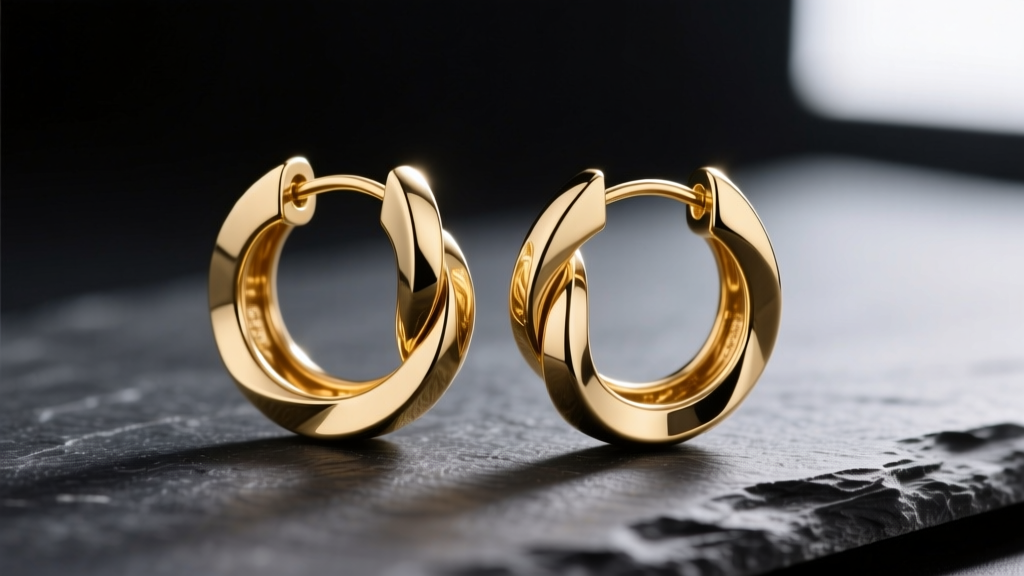
| The Minimalist Bride | Interlocking Geometric Hoops | 14k Solid Gold, 18g Wire | $350 - $800 |
| The Edgy Creative | Byzantine Chainmaille Dangles | Anodized Niobium, 20g Wire | $85 - $160 |
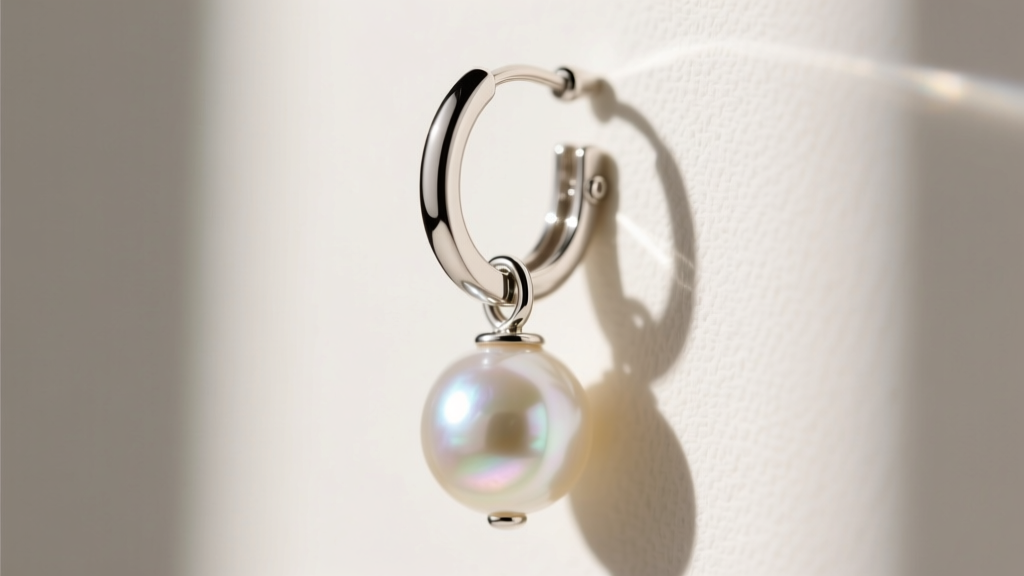
| The Sentimental Collector | Heavy-Gauge Charm Carriers | Sterling Silver, 14g or 16g Wire | $120 - $250 |
The Minimalist: Interlocking 14k Gold Hoops
For the recipient who favors quiet luxury and clean lines, interlocking jump ring hoops are the ultimate 2026 staple. These designs rely on a series of medium-diameter jump rings linked together to form a flexible, textured hoop. According to the Gemological Institute of America (GIA), 14k gold is the optimal choice for structural jewelry because the alloyed metals (like copper and zinc) provide the necessary tensile strength to prevent the rings from warping under daily wear. When gifting this style, ensure the primary structural rings are soldered shut to prevent accidental unhooking.
The Edgy Creative: Anodized Niobium Chainmaille
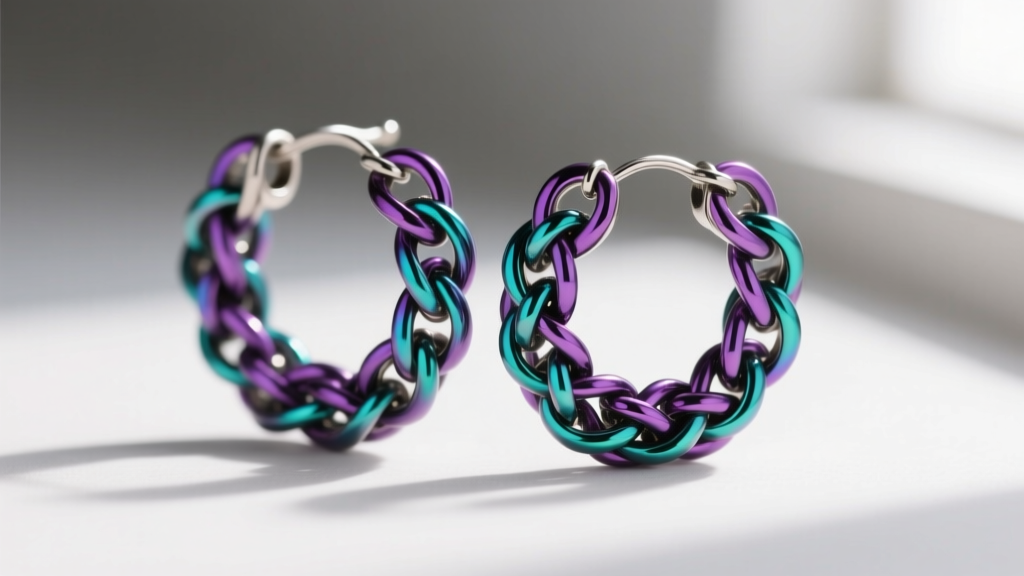
Chainmaille is the art of weaving jump rings into complex, fabric-like patterns. For the alternative or artistically inclined recipient, anodized niobium is a revelation. Niobium is a highly reactive, hypoallergenic metal that can be anodized using electricity to produce vivid, permanent colors without the use of dyes or plating. A Byzantine or European 4-in-1 weave in iridescent purple and teal makes for a show-stopping gift. Because niobium is incredibly lightweight, even large, shoulder-duster chainmaille earrings remain comfortable for all-day wear.
The Sentimental Collector: Heavy-Gauge Charm Carriers
For the recipient who loves to curate their own story through charms, a heavy-gauge jump ring hoop is the perfect canvas. Unlike standard thin wire hoops, these are constructed from 14-gauge or 16-gauge wire, providing a robust track for heavy enamel, gemstone, or solid metal charms. The critical feature to look for here is a secure latch mechanism or a heavy-duty split-ring connector that allows the wearer to slide charms on and off without compromising the structural integrity of the earring.
Technical Pitfalls: How to Spot Low-Quality Jump Ring Jewelry
When shopping for jump ring earrings, the difference between a lifelong treasure and a broken disappointment lies in the metallurgy and finishing. Avoid cheap mass-produced options by checking for these three critical failure modes:
- Dead-Soft Wire Tempering: Jump rings cut from dead-soft wire will easily pull apart under the mere 2-to-3-gram weight of an earring dangle. High-quality artisans use half-hard wire or tumble their finished pieces to work-harden the metal, increasing its yield strength. You can read more about wire temper standards via Rio Grande's metallurgical guides.
- Unfinished Kerfs: The "kerf" is the slit where the jump ring is cut from the coil. If the kerf is jagged or misaligned, it will act like a tiny saw blade, catching on hair and silk clothing. Premium jump rings are either perfectly flush-cut or seamlessly soldered.
- Plated Base Metals: Jump rings rely on surface tension and friction. If a ring is made of brass and merely plated in gold, the friction at the connection points will quickly wear away the plating, exposing the allergenic base metal beneath. Always opt for solid metals or high-quality gold-filled wire for structural connections.
"A jump ring is only as strong as its temper. In earring design, where gravity is constantly testing the metal's memory, work-hardening isn't just an option—it's a structural necessity." — Master Bench Jeweler
Sizing and Comfort: Gauge and Ear Lobe Considerations
The physical weight and gauge of the jump rings must be matched to the recipient's piercing type. Standard earlobe piercings are typically done at 20-gauge or 18-gauge. However, if you are gifting a heavy chainmaille dangle or a hoop laden with charms, the earlobe can stretch over time if the wire resting inside the piercing is too thin.
For heavy jump ring earrings, look for designs that incorporate a "comfort zone"—a section of the earring where the wire thickens to 16-gauge or 14-gauge specifically where it passes through the earlobe. This distributes the weight over a wider surface area, preventing the dreaded "cheese-cutter effect" that can permanently elongate the piercing hole. For cartilage piercings, such as the helix or tragus, stick strictly to lightweight 20-gauge niobium or titanium jump ring designs to avoid migration and irritation.
Final Gifting Tips for the Modern Collector
When presenting jump ring earrings as a gift in 2026, the unboxing experience should reflect the craftsmanship of the piece. Because chainmaille and interlocking ring designs can easily become tangled with other jewelry, always gift them in a structured, velvet-lined box with individual compartments. Include a small, soft-bristled jewelry brush (like a baby toothbrush) and a bottle of mild, phosphate-free dish soap, advising the recipient to gently brush between the rings to remove daily oils and lotions that can dull the metal's brilliance. By understanding the intricate mechanics of gauge, aspect ratio, and metal temper, you aren't just giving a piece of jewelry; you are gifting a masterclass in wearable engineering.


