Troubleshooting Bar Hoop Earrings: Fix Snags and Sagging
Struggling with heavy, snag-prone bar hoop earrings? Learn expert troubleshooting tips for clasps, lobe sagging, and metal allergies to wear them comfortably.

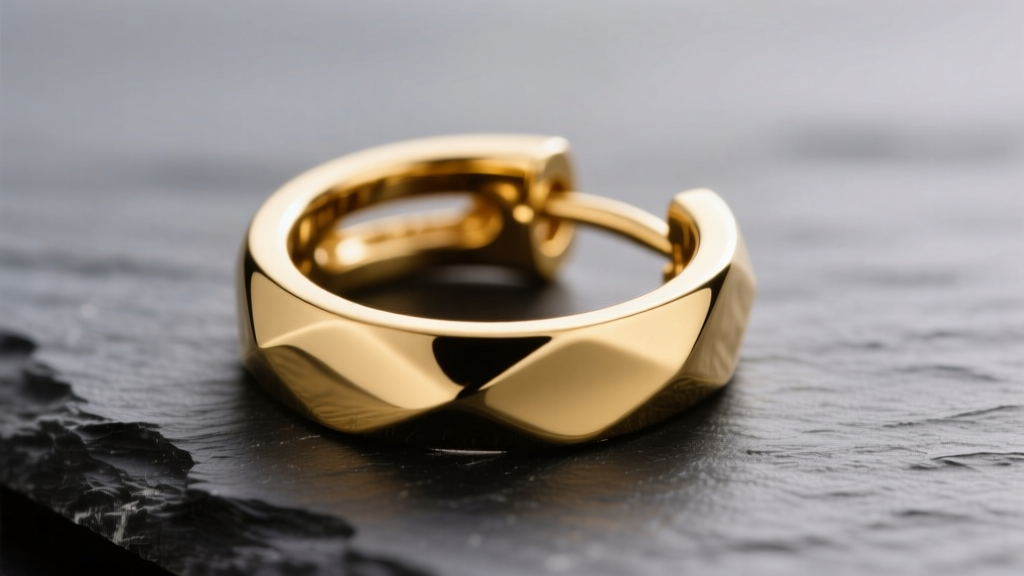
The Unique Anatomy of Bar Hoop Earrings (and Why They Fail)
Bar hoop earrings represent a striking intersection of architectural geometry and classic jewelry design. By integrating a rigid linear element (the bar) with a curved hoop, these earrings create a bold, modern silhouette. However, this exact structural hybrid is what makes them notoriously difficult to engineer correctly. Unlike a standard continuous hoop where weight and tension are distributed evenly along a single curve, a bar hoop introduces a cantilever effect. The straight bar acts as a lever, shifting the center of gravity away from the piercing hole.
This asymmetrical weight distribution leads to three primary mechanical failures: aggressive hair snagging, chronic earlobe sagging (and the resulting tissue damage), and accelerated buildup in the 90-degree crevices where the bar meets the hoop. If you have abandoned your favorite geometric earrings due to discomfort or constant tangling, the issue is rarely your ear shape—it is almost always a failure in gauge sizing, clasp mechanics, or material grading. Below is a comprehensive troubleshooting guide to diagnosing and fixing the inherent flaws of bar hoop earrings.
Troubleshooting Issue #1: The Dreaded Hair Snag
The most common complaint with bar hoops is that they act as a comb, catching stray hairs and pulling them out at the root. This snagging almost exclusively occurs at two points: the transition joint where the bar is soldered to the hoop, and the clasp mechanism itself.
Clasp and Hinge Solutions
Many mass-market bar hoops utilize a basic "snap hinge" or "latch-back" closure. Because the rigid bar prevents the earring from flexing, opening a snap hinge requires bending the metal slightly out of its natural resting state. Over time, this metal fatigue causes the clasp to gap open by a fraction of a millimeter—just enough to catch fine hair or delicate knitwear.
- The Clicker Upgrade: To permanently solve snagging, transition to a bar hoop featuring a clicker mechanism. Clickers use a spring-loaded internal pin that snaps into a recessed tube. This creates a completely seamless exterior surface with zero gaps, eliminating the snag point entirely.
- Laser-Welded Seams: Inspect the joint where the straight bar meets the curved hoop. If you feel a microscopic ridge or catch a fingernail on it, the soldering is poorly finished. High-end manufacturers use laser welding and hand-polishing to create a flush, seamless transition. If your current pair has a rough joint, a local bench jeweler can often buff and polish the seam smooth for a minimal fee.
- Post-and-Butterfly Alternatives: If you cannot find a clicker style you love, opt for a bar hoop that utilizes a standard post and secure it with a flat-disc silicone earring back. Silicone backs grip the post tightly and lack the sharp metal prongs of traditional butterfly clasps that catch hair.
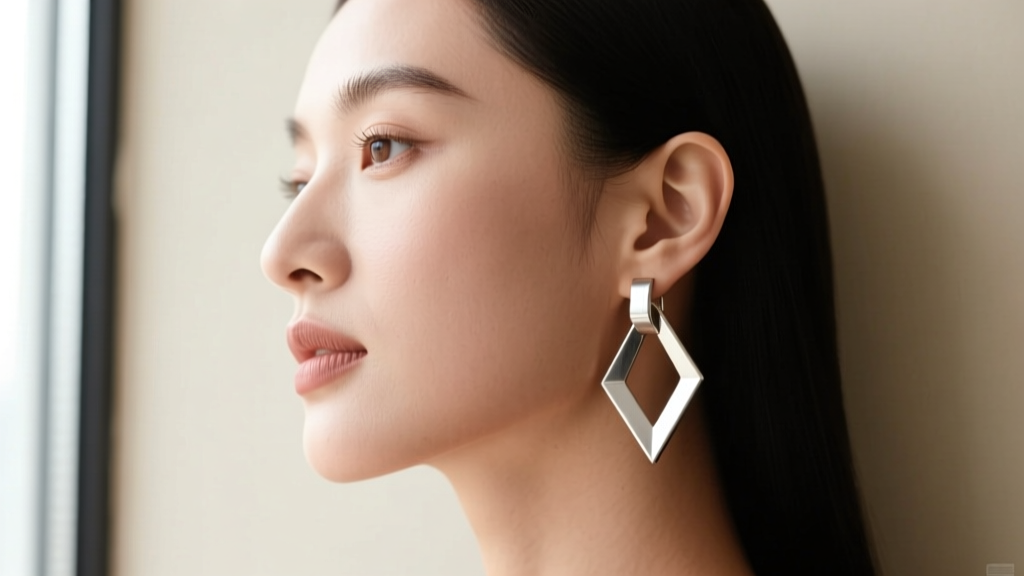
Troubleshooting Issue #2: Earlobe Sagging and the Cheese-Cutter Effect
Because the horizontal or vertical bar extends outward from the face, it creates a lever that pulls downward on the earlobe. If the wire or post passing through your piercing is too thin, this leverage will cause the earring to droop awkwardly or, worse, slowly slice through your earlobe tissue—a phenomenon professional piercers call the "cheese-cutter effect."


