Cleaning Enamel Earrings: Protecting the Drawing of Earrings Art
Learn expert care and cleaning tips for enamel and etched earrings. Preserve the delicate drawing of earrings motifs with our 2026 conservation guide.

The Fragility of Hand-Drawn Enamel and Etched Motifs
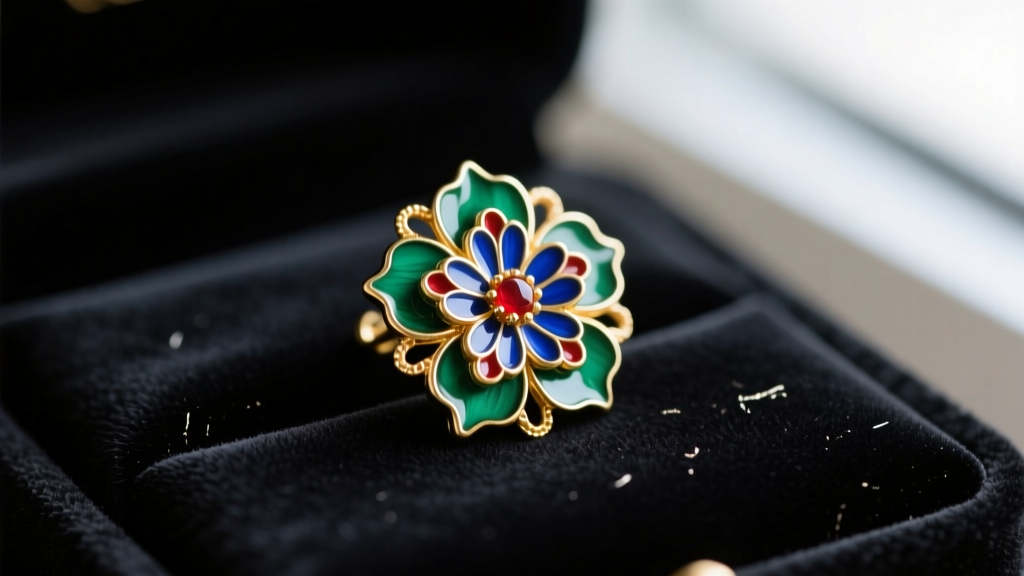
In the world of high jewelry and bespoke artisanal accessories, earrings are rarely just simple metal findings; they are miniature canvases. When collectors and master jewelers discuss the intricate drawing of earrings from the Art Nouveau period or contemporary micro-enamel collections, they are referring to the illustrative, hand-painted, or acid-etched line work that gives the piece its soul. As we move through 2026, the resurgence of heritage crafting techniques like plique-à-jour and guilloché has brought these delicate, sketch-like motifs back into the spotlight.
However, the very materials that allow for such breathtaking illustrative detail—fused silica glass, metallic oxides, and soft karat gold—are notoriously vulnerable to improper maintenance. A single swipe with an abrasive cloth or a dip in an ultrasonic cleaner can permanently fracture the glass or erase decades of patina. Preserving the original drawing of earrings motifs requires a shift in mindset: you are no longer just cleaning jewelry; you are performing microscopic art conservation.
Identifying Your Earring's Art Technique
Before applying any cleaning solution, you must identify the specific technique used to create the earring's illustrative design. The structural integrity of the 'drawing' depends entirely on how the enamel or metal was manipulated.
- Cloisonné: Fine gold or silver wires are soldered to a metal backing to create compartments (cloisons), which are then filled with wet enamel powder and fired. The wire network forms the 'lines' of the drawing.
- Champlevé: Troughs are carved or etched directly into the thick metal base, leaving raised metal lines that form the illustration. The carved areas are filled with enamel.
- Guilloché: A precise, repetitive geometric pattern is engine-turned or hand-engraved into the metal base, then covered with transparent enamel. The 'drawing' is actually the engraved metal showing through the glass.
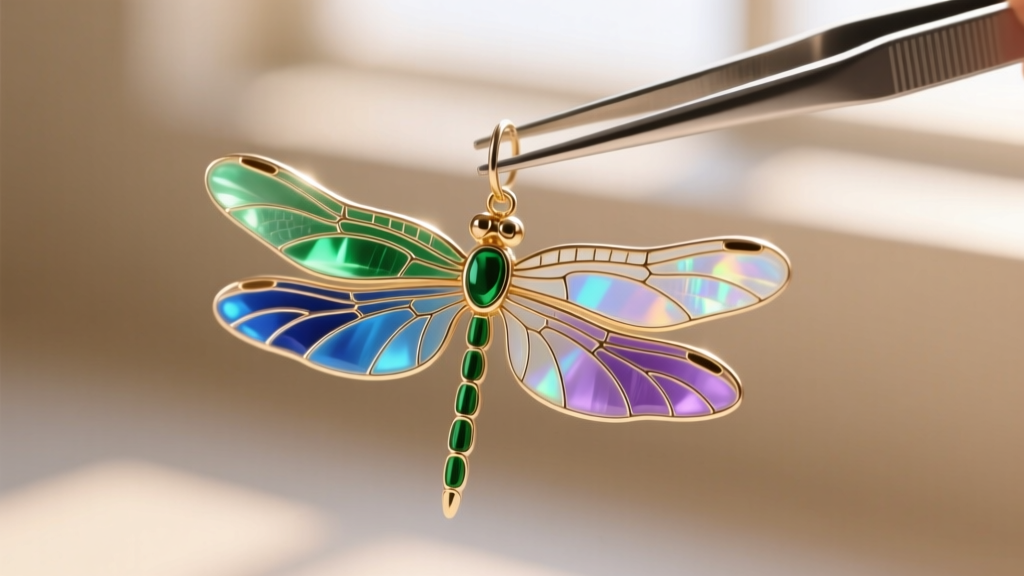
- Plique-à-jour: The most fragile technique. Enamel is fired into a wire framework with no metal backing, creating a stained-glass effect. The drawing is suspended entirely in glass.
The Science of Enamel Vulnerability
To understand why standard jewelry cleaners destroy these pieces, we must look at the Mohs scale of mineral hardness. Vitreous enamel is essentially fused glass, rating between 5 and 6 on the Mohs scale. While this makes it harder than the 18k gold setting (which sits around 2.5 to 3), it is significantly softer than quartz dust (Mohs 7), which is omnipresent in household air and on our skin.
According to the Victoria and Albert Museum's jewelry conservation guidelines, dry-wiping enamel with a standard tissue or cotton cloth can drag microscopic quartz particles across the surface, resulting in a web of micro-scratches that cloud the transparency and ruin the visual depth of the drawing. Furthermore, the metal oxides used to color the enamel can react poorly to the harsh alkaline or acidic environments found in commercial silver dips.
The 2026 Conservation Cleaning Protocol
Forget the ultrasonic machines and ammonia-based solutions. To safely clean illustrated enamel and etched earrings, follow this strict, low-impact protocol endorsed by modern gemological conservators.
Step 1: The Dry Dusting Phase
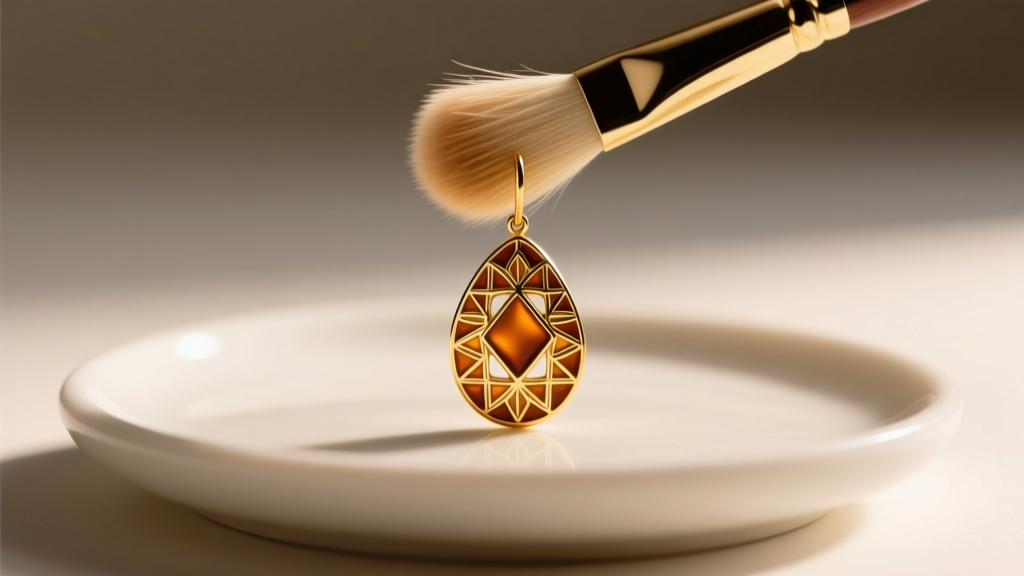
Never introduce moisture to a dusty surface. Use a pristine, ultra-soft camel-hair or sable makeup brush to gently sweep away loose particulate matter. Hold the earring by its post or thickest metal finding, never by the enamel itself, as the oils from your fingers can degrade the luster over time.
Step 2: The pH-Neutral Bath
Prepare a bath using distilled water (never tap water, as dissolved minerals and chlorine can leave permanent water spots or react with copper oxides in the enamel). Add exactly one drop of a pH-neutral, dye-free, and fragrance-free dish soap. Submerge the earrings for no more than 3 to 5 minutes. If dealing with plique-à-jour, do not submerge; instead, use a dampened cotton swab to gently roll over the wire framework, avoiding direct pressure on the glass spans.
Step 3: The Capillary Drying Method
Rinse briefly in a secondary bowl of clean distilled water. Do not rub the piece dry. Instead, place it on a lint-free microfiber towel and use the corner of a second dry towel to touch the edges of the earring, allowing capillary action to draw the water away from the intricate wire crevices.
Enamel and Etching Care Matrix
Use the following reference table to determine the specific risk factors associated with your earring's illustrative technique. The Gemological Institute of America (GIA) frequently warns against the misuse of ultrasonic vibrations on treated or fused surfaces.
| Enamel Technique | Structural Vulnerability | Safe Cleaning Agent | Strictly Avoid |
|---|---|---|---|
| Cloisonné | Wire separation, glass cracking | Distilled water, pH-neutral soap | Ultrasonic cleaners, steamers |
| Champlevé | Enamel pitting, metal tarnish | Mild soap, camel-hair brush | Silver dip, abrasive polishes |
| Guilloché | Clouding of transparent glass | Distilled water, microfiber pat | Paper towels, toothpaste, ammonia |
| Plique-à-jour | Total glass shattering | Damp swab (surface only) | Submersion, ultrasonics, pressure |
Storage and Environmental Hazards
The survival of the drawing of earrings art depends as much on how they are stored as how they are cleaned. Enamel is highly sensitive to thermal shock. Leaving your earrings on a bathroom vanity where they are subjected to rapid temperature changes from hot showers can cause the glass to expand and contract at a different rate than the gold backing, leading to 'crazing' (a network of fine internal cracks).
Conservator's Tip: Always store enamel earrings in a climate-controlled room. Wrap them individually in acid-free, unbuffered tissue paper or anti-tarnish Pacific Silvercloth. Never allow two enamel pieces to touch inside a jewelry box; the gold settings can easily scratch the softer glass canvas of a neighboring pair.
When to Seek Professional Conservation
If you notice any lifting of the cloisonné wires, a cloudy white bloom beneath the surface of the guilloché glass, or micro-fractures in a plique-à-jour wing, stop all cleaning immediately. These are signs of structural failure or moisture intrusion. At this stage, home maintenance is no longer viable. Seek out a master jeweler who specializes in heritage enamel restoration or a certified lapidary conservator who can stabilize the piece using museum-grade adhesives and specialized kiln-firing techniques.