Big Rhinestone Hoop Earrings: Material & Weight Guide
Discover the best base metals, crystal grades, and setting techniques for big rhinestone hoop earrings to ensure brilliance, durability, and lobe health.

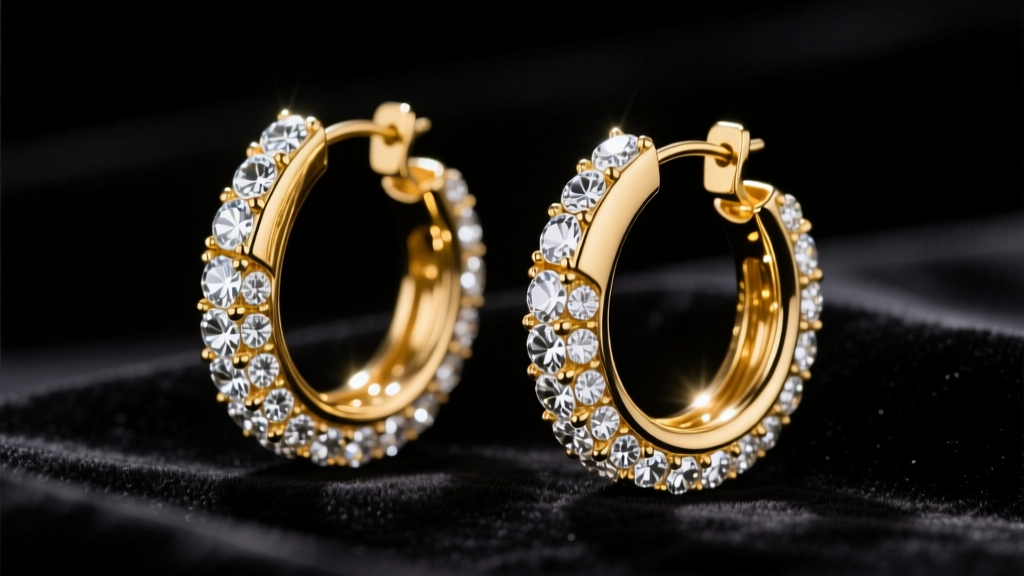
The Hidden Engineering of Maximalist Ear Curations
As maximalist jewelry continues to dominate the 2026 style zeitgeist, big rhinestone hoop earrings have become a non-negotiable staple for high-impact ear curations. However, the sheer scale of these pieces—often spanning 50mm to 80mm in diameter—introduces complex structural and ergonomic challenges that fast-fashion manufacturers frequently ignore. When you combine a large metal surface area with the dense paving of rhinestones, the resulting weight and torque can compromise both the earring's integrity and the health of your earlobe.
Understanding the material science behind these statement pieces is the difference between an heirloom-quality investment and a tarnished, broken disappointment. This guide deconstructs the base metals, rhinestone compositions, and setting mechanics that define the quality of large-scale hoops.
Base Metal Frameworks: Tensile Strength and Hypoallergenic Properties
The base metal of a hoop earring dictates its tensile strength, weight, and biocompatibility. For big rhinestone hoop earrings, the metal must support the heavy stone paving without warping, while remaining safe for prolonged skin contact. According to the Association of Professional Piercers (APP), material purity is paramount to avoid contact dermatitis, especially when heavy earrings cause micro-abrasions in the piercing fistula.
| Base Metal | Tensile Strength | Weight Factor | Nickel Risk & Biocompatibility |
|---|---|---|---|
| ASTM F136 Titanium | Extremely High | Ultra-Light | Zero nickel; ideal for sensitive lobes |
| 316L Surgical Steel | High | Medium-Heavy | Contains trace nickel; risky for prolonged heavy wear |
| 925 Sterling Silver | Low-Medium | Medium | Nickel-free, but prone to sulfide tarnishing |
| Brass (Plated) | Medium | Heavy | High nickel/lead risk if plating chips |
For oversized hoops, ASTM F136 implant-grade titanium is the gold standard. It offers superior tensile strength, meaning the hoop will not bend out of its perfect circle when you take it on and off, yet it is nearly 45% lighter than stainless steel. Conversely, brass is heavily utilized in mass-market fashion jewelry due to its low cost and excellent casting properties, but it requires thick gold or rhodium plating. Once that plating wears through from friction against the neck, the raw brass will oxidize rapidly and turn the skin green.
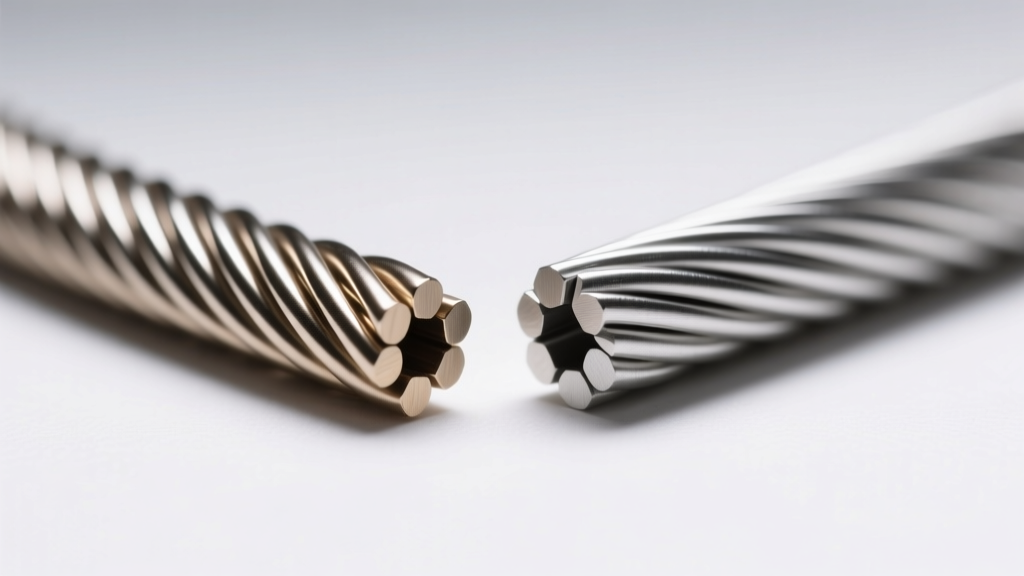
Rhinestone Composition: Refractive Index vs. Density
The term "rhinestone" is a catch-all for various faceted materials. When scaling up to large hoops, the density of the stone material drastically impacts the final weight of the earring. The Gemological Institute of America (GIA) notes that the refractive index (RI) determines a stone's brilliance, but higher RI materials often come with a heavier specific gravity.
1. Precision-Cut Lead Glass (Crystal)
Brands like Preciosa and Swarovski's Advanced Crystal use specialized glass formulas with an RI of 1.7 to 1.8, mimicking the brilliance of diamonds. However, glass is dense. A 60mm hoop fully paved in 3mm glass crystals can easily weigh 18 to 24 grams per earring. While visually unmatched, this weight requires robust lobe support.
2. Cubic Zirconia (CZ)
CZ offers exceptional brilliance (RI 2.15) and high hardness (Mohs 8.5), making it highly scratch-resistant. It is, however, extremely heavy (specific gravity 5.6). Big rhinestone hoop earrings set entirely with CZ are often unwearable for extended periods without specialized earring backs.
3. Acrylic and Resin
Acrylic stones are incredibly lightweight, solving the weight issue of large hoops. Unfortunately, they possess a low RI (1.49) and a Mohs hardness of just 2.0. They will scratch, cloud, and dull within months of regular wear, making them a poor choice for investment pieces.
Setting Mechanics: The Failure of Adhesives
How the rhinestone is secured to the metal hoop is the most common point of structural failure. Large hoops are subject to continuous torque—they flex slightly when handled, dropped, or caught on clothing.
"Adhesives like cyanoacrylate or jeweler's epoxy are rigid when cured. When a large metal hoop flexes even a millimeter, the brittle glue bond shatters, resulting in immediate stone loss."
For high-quality big rhinestone hoop earrings, you must look for mechanical settings:
- Prong Settings: Metal claws are pushed over the girdle of the stone. This allows the metal to absorb shock and flex without dislodging the rhinestone.
- Channel Settings: Ideal for baguette or square-cut rhinestones, where stones are slid into a metal track and the walls are hammered down to secure them.
- Bezel Settings: A thin rim of metal encircles the entire stone. While highly secure, it covers more of the stone's surface, slightly reducing light return and brilliance.
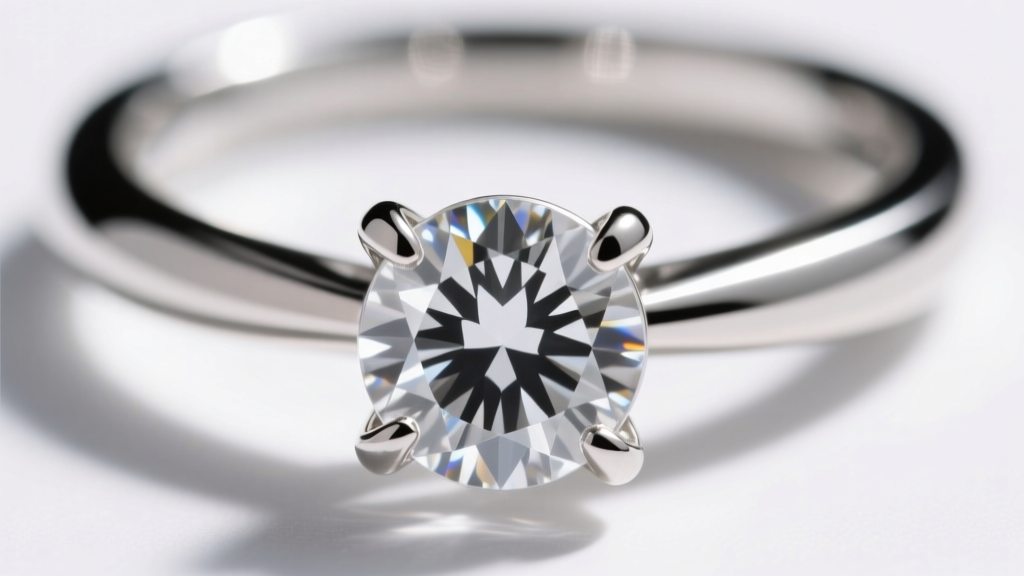
Ergonomics and Lobe Health: Managing the Drop
The physics of a heavy hoop earring create a lever effect on the earlobe. The weight pulls downward and backward, which can lead to lobe stretching, migration, or the dreaded "cheese-cutter effect," where a thin wire slowly slices through the piercing tissue.
Wire Gauge Requirements
Standard fashion earrings typically use 20-gauge (0.81mm) or 22-gauge (0.64mm) wire. This is entirely insufficient for heavy, stone-encrusted hoops. If a pair of big rhinestone hoop earrings weighs more than 12 grams, the wire passing through the ear must be a minimum of 16-gauge (1.29mm), and ideally 14-gauge (1.63mm). This thicker wire distributes the load across a wider surface area of the fistula, preventing tissue damage.
Upgrading the Earring Back
The traditional butterfly clutch is a liability for heavy hoops. The small surface area digs into the back of the ear, and the friction grip often fails under the pendulum-like swinging of a large hoop. To secure big rhinestone hoop earrings safely:
- Flat Disc Friction Backs: A 10mm to 12mm silicone or metal disc sits flush against the back of the lobe, distributing the weight evenly and preventing the earring from drooping forward.
- Silicone O-Rings: Placing a small silicone O-ring over the post before applying the backing adds friction and prevents the metal back from sliding off during movement.
- Hinged Snap Closures: Many premium large hoops utilize a hinged hoop with a secure snap closure that completely eliminates the need for a separate backing, offering a seamless and secure fit.
The Verdict: Building a Sustainable Maximalist Wardrobe
Big rhinestone hoop earrings are an exercise in balancing visual weight with physical mass. By prioritizing ASTM F136 titanium or thick 14-gauge sterling silver frameworks, demanding mechanical prong settings over chemical adhesives, and understanding the density trade-offs between glass crystal and acrylic, you can curate a maximalist ear wardrobe that is as durable as it is dazzling. Always inspect the wire thickness and setting mechanics before purchasing, ensuring your statement pieces are engineered to withstand the beautiful burden of their own brilliance.


