How to Style and Authenticate a Juste Un Clou Earring
Learn how to style, wear, and authenticate your Cartier Juste un Clou earring. Expert tips on gauges, hallmarks, and face-shape matching.

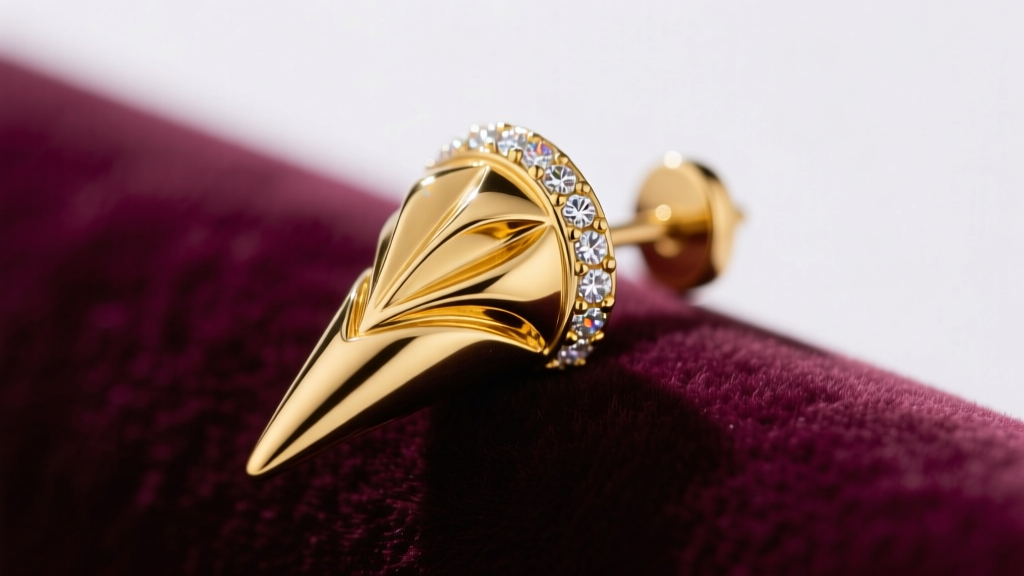
The Anatomy of an Iconic Nail
Originally conceived by Aldo Cipullo in 1971 as a rebellious bracelet, the nail motif has evolved into one of the most coveted silhouettes in fine jewelry. Today, the Juste un Clou earring represents a masterclass in industrial-chic design, transforming a humble hardware staple into a symbol of luxury. However, as the secondary market for high-end jewelry continues to surge in 2026, so does the prevalence of hyper-realistic counterfeits. Furthermore, because of the unique weight distribution and linear geometry of the nail design, wearing and styling these earrings requires specific considerations regarding piercing gauges and face shapes.
This comprehensive guide will walk you through the exact steps to authenticate your pieces, understand the structural requirements for your piercings, and style the linear drop to perfectly complement your unique features.
Step 1: Authenticating Your Juste Un Clou Earring
The sophistication of modern counterfeit manufacturing means that a simple visual check is no longer sufficient. Authenticating a luxury nail earring requires a systematic examination of hallmarks, serial engravings, and gemstone quality. According to Cartier's official authenticity guidelines, every piece of their 18k gold jewelry carries specific, legally mandated stamps that fakes often misinterpret or omit entirely.
The Hallmark and Serial Checklist
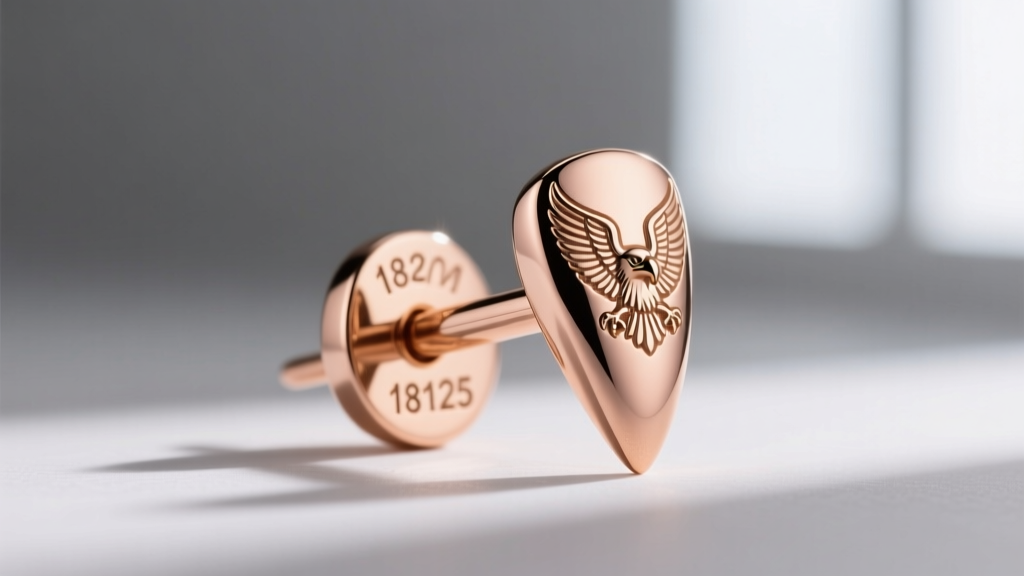
Use a 10x jeweler's loupe to inspect the earring post, the back of the nail head, and the interior curve of the drop. You are looking for the following precise markers:
| Feature | Authentic Marker | Common Counterfeit Red Flag |
|---|---|---|
| Gold Purity Stamp | 'Au750' or the French Eagle Head hallmark (for 18k gold). | Stamped simply '18k' or '750' without the maker's mark or eagle head. |
| Maker's Mark | A lozenge (diamond) shape containing Cartier's initials and a symbol. | Missing entirely, or poorly cast with blurred edges. |
| Serial Number | Deeply laser-engraved alphanumeric code (e.g., two letters followed by numbers). | Surface-etched, shallow, or using an incorrect font spacing. |
| Logo Engraving | Crisp, specific serif font for 'Cartier' with perfect kerning. | Sans-serif fonts, uneven spacing, or 'CARTIER' in all block caps. |
Diamond Pavé Verification
If your earring features diamonds, the gemological standards are strictly enforced. Cartier exclusively uses diamonds in the D to F color range with VVS2 to VS1 clarity. Under magnification, authentic micro-pavé settings will show perfectly uniform, tiny bead prongs holding each stone. Counterfeits often use lower-grade commercial diamonds that appear cloudy or slightly yellow, and the metal bead prongs will look sloppy, uneven, or cast rather than hand-raised. For a deeper understanding of diamond clarity and color grading, the Gemological Institute of America (GIA) provides excellent reference charts to help you spot subpar stones.
Step 2: Piercing Requirements and Gauge Specifications
One of the most common mistakes collectors make is attempting to wear heavy 18k gold drop earrings in delicate, unsupported piercings. The Juste un Clou drop earring is notably top-heavy due to the solid gold nail head and the density of 18k gold (which is significantly heavier than 14k gold or brass fakes).
Understanding the Post Gauge
Standard Cartier earring posts typically range between 19-gauge (0.91mm) and 18-gauge (1.02mm). This is slightly thicker than the standard 20-gauge (0.81mm) wire used in basic stud earrings. This deliberate thickness is engineered to prevent the post from bending under the weight of the elongated nail shaft. If your earlobe piercings were done with a standard piercing gun (which usually uses 20g or 22g), you may feel slight, temporary resistance when inserting the 18g post. Never force it; instead, gently stretch the piercing with a tapered insertion pin first.
Lobe vs. Cartilage Placement
While the linear design might look striking in a lower helix or flat cartilage piercing, it is highly discouraged. The weight of the 18k gold nail can cause 'cheese-cutter' migration in cartilage, slowly tearing the tissue over time. Stick to fully healed, standard earlobe piercings. Furthermore, ensure the earring backing is a secure friction back with deep grooves or a custom screw-back mechanism to prevent the heavy drop from pulling loose during wear.
Step 3: Styling the Linear Drop for Your Face Shape
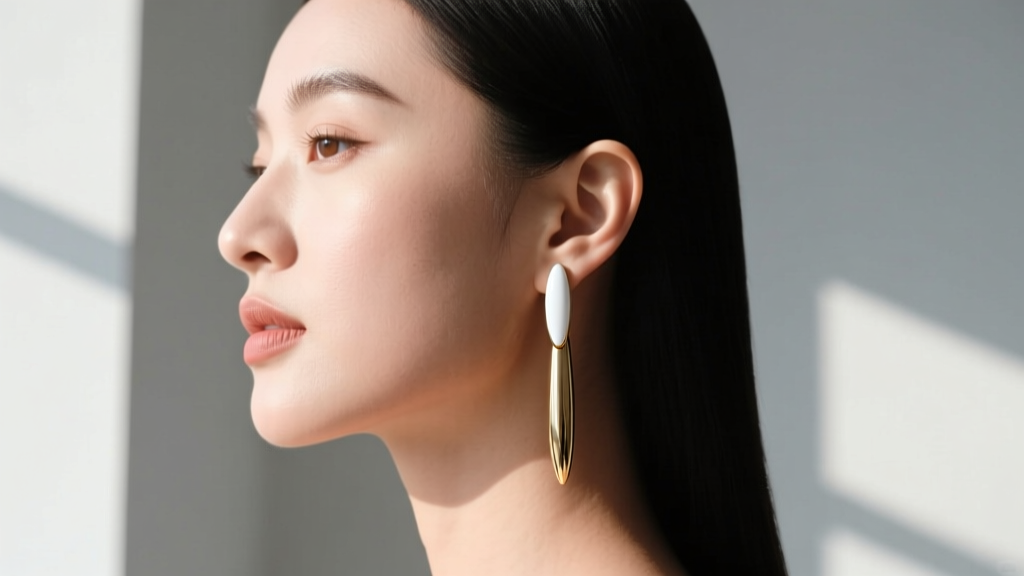
The structural brilliance of the nail earring lies in its verticality. The straight, unbroken line of the nail shaft creates an optical illusion that draws the eye downward. This makes it an incredibly powerful tool for balancing facial proportions, but it must be matched correctly to your specific face shape.
Face Shape Matching Guide
- Round Faces: The Juste un Clou drop is your best friend. The sharp, vertical lines of the nail shaft contrast beautifully with soft, curved jawlines, creating an elongating effect that slims the face. Opt for the longer drop variations.
- Square Faces: The subtle curve at the base of the nail and the rounded nail head help soften strong, angular jawlines. Choose a medium-length drop in rose gold to add warmth and soften the geometric harshness of the metal.
- Oval Faces: With naturally balanced proportions, oval faces can pull off any variation. However, the classic stud version or the huggie nail hoop often provides a more harmonious look than an excessively long drop, which might over-elongate the face.
- Heart-Shaped Faces: Because the nail draws attention downward toward the neck and collarbone, it helps balance a wider forehead and narrow chin. Pair the drops with a V-neckline to emphasize the elongating, harmonious lines.
Hair and Neckline Pairings
To maximize the visual impact of the nail earring, the surrounding canvas matters. An updo, such as a sleek chignon or a messy French twist, exposes the earlobe and allows the linear drop to stand out without competing with tangled hair. When it comes to necklines, crew necks and high turtlenecks can make the earrings look crowded. Instead, opt for open collars, scoop necks, or strapless tops to give the gold and diamonds room to breathe and catch the light.
Step 4: Maintenance and Micro-Pavé Care
Preserving the pristine condition of your earrings requires a disciplined care routine, particularly if your piece features diamond pavé. The small crevices around the nail head and the tiny bead prongs are natural traps for skin oils, lotions, and environmental dust, which can quickly dull the brilliance of the diamonds.
The Safe Cleaning Protocol
Forget harsh chemicals or commercial silver dips. To clean your 18k gold and diamond earrings, follow this expert-approved method:
- Mix a few drops of mild, ammonia-free dish soap in a bowl of lukewarm water.
- Soak the earrings for 15 to 20 minutes to loosen debris.
- Using an extra-soft baby toothbrush, gently brush the back of the diamond settings and the grooves of the nail head. Do not scrub aggressively, as 18k gold is a relatively soft metal and can accumulate micro-scratches.
- Rinse thoroughly under lukewarm running water (ensure the drain is plugged!).
- Pat dry with a lint-free microfiber cloth.
A Warning Against Ultrasonic Cleaners
While ultrasonic cleaners are fantastic for solid gold pieces, they pose a significant risk to micro-pavé jewelry. The high-frequency vibrations can loosen the microscopic bead prongs holding the tiny diamonds in place, leading to stone loss over time. Furthermore, if your earrings feature any fracture-filled diamonds or specific gemstone treatments (rare in Cartier, but possible in vintage or altered pieces), the heat and vibration of an ultrasonic machine can cause irreversible damage. Stick to manual, gentle cleaning to ensure your settings remain secure for decades.
Final Thoughts on Wearing the Icon
Owning a Juste un Clou earring is an investment in both heritage and avant-garde design. By taking the time to meticulously verify its authenticity, respecting the gauge requirements of your piercings, and strategically styling the linear drop to enhance your natural features, you elevate the piece from a mere accessory to a masterful extension of your personal style. Treat the gold with care, protect the pavé settings, and let the rebellious spirit of the nail shine through.


