Expert Care Guide: Cleaning Your Small Diamond Earring Studs
Discover expert tips to clean, maintain, and protect your small diamond earring studs. Learn about prong care, ultrasonic safety, and daily wear rules.

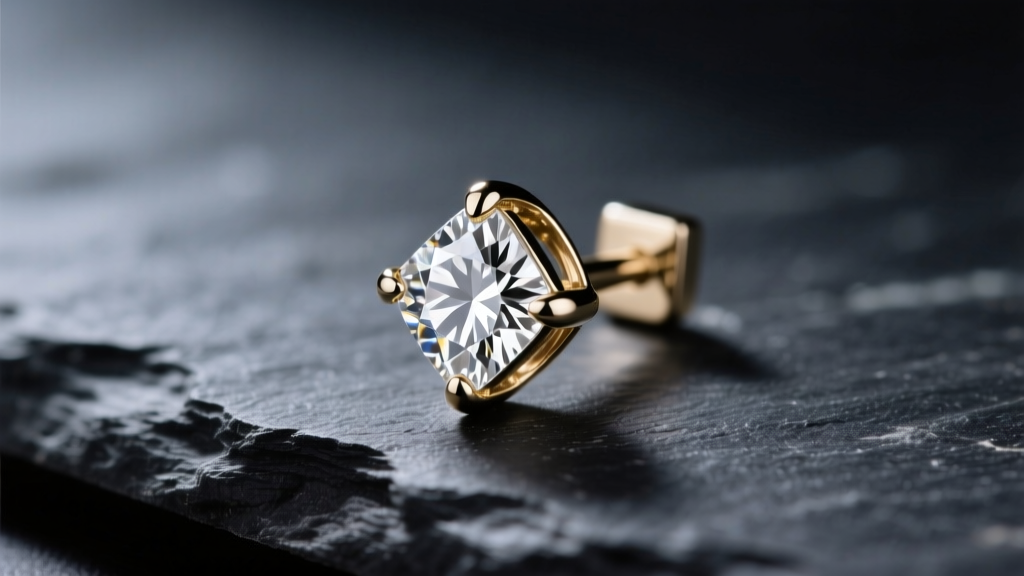
Diamonds are inherently oleophilic, meaning they naturally attract and hold onto oils, grease, and sebum. While a large solitaire might retain some brilliance despite a smudge, a small diamond earring stud—typically ranging from 0.10 to 0.50 carats in total weight—has a much smaller surface area. A single fingerprint or buildup of daily skincare products can obscure up to 60% of the stone's light return, turning a fiery gem into a dull, lifeless pebble. As lab-grown diamonds continue to dominate the everyday fine jewelry market in 2026, understanding the specific care requirements for these petite, high-impact accessories is more critical than ever. Whether your studs feature a classic 4-prong basket or a minimalist 3-prong martini setting, proper maintenance ensures they remain secure and brilliant for decades.
The Hidden Vulnerabilities of Small Diamond Settings
When we talk about cleaning, we must also talk about structural integrity. The settings used for small diamond earring studs are micro-engineered, meaning the prongs holding your stone are exceptionally thin. The metal alloy you choose plays a massive role in how well these prongs withstand daily wear and cleaning regimens.
- 14k Gold (58.5% Pure Gold): The industry standard for small diamond studs. The higher alloy content (mixed with copper, silver, and zinc) provides superior tensile strength, making the micro-prongs highly resistant to bending or snapping during cleaning.
- 18k Gold (75% Pure Gold): Softer and more malleable. While it offers a richer color, 18k gold prongs on stones under 0.25ct are prone to lifting if snagged on a towel or brushed too aggressively.
- Platinum (95% Pure): Dense and incredibly durable. Platinum prongs rarely wear away, but the metal can develop a 'patina' (micro-scratches) that dulls the metal's shine, requiring occasional professional polishing to maintain the mirror finish that reflects light back into the diamond.
Furthermore, the setting style dictates your cleaning approach. Martini settings (3 prongs) allow maximum light entry but are notorious for catching on hair and sweater threads. Basket settings (4 prongs) offer a lower profile and better protection for the diamond's girdle, but they trap more lotion and dead skin cells beneath the stone's pavilion (underside).
The 2026 Protocol: Step-by-Step Cleaning for Maximum Brilliance
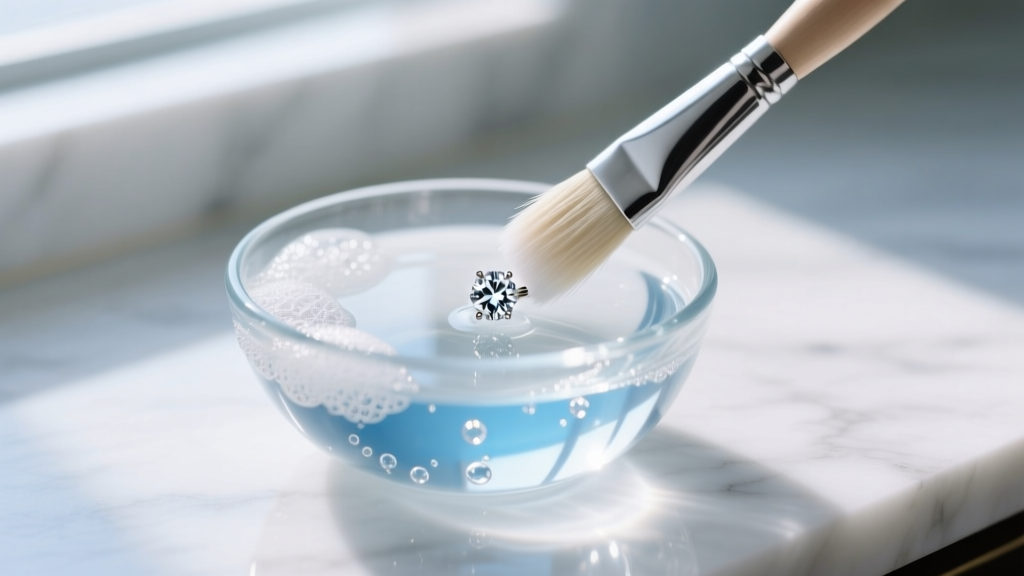
According to the Gemological Institute of America (GIA), the safest and most effective way to clean diamond jewelry at home is a gentle, non-abrasive soak. Avoid harsh commercial 'dip' cleaners, which often contain unlisted acids that can degrade the rhodium plating on white gold settings.
1. The Ammonia-Free Soak
Fill a small glass bowl with warm (not hot) distilled water and add three drops of a mild, ammonia-free dish detergent. Hot water can cause thermal shock if your diamond has been exposed to cold temperatures, and ammonia can degrade certain alloy metals over time. Submerge your small diamond earring studs for 15 to 20 minutes. This loosens the hydrophobic oils and cosmetic buildup trapped under the setting.
2. Targeted Pavilion Brushing
Remove the earrings from the solution. Using an extra-soft baby toothbrush (never a standard adult brush, as the bristles can scratch the gold or platinum alloy), gently brush the pavilion—the V-shaped underside of the diamond. This is where 90% of dirt accumulates. Brush in small, circular motions, moving outward toward the girdle. Do not apply downward pressure on the table (top facet) of the diamond.
3. The Lint-Free Dry
Rinse thoroughly under a gentle stream of lukewarm distilled water. (Always ensure your sink drain is plugged or use a mesh strainer to prevent catastrophic loss). Pat dry with a lint-free microfiber cloth. Never use tissue paper or paper towels; the wood fibers can microscratch the metal and leave behind lint that snags on the prongs.
Chemical Hazards: What Destroys Diamond Earrings?
Diamonds themselves rank a 10 on the Mohs hardness scale, making them virtually impervious to scratching. However, the settings and the optical clarity of the stone are highly vulnerable to everyday household chemicals. Below is a breakdown of common hazards and their specific failure modes.
| Chemical Agent | Primary Target | Damage Mechanism & Result |
|---|---|---|
| Chlorine Bleach | Gold Alloys (14k/18k) | Causes stress corrosion cracking in the copper/silver alloys, leading to brittle prongs that snap without warning. |
| Hairspray & Dry Shampoo | Diamond Surface | Leaves a stubborn, cloudy polymer film over the table facet, severely reducing light refraction and brilliance. |
| Hand Sanitizer (Alcohol) | Rhodium Plating | Accelerates the degradation of rhodium plating on white gold settings, causing premature yellowing of the metal. |
| Heavy Body Lotions | Pavé / Micro-Prongs | Traps microscopic dirt particles against the metal, creating an acidic micro-environment that degrades the prong tips. |
Advanced Maintenance: Navigating Ultrasonic Cleaners
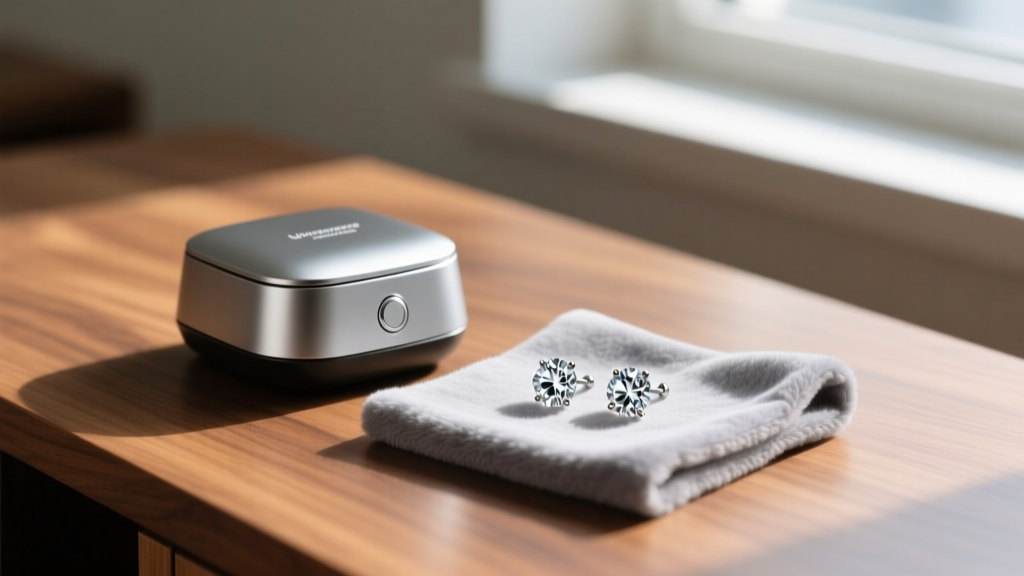
Ultrasonic cleaners have become highly accessible for home use, utilizing high-frequency sound waves (typically 40kHz to 45kHz) to create microscopic cavitation bubbles in a liquid solution. When these bubbles implode against the jewelry, they blast away microscopic debris. While highly effective for solid basket settings, they carry significant risks for certain types of small diamond earring studs.
When to Avoid Ultrasonic Cleaning
According to guidelines endorsed by Jewelers of America, you must never place fracture-filled or clarity-enhanced diamonds in an ultrasonic cleaner. The intense vibrations and heat can melt the glass-like resins used to fill internal fissures, permanently clouding the stone. Furthermore, if your small diamond earring features a 'halo' or micro-pavé accents, the 40kHz vibrations can easily shake loose the tiny secondary stones, which are held by barely-there micro-prongs. For standard, single-stone solitaire studs with secure 4-prong baskets, a 3-minute ultrasonic cycle is safe and highly effective.
Backings, Storage, and Nightly Best Practices
Care extends beyond cleaning; it encompasses how you secure and store your earrings. The standard 'butterfly' friction back relies on the tension of the metal loops to grip the earring post. Over time, this metal fatigues, loosening its grip and dramatically increasing the risk of losing your small diamond earring in your bedsheets or on the floor.
Consider upgrading to silicone O-ring stoppers or La Poussière lock-backs, which mechanically lock onto the post groove. If you prefer screw-backs, be aware that the microscopic threads can strip if cross-threaded, or accumulate skin cells that jam the mechanism. Clean screw-back threads monthly with a wooden toothpick and a drop of rubbing alcohol.
'The leading cause of lost diamond studs isn't a broken prong; it's a fatigued friction back. Replacing standard butterfly backs with locking silicone mechanisms is the single most effective maintenance step a consumer can take.' — Master Bench Jeweler, 2026 Industry Report
Finally, never toss your small diamond earring studs loosely into a jewelry box. Diamonds will scratch adjacent gemstones (like sapphires or emeralds) and can easily scratch the polished metal of other gold pieces. Store them in a dedicated, fabric-lined compartment or a small silicone travel pod to keep the prongs protected from impact and the stones free from abrasive dust.


