Earring Spray Guide: Hypoallergenic & Anti-Tarnish Tech
Discover the science of earring sprays. Expert guide on hypoallergenic barrier polymers, anti-tarnish chemistry, and safe application for sensitive ears.

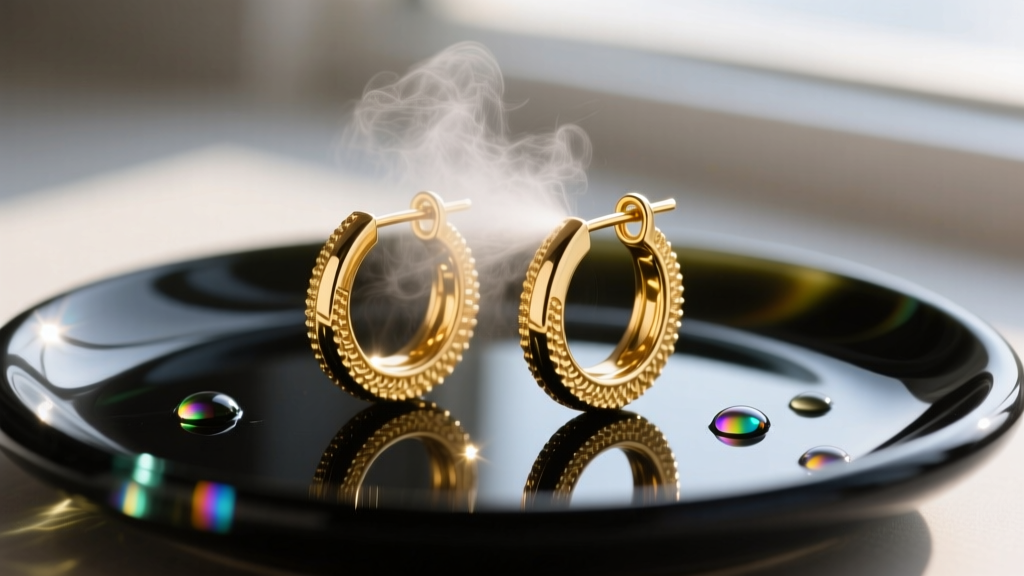
The Science of Earring Sprays: Beyond Basic Cleaning
When jewelry professionals and dermatologists discuss earring spray, they are rarely referring to a single, monolithic product. Instead, this term encompasses a highly specialized triad of chemical solutions designed to solve the three most common failure points in ear jewelry: contact dermatitis, metallurgical oxidation, and piercing site infection. As of 2026, advancements in polymer chemistry and non-toxic surfactants have revolutionized how we maintain both the integrity of precious metals and the biological safety of the ear lobe and cartilage.
For consumers with sensitive skin or collectors of high-end ear cuffs, huggies, and drop earrings, understanding the exact chemical composition of these sprays is no longer optional—it is essential for preserving both your jewelry investment and your skin health. This deep dive explores the technical specifications, application protocols, and material interactions of modern earring sprays.
Hypoallergenic Barrier Sprays: The Dermatology of Polymer Coatings
Nickel allergy affects approximately 15% to 20% of the global population, making it the most common cause of allergic contact dermatitis. Even jewelry marketed as "hypoallergenic," such as certain grades of sterling silver or white gold, often contains trace nickel or copper alloys that can trigger a reaction when exposed to the acidic pH of human sebum and sweat. According to the American Contact Dermatitis Society, the most effective non-invasive intervention is the application of a medical-grade barrier spray.
Polyurethane vs. Acrylate Copolymers
Professional hypoallergenic earring sprays rely on two primary active ingredients:
- Polyurethane Dispersions: These create a flexible, breathable film that stretches with the metal. When applied to an earring post, it forms a 10 to 20-micron physical barrier that prevents nickel ion leaching. Polyurethane is highly resistant to the lactic acid found in human sweat.
- Acrylate Copolymers: Often used in medical device coatings, acrylate sprays dry to a harder, more rigid finish. While excellent for heavy drop earrings that experience high friction against the neck, they can micro-fracture on flexible huggie hoops if bent repeatedly.
The Danger of DIY Earring Sprays
A persistent and dangerous myth in jewelry care is the use of clear nail polish as a DIY earring spray or barrier. Nail polishes contain toluene, formaldehyde resin, and dibutyl phthalate (the "toxic trio"). When trapped against the warm, moist environment of a fresh or healing ear piercing, these volatile organic compounds (VOCs) can cause severe chemical burns and exacerbate contact dermatitis. Always opt for dermatologist-tested, water-based polymer sprays specifically engineered for mucosal and epidermal contact.
Anti-Tarnish Sprays and Metallurgical Preservation
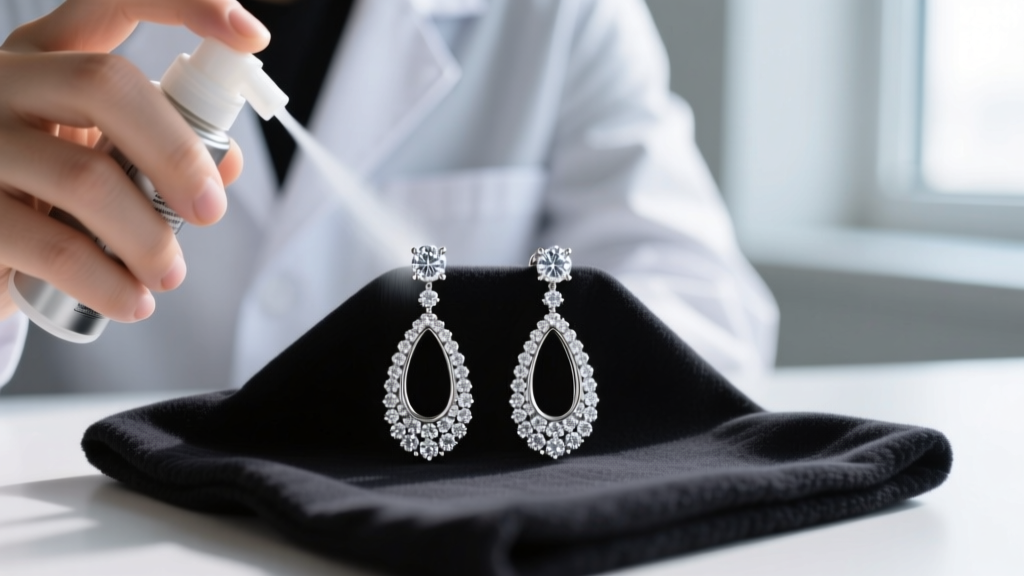
Tarnish is not dirt; it is a chemical reaction. Sterling silver (92.5% silver, 7.5% copper) reacts with hydrogen sulfide in the atmosphere to form silver sulfide (Ag2S), resulting in a blackened surface. While ultrasonic cleaners are popular, they cannot reach the intricate crevices of pavé-set diamond drop earrings or delicate filigree ear cuffs. This is where specialized anti-tarnish earring sprays become critical.
Benzotriazole (BTA) and Surfactant Chemistry
High-end anti-tarnish sprays utilize benzotriazole (BTA) or advanced plant-based surfactants. BTA is a corrosion inhibitor that bonds to the copper atoms in sterling silver, preventing the oxidation cascade before it begins. However, the Gemological Institute of America (GIA) strictly warns against using ammonia-based or highly acidic cleaning sprays on porous gemstones. If your drop earrings feature pearls, opals, or turquoise, the alkaline nature of standard silver sprays will strip the nacre from pearls and cause micro-fissures in opals. Always verify that your anti-tarnish spray is labeled "safe for porous organics" before application.
Technical Comparison Matrix: Earring Spray Categories
| Spray Category | Active Ingredient | Primary Function | Reapplication Frequency | Avg. Price Range (2026) |
|---|---|---|---|---|
| Hypoallergenic Barrier | Polyurethane Dispersion | Blocks nickel/copper ion leaching | Every 14-21 days (daily wear) | $18 - $35 |
| Anti-Tarnish Coating | Benzotriazole (BTA) | Prevents silver sulfide formation | Every 3-6 months | $22 - $45 |
| Surfactant Cleaner | Plant-based Saponins | Lifts sebum and cosmetic buildup | Weekly (as needed) | $12 - $25 |
| Isotonic Saline Wash | 0.9% Sodium Chloride | Flushes piercing sites in-situ | 1-2 times daily (healing only) | $8 - $15 |
Application Protocols by Earring Architecture
The physical design of an earring dictates how a spray must be applied to ensure maximum efficacy without damaging the jewelry's mechanical components.
Stud Earrings and Butterfly Backs
For studs, the primary point of failure is the friction back (butterfly clutch). Sweat and dead skin cells accumulate inside the clutch, creating a breeding ground for bacteria and accelerating galvanic corrosion between the post and the clutch. Protocol: Remove the clutch. Spray the barrier solution directly onto the earring post and the interior of the clutch. Allow to air dry for exactly 120 seconds before reassembly to ensure the polymer film fully cures.
Huggies, Hoops, and Hinges
Huggies and clicker hoops rely on a microscopic tension hinge. Spraying heavy, viscous anti-tarnish solutions directly into the hinge mechanism can cause the residue to dry and lock the clasp shut. Protocol: Use a low-viscosity, aerosolized micro-mist spray. Apply to a lint-free swab and carefully wipe the exterior band, avoiding the hinge joint entirely. For the interior curve that touches the ear, apply a hypoallergenic barrier spray to prevent friction-induced micro-abrasions on the earlobe.
Ear Cuffs and Non-Pierced Cartilage Jewelry
Because ear cuffs rely on tension to grip the helix or conch, they are subjected to constant mechanical stress and direct contact with the skin's natural oils. The acidity of sebum rapidly degrades gold vermeil (a thick layer of gold over sterling silver). Protocol: After every wear, mist the interior grip of the ear cuff with a pH-neutral surfactant cleaner, wipe with a microfiber cloth, and apply a light coat of BTA anti-tarnish spray to preserve the vermeil plating.
Real-World Failure Modes and Troubleshooting
Even the best earring sprays will fail if subjected to environmental stressors they were not designed to withstand. The most common failure mode for hypoallergenic barrier sprays is hydrolysis—the breakdown of the polymer chain caused by prolonged exposure to water and high heat. If you wear barrier-sprayed earrings in a sauna, hot tub, or during high-intensity interval training, the 15-micron polymer layer will degrade in less than 48 hours.
Another frequent issue is "clouding" on high-polish metals. This occurs when a barrier spray is applied too heavily, causing the polyurethane to pool and dry unevenly. To troubleshoot this, lightly mist the earring from a distance of 12 inches, allowing gravity to pull the micro-droplets down the post evenly. Never brush or wipe the spray while it is wet, as this destroys the cross-linking process of the acrylate molecules.
Conclusion: Integrating Sprays into Your Jewelry Maintenance Routine
The modern approach to earring care requires moving beyond simple wiping and polishing. By understanding the specific chemistry of hypoallergenic barrier polymers, anti-tarnish inhibitors, and isotonic saline solutions, you can drastically extend the lifespan of your jewelry while eliminating the discomfort of contact dermatitis. Whether you are maintaining a daily pair of titanium studs or preserving a set of heirloom diamond drop earrings, selecting the correct earring spray is the ultimate hallmark of informed, expert-level jewelry stewardship.


